



Gasgoo Munich- China's new energy vehicle (NEV) market staged a broad rebound in March, with sales figures climbing sharply across the board. BYD remained far ahead of the pack, Li Auto returned to the 40,000-unit range, and Leapmotor quietly emerged as the top-selling single brand among the country's startup NEV makers.
The surge, however, is less a clean recovery than a delayed release of pent-up demand. The phase-out of purchase tax incentives at the end of last year pulled forward consumption, leaving January and February comparatively weak. March's upswing reflects that deferred demand coming back into the market. Meanwhile, volatility in global fuel prices has further strengthened the appeal of electric vehicles.
Beyond shifting rankings, the latest figures point to a deeper contest—one defined by technology, strategy, and operational endurance.
Section I: Leaders build moats—and face new pressures
BYD: Scaling up infrastructure to defend its lead
BYD sold 295,693 passenger vehicles in March, with its Dynasty and Ocean lineups contributing the bulk of 262,327 units. Yet the company's real strategic focus lies beyond volume. Its latest combination of technologies—including a second-generation Blade Battery and FLASH charging—targets one of the NEV sector's most persistent challenges: charging anxiety.
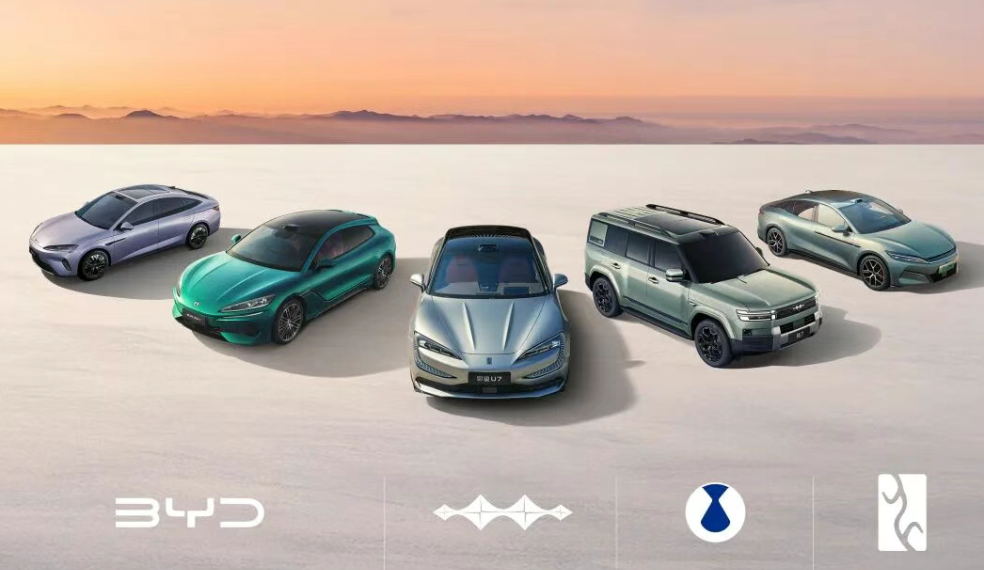
Image source: BYD
More notably, BYD is pairing product innovation with rapid infrastructure deployment. The company has already rolled out 5,000 FLASH charging stations and is targeting 20,000 by year-end, signaling a shift in competition from product performance to ecosystem strength. Its advantage is increasingly systemic, built on both technology and supporting infrastructure.
That said, its premium YANGWANG brand posted modest sales of just 307 units, highlighting the difficulty of gaining traction in the ultra-high-end segment, where brand narrative matters as much as technical specifications.
Geely: Multi-brand strategy gains traction
Geely Automobile reported total sales of 233,031 vehicles in March, with NEVs accounting for more than half at 127,319 units—underscoring the speed of its transition. The group's multi-brand strategy is beginning to pay off: Galaxy (82,744 units) anchors the mass market, while Zeekr (29,318 units) and Lynk & Co (25,426 units) target premium and personalized segments, respectively.
The strong positioning of models like the Zeekr 9X in the premium bracket suggests Geely's technology-heavy approach is resonating with higher-end buyers. Meanwhile, the approval of its advanced driver assistance system in Europe marks a significant, if underappreciated, milestone—opening the door to more mature overseas markets.
Geely's roadmap is increasingly clear: scale through Galaxy, elevate brand equity with Zeekr, differentiate through Lynk & Co, and underpin it all with in-house AI capabilities.
Section II: Startup NEV makers enter a decisive ranking battle
Leapmotor: A quiet frontrunner emerges
Leapmotor delivered 50,029 vehicles in March, making it the top-selling startup NEV brand in China for the month. Notably, the company has also achieved overall profitability—challenging the long-held assumption that NEV startups must sacrifice margins for growth.
Rather than relying on headline-grabbing technologies, Leapmotor's strategy centers on in-house R&D and value-driven products. Its latest model has gained traction by offering competitive pricing alongside solid build quality and interior space.
As consumers grow more price-sensitive and less willing to pay for brand premiums, Leapmotor's rise reflects a broader shift toward value-oriented purchasing. Its trajectory suggests that mass-market positioning—akin to traditional global volume brands like Toyota and Volkswagen—can be just as viable as pursuing a Tesla-style innovation narrative.
Li Auto: Regaining momentum after setbacks
Li Auto delivered 41,053 vehicles, stabilizing its performance after earlier volatility. While production normalization after the holiday season played a role, the ramp-up of its i series model delivery has been more critical.
The company's renewed focus on its core strengths—family-oriented vehicles, extended-range technology, and in-car intelligence—signals a strategic reset following challenges tied to its all-electric flagship ambitions.
Li Auto's resilience lies in its ability to respond with strong products during periods of skepticism. The key question ahead is whether it will revisit its full-electric ambitions as the market matures. For now, its approach appears more measured and pragmatic.
NIO: Product strength validates long-term strategy
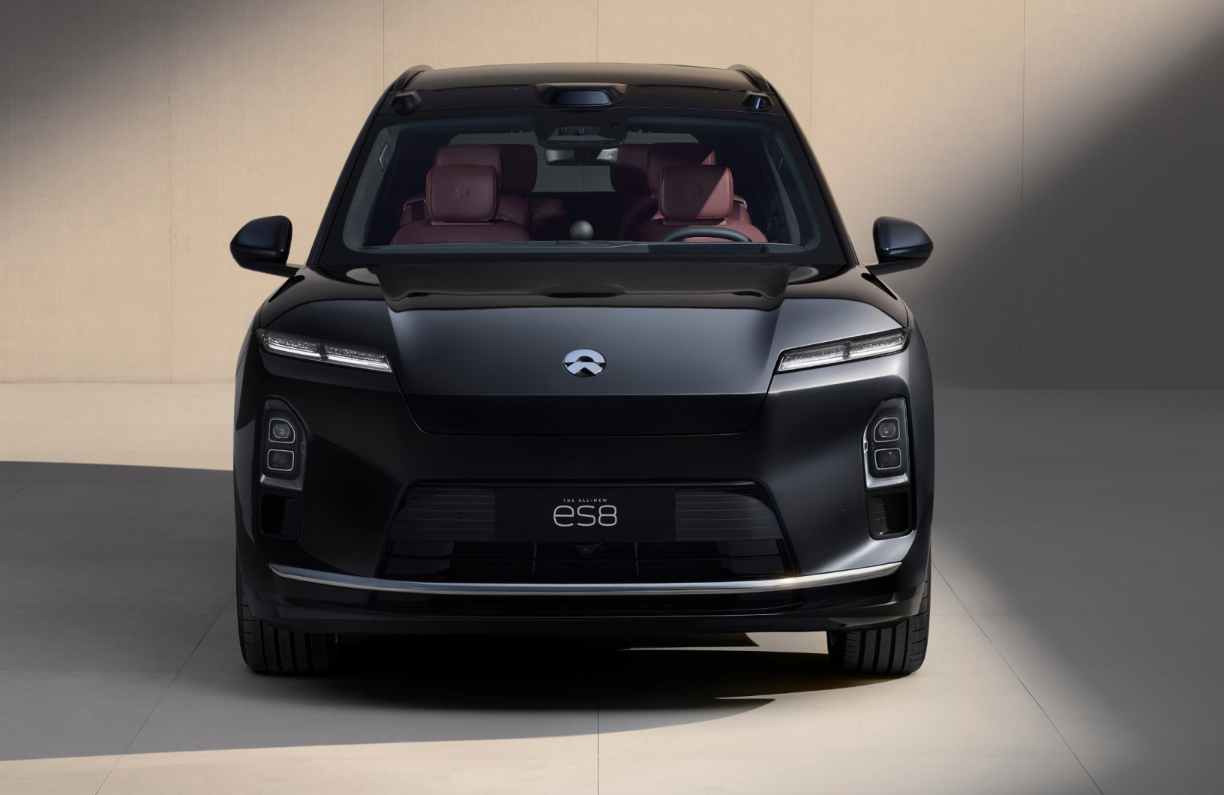
NIO Inc. delivered 35,486 vehicles in March, with its core NIO brand contributing 22,490 units. The All-New ES8 alone accounted for more than 16,000 deliveries, standing out in the full-size electric SUV segment.
All-New ES8; image source: NIO
The performance underscores how a single competitive model can shift market sentiment, even as debates continue around NIO's capital-intensive battery-swapping network and organizational complexity.
Sub-brands such as ONVO and FIREFLY remain in early ramp-up stages, but NIO's broader investments—including in chips and next-generation batteries—are beginning to gain renewed attention from investors.
Its trajectory highlights a fundamental truth in the automotive industry: sustained investment in R&D, even when costly, can ultimately translate into durable competitive advantages.
XPENG: Balancing multiple powertrain paths
XPENG delivered 27,415 vehicles, reflecting steady—if not rapid—progress. The introduction of extended-range technology broadens its appeal, while upcoming models like the new MONA M 03 and the GX flagship SUV point to a more diversified lineup.
Crucially, XPENG is shifting away from a purely battery-electric identity toward a more flexible strategy aligned with market demand. Its parallel investments in AI and robotics also position the company within a broader technology narrative beyond automotive.
Section III: State-owned and legacy players push for breakthroughs
Changan Automobile: A model performer among state-owned automakers
Changan Automobile posted total sales of 270,600 vehicles in March, including 89,600 NEVs, reflecting a well-balanced portfolio. Its brand architecture is clearly delineated: AVATR targets the premium segment with a design- and tech-led positioning, DEEPAL is expanding aggressively overseas, while NEVO focuses on affordability.
Rather than retrofitting legacy oil-fueled models into electric ones, Changan has opted for a cleaner break—allowing sub-brands to develop independently while maintaining centralized strategic control. This hybrid structure, combining top-down coordination with operational autonomy, is emerging as a viable template for state-owned automakers navigating electrification.
Chery Group: Thriving beyond domestic borders
Chery Group's NEV sales reached 70,106 units in March—solid but not headline-grabbing. Its export performance, however, tells a different story. The company shipped 148,777 vehicles overseas in the month, marking the eleventh consecutive month with exports exceeding 100,000 units.
While competition intensifies in China's crowded NEV market, Chery has built a formidable presence abroad. Its products may not dominate domestically, but in international markets they are increasingly seen as competitive, cost-effective representations of Chinese manufacturing. The company's strategy is clear: leverage intense domestic competition to sharpen capabilities, then scale globally.
Great Wall Motor: Reinventing a rugged identity
Great Wall Motor reported total sales of 106,198 units for March, with NEVs accounting for 21,857 units. Yet the underperformance of its ORA brand (only 2,529 units sold)—focused on small electric cars—highlights lingering gaps in the mass-market BEV segment.
The company is instead doubling down on premium and off-road positioning, with TANK (18,316 units) and WEY brands (7,751 units) delivering stronger results. The New GWM ONE platform and the upcoming WEY V9X are expected to reinforce this strategy, but the key challenge remains: translating its rugged, off-road expertise into broader urban appeal. Its transition reflects a difficult shift from niche strength to mainstream relevance.
Section IV: Other variables shaping the market
GAC's HYPTEC-AION business unit sold 38,268 vehicles in March following internal restructuring, with early signs of scale efficiency emerging. The AION i60 has gained traction quickly, with over 28,000 units sold within 3 months after hitting the market. Those all suggest that streamlining internal operations is beginning to pay off.
Dongfeng Motor's Yipai Technology recorded 27,505 units in March sales after consolidating the three brands of Aeolus, eπ, and NAMMI. While volumes are improving, brand recognition remains a weak point—an issue that could limit its ability to convert product competitiveness into sustained demand.
SERES sold 22,706 vehicles in March, with the AITO lineup continuing to anchor its performance under Huawei's smart vehicle ecosystem. While its flagship AITO M9 model face increasing competition in the 500,000-yuan segment, upcoming launches aimed at more mainstream price points will be critical to broadening its market base.
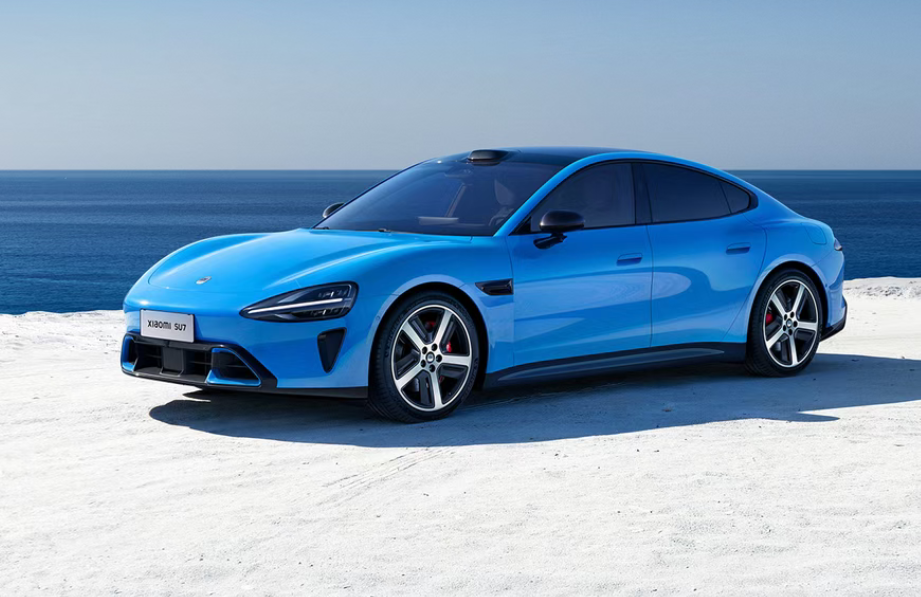
Xiaomi EV surpassed 20,000 units in March deliveries, with its next-gen SU7 model reaching over 7,000 units within just one week of launch. The company is advancing three models simultaneously, signaling an aggressive rollout strategy rarely seen in the traditional auto industry.
Next-gen SU7; image source: Xiaomi
What sets Xiaomi apart is not just speed, but method. By applying the cadence and traffic-driven marketing tactics of consumer electronics, it is reshaping how vehicles are launched, promoted, and scaled. With three models already in parallel production and the potential introduction of a large six-seat SUV later this year, Xiaomi EV is positioning itself for a significantly stronger performance in the months ahead.
VOYAH delivered 15,019 vehicles in March, posting an 50% year-on-year increase. Its collaboration with Huawei is beginning to yield tangible results, while its listing in Hong Kong has eased funding constraints.
The brand's recent rebound illustrates how a combination of technological partnerships and improved capital positioning can accelerate recovery in an increasingly competitive NEV market.
IM Motors recorded 7,187 units of March deliveries. The carmaker attempts to replicates the success seen by rivals in the premium NEV SUV segment by leveraging the two-model lineup (IM LS9 and IM LS8). In addition, its push into advanced intelligent driving—marketed as a "super intelligent agent"—remains a key differentiator on paper, though its real-world competitiveness will ultimately depend on user adoption and performance validation.
Final thoughts
March's sales figures serve as a sobering reset for a market that began the year on uneven footing. The recovery is genuine, but so is the intensifying rivalry. From BYD's infrastructure push and Geely's multi-brand strategy to Leapmotor's value focus, Chery's global expansion, and NIO's long-term investments, each contender is pursuing a distinct—and increasingly defined—trajectory.
One structural shift, however, is becoming unavoidable. China's NEV sector is transitioning from a phase of rapid, fragmented growth into one defined by consolidation and competitive filtering. Scale, strategic clarity, and execution discipline are emerging as the decisive factors for survival.
For automakers still reliant on external financing, lacking a clear product cadence, or struggling with brand identity, the margin for error is shrinking rapidly. The March rebound may not signal stability, but rather mark the final calm before a more decisive industry shakeout.


