



In 2025, Tesla prospered in the stock market but stumbled in the car market.
Tesla's market value at one point topped USD 1.6 trillion, with its share price repeatedly setting new highs — securing its position as the world's most valuable automaker. Yet back in the industry itself, Tesla lost the global pure‑EV sales crown for the first time. Pulling it off the pedestal was China's BYD, which sold 2.26 million battery‑electric vehicles in 2025, far ahead of Tesla's 1.636 million.
Among global automakers, Tesla has been one of the earliest — and most directly — exposed to the rise of Chinese brands. Outside the relatively secure home markets of the US and Canada, where Chinese automakers have little presence, Tesla faces head‑on competition from Chinese companies in China and Europe, the two most important growth markets for new‑energy vehicles.
Sales fall instead of rise
Tesla's global sales over the past five years have traced a curve that rose, then rolled over.
In 2023, Tesla's global deliveries reached a record of just over 1.80 million. Momentum stalled in 2024, with deliveries easing to 1.79 million. By 2025, the decline widened to 8.6%, as deliveries slipped to 1.636 million.
By contrast, the global new‑energy market kept expanding. According to the China Passenger Car Association (CPCA), in the first 11 months of 2025 global NEV sales hit 20.33 million, with broad‑definition NEVs at a 30% share — up 3.7 percentage points from 2024.
Against that rising tide, Tesla's slide means its market share is being rapidly chipped away. And that is what the data show: Tesla faces varying levels of pressure across China, Europe and the US — its three core markets.
In China, Tesla's 2025 sales are expected to be around 600,000, roughly 30% of its global total — still its largest single market. The company tried in the second half to boost demand with price adjustments and financing offers, but the lift was limited.
Meanwhile, China's NEV market continues to swell. CAAM data show battery‑electric sales reached 7.72 million in January–November 2025, up 15.5% year on year. Including plug‑in hybrids, CAAM expects full‑year NEV sales to surpass 16 million, pushing market share close to 50%.
Domestic brands are the biggest beneficiaries. BYD's 2025 sales reached 4.60 million, up 7.7%; Geely's full‑year NEV sales hit 1.69 million, up 90%. Leapmotor, Harmony Intelligent Mobility, Xiaomi, NIO and Chery also posted annual gains.
Tesla's performance in Europe was even more painful. According to the European Automobile Manufacturers' Association (ACEA), in the first 11 months of 2025 Tesla's EU sales fell 38.8% year on year to 129,000. Market share dropped to 1.4% from 2.4% in 2023.
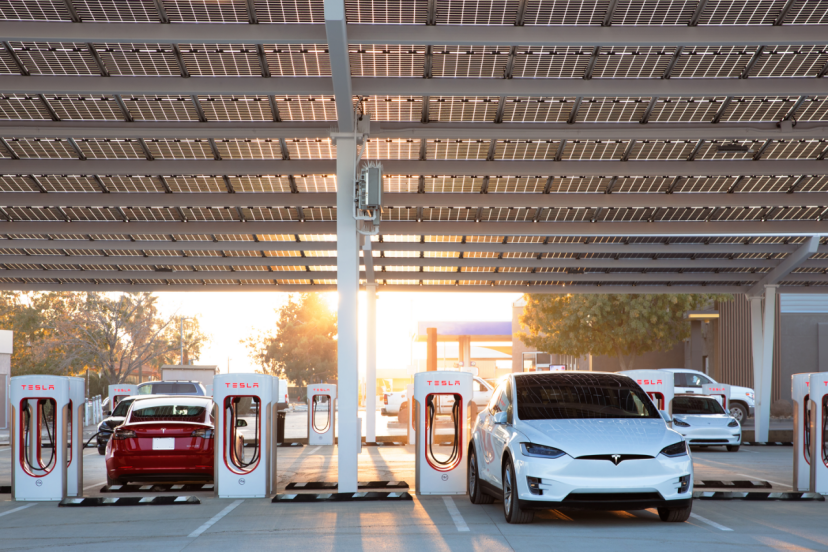
Image source: Tesla
In traditional strongholds such as Germany, France and Sweden, the declines were particularly steep. In France, November sales slumped 58% to 1,593; in Sweden they fell 59% to 1,466; and in Denmark they dropped 49% to 534.
By comparison, Europe's BEV market kept growing at double‑digit rates. In January–November 2025, EU BEV registrations reached 1.66 million, up 27.6%, lifting market share to 17%. Germany, the UK, France and Spain all recorded double‑digit NEV growth.
Chinese brands are gaining traction in Europe. BYD, SAIC's MG and Chery are competing not just on price, but with broader model coverage and powertrain choices that better match European consumers' needs.
North America, Tesla's home base, may lack direct Chinese competition — but it hasn't been a safe harbor. In 2025, Tesla's US sales were about 570,000, below market expectations.
The sales decline has dented results. In the first three quarters of 2025, Tesla's net profit attributable to shareholders was USD 2.954 billion, down 40.5% year on year.
Why did it happen?
In 2025, factors from product cycles to market conditions, from the pace of innovation to the founder himself — plus broader macro uncertainty — all weighed on Tesla's performance.
On product, long refresh cycles and a narrow lineup are key drags. Model 3 and Model Y remain the backbone, accounting for 96% of global sales. Model 3 has been in production since 2017 — eight years; Model Y debuted in 2020 — five years.
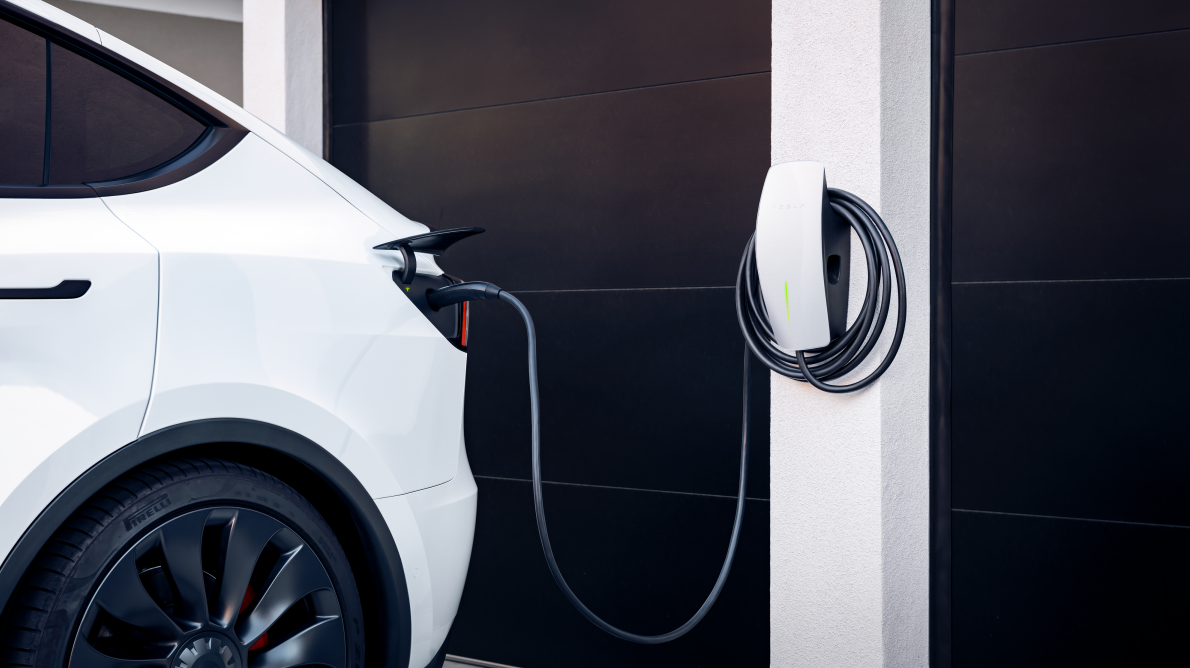
Image source: Tesla
While the Model 3/Y and Model S/X have received updates, most changes center on exterior and interior tweaks rather than fundamental technical overhauls.
That strategy had clear advantages during the industry's fast‑growth phase: scale was easy to amplify, supply chains ran efficiently, and brand recognition concentrated around a few nameplates. As the global NEV market matures, however, consumers are asking for more product differentiation, richer configurations and better fit for specific use cases — weakening the marginal pull of a single‑blockbuster model strategy.
Analysts and consumers alike argue the novelty is fading. A study by consulting firm Escalent backs that up: across five of Europe's largest car markets, 38% of respondents said Tesla's freshness had worn off, with the brand lagging rivals in design, quality and emotional appeal.
Cybertruck, the model on which hopes were pinned, has underperformed. Foreign media report 2025 deliveries of just 17,000, far short of Tesla's 250,000‑a‑year target.
The result: Tesla's status as a technology pace‑setter looks diluted. In 2025 the company kept iterating FSD (Full Self‑Driving) and began testing robotaxi services in Austin. Yet industry insiders say the advances aren't disruptive and have yet to roll out at scale in the US or globally.
For now, FSD's real‑world scenarios remain limited. By the third quarter of 2025, only 12% of Tesla customers had subscribed to FSD.
Chinese rivals, by contrast, offer advanced driver‑assistance as standard. XPENG and Li Auto, among others, show stronger localization in practical city NOA use cases. When innovation no longer creates stark differentiation, Tesla's product appeal naturally ebbs.
Zooming into the three core markets, shifting conditions have amplified Tesla's challenges. In the US, the federal government ended the USD 7,500 EV tax credit early in September 2025, undercutting sales.
Tesla tried to trade price for volume, but the slide persisted. In the fourth quarter of 2025, US sales fell 15.6%. CEO Elon Musk warned that policy changes could make the next few quarters difficult.
In China, the strain stems from intensifying competition. Product variety and price bands keep widening, and the mainstream is packed with domestic scale players. Their flexibility in cost control, smart‑feature packaging and channel penetration is turning competition from tech shoot‑outs into full‑system contests.
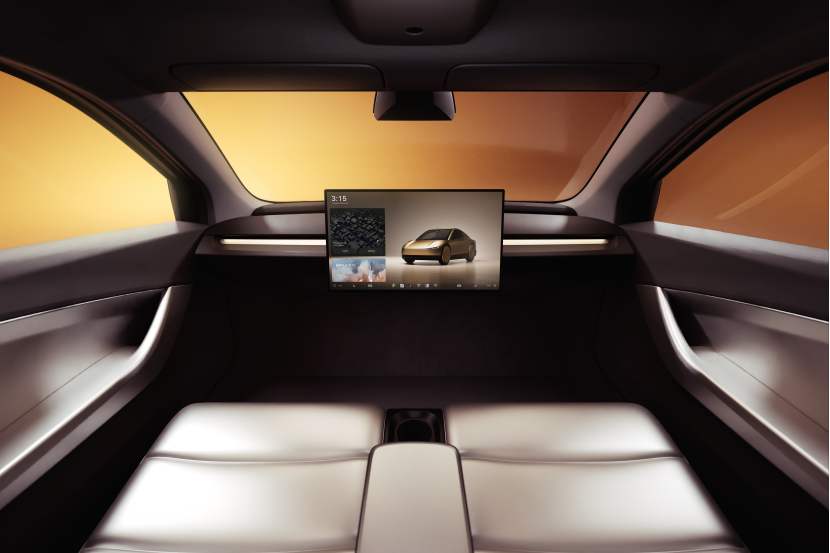
Image source: Tesla
In that context, Tesla's smart‑tech edge is fading. FSD's slow rollout in China is pushing potential buyers toward local smart EV brands.
Europe's weakness, meanwhile, reflects changing demand, a strong push by Chinese brands, and Musk's political forays. With the economy softening, some buyers are shifting to affordable EVs and hybrids. Chinese NEVs priced largely between EUR 20,000 and EUR 40,000 — backed by sharper value and fast‑growing sales networks — are quickly grabbing share and siphoning off potential Tesla customers.
In the first 11 months of the year, Chinese automakers' European sales jumped 95%, topping 700,000 for the first time, with market share rising to 5.8% from 3% a year earlier.
BYD's EU sales surged 117% to 158,000 in the period, lifting its share to 1.8% — ahead of Tesla over the same span. The BYD SEAL U and BYD Dolphin ranked among the top ten across several European segments. MG's European sales rose 26% to 272,000.
Industry insiders argue that stronger parts procurement to improve price competitiveness, coupled with refined overseas sales tactics, are key to BYD's rapid climb in Europe.
Beyond product, Musk's personal remarks and political involvement have hurt the brand. His attention has been dispersed — another factor that can't be ignored. In 2025, Musk focused on winning shareholder approval for a compensation package allegedly worth USD 1 trillion, building out xAI and participating in politics, reducing his attention to Tesla's auto business. He shifted focus back to Tesla only in the second half.
At the same time, changing global trade and fiscal policies are creating hard‑to‑measure effects on auto and energy supply chains, company cost structures and related services. In October, Tesla said it was facing uncertainty from shifts in trade, tariffs and fiscal policy.
Can "new models + new tech" reverse the slide?
To stimulate China sales, on January 6, 2026 Tesla introduced five‑year zero‑interest financing for buyers of the Model 3, Model Y and Model Y Long Range. Even so, bigger purchase incentives are mostly a short‑term lever.
Tesla clearly recognizes that. After two years of declines, its 2026 strategy now centers on new model launches and pushing new technologies toward commercialization to drive a turnaround.
The long‑awaited lower‑priced Model 3 and Model Y are expected to reach China and other core markets in 2026. Last year, Tesla rolled out two "simplified" versions in North America and parts of Europe. In North America, the Model Y started at USD 39,999 and the Model 3 at USD 36,990 — USD 5,000 to USD 5,500 below previous trims.

On December 30, 2025, Tesla's 9 millionth vehicle rolled off the line. Image source: Tesla
Analysts say that if the cut‑price Model 3 and Model Y are compelling enough, they should help lift domestic sales. Tesla's brand recognition among Chinese EV buyers remains strong; even as new players' volumes surge, Tesla's results could come in better than expected.
Beyond cars, Tesla's new "autonomy + AI" chapter is drawing attention. Musk pledged to operate robotaxi services in at least eight metro areas, including Phoenix and Las Vegas, by year‑end. The goal wasn't met in 2025, but the market still expects expansion in 2026.
Under the plan, the low‑cost, robotaxi‑dedicated Cybercab will enter mass production in April 2026 — marking a key step toward commercializing autonomy. Deutsche Bank projects that if Tesla reaches an early‑2026 operating target of 1,500 robotaxis, the fleet could exceed 2,500 by June.
Wedbush Securities argues that 2026 will be a milestone year for Tesla and Musk. As the autonomy and robotics chapters open, the company will accelerate robotaxi deployments across the US.
The analyst estimates Tesla could launch robotaxis in more than 30 US cities in 2026, with AI and autonomy alone delivering at least USD 1 trillion in revenue. In a bullish scenario, Tesla's market value could reach USD 3 trillion by end‑2026.
Overseas expansion of FSD is also in focus. As of December 27, 2025, supervised FSD had logged more than 7 billion miles (about 11.2 billion km).
Tesla says FSD V14 has reached a quasi‑Level 4 threshold. Software performance has improved in route selection and vision‑based navigation. With continuous training on global fleet data, FSD could achieve higher autonomy levels over the next few years.
Musk says Tesla will offer FSD in the UAE in January 2026 and expects overseas regulators to fully approve FSD "around February or March." Analysts told Gasgoo that entry into Europe would help Tesla's EU sales. In China, FSD is also expected to secure approval for full local training and deployment.
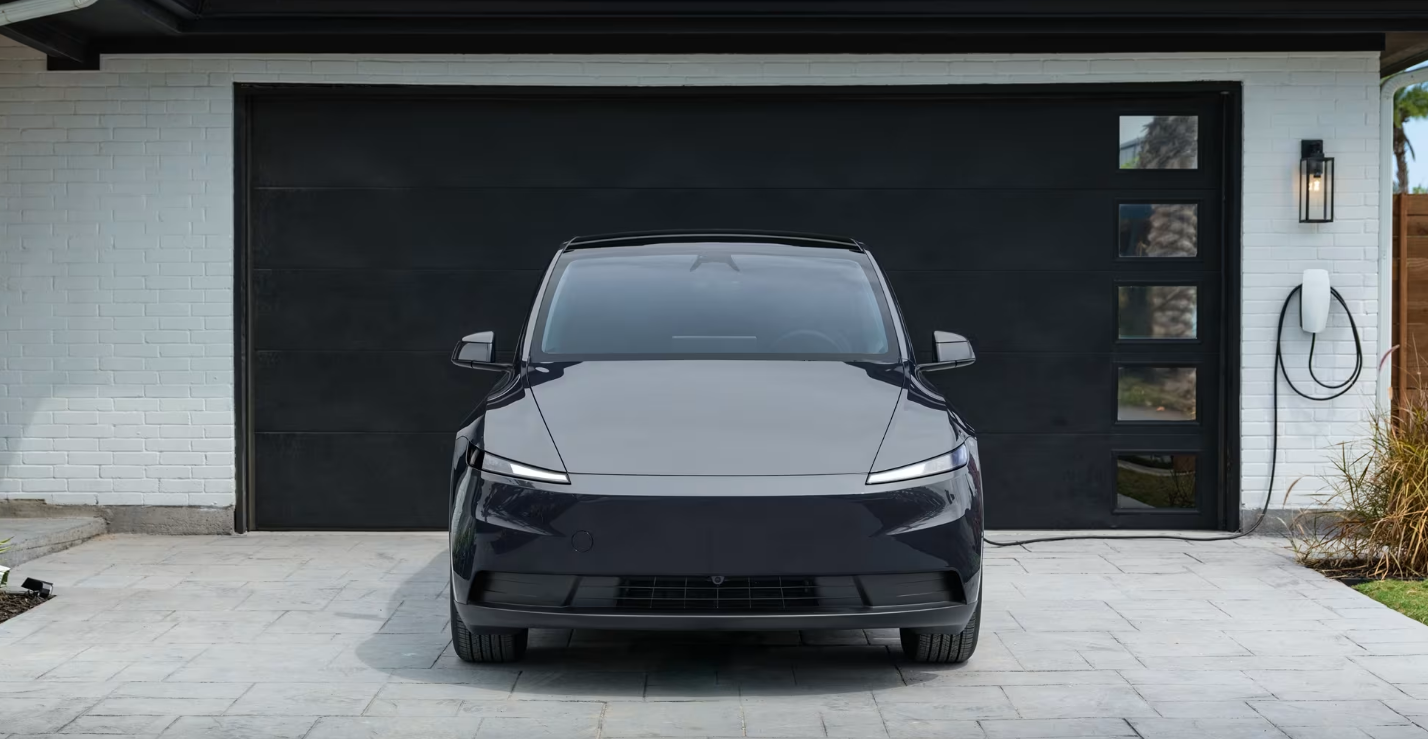
Image source: Tesla
CITIC Securities estimates that by 2030, FSD subscriptions and robotaxis could each contribute more than USD 10 billion in gross profit. Wedbush, for its part, sees FSD penetration rising above 50% over time — reshaping Tesla's financial model and margin profile.
The humanoid robot Optimus is viewed as another pillar of Tesla's long‑term value. In the first quarter of 2026, Tesla plans to complete design‑freeze for Optimus Gen3, move to mass production within the year, and target 50,000 units in 2026, with lines planned for 1 million units a year in capacity.
Musk has floated a price of about USD 20,000–30,000 for factory and household use, and says the product could eventually account for 80% of Tesla's value. Morgan Stanley estimates the humanoid robot market could reach USD 5 trillion by 2050, with the technology accelerating in the mid‑2030s.
Powering Tesla's physical‑AI applications is a next‑generation chip. Tesla plans to start producing the AI5 in 2026; Musk claims major improvements over the current AI4, potentially 10x the performance — even surpassing Nvidia's competing chips. If that's not bluster, AI5 would deliver stronger compute for robots, data centers and robotaxis.
Not all analysts are optimistic about 2026. Some warn that Tesla's expansion pace versus Waymo and others is unclear, which could add volatility to the stock.
Others note Musk's history of over‑promising timelines for products and services, and say robotaxi commercialization may follow the same pattern. Morgan Stanley's outlook is more cautious, arguing the on‑road timing for the Cybercab robotaxi remains uncertain.
On the traditional auto business, Wall Street has cut expectations sharply. Two years ago analysts projected Tesla would deliver more than 3 million vehicles in 2026; the average forecast now is around 1.8 million. The case for a higher valuation increasingly hinges on autonomy and physical AI, rather than conventional carmaking.
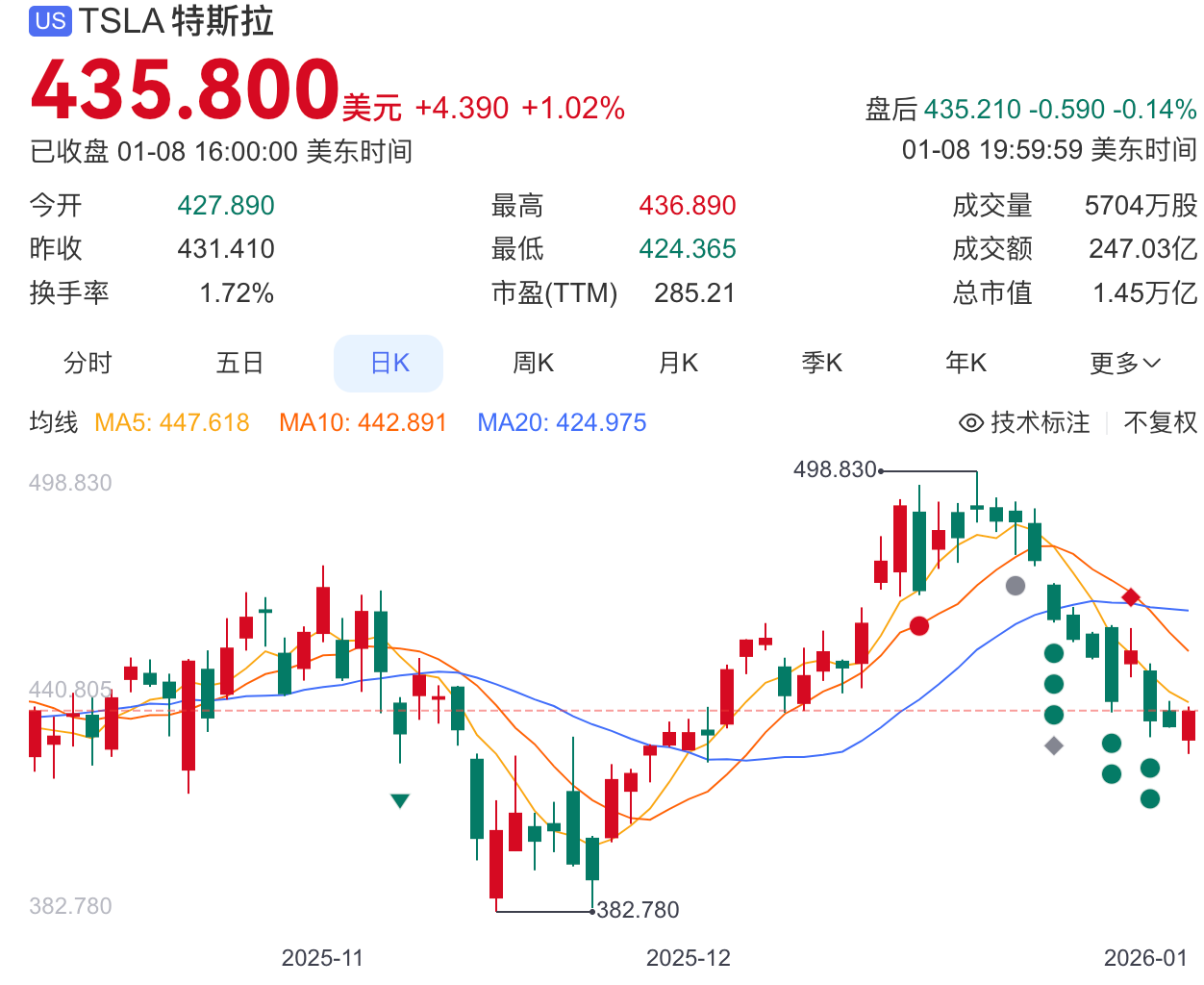
Image source: Baidu Gushitong
Stepping back, the question of whether Tesla can reverse its slide in 2026 needs a two‑track view. On auto sales, new models may help stop the bleeding and stabilize volumes — but a return to the explosive growth of the past looks unlikely. For the company overall, the key lies in FSD's generalization capabilities, robotaxis at scale, and Optimus's production pace meeting or approaching market expectations.
In other words, capital markets care about Tesla and Musk's ability to tell a story — and to deliver. If the new technologies make visible, credible progress in 2026, Tesla could keep "winning" in equities even if car sales only edge up. If commercialization lags, pressure from both sales and valuation could intensify.
Note: at the request of interviewees, we refer to them as "industry insiders" or "analysts."


