



Gasgoo Munich- On paper, the February 26 signing in Beijing between Mercedes-Benz China and Momenta looked like a routine upgrade. But beneath the surface lies a strategic overhaul for luxury intelligent driving. The stakes were raised even higher that same day when German Chancellor Friedrich Merz took a firsthand look at their jointly developed system. His strong endorsement instantly validated the partnership's significance.
Mercedes-Benz made an early bet on Momenta back in 2017, becoming the first global automaker to invest in the Chinese driving-tech firm. Nearly a decade of deep integration has since evolved the relationship far beyond simple capital backing.
This latest agreement is clearly more than just business as usual. The question is: what happens when Mercedes-Benz's century-old quality standards collide with Momenta's homegrown AI algorithms? The answer lies in the slew of new models hitting the road soon.
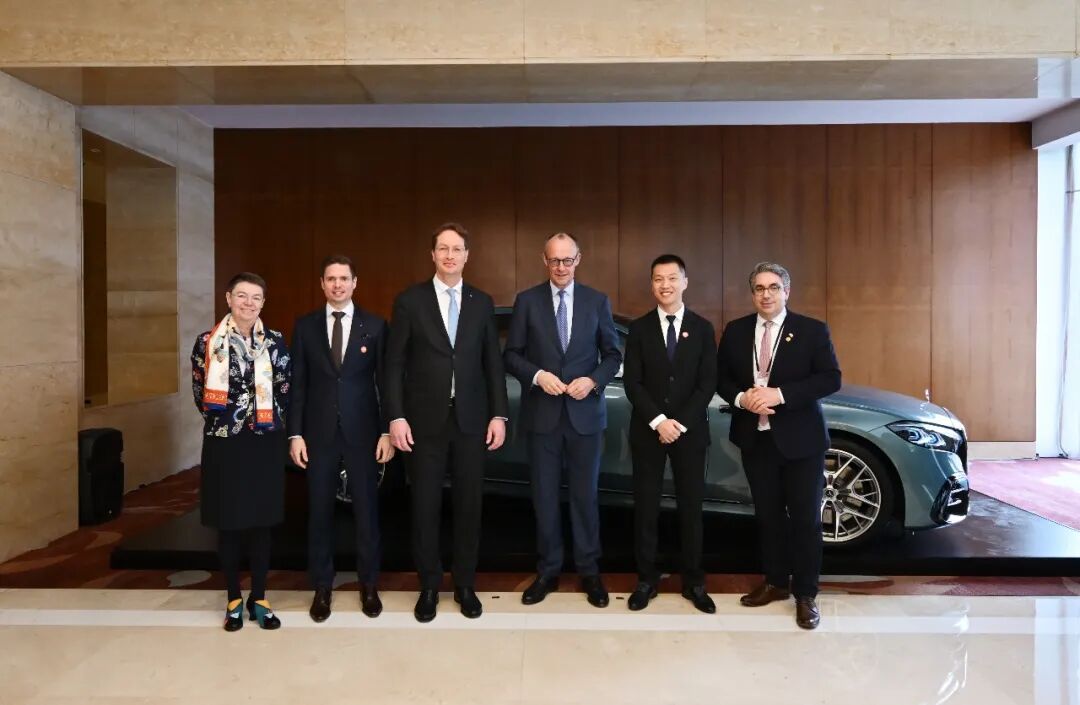
Image Source: Momenta
Strategic Upgrade
At the February 26 ceremony, Mercedes-Benz China and Momenta outlined the core of their upgraded partnership. They are expanding their scope beyond joint R&D on driver-assistance tech. The scope now includes full-stack technology iteration, localized scenario optimization, mass production acceleration, and the joint creation of a future mobility ecosystem.
Unlike short-term project deals, the upgraded memorandum of understanding signed here institutionalizes their mutual strategic trust. The goal is to build a stable, long-term community for technological innovation.
Under the roadmap, both parties will ramp up resources and deepen collaboration in core areas like driving algorithms, data security, and scenario adaptation. The aim is to translate technical breakthroughs into product competitiveness at a faster clip.
Leveraging their respective strengths, the two will explore deeper integration of intelligent driving with new energy vehicles. This supports Mercedes-Benz's electrification and smart transformation in China while scaling Momenta's technology across the luxury sector—a win-win for both.
The partnership got a direct endorsement—and a stress test—the same day. During a test ride in the new Mercedes-Benz S-Class, accompanied by Group Chairman Ola Källenius, Chancellor Merz experienced the jointly developed system firsthand. He focused on core functions like highway navigation and urban driving.
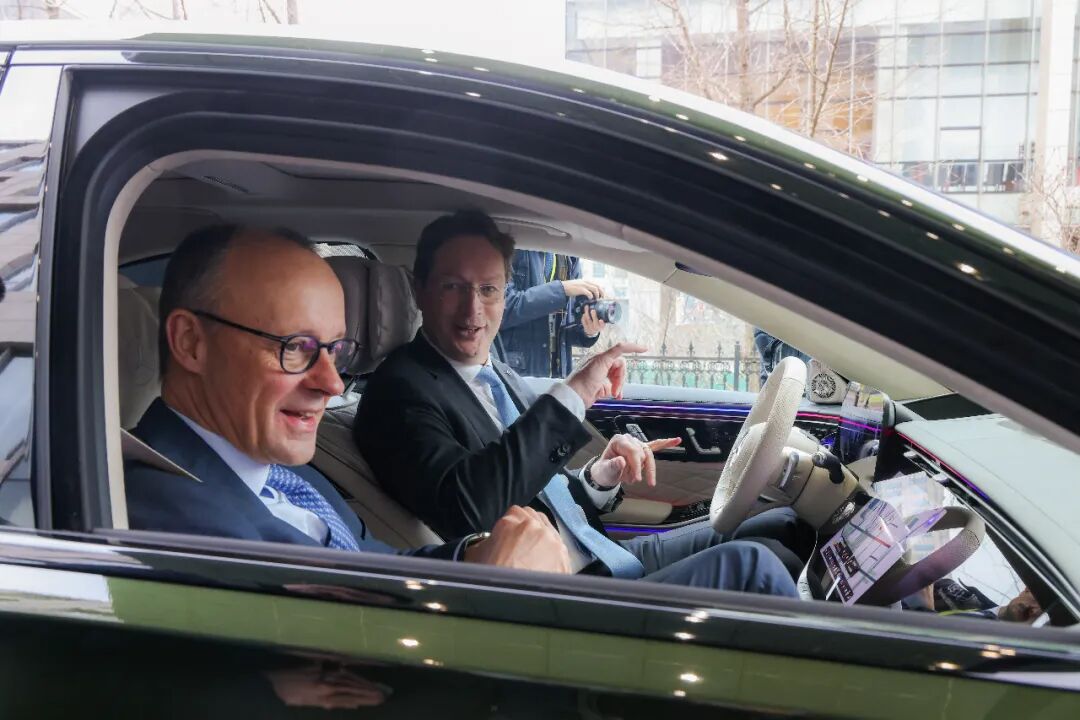
Image Source: Momenta
This high-profile test ride was more than a tech showcase; it served as a dual statement on industrial leadership and international cooperation. It confirmed that the jointly developed system meets the maturity and reliability standards of a luxury brand. It also highlighted the massive potential for cross-border collaboration between China and Germany in automotive technology, injecting new energy into bilateral industrial ties.
The deep ties between Mercedes-Benz and Momenta didn't happen overnight. They are built on a foundation of long-term capital linkage and strategic trust. In 2017, Mercedes-Benz broke the mold by becoming the first global automaker to invest in a Chinese autonomous driving startup, kicking off their partnership.
Over the years, Mercedes-Benz has strengthened those bonds through multiple funding rounds. The relationship has evolved from simple capital backing to a full-chain collaboration model—jointly defining products, co-developing technology, and pushing for mass production together.
Unlike the traditional vendor-buyer model, this long-term binding allows for a deep fusion of core strengths. Mercedes-Benz contributes global quality standards and automotive engineering expertise, while Momenta brings AI algorithm innovation and a wealth of local Chinese road data. This synergy has not only accelerated R&D but also laid the groundwork for this latest upgrade.
Smart Across Powertrains: 9 New Mercedes Models Coming Soon
The core of this partnership lies in fusing German rigor with Chinese AI innovation. On one side, the development team adheres to Mercedes-Benz's unified global safety standards. From system design and hardware selection to functional testing, every link follows strict safety protocols—ensuring the reliability and security that luxury buyers demand.
On the other, the system achieves deep localization by leveraging Momenta's strengths in AI algorithms, large-model technology, and accumulated data on Chinese driving conditions.
The team has optimized algorithms specifically for Chinese road conditions—mixed traffic in urban areas, complex intersections, dense highway flows, and diverse parking scenarios. This sharpens the system's ability to recognize and react to complex environments.
Seamlessly integrated into the Mercedes-Benz MB.OS electrical architecture, the system bridges intelligent driving, the smart cockpit, body control, and energy management. The result is a cohesive and convenient mobility experience.
Through joint development, the system now covers full scenarios: highway, urban, and parking. It achieves end-to-end intelligent navigation, autonomously handling ramp entry and exit, intersection crossing, pedestrian avoidance, and automated parking—significantly reducing the driver's workload.
Notably, the system introduces a "human-machine co-driving" concept. Unlike the mechanical intervention of traditional driver-assist systems, its lane-changing logic mirrors human habits. It ensures a smooth transition between assistance and manual control, balancing safety with ride comfort.
Moving forward, the system will continue evolving based on Momenta's R6 reinforcement learning model. By continuously learning from user driving habits and road data, it will refine its adaptability and deliver a more personalized, precise driving experience.
The ultimate value of innovation lies in scaling it up. The jointly developed system has already debuted on the all-electric CLA class, marking its entry into mass production.
By 2026, the system is slated for rollout across nine new Mercedes-Benz models. This lineup includes core products like the all-electric long-wheelbase GLC SUV and the new S-Class. Spanning luxury sedans, electric SUVs, and internal combustion engine models, the move ensures "smart driving parity" across both powertrains.
The speed of this rollout reflects the efficiency of the partnership and Mercedes-Benz's determination to accelerate its smart transformation. Broad deployment across multiple models won't just expose more users to advanced driver-assist tech—it will also accelerate the adoption of these systems and reshape future mobility.
This upgrade carries significant strategic weight. For Mercedes-Benz, deep collaboration with a local tech firm allows it to quickly boost the intelligent driving capabilities of its products. This helps meet Chinese demand for smart mobility, cements its position in the luxury market, and accelerates its electrification and smart transformation in China.
For the industry at large, this partnership offers a replicable model for collaboration between global luxury automakers and Chinese tech companies. It proves that combining "international quality with local innovation" creates complementary advantages and mutual gains—driving the rapid iteration and deployment of intelligent driving technology.


