



Gasgoo Munich- "The simplest approach is one platform for the world." As automakers push overseas, this is often the first development strategy that comes to mind: build a single platform, engineer to global standards, and leverage scale to cover more markets.
Lately, Chinese automakers have been doubling down on this logic. XPENG's G9L is being developed for 64 countries and regions, with testing and validation mapped to global standards. Chery, too, insists on anchoring to global markets from day one, factoring regional demands into the product definition phase. Yet legacy automakers are starting to rethink the global-car playbook.
Audi's CTO argues that "the traditional global car strategy is becoming obsolete." In his view, a single model can no longer satisfy consumers in China, Europe, and the US simultaneously. Hence, Audi partnered with SAIC to launch the AUDI brand, developing exclusive products for the Chinese market. Today, Volkswagen, Toyota, Honda, and other transnational automakers are largely following similar logic in China.
The global auto industry seems split down the middle. Chinese brands treat the global car as an efficiency tool; some legacy automakers see it as historical baggage. Why the divergence?
Global Cars: Diverging Paths
Global models have long been the standard development playbook for transnational automakers.
Selling one model across multiple countries, while sharing R&D platforms, powertrains, and core components, amortizes development costs and boosts production efficiency. For brands with broad lineups and mature overseas footprints, this model has underpinned decades of global expansion.
Chinese automakers are now championing the global car for similar efficiency gains. Designing and validating to global standards from the R&D stage cuts the redundant spending of late-stage adaptation—and opens doors to more markets.

Image credit: XPENG
XPENG’s definition of a global car now extends to R&D standards, validation systems, and production planning. The G9L targets 64 countries and regions, undergoes testing against major global safety protocols, and has completed road validation in 26 locations—logging over 6.7 million km. Built simultaneously in Guangzhou, China, and Graz, Austria, the G9L reflects a blend of global engineering and regional manufacturing.
Chery also factors overseas needs in early. Its Arrizo 7, billed as the "most beautiful global car," is engineered to global standards with both ICE and hybrid powertrains, slated for launch in Q4 2026.
XPENG and Chery are emblematic of China's global-car push. Chery Group Chairman Yin Tongyue has said exporters must weigh different market needs from the product-definition phase. Other Chinese brands with global ambitions are doing the same—Changan, for instance, plans to unveil a "global product matrix" at the 2026 Paris Motor Show.

Image credit: Chery
Ironically, the pioneers of the global car—legacy automakers—are having second thoughts. Audi, for one, is splitting its product strategy for Western markets and China. It hasn't just created the AUDI brand for China-exclusive models; it has set up a dedicated project center to interface directly with local demand.
Toyota’s 2026 annual report stresses regional decentralization. The company has carved its global business into eight zones, giving regional teams more room to make business decisions. Under this restructuring, local economic conditions, consumer
demand, climate, road conditions, and other lifestyle factors are now firmly embedded in product and market decisions.
This shift has a real-world backdrop, driven by three underlying factors. First, technology paths have diverged. Global cars worked when everyone built ICE vehicles; now China is racing toward electrification and software-defined vehicles, while the West leans on ICE and hybrids. With routes split, shared platforms break down.
Second, product-definition power has moved. Europe used to define products for the world; today, Chinese consumer demand is outpacing the West, leaving Europe and the US playing catch-up.
Third, the supply chain center of gravity has shifted. The core supply networks for batteries, smart-cabin chips, and electric drivetrains are in China. Building EVs means anchoring near Chinese suppliers.
Global Platforms, Local Markets
While the global-model strategy is being recalibrated, global platforms remain a critical foundation for overseas expansion.
It helps to separate two ideas: global platforms and global models. Platforms can be shared, and models can be spawned from the same architecture. A common chassis and E/E architecture can yield products with different powertrains, features, and tuning. But the end product must adapt to its market.
A unified platform lets automakers reuse proven tech, pool global R&D, and cut the cost of duplicate development across markets. The real variation happens during localization. Industrial bases, supplier capabilities, road conditions, and energy infrastructure differ by region, so automakers must align parts sourcing, validation, and production to local realities—even under a shared architecture.
In short, the global platform provides the common baseline; local supply chains help the product fit the market.
That division of labor raises the bar for automakers.
At a recent auto-export conference, Wen Hua, deputy general manager of Dongfeng Liuzhou Motor’s import-export arm, pointed to commercial vehicles. Chinese CVs keep shedding weight to cut fuel use and boost efficiency. Yet in parts of Southeast Asia, Africa, and South America, overloading and mining operations are routine—vehicles must bear heavier loads on rougher roads.
When domestic lightweight designs hit these markets, automakers must reassess the strength and durability of frames and suspensions—and suppliers must join the re-engineering and validation.

Image credit: Seres
Climate also reshapes component choices. Wen Hua noted that Dongfeng Liuzhou faced AC issues in Kuwait, where a proven domestic system drew customer complaints under extreme heat. In Thailand’s rainy season, truck AC units can even suck in water.
Such problems are hard to fix at the R&D level alone. Automakers must feed local conditions back to suppliers, pulling them into design, component selection, and validation. For companies already overseas, supplier responsiveness and engineering coordination dictate how fast products can be improved.
Powertrain choices further reflect the tug between global tech resources and local energy conditions. Charging infrastructure is thin in parts of Central Asia, Africa, and Latin America, yet natural gas is plentiful and refueling is mature. Dongfeng Liuzhou developed LNG models for these markets, achieving 17 kg of gas per 100 km. In Brazil, finding few high-voltage truck chargers, they built a range-extended version instead.
Right-hand-drive markets add another layer of complexity. Dongfeng Liuzhou re-engineered its RHD platform, developing products across four powertrains—ICE, natural gas, pure electric, and range-extended. For Southeast Asia, East Africa, and Australia, it trimmed curb weight, tuned for rough roads, and upgraded the driving experience.

Image credit: Dongfeng Liuzhou Chenglong
Such work can still build on existing tech. Foundational R&D, powertrain tech, and certain core components can come from the group or global suppliers; the automaker then mixes and matches to suit local energy conditions. This leverages prior R&D without forcing a clean-sheet redesign for every market.
As automakers tweak products, suppliers must keep pace. Linglong Tire President Zhou Lingkun notes that tires are regionally differentiated. Its Thai factory, for instance, tweaks rubber compounds for Southeast Asia’s climate; its Serbian plant, targeting European EVs, reuses the group’s low-rolling-resistance tech and runs custom tests with local automakers.
"Product adaptation is a front-end service." Relying on price-to-performance ratios or China’s manufacturing edge won’t sustain growth forever. Companies must dig into market-side demand and enter a phase of deep cultivation.
Compliance is another regional fault line. The EU is rolling out the Digital Product Passport (DPP) and the EUDR zero-deforestation regulation—closely tied to tires—which requires tracing every tire back to its rubber plot. Linglong’s European certification experience can, in turn, help Chinese automakers, letting the whole supply chain face mature markets on aligned standards.
From whole vehicles to parts, from climate to energy, from roads to regulations, a platform that supports the world needs multi-dimensional tweaking. What the platform shares is architecture and base modules; what it doesn’t is the final product definition.
Global Cars and Regional Exclusives Side by Side
When regional variance becomes the norm, automakers must answer: which products go global, and which markets need bespoke development? It’s not either-or. Sun Xiaohong’s framework—"full-chain viability, single-point breakthrough, cautious rollout"—offers a lens for sizing up regional investment.
Mature markets, with their robust supply chains, strict regulations, and savvy consumers, warrant deep local R&D. Developing markets, with limited scale, call for a single-point breakthrough to validate the product before expanding. High-potential but uncertain markets demand cautious observation. Different stages require different playbooks.
That means automakers need a layered product portfolio.
The first layer: global models. Built on unified platforms and core tech, they receive the necessary feature, regulatory, and performance tweaks for each market. XPENG’s G9L—engineered to global standards and validated across multiple markets—fits this mold.
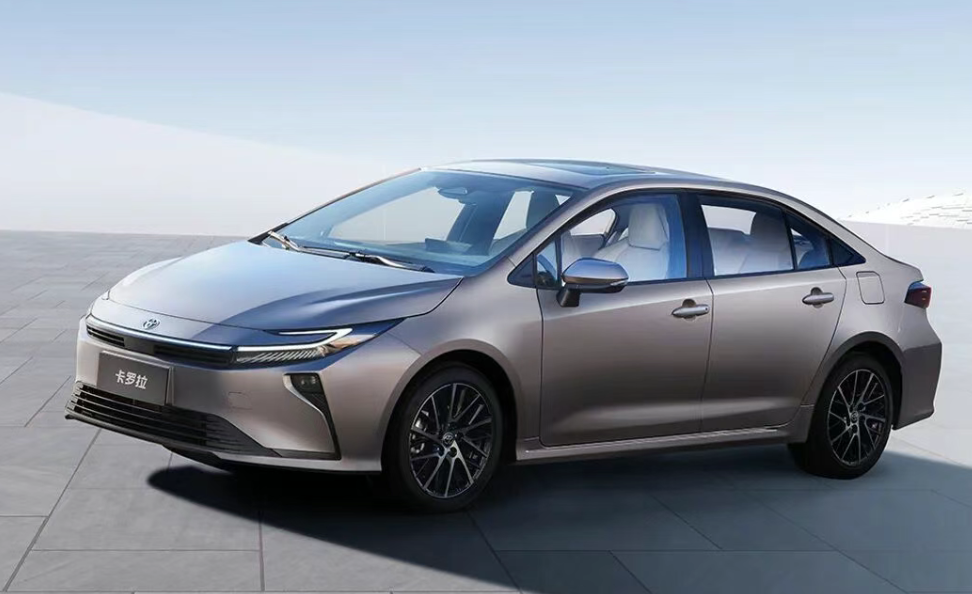
Image credit: FAW Toyota
The second layer: regional models built for specific markets. Australia is a case in point. Its pickup market is mature, and buyers demand strong towing, payload, and off-road capability.
Before bringing the BYD SHARK to Australia, the company ran extensive local tests, with HQ engineers joining to evaluate suspension and vehicle dynamics. Post-launch, BYD kept refining the product based on user feedback, rolling out new variants—and feeding the chassis-tuning and test data from its Australian team back into models for other markets.
The SHARK 6’s Australian success is now propelling it into new territories. The SHARK has already reached the UK, with broader European entries to follow. Because overseas demand far exceeded expectations, BYD even plans to bring the model back to China. A vehicle originally developed abroad returning to its home market is a rare twist in the Chinese auto-export story.
The third layer: products engineered and built in China for multiple overseas markets. Nissan’s Fengtan Frontier Pro, for instance, was designed, developed, and built by the Zhengzhou Nissan team. After more than a year of market-specific R&D and validation, it entered the export phase. In 2026, the first 900 units shipped from Shanghai to Latin America, with Nissan later announcing shipments to Southeast Asia and the Gulf states.
The takeaway: China’s auto supply chain has amassed advantages in electrification, intelligence, and development speed—and legacy automakers are now weaving Chinese R&D and manufacturing into their global product systems.
All three paths can coexist. And as regional markets scale, proven products and tech solutions may spill into other regions, circling back to shape the automaker’s global product plan.
Still, entering a market is just the start of the business.
Overseas service must first clear two hurdles: having someone to fix the vehicle and having the parts to do it. For commercial vehicles, downtime directly eats into a customer's transport revenue; repair turnaround and parts availability dictate whether customers buy again. Without adequate service coverage, early sales rarely harden into stable market share.

Image credit: Doubao
Sun Xiaohong notes that Chinese brands still lag international peers in overseas service resources. The contrast is stark: Chinese brands operate roughly 30 overseas parts warehouses, versus about 600 for legacy brands. That gap directly affects parts allocation, repair speed, and the customer experience.
Service deficits erode word-of-mouth and repeat purchases. The collapse of Chinese motorcycles in Vietnam years ago left a deep mark on export veterans. Dongfeng Liuzhou is prioritizing after-sales and service precisely to avoid repeating that history with its vehicles.
New-energy vehicles add another layer of complexity. Overseas technicians, mostly trained on ICE vehicles, have limited experience diagnosing faults in motors, inverters, and smart systems. Some complex issues require intervention from domestic tech teams—yet import rules and logistics can get in the way. Companies must simultaneously build out technical documentation, remote diagnostics, parts supply, and training networks.
Dongfeng Liuzhou is closing that gap. Over three years, it has shrunk its service radius from 160 km to 102 km, targeting 65 km next. It also partners with local vocational schools to train technicians, ensuring they can read Chinese technical manuals and handle common faults. Wen Hua says these programs have trained over 800 people to date.
Such investments rarely show up at launch, yet they determine whether a product can sustain operations post-entry. Parts warehousing, service outlets, tech support, and local talent all require long-term spending—and must scale with overseas sales and market footprint.
Global-car development ultimately collides with local realities. Platforms can be shared; products must be adapted. Regional exclusives can round out the global lineup—provided after-sales and supply chains keep pace with the vehicles entering the market.
For Chinese automakers, overseas competition is shifting from single products to portfolios and operating systems. A platform can open many markets, but staying in them demands a product, supply-chain, and service ecosystem that keeps responding to local demand.


