



On February 3, AITO released the first official images of its new M6 model. A day earlier, Yu Chengdong, executive director of Huawei and chairman of its Consumer BG, teased the launch on social media, calling the M6 a "new ace" and declaring, "The 56789 lineup is complete—see you in spring!" The announcement of a spring market debut has sparked widespread industry attention.
The debut of the AITO M6 carries significant weight, marking the completion of the M-series lineup from M5 to M9 and finally filling the gap in the "6" series.
As a strategic model, it slices directly into the fiercely competitive mid-to-large SUV market priced between 250,000 and 300,000 yuan. It bridges the price gap between the M5 and M7, serving as a vanguard product for the brand's expansion into the mainstream family market and injecting fresh momentum into its new journey.
AITO M6: What are the highlights?
The M6's most striking breakthrough is its complete departure from the brand's previous steady, business-oriented style. Centered on "Blade Aesthetics," the design champions a sharp, sporty look. Positioned as a dynamic mid-to-large SUV for the young, it targets the aesthetics of the 25-to-35 age demographic, breaking the brand's earlier label of maturity.
The vehicle adopts a low, sleek stance with a lowered center of gravity. This sheds the stiffness of traditional SUVs while retaining the family's premium texture, striking a balance between sportiness and practicality to avoid falling into a niche trap.
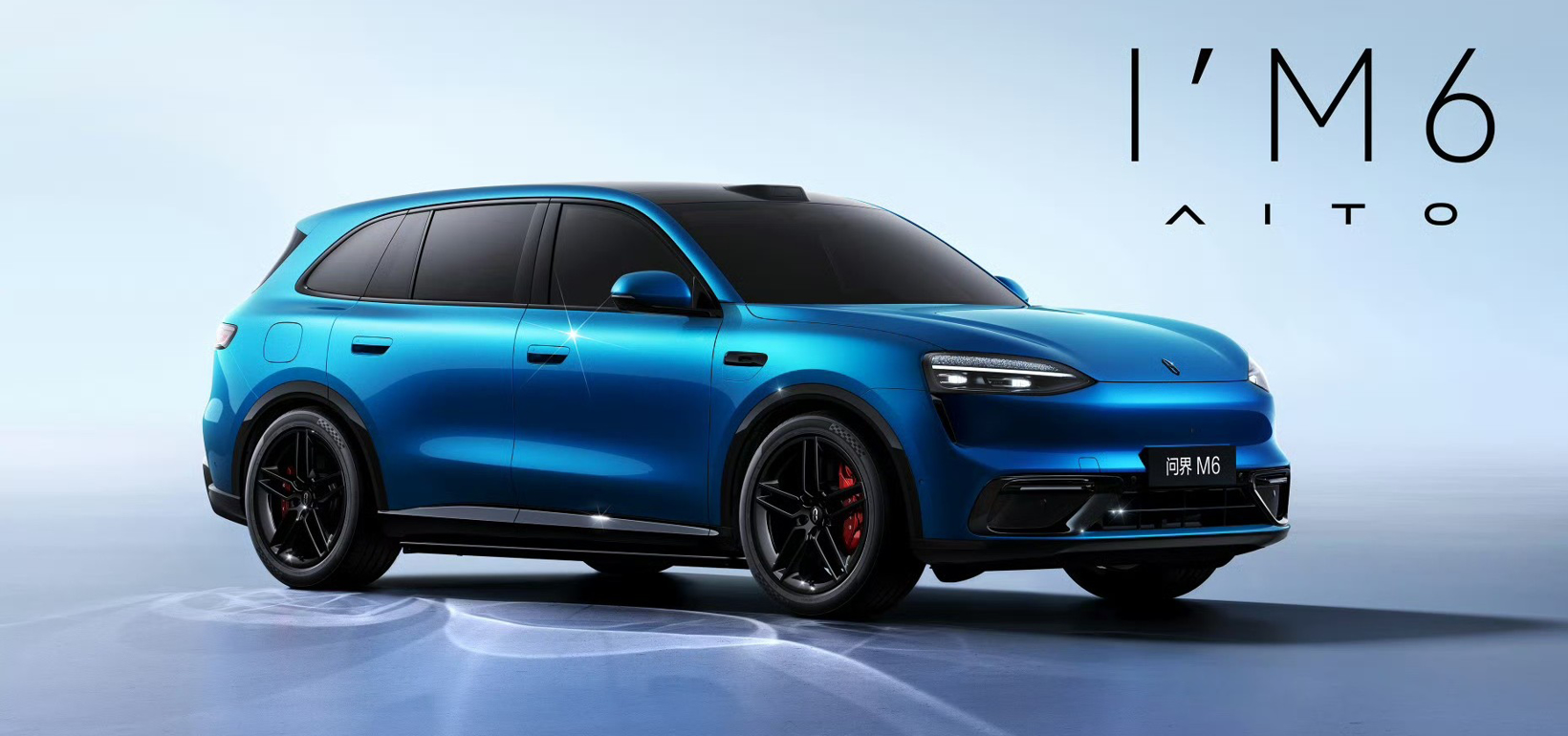
Image Source: AITO
This design aligns perfectly with Yu's positioning of the car as a "new ace." It is the first model in the family developed entirely around this "cutting-edge" concept, underscoring the brand's determination to expand its reach among younger consumers.
The front fascia is the core expression of this cutting-edge character. It features split-headlight design, abandoning the traditional continuous light bar. The upper, slim LED daytime running lights are sharp, while the compact high-and-low beam clusters below are paired with black housings for strong visual impact—creating a defining signature for the front end.
The closed front face aligns with new-energy trends, eschewing excessive chrome trim. Instead, it uses a three-segment lower air intake and a black sport front lip to reinforce the athletic character.
Near the front grille, a small blue light for assisted driving integrates Huawei's advanced autonomous driving technology into the exterior, seamlessly blending tech with aesthetics and adding a layer of hardcore capability.
The side profile balances sport and utility. A fastback design allows the roof to taper naturally, combined with full surfaces and sharp waistlines. Even when stationary, the car conveys a sense of pent-up power, breaking the dullness typical of traditional mid-size SUVs.
Semi-hidden door handles maintain a sleek look while improving aerodynamics and efficiency. Petal-style wheels paired with red calipers highlight the sporty DNA, with select versions offering multiple wheel options to satisfy the personalized demands of younger users.
Based on the official images, the vehicle is estimated to measure between 4,850 and 4,900 mm in length with a wheelbase of around 2,900 mm. This ensures a sporty, fastback silhouette while still providing ample interior space to meet the travel needs of young families.
The rear echoes the front, continuing the sharp sporty style while maintaining refinement. The continuous taillight corresponds to the split front headlights, while the internal glowing AITO logo offers high recognition at night. The sharp styling fits the "Blade Aesthetics" theme.
Below, a black sport surround mirrors the front lip, and hidden exhausts keep the rear clean and refined. It reinforces the sporty vibe while embodying a design philosophy of "minimalist yet sophisticated."
The official images reveal youthful paint options like a high-gloss metallic blue. The colors are rich and textured, catering to young tastes, with more color choices expected in the future.
The roof-mounted LiDAR is positioned logically, preserving the exterior's harmony while visibly demonstrating the strength of Huawei's advanced intelligent driving system, confirming the vehicle's commitment to smart configuration.
Another Masterpiece for AITO
The arrival of the AITO M6 means far more than simply adding another product. It is a crucial link in the formation of AITO's systematic competitiveness, carrying multiple strategic missions to bridge existing models and expand the brand's territory.
The M6 thoroughly resolves the discontinuity in the AITO product sequence. From the M5 to the M9, the closure of the "56789" numerical sequence builds a complete product wall ranging from compact SUVs to full-size flagships.
Crucially, the M6 stakes a claim in the 250,000 to 300,000 yuan price bracket. This allows AITO's price coverage to extend seamlessly from 229,800 yuan all the way to 589,800 yuan, leaving no gaps.
This means that regardless of whether a consumer's budget is 250,000, 350,000, or 500,000 yuan, they can find a corresponding model within the AITO family.
This matrix layout generates powerful scenario coverage and user traffic attraction. With its sporty design and youthful positioning, the M6 actively targets "cutting-edge" families or individuals aged 25 to 35—demographics that might find the M7 too "family-oriented" or the M9 out of budget.
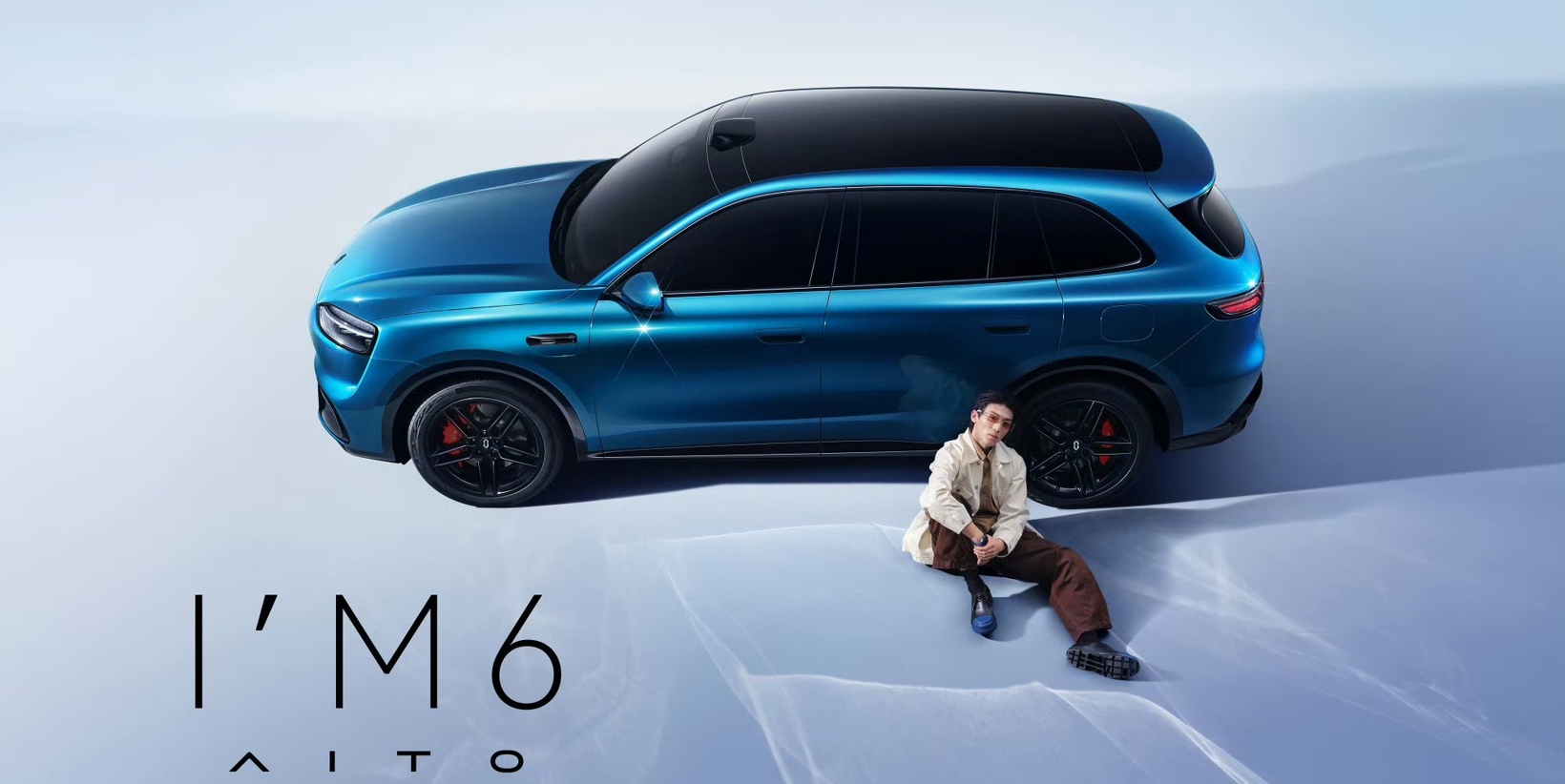
Image Source: AITO
As these users age, their family structures change, or they upgrade their consumption, they are likely to transition naturally within the AITO brand from the M6 to the M7, M8, or even the M9.
The M6 thus becomes a heavyweight "entry-level" product for AITO users. Together with the M7, it forms a "Double Star" combination covering the 250,000 to 350,000 yuan market, jointly consolidating the brand's core foundation.
However, the M6 is entering a battlefield. The mid-size SUV market in the 250,000 to 300,000 yuan range is crowded with top-tier contenders like the Tesla Model Y and Li Auto L6. It is a front line for sales, reputation, and technology. The M6's entry with a brand-new design at this moment is a head-to-head clash.
Its competitive strategy is clear and differentiated: the M6 breaks through with "Huawei intelligent technology + radical sport design." It extends the core advantages of Huawei's advanced intelligent driving and HarmonyOS cockpit while distinguishing itself from competitors' minimalist, family-oriented positioning with a sporty exterior, creating a unique label to quickly attract consumer attention.
As a key new product for HarmonyOS Mobility in 2026, the M6 is expected to be a "sales pillar." Its performance will directly impact the achievement of the second million-vehicle milestone for HarmonyOS Mobility and AITO's annual sales target of 500,000 vehicles. With Huawei's technology, precise positioning, and pricing advantages, it has the potential to become a bestseller.
In terms of synergy, the M6 and M7 form a "one-two punch." The M6 targets the 250,000 to 300,000 yuan sport market, while the M7 covers the mid-to-high-end family market above 299,800 yuan. Their tight connection and complementary positioning leverage the positive reputation of the family lineup to drive traffic and boost overall brand competitiveness.
Conclusion
The release of the AITO M6 marks a pivotal turning point for the brand, shifting from single-product breakthroughs to matrix synergy, and from serving specific markets to achieving comprehensive coverage.
It is not merely about filling a numerical void with a new car, but about extending a clear invitation to a vast, young consumer group through a completely new design language.
With the "56789" straight now assembled, AITO has positioned itself for a full-scale offensive. The M6—the sharpest, most battle-ready "new ace" closest to the mainstream front lines—will face its first practical test in the spring of 2026. Its success or failure may well determine the height and breadth of AITO's new journey.


