



Gasgoo Munich- The "Golden September, Silver October" mantra has echoed through the auto industry for years. In seasons past, this stretch reliably brought a surge in showroom traffic and closed deals. Not this September. The market never warmed up.
Data from the China Passenger Car Association (CPCA) shows September passenger-vehicle retail sales hit 1.62 million units — down 28% from a year earlier and up a mere 5% from August. For the first nine months, cumulative retail sales stood at 13.33 million units, a 21.7% annual decline. The contraction is the steepest of any month so far this year.

Image Source: CPCA
The headline volume is grim, but the structural shift is swift. On one side, internal-combustion engine (ICE) retail sales nearly halved from a year ago. On the other, new-energy vehicle (NEV) retail penetration surged to a record 67%, while exports more than doubled. The forces reshaping the market are far more complex than a single word like "sluggish" can capture.
Why did the peak season fall flat? Among domestic and joint-venture brands, who is gaining ground and who is losing it? Where does the power balance between NEVs and ICE vehicles stand? And can the market find its footing in October?
0omestic Brands Near 70% Market Share as Joint Ventures Hunt for a Turnaround
Start with the domestic brands. CPCA data shows September retail sales for independent brands reached 1.13 million units — down 25% year on year but up 5% from August. Their domestic retail share hit 69.8% for the month, a 2.8-percentage-point annual gain that puts them within striking distance of 70%.

Rising share alongside falling sales is no paradox. The overall pie has shrunk; domestic brands simply claimed a larger slice of it.
Yet domestic players are hardly resting easy. The CPCA attributes September's unusually sharp retail drop to a pileup of factors. The Mid-Autumn Festival landed early in late September, dragging down sales for that week. Meanwhile, last year's last-minute buying rush — sparked by subsidy/0subsidy expirations in some provinces — inflated the baseline. Persistently high oil prices continue to dampen buying intent, and AI-driven spikes in memory and chip prices, coupled with supply tightness, have slowed the rollout of new NEV models. Amid broader market chills, domestic brands aren't immune.
Look at the retail mix, though, and domestic brands' roots run deep. Their NEV retail penetration hit 84.5% in September, accounting for a 64.5% share of NEV retail. An early pivot to electrification and broad product lines have locked in their advantage as consumer preferences shift. Overseas markets are delivering growth, too. September exports for domestic brands reached 812,000 units — a 75% annual jump — with some automakers now shipping more than half their output abroad.
For joint ventures, the squeeze is even tighter. Mainstream JV brands recorded 310,000 retail sales in September — a 36% annual plunge and a 2% monthly uptick. German brands saw their share slip to 12.2%, down 2 percentage points, while Japanese names fell to 10.7%, a 0.9-point drop. American brands, holding a 6.3% share, eked out a 0.5-point annual gain — the only JV camp to buck the downward trend.
An eroding base is the core problem. Joint ventures built their empires on ICE vehicles, and that market imploded in September, with mainstream JV ICE retail sales cratering 42%. Decades of hard-won reputation for engines and transmissions are rapidly losing their value at the pump.
Even so, joint ventures aren't in full retreat. CPCA data shows mainstream JV NEV retail sales actually climbed 36% in September, even as domestic NEV retail slipped 19%. JV wholesale NEV penetration rose to 16.3%, with retail penetration at 15.9%. Their NEV retail share reached 4.8%, a 1.6-point annual improvement.
The absolute volumes remain small, but the trajectory has shifted. Volkswagen, Toyota, and General Motors are now seriously betting resources on electrification, and lower-volume JV automakers are gradually regaining their footing.
Luxury vehicles haven't been spared either. September retail sales for the segment totaled 170,000 units — down 29% annually but up 12% from August, the strongest monthly rebound among the three camps. Retail share held at 11%, slipping just 0.2 percentage points year on year.
As sticker prices return to more rational bands, the air has come out of luxury-car premiums. More striking is the pace of electrification: NEV wholesale penetration for luxury vehicles hit 55.4%, with retail penetration at 44.9%. More than half of luxury wholesale volume is now generated by new-energy models.
Production-side contrasts tell a similar story. Domestic brands saw output dip just 1% year on year in September while climbing 9% from August, keeping capacity largely stable. Joint-venture output plunged 29% annually but rebounded 20% month on month. Luxury production fell 24% year on year, with a modest 5% monthly gain.
In the wholesale rankings, Leapmotor, Arcfox, GAC Aion, and BAIC Motor all posted year-on-year growth exceeding 20% in September. Twenty-two NEV makers exceeded 10,000 wholesale units for the month, collectively accounting for 94.4% of total NEV volume. The front-runners are pulling away, leaving ever-thinner margins for the mid- and long-tail players.
Domestic brands are defending their crown, joint ventures are fighting for survival, and luxury names are pivoting. September's battle of the camps is far less one-sided than the market-share figures suggest.
NEV Penetration Hits 67% as ICE Sales Nearly Halve
The camps may still trade blows, but the shifting balance between ICE and electric power is growing unmistakable.
CPCA data shows September NEV retail sales reached 1.08 million units — down 16.7% year on year but up 7.8% from August. Wholesale volumes hit 1.67 million units, climbing 11.3% annually and 10% monthly. While the retail side is still adjusting to high bases and subsidy distortions, wholesale has already returned to double-digit growth.

Image Source: CPCA
Penetration tells the real story. September's NEV retail penetration hit 67% — up 9.1 percentage points year on year and 1.7 points from August. Wholesale penetration reached 65.4%, a 12-point annual leap. Both are all-time highs. Put simply, more than two out of every three new cars sold are now new-energy vehicles.
The ICE landscape tells a different tale. September ICE retail sales plunged 43% year on year, with pure ICE models falling 49% — a near-halving. Regular ICE passenger-vehicle retail limped to 530,000 units, down 43% annually and 0.3% monthly. Across camps, domestic ICE dropped 47%, joint ventures 42%, and luxury 41%. When pump prices are this high, camp loyalties dissolve — every ICE segment is taking a hit.
High fuel prices are the most immediate culprit. CPCA data shows gasoline prices have climbed a cumulative 2,375 yuan per ton since late September, keeping running costs elevated and steadily suffocating demand for gas cars. Naturally, this pullback is also compounded by subsidy tweaks and tough year-ago comparisons. For many consumers, switching to an electric vehicle is now the default logic. The "ICE-to-EV substitution" has evolved from a trend into the new normal.
Inside the NEV camp, divergence is just as stark. September's wholesale mix shows battery electric vehicles (BEVs) at 1.13 million units — up 18.3% and claiming a 67.6% share. Narrow-definition plug-in hybrids (PHEVs) came in at 423,000 units, slipping 0.1% to hold 25.4%. Extended-range electric vehicles (EREVs) totaled 117,000 units, down 4% for a 7% slice. BEVs command the field, PHEVs are losing momentum, and EREVs are fading. The pecking order among powertrains is being rewritten.
Across price bands, high-end and low-end performance diverged sharply. In the premium tier, September B-segment EV wholesale volumes reached 329,000 units — a 21% annual gain and a 29% share of the BEV market, making it the most stable BEV segment.
At the entry level, A00-segment BEV wholesale volumes totaled just 78,000 units — a 51% collapse that slashed its share to 7%, down a steep 10 percentage points from a year ago. Subsidy shifts have hit entry-level models almost instantly.
The mid-range segments also had their bright spots: A0-class wholesale sales reached 396,000 units, up 10% year on year and accounting for 35% of the pure EV market. The A-class segment sold 266,000 units, with a 24% share, down slightly by 2 percentage points year on year. New EV makers captured a 23.6% retail share, up 3.4 percentage points from a year earlier, with pure EVs making up 75% of their sales. Models priced between 100,000 and 150,000 yuan saw particularly strong growth.
Export figures outshine domestic retail. September NEV exports surged to 558,000 units — a 163.5% annual leap — making up 60.8% of all passenger-vehicle exports, a 21-point jump from last year. For the first nine months, NEV exports reached 3.89 million units, up 138.8%. BYD alone shipped out roughly 176,000 NEVs for the month, with Chery and Geely close behind.
The model rankings speak volumes. Twenty-three models topped 20,000 wholesale units in September. The BYD SONG led with 69,266 units, followed by the Tesla Model Y at 62,948, the BYD YUAN UP at 62,711, and the Geely XINGYUAN at 60,871. The top four are entirely NEVs; traditional ICE models have been pushed into the middle of the pack.
Zoom out globally, and China's dominance is clear. From January through August, Chinese NEV passenger vehicles claimed a 62% global share, hitting 65.3% in August alone. In the world's PHEV market, Chinese brands hold a 71% share. Overseas, domestic NEVs captured a 29% market share in August — a 14-percentage-point annual surge.
Electrification is no longer just a Chinese story, though global rhythms vary wildly. CPCA data compiled from global industry associations shows world NEV passenger-vehicle sales at 15.7 million units for the comparable period — up 15%, with global penetration at 24.5%. Germany sits at 33.4% and the UK at 36%, while the US lags at just 7% and Japan at 4%. The uneven progress leaves ample room for Chinese brands to expand. ICE retreat and NEV expansion — the pace of this swap is still accelerating.
Can the Market Rebound in October?
September's report card is in. What about October?
Start with the calendar. CPCA analysis notes October has 18 working days — on par with last year. With the Mid-Autumn Festival falling in late September, October enjoys a longer effective selling window, and showroom traffic is expected to keep recovering. The market is hoping "Silver October" can settle the IOUs left by a lackluster "Golden September."
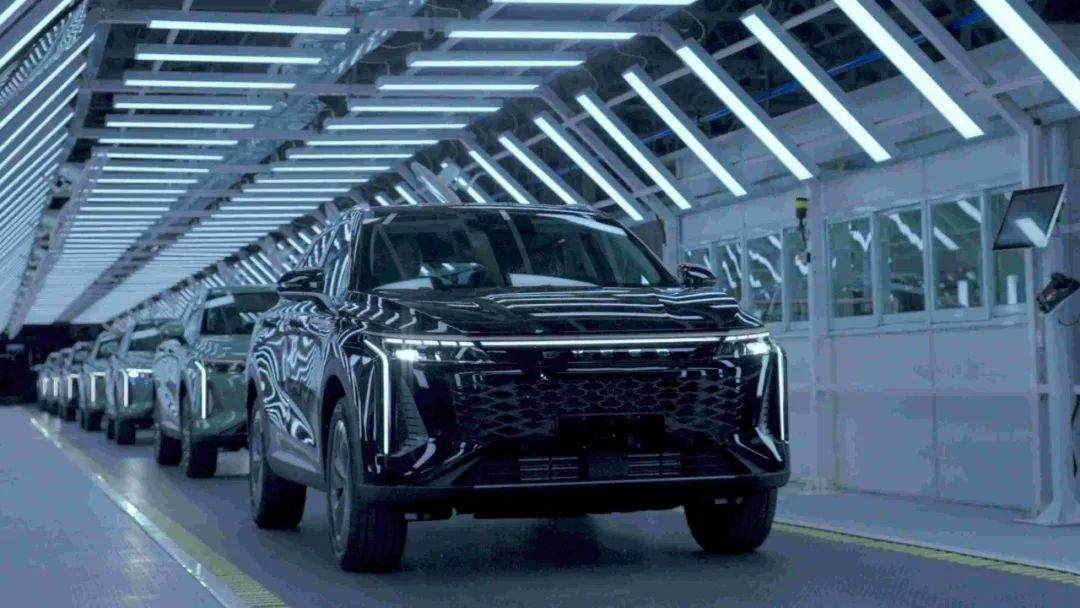
Image Source: Chery
The tailwinds are real. A dense lineup of National Day auto shows, rolling local subsidies, and sweeping peak-season promotions from automakers are providing near-term floor support. On the policy front, this year's trade-in subsidies continue to drive momentum. Subsidy volumes are expected to follow a "low-to-high" trajectory — a stark contrast to last October's phase-out — which should help stabilize the market.
Yet the headwinds demand attention. The macro backdrop is defined by a fragile economic recovery and stimulus policies focused on replacing existing stock, leaving the market in a zero-sum phase. Weak consumer confidence and price-war fatigue are fueling a wait-and-see mood. First-time buyer growth is temporarily stalled, making replacement demand the critical prop for overall growth.
Consumers are also crunching the numbers harder than ever. Purchase decisions have evolved beyond the sticker price into a holistic calculus of total ownership costs, residual values, and smart-feature experiences.
The high-oil-price variable looms large. The CPCA warns that if global crude stays elevated, ICE demand will remain sluggish, the ICE-to-EV swap will accelerate, and NEV penetration will likely hold above the 65% mark.
As for the fourth-quarter cadence, CPCA Secretary-General Cui Dongshu notes that a true recovery relative to last year remains difficult. September and October face tough bases. October and November should bring some improvement, with the pace of contraction narrowing noticeably. By December, the annual decline could shrink to within 10%, edging toward breakeven and laying a stronger foundation for next year. In his view, 2024 is a transitional bridge year.
Structurally, a few threads stand out. The electrification of A-segment cars is unmistakable, with better fast-charging tech pulling up A-segment EV sales. Replacement demand is crowding out first-time buyers, fueling robust appetite for B-segment and larger premium models. Meanwhile, A- and A00-segment economy EVs continue to shrink under a tangle of pressures.
Aging demographics are accelerating, and some automakers are starting to roll out senior-friendly products and mobility services. A0-segment EVs could capture growth here.
The CPCA also hopes future policies will keep backing economy EVs, encouraging smaller footprints and directing more subsidies to lower-priced cars to unlock first-time buyer demand in lower-tier markets. With major cities saturated and rural counties still wide open, first-time purchases in county-level markets remain a blue ocean.
On the export front, shifting winds bear watching. Trade pressures in the EU are mounting, and restrictions on PHEV models are starting to take effect; a growth slowdown will gradually show. Zoom out, though, and the overarching trend of Chinese cars going global remains intact.
Step back to a global view, and this conclusion sharpens. Worldwide auto sales from January through August reached 63.43 million units — up 2% — with China holding a 32% share. Emerging markets like India, Vietnam, and Thailand are leading the growth charts. The "East rising, West fading" narrative remains the industry's main arc.
Channel and profit pressures are also running high. CPCA surveys show a strong destocking trend this year, with industry inventory dropping 680,000 units over the first nine months. Dealers are ordering new stock more cautiously; most say the "Golden September, Silver October" seasonal boost is noticeably weaker than in past years, leaving them battling survival pressures and flagging confidence at the same time.
On profits, CPCA data shows January-through-August automotive industry earnings fell 16% to 253.4 billion yuan, dragging the revenue-profit margin to just 3.6%. August alone brought a flicker of warmth: monthly profit hit 37.1 billion yuan, up 24%, lifting the margin back to 4%. Still, with upstream raw materials and memory chips getting pricier while downstream demand stays soft and price wars rage on, automakers are caught in a vise that won't loosen anytime soon.
Look further ahead, and the drivers of market growth are fundamentally shifting. With marriage rates declining, wedding ages rising, and the population aging rapidly, the growth engine is pivoting from "newlywed first-time purchases" toward "replacement and add-on purchases, NEV upgrades, and age-friendly mobility."
October may not deliver a v-shaped rebound, but the demand temporarily suppressed by high pump prices, tough year-ago bases, and holiday timing won't simply vanish.


