



Over the past five years, China's automotive industry has advanced at an extraordinary pace:
It has become the world's largest EV market, the fastest-moving hub for intelligent driving, and the only country with a fully integrated, end-to-end automotive supply chain.
But none of these breakthroughs answer the defining question for the decade ahead: Can China move from being an industry participant to becoming a global rule-setter in the new automotive era?
Why does this question matter so much?
Because in the era of intelligent vehicles, the underlying logic of competition is undergoing a profound shift.
Neither production volume nor technological leadership alone can secure global dominance. The true battleground of the future lies in defining the new rules and standards of the industry—the emerging "operating system" of the global automotive sector.
These rules determine who may enter the market, who gains structural cost advantages, and who ultimately controls the ecosystem.
In the past, China followed the rules set by others. The question now is whether China can evolve into a co-creator—or even a maker—of the next generation of global automotive rules.
That is the question we aim to answer in this episode.
1. Why must China take part in shaping global rules?
In any industry, technological leadership is always a necessary condition—but never a sufficient one. What ultimately defines the global competitive landscape is who holds the power to set the rules. There are three reasons for this.
(1) Rules define the "starting line" and the "boundaries" of competition
Behind every major industry shift lies the force of regulation:
EU carbon-emission standards are pushing all automakers toward electrification; UNECE regulations on autonomous driving determine which functions can be commercialized and which cannot; The U.S. Inflation Reduction Act rewrites the supply chain by dictating origin requirements.
A single regulation can redirect an entire national industry.
A single standard can reshape a carmaker's cost structure.
A single technical requirement can decide whether a product is allowed into a market.
In other words: Technological leadership does not equal market viability, Product leadership does not equal market access.
If your innovation does not meet the rules, it has no commercial value.
That is the power of rules.
(2) Rules shape the industry narrative—and direct global capital flows
When the EU sets a "carbon-neutrality roadmap," capital shifts toward new energy.
When the United States defines its "clean battery rules," global battery manufacturers are compelled to move toward North America.
When Japan promotes hydrogen-energy standards, its entire industrial chain adjusts accordingly.
Who writes the rules, writes the future.
Who shapes the narrative, controls how global resources are allocated.
(3) Rules determine who controls the ecosystem
Why does Apple dominate the smartphone ecosystem?
Not because of hardware, but because it defines the rules of the App Store.
Why does Tesla hold a privileged position in the global EV landscape?
Not because of range alone, but because it has established de facto standards in FSD, BMS, and its Supercharger network.
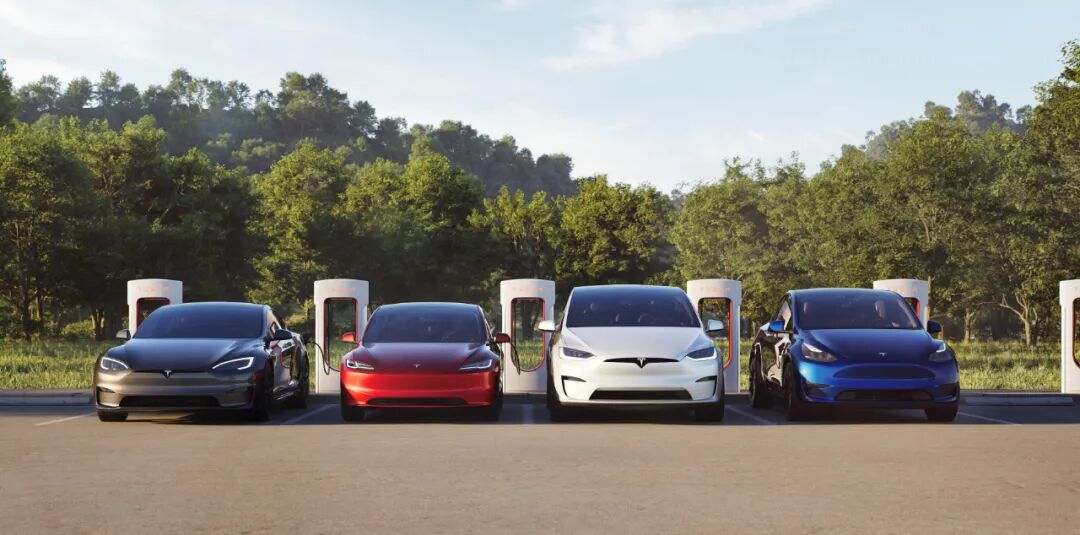
Image source: Tesla
In the decade ahead, the core of automotive competition will not be about pushing technology to its limits— but about who defines the rules of the ecosystem.
2. Can China move from a "rule follower" to a "rule co-creator"?
Are the underlying conditions now in place?
In the era of traditional internal-combustion vehicles, China had limited influence in rulemaking.
The industry started late, the domestic market was not yet large enough, international institutions were dominated by Europe and the U.S., and China's own technologies lacked global reference value.
But in the intelligent-vehicle era, China is standing at the forefront of the global value chain for the first time—and the underlying conditions are undergoing a structural shift.
(1) China is the world's largest data field, application field, and validation field for new-energy vehicles
China now sells more than 10 million NEVs annually, with NEV penetration exceeding 50% of new car sales. It leads the world in real-world autonomous-driving test mileage, operates the largest number of city-level commercial pilots, and achieves OTA iteration speeds two to four times faster than European and American automakers.
Rules are not written in meeting rooms—they are shaped through real-world operation.
A market with the largest scale of users, vehicles, and data naturally gains the legitimacy and capability to define the rules.
(2) A complete supply chain gives China the power to set "de facto standards"
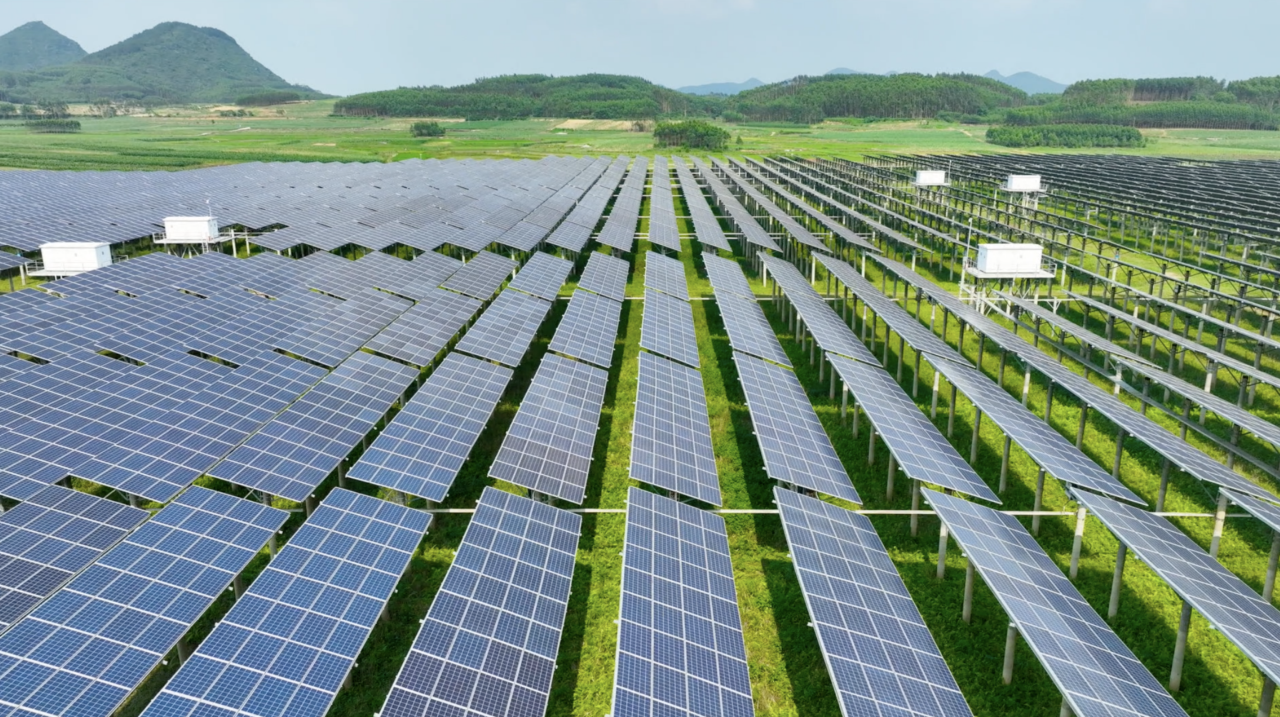
Image source: CATL
In the era of intelligent vehicles, many of the rules are ultimately shaped by the supply chain:
Batteries: CTP, CTB, and blade architectures are redefining global battery design.
High-voltage platforms: The rise of 800V—together with China's strength in power devices and thermal management—sets the new technical baseline.
Intelligent driving: Domain-controller architectures and lidar adoption cycles are largely dictated by the Chinese market.
In-car experience: Large-screen interfaces, voice-first interaction, and AI-powered features are all "voted into existence" by Chinese users.
In reality, there are two types of rules: the rules written in international documents, and the rules embedded in the supply chain.
The latter are de facto standards— and China is gaining control over more of them than ever before.
(3) Global rules are being rewritten—and China is entering a strategic window
The regulatory framework for intelligent vehicles is undergoing a fundamental reset:
The EU's carbon-emission system is being restructured under Fit for 55;
The United States is rewriting autonomous-driving regulations, redefining liability boundaries;
The EU's AI Act is coming into force, bringing vehicle algorithms under formal oversight;
And across autonomous driving, data governance, and software OTA, no globally mature rulebook yet exists.
This creates a once-in-decades "regulatory vacuum."
In such a moment, whoever moves first, writes first.
3. The "New Rule Matrix" of Intelligent Vehicles: Future rules will no longer be about energy alone, but about systems
Intelligent vehicles no longer operate under the rulebook of the traditional automotive industry. Instead, they are governed by a cross-industry rule matrix that spans seven sectors:
Automotive × Battery × Energy × Software × AI × Communications × Data Security
This system-level regulatory landscape—not the old automotive standards—is what Chinese companies will truly confront in the years ahead. We'll break it down into five core rule-making arenas.
(1) Green supply-chain rules: the core point of friction between China and Europe
The European Union is building the world's most stringent green-regulation framework—including life-cycle carbon assessments (LCA), a mandatory battery passport by 2027, full traceability of raw materials, minimum renewable-energy ratios, and mandatory third-party audits, among many other requirements.
Where does the challenge lie for China? Because China and the EU do not share fully aligned carbon-footprint accounting methods, and their standards are neither clear nor mutually recognized.
The impact on Chinese companies going abroad is enormous:
Without transparent supply-chain data, EU certification cannot be obtained;
Without complete battery-passport information, products cannot enter the market;
Batteries that fail to meet recycling or circularity requirements cannot be sold;
Low renewable-energy usage in manufacturing causes products to fall short of EU carbon benchmarks.
In Europe, product compliance does not equal supply-chain compliance.
And without a green supply chain, entry into the European market is simply not possible.
(2) Data and cybersecurity: the biggest cross-border regulatory challenge of the future
Intelligent vehicles generate massive volumes of data—including sensor and environmental data, user-behavior data, location and trajectory data, vehicle-control signals, OTA logs, and V2X communication data, among many others.
But global regulatory frameworks are diverging rapidly:
Europe: GDPR + the AI Act
United States: national-security–driven controls + supply-chain localization reviews
China: data classification and tiered protection + outbound-data approval mechanisms
These three systems are currently not mutually compatible.
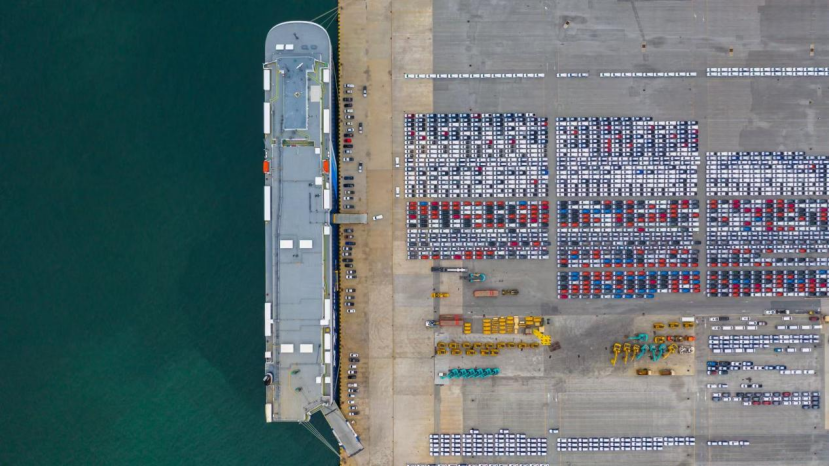
Image source: 699pic.com
This means Chinese automakers going global must build localized data-handling loops:
Data that must stay local must remain local;
Data that requires encryption must be encrypted;
Data that needs anonymization must be anonymized.
Data compliance will become one of the largest hidden costs for any global automotive company in near future.
(3) Autonomous-driving rules: Whoever commercializes first, defines the standard
Globally, the development and regulation of autonomous driving follow three broad pathways:
The U.S. model: commercialize first, regulate later—Waymo already operates in more than four cities and leads in paid-service deployment;
The European model: regulate first, commercialize later—UNECE takes the lead in defining liability and approval frameworks;
The China model: city-level commercial pilots + rapid iteration, with the world's richest scenarios and largest real-world datasets.
Yet in international rulemaking, China still holds relatively limited influence:
The L2/L3 classification system was not defined by China;
Europe dominates the liability framework for autonomous driving;
Testing and validation procedures are governed largely by UNECE bodies;
China has little say in defining algorithm transparency and safety boundaries.
However—and this is crucial—the decisive factor in autonomous-driving rules is not who writes the documents, but who first proves a scalable, commercially viable path.
(4) Software and ecosystem rules: the true throne of the next decade
The core competition behind intelligent vehicles is shifting from hardware supremacy to software dominance. Future software-related rules will cover: OTA frequency, permissions, and audit mechanisms;The openness of in-car operating systems; Regulation of large-model deployment in vehicles; Approval frameworks for third-party applications; API openness and interface standards as well as Authority boundaries in vehicle–cloud collaboration etc.
Whoever defines the software rules will control the "App Store" of the future automotive world.
For China, the in-car user experience is already a global leader. But China still lacks a unified, globally recognized software-security certification system—a critical capability that must be built over the next five years.
(5) Infrastructure rules: the charging ecosystem is China's most exportable "hard rule"
China has already built the world's most advanced energy-replenishment infrastructure: the largest charging network globally, a leading battery-swap system, the most mature 800V fast-charging technology, and city-level integrated energy planning unmatched by any other country.
All of these can become exportable rule sets, especially in regions such as ASEAN, the Middle East, Latin America, and Africa—markets that lack mature charging and energy infrastructure and are therefore the most likely to adopt Chinese charging and swapping standards.
Among all potential rule-export paths, the charging and energy-infrastructure system is where China has the strongest opportunity to shape global standards.
4. How can China truly move toward becoming a "co-creator of global rules"? Five actionable paths:
(1) Use scale and speed to create de facto standards
De facto standards outweigh written standards.
Standards are not decided in conference rooms—they are established through large-scale real-world adoption.
Whether it is autonomous driving, 800V high-voltage platforms, battery swapping, or large AI models in vehicles—as long as China is the first to achieve scale, it will be the first to define the de facto standard.
(2) Build a "China Intelligent-Vehicle Rule System" and push for international alignment
This system should include: life-cycle carbon accounting aligned with EU methods; a China version of the battery passport; localized data-security frameworks; OTA traceability systems; safety evaluation standards for autonomous driving; and vehicle–infrastructure coordination standards.
Together, these form the soft-power foundation China must build for the decade ahead.
(3) Establish "standard spillover zones" in emerging markets
In emerging regions—ASEAN, the Middle East, Latin America, Africa—there are few established rules and no clear rule-setters. China can export charging and battery-swap systems, intelligent road-side infrastructure, regional carbon-accounting frameworks, vehicle-data governance models, supply-chain transparency platforms.
By first becoming the rule-setter in these markets, China can then gain leverage to compete for discourse power in developed markets.
(4) Go global through alliances: automakers + suppliers + tech companies + government
No single company—no matter how strong—can define global industry rules alone. A rule-making community must be formed, through international collaboration alliances, joint technical white papers, China–EU mutual-recognition frameworks for green supply chains, cross-border data-compliance groups, multinational testing and validation centers.
Rules are always an ecosystem project, never a solo effort.
(5) Strengthen China's institutional influence in international standard-setting bodies
Organizations such as ISO, IEC, and UNECE are the origin points of global rules. Yet Chinese industry participants remain focused primarily on market competition, with limited involvement in these institutional arenas.
China rarely serves as initiator, proposer, working-group lead, or technical-framework architect—and without these roles, it is impossible to shape rulemaking. These capability gaps must be addressed for China to systematically elevate its influence in the global automotive rule system.
Final Thoughts
Technological leadership does not guarantee industry dominance. In the end, it is the rules that represent the highest form of competition.
Over the past decade, China's automotive rise has come from strengths in technology, product innovation, supply-chain capability, and iteration speed.
In the decade ahead, China must win in standards, rules, ecosystems, system-level capabilities, and international discourse power—only then can it achieve true global influence.
The next milestone for China's automotive industry is not becoming the world's production champion, but becoming a co-builder and shaper of the global rulebook for the future of mobility.
Written by Xiaoying Zhou — CEO and Editor-in-Chief, Gasgoo International


