



Gasgoo Munich- GAC Toyota kicked off pre-sales for its new flagship electric sedan, the BoZhi 7, on March 5. The model comes in five versions, with pre-sale pricing ranging from 156,800 to 209,800 yuan.
Marking another critical step in GAC Toyota's electrification shift, the BoZhi 7 joins the previously hot-selling BoZhi 3X to form a "sedan plus SUV" product matrix.
As joint venture brands struggle to adapt to the new energy race, the BoZhi 7 is pushing back against the stereotype that JV electric models lag in intelligence. By deeply integrating localized core features—such as the Huawei HarmonySpace, Momenta's advanced driver-assistance system, and dual-chamber air suspension—it aims to reshape market perceptions.
When Toyota Embraces China's Smart Ecosystem
Visually, the BoZhi 7 carries forward the family design language established by the BoZhi 3X. A closed front fascia pairs with C-shaped continuous headlights and inverted N-shaped LED daytime running lights, giving the sedan instant road presence.
The fastback silhouette and semi-hidden door handles balance aerodynamic efficiency with a high-tech aesthetic, while multi-spoke alloy wheels accentuate its sporty character. At the rear, smoked continuous taillights flow naturally into the panoramic roof, creating a wide, luxurious visual stance.
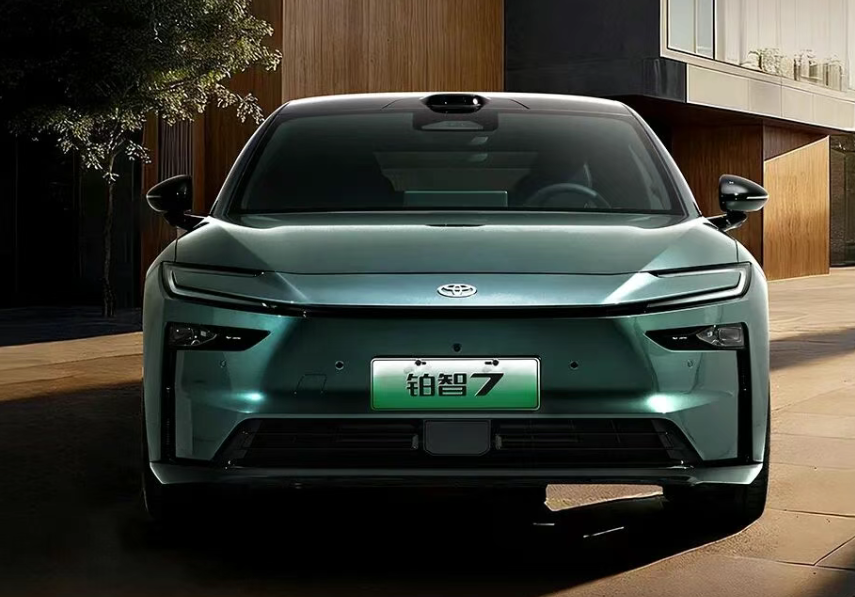
Image Source: GAC Toyota
The BoZhi 7 measures 5,130mm long, 1,965mm wide, and 1,506mm high, with a wheelbase stretching 3,020mm. That length—over five meters—and three-meter wheelbase not only ensure generous interior space but also position it directly against popular large electric sedans like the BYD Han L and Xiaomi SU7.
The interior's standout feature is the standard Huawei HarmonySpace 5.0 system—a first for Toyota in China, marking a deep integration of the local tech ecosystem. Powered by the MoLA large-model architecture, the system supports multi-zone voice interaction and fuzzy semantic understanding, shifting the experience from rigid commands to natural conversation.
On the hardware front, an embedded fully digital instrument cluster, a massive floating central touchscreen, and a head-up display create a linked three-screen setup.
Materials and specs lean toward luxury: extensive soft-touch surfaces meet wood-grain trim, while a column shifter frees up significant storage space on the center console.
The front passenger gets a zero-gravity seat, while all four outboard seats offer heating and ventilation. Rear passengers also benefit from tray tables, independent climate controls, and an onboard refrigerator, pushing the flagship comfort experience to the limit.
For driver assistance, the BoZhi 7 features the Momenta R6 system. Built on a reinforcement learning model, it uses 27 sensors for 360-degree perception, supporting navigation on autopilot (NOA) in both urban and highway settings, along with various automated parking functions.
Power comes from Huawei's DriveONE electric drive system, delivering a total motor output of 207kW. Paired with lithium iron phosphate (LFP) batteries from CALB and Jiangsu Zenergy Battery Technologies Group Co.,Ltd., the sedan achieves a maximum CLTC range of 710 kilometers. Higher-trim models support 800V high-speed charging, capable of replenishing the battery from 10% to 80% in just 15 minutes.
In terms of product competitiveness, the BoZhi 7 has moved beyond the traditional JV pitfalls of half-hearted electric conversions or outdated specs. By leveraging top-tier Chinese supply chain resources like Huawei and Momenta, GAC Toyota has built a vehicle that rivals startups in both intelligence and comfort.
Can GAC Toyota Break the Deadlock?
A dominant player in the internal combustion era, GAC Toyota initially struggled to adapt global models to China's EV market. But the BoZhi 3X, launched in 2025, shifted the narrative: with annual sales surpassing 70,000 units, it became the best-selling EV from a joint venture, proving that JV-branded electrics can still be hits.
Momentum continued into 2026. Cumulative sales for the first two months hit 104,100 units, up 11.94% year-on-year, with February alone reaching 41,500 units—a 15.28% jump. While its internal combustion engine base remains stable, the new energy division is now driving growth.
Yet, the market has entered a survival-of-the-fittest phase, and the BoZhi 3X alone cannot sustain the broader electrification strategy.
The BoZhi 7 creates a "sedan plus SUV" dual-drive strategy. While the BoZhi 3X targets the 150,000 yuan compact SUV segment, the BoZhi 7 expands the battlefront into the 200,000 yuan mainstream electric sedan market as a large flagship. By taking on rivals like the BYD Han and Xiaomi SU7, it diversifies the portfolio and reduces reliance on a single model.
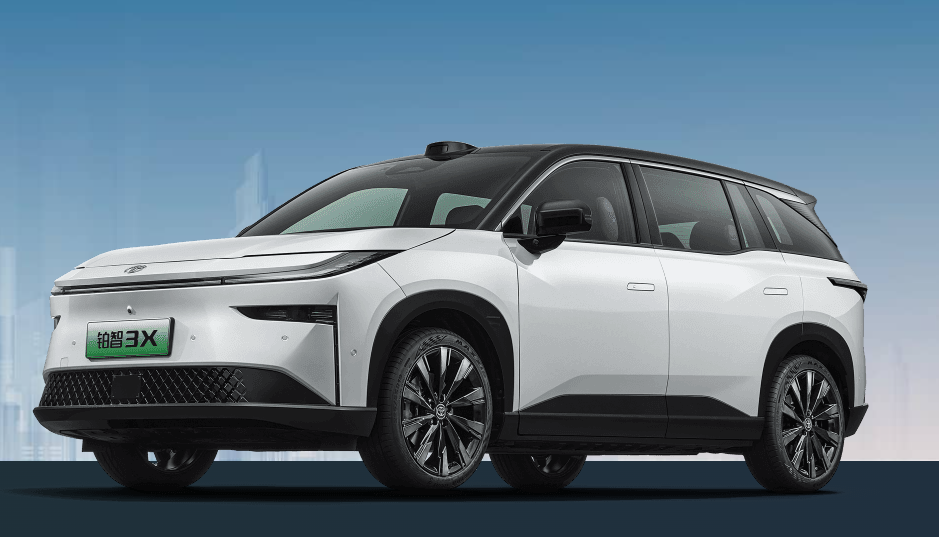
Image Source: GAC Toyota
Second, the BoZhi 7 carries the strategic mission of elevating the brand. While Toyota is renowned in China for reliability and balance, it has lacked a flagship product for intelligence and luxury. With premium features like the HarmonySpace, dual-chamber air suspension, and zero-gravity seats, the BoZhi 7 sends a clear message: Toyota can build high-end intelligent EVs, too.
On a deeper level, the BoZhi series represents the practical application of GAC Group's "Panyu Action" within its joint ventures. With 2026 serving as a pivotal year for this initiative, stabilizing the joint venture sector requires strengthening local adaptation capabilities.
The rapid rollout of the BoZhi 3X and BoZhi 7 underscores GAC Toyota's localized breakthrough: it is no longer waiting for global product hand-me-downs, but instead developing vehicles in China, for China, using local supply chains and led by local teams.
Of course, the challenges facing the BoZhi 7 cannot be ignored. The 200,000 yuan electric sedan market is already a red ocean. The BYD Han series has deep roots, the Xiaomi SU7 commands massive attention, and startups like ZEEKR and XPENG are circling.
Whether the BoZhi 7 can replicate the success of the 3X depends not just on the hardware, but on GAC Toyota's broader capabilities in user operations, brand communication, and charging infrastructure.


