



On January 6 local time, the Consumer Electronics Show (CES 2026) opened in Las Vegas. Display technology supplier Tianma brought more than 60 innovative products spanning automotive, IT, professional displays and smart wearables.
Next-generation smart cockpit: spec breakthroughs and interaction reimagined
In the smart-car arena, Tianma unveiled a next-generation smart cockpit display solution — the centerpiece of its CES showcase.
Built around multi-screen linkage in the cabin, the setup spans a panoramic windshield-integrated display, center stack, armrest screen and rear headrest screen. At its core sits a 49.6-inch C-shaped ultra-wide curved "Tianxuan" screen, positioned as the cockpit's information hub.
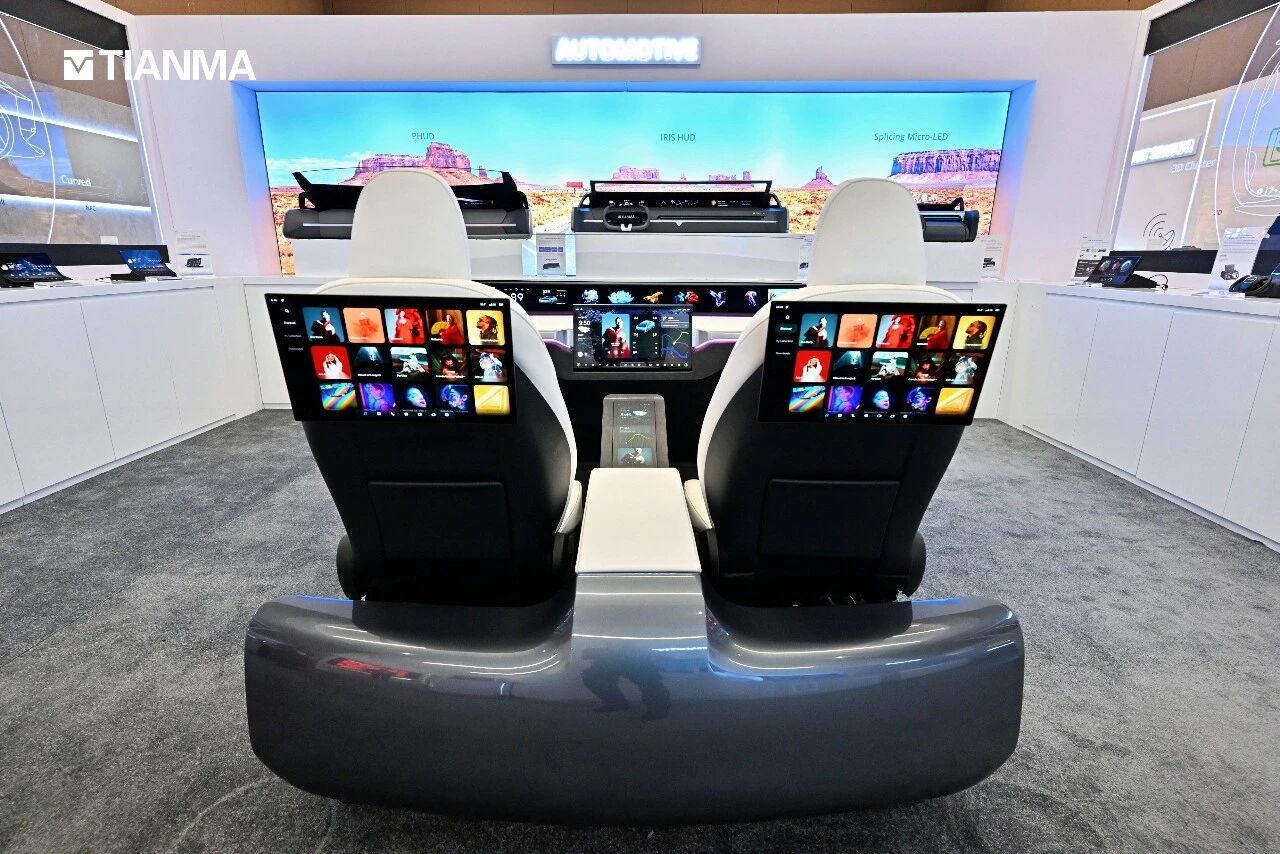
Image credit: Tianma
Its 1.25 meters of ultra-wide span and precise R3000 curvature radius, combined with Corning's advanced cold-bent cover glass technology, enable a seamless and safe bond to the vehicle windshield.
On display performance, the screen integrates Tianma's self-developed ACRUS pixel-level precise local dimming. With fine control across more than 210,000 independent dimming zones, it achieves a 100,000:1 contrast ratio.
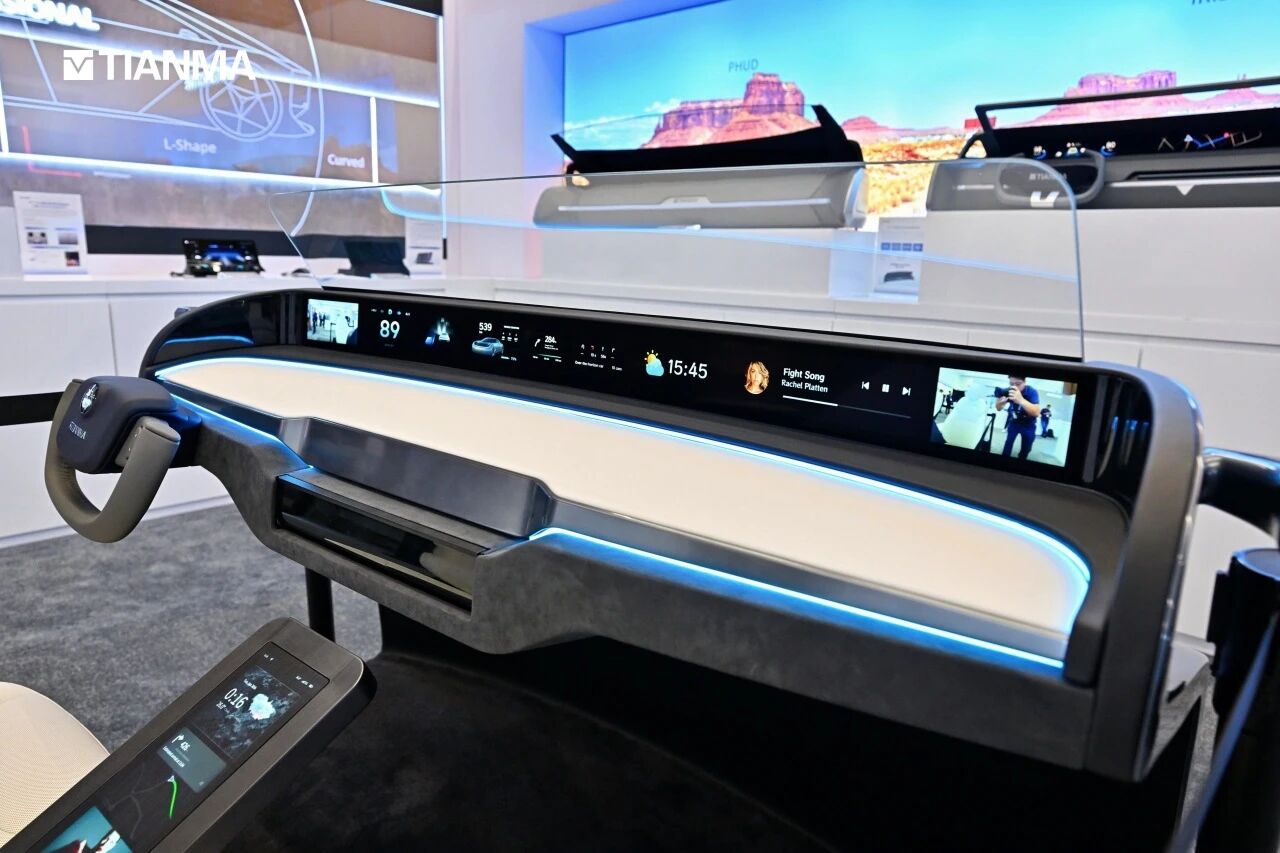
Image credit: Tianma
To tackle a key source of visual distraction while driving, its anti-reflection design keeps windshield reflection brightness below 0.55%, sharpening clarity. Paired with a surround-view imaging system, it offers assistance in complex lighting conditions.
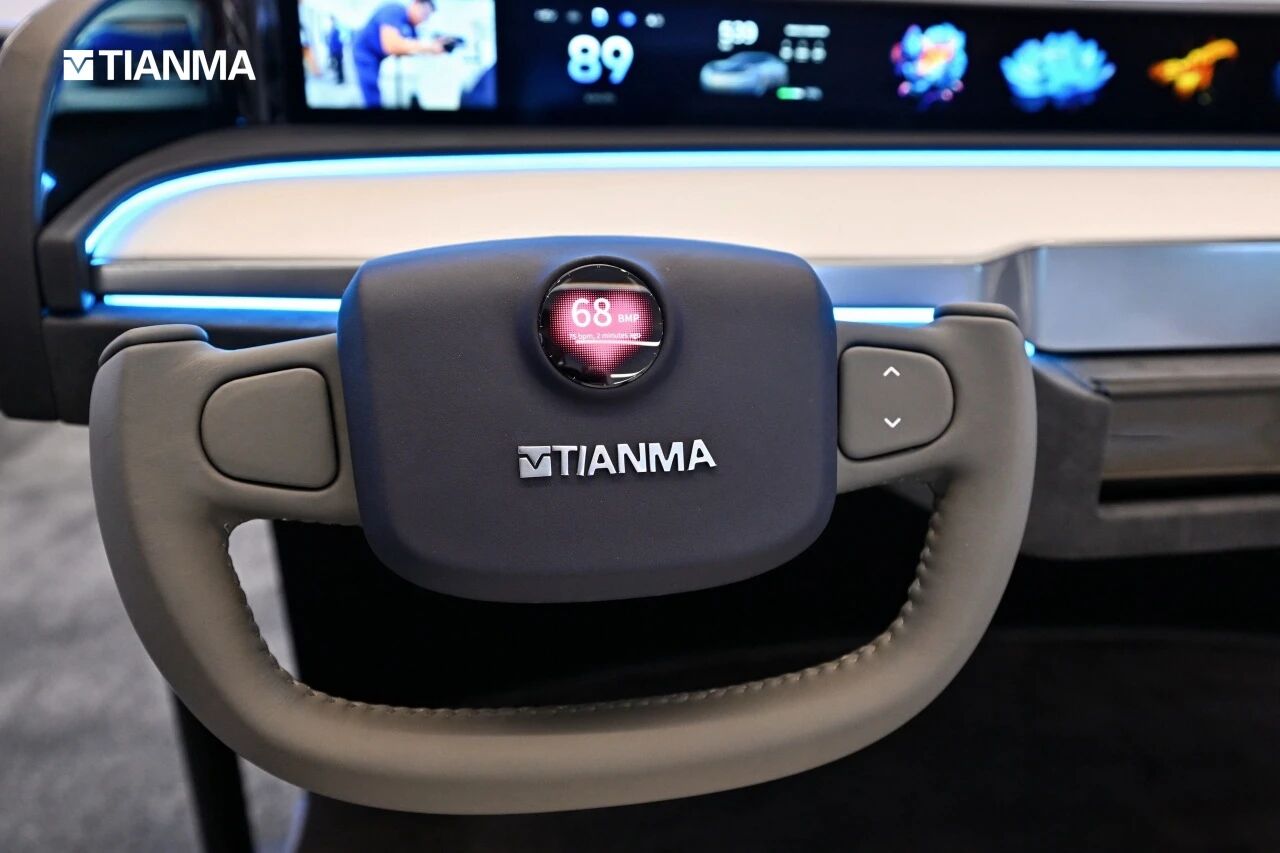
Image credit: Tianma
The cockpit's interaction layer is built out through a set of innovative sub-screens. The center console carries a 17-inch flexible pull-out display with 150 mm of sliding travel and 7.5 mm of dynamic curvature change, enabling a free expansion of up to four times the display area to suit different use cases.
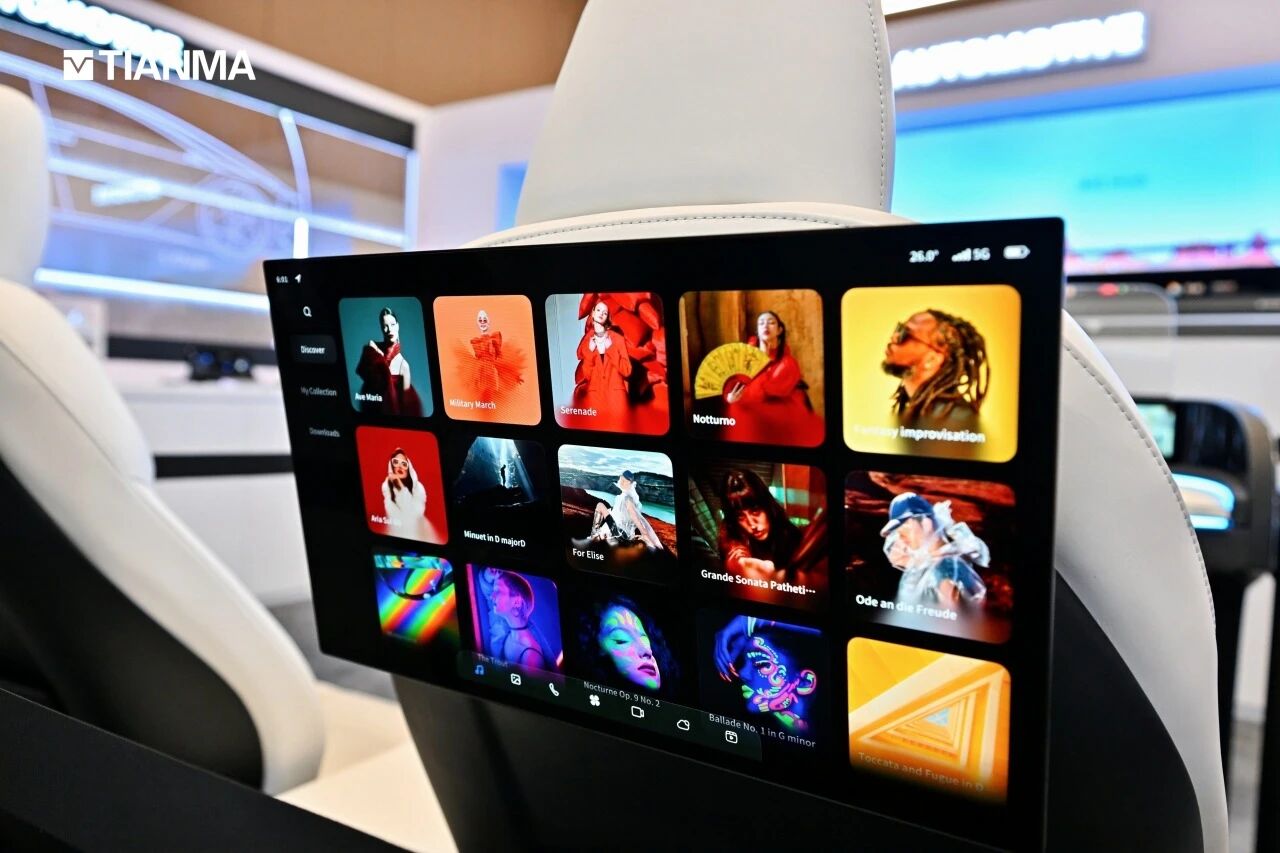
Image credit: Tianma
A flexible AMOLED circular screen is integrated into the steering wheel, offering high resolution, high contrast and an adaptive refresh rate dedicated to real-time speed, navigation and other core driving data. A hidden central armrest screen uses InvisiVue™ technology to vanish into the interior's texture when off, then light up with instant clarity. The rear headrest screen for back-seat entertainment features a 2,880 × 1,620 resolution, 1,000 nits peak brightness, over 200,000:1 contrast, and a 105% NTSC wide color gamut — aiming to deliver a cinema-grade immersive viewing experience.
Ecosystem collaboration: from supplying parts to co-defining products
Another throughline is Tianma's deep collaboration with Corning. The newly upgraded 43.7-inch IRIS PHUD+ panoramic information display integration uses Corning's ColdForm™ glass technology, reaching a local peak brightness of 10,000 nits to ensure readability in strong light.

Image credit: Tianma
Even more imaginative is the 34-inch "Lightveil" intelligent adjustable window. It aims to replace physical sunshades with dye-based liquid crystal technology, enabling millisecond-level electronic control of glass transmittance. If the technology matures and costs are contained, it could reshape the design language of the vehicle's sides — turning the window from a passive element into an interactive intelligent surface.
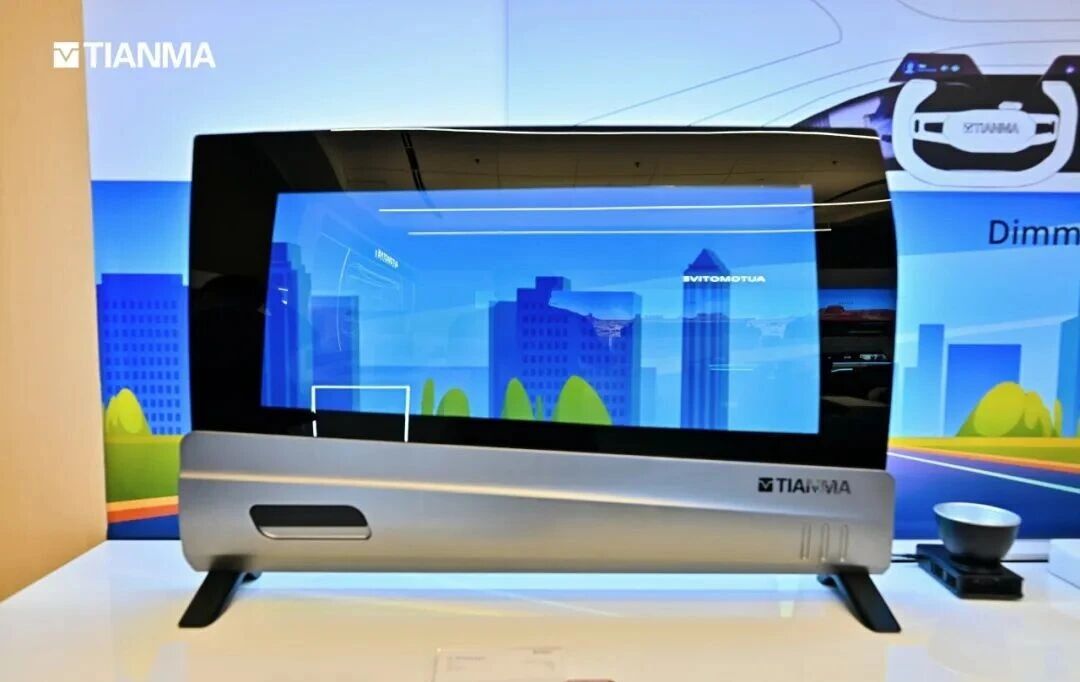
Image credit: Tianma
This deep coupling of materials and display technology is raising the industry's technical bar. Competition is shifting from pure screen manufacturing to systems engineering centered on display — fusing glass, optics, sensing and algorithms.
In recent years, Tianma has frequently set up joint labs with automakers and Tier‑1 suppliers. The launch of the "Tianxuan" brand, at heart, is about elevating from a component supplier to a solutions provider. In the smart-car value chain, those who engage earlier and more deeply in the vehicle-definition phase have a better chance of shaping how value is shared. Tianma's CES show is a concentrated bid for that definition power.
Conclusion:
CES has long been a showcase for concepts and trends. Tianma's portfolio this year sketches an appealing vision of the future cockpit, especially in lifting baseline display quality and exploring new interaction forms — evidence of solid R&D behind the scenes.
Still, getting from the booth to mass production will take time. Ultra-high brightness, fine-grained local dimming, complex curved bonding — can yields and consistency hold up at scale? And can flashy ideas like adjustable windows be engineered within cost ranges automakers can accept? Those questions are tougher than any lab spec.
Meanwhile, the field is crowded. Global heavyweights such as Samsung and LG Display — alongside domestic peers BOE and Visionox — are pouring resources into in-car displays, with multiple technical routes in play. The contest in automotive displays is far from over.

