



As the number "9" begins to dominate showroom floors across China, a quiet but consequential battle is unfolding in the auto market.
In early 2026, filings released by China's Ministry of Industry and Information Technology showed a rapidly expanding list of new vehicles bearing the "9" designation. From BYD's Tang 9 and Han 9 series, to Li Auto's L9 Livis, NIO's ES9, Great Wall Motor's WEY V9X and the Huawei-backed LUXEED V9, nearly 30 "9-series" models are either launching or already entering the market. This is less a naming coincidence than a coordinated signal: China's automakers are mounting a collective offensive on the premium segment.
A carefully staged reveal
The opening salvo came on January 10, 2026, when BYD unveiled the Tang 9 and Han 9 at its Dynasty brand event. Once little more than fan speculation on online forums, the models were suddenly official. With body lengths exceeding 5.2 meters, wheelbases stretching to 3.1 meters, DiSus-A intelligent body control system, 800-volt electrical architectures, and both pure electric and plug-in hybrid variants, BYD made clear it was not testing the waters. Its targets were the long-established strongholds of the BMW 7 Series and Mercedes-Benz S-Class.
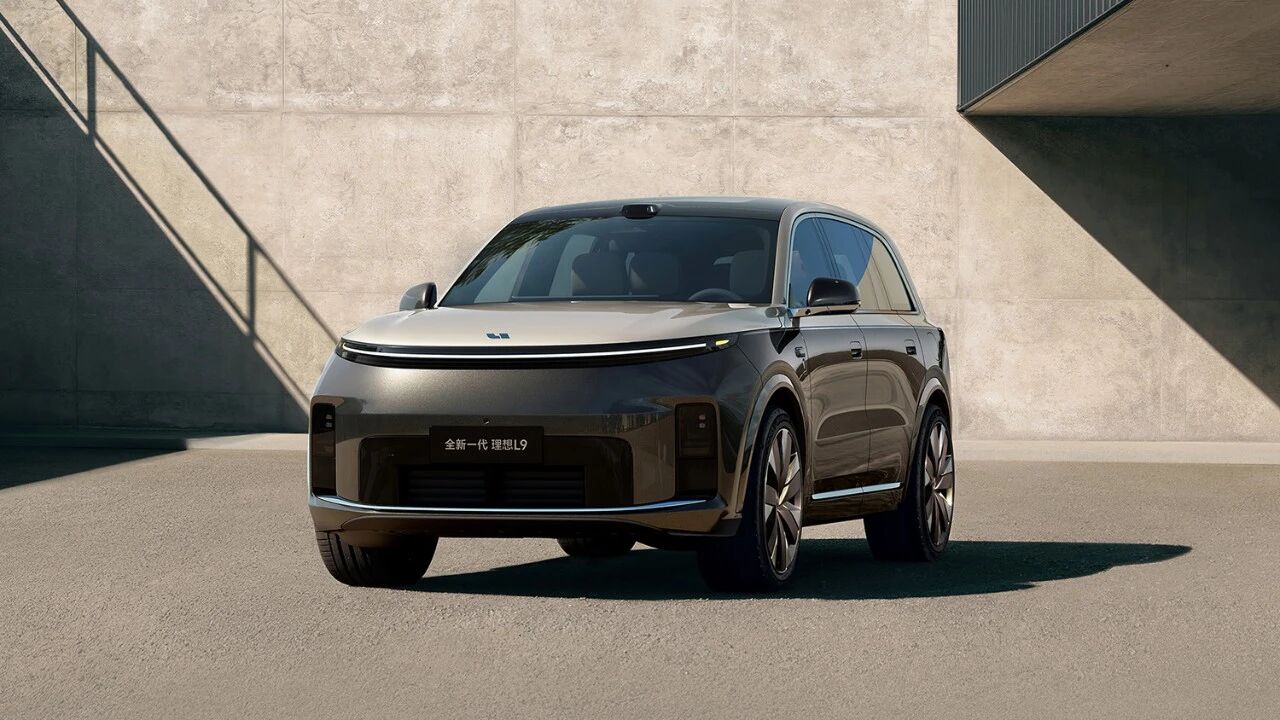
All-new Li L9; image source: Li Auto
Soon after, Li Auto's CEO Li Xiang took to social media with an ambitious claim: the Li L9 Livis (the "Ultimate edition of the new-gen Li L9") would be built as an "embodied intelligence robot." Priced at 559,800 yuan, the full-size SUV features dual in-house 5-nanometer chips delivering 2,560 TOPS of computing power, and becomes the first model under 600,000 yuan to adopt an 800-volt fully active suspension system. The message was clear—move beyond spec-sheet competition and redefine user experience.
Great Wall Motor, meanwhile, is betting heavily on the WEY V9X. Built on the GWM ONE platform, the six-seat SUV combines a Hi4 hybrid system with a 2.0-liter turbocharged engine, an 800-volt architecture and 6C fast charging. Despite four-second 0–100 km/h acceleration, fuel consumption in charge-sustaining mode is claimed at just 6.3 liters per 100 km. Chairman Wei Jianjun personally endorsed the model, which the company describes as an "AI-powered luxury six-seat flagship."
NIO has taken a more measured approach, planning to disclose technical details of the NIO ES9 on April 10. Based on the NT3.0 platform and sharing its advanced chassis architecture with the ET9, the ES9 remains light on published specifications. Still, NIO's service-centric brand positioning and its new-generation platform are widely expected to secure it a meaningful place among the "9-series" contenders.
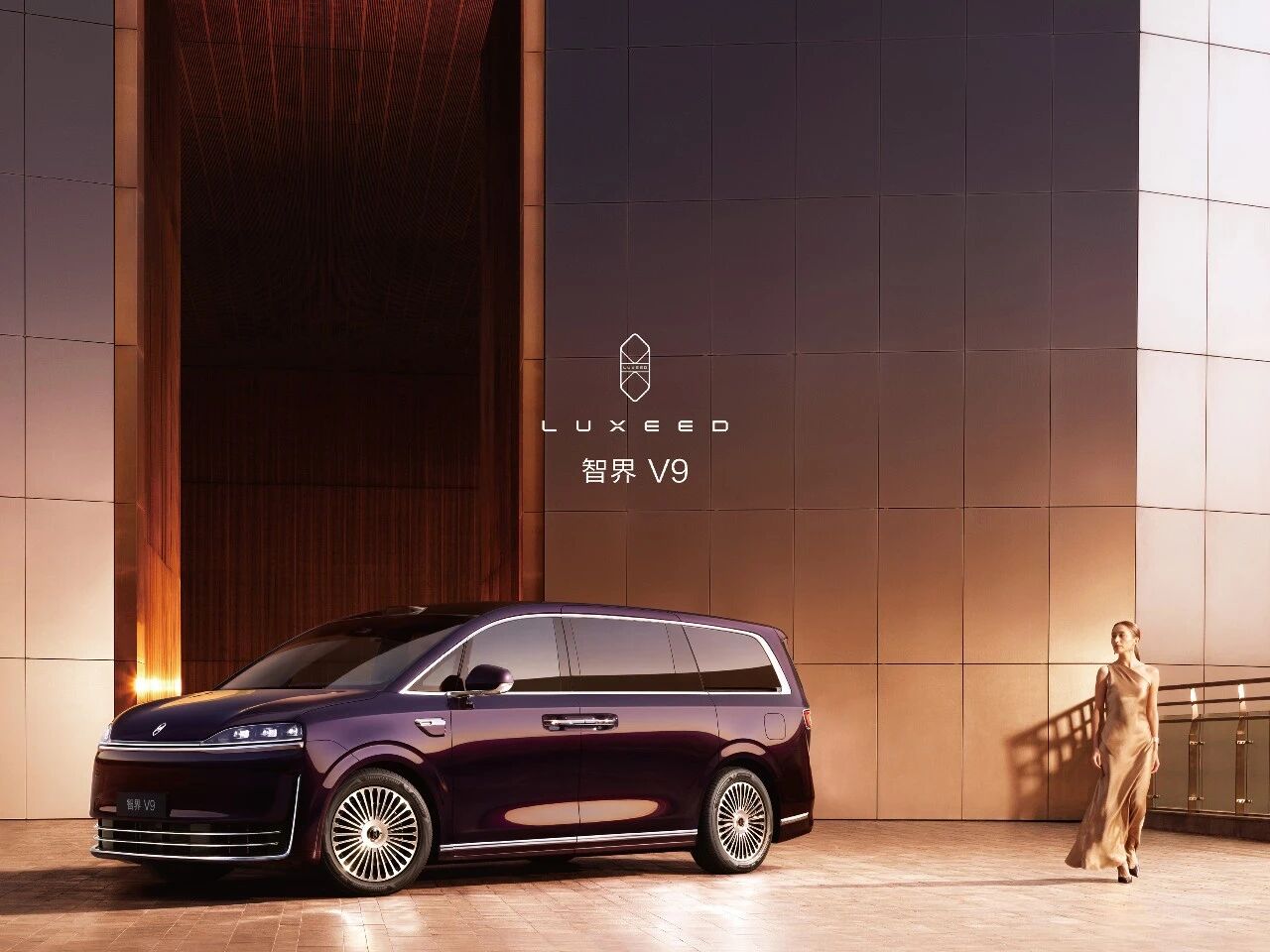
LUXEED V9; image source: LUXEED
In the MPV segment, the Huawei-backed LUXEED V9 is carving out its own niche. Expected to launch this spring, the large luxury MPV will feature Huawei's latest advanced driver-assistance system with L3 capability, paired with an intelligent range-extender setup delivering up to 1,250 kilometers of combined range. With a HarmonySpace cockpit and CATL batteries, the vehicle has been widely described as a "mobile Huawei showcase."
Beneath the noise, the critical question is who is truly prepared—and who is not.
At first glance, China's top-end auto market looks like a technology carnival. Air suspension, steer-by-wire, 5-nanometer chips and L3 assisted driving—features once reserved for concept cars—are now appearing en masse in production models. Priced broadly between 300,000 yuan and 500,000, these vehicles span everything from "high value" to "true luxury." Large SUVs dominate, with MPVs filling in the gaps. Lengths routinely exceed 5.2 meters, wheelbases approach 3.2 meters, and every model seems to shout the same message: this is a flagship.
Sales data, however, tells a far more sobering story.
According to data from Dongchedi, in the large flagship SUV segment over the past six months—from August 2025 to January 2026—only a handful of models achieved average monthly sales above 8,000 units, notably the AITO M8 and M9 alongside the NIO ES8. Just three models managed in the range of 4,000 to 8,000 units per month, while only two sustained volumes in the 2,000–4,000 range.
The implication is stark: even with every cutting-edge technology onboard and a spec sheet twice as long as a rival's, buyers may still walk away.
An even tougher challenge is homogenization. If one brand promotes air suspension, the next follows suit. If one emphasizes family comfort, others quickly echo the message. Intelligence has become a universal claim, backed by similar chips and software. As every car tells a near-identical story, the "9-series" badge—meant to signal a pinnacle—has instead blurred into a sea of lookalikes.
An industry insider summed it up bluntly: China's new energy vehicle market has reached an inflection point. The era of growth driven by sheer volume is over; the era of flagship competition has only just begun. But it will not accommodate everyone. Over time, the number of major domestic automakers is likely to shrink to around 15, and those lacking true technological moats—relying instead on a "9" badge to chase attention—will be pushed out.
So where does the breakthrough lie?
Seen over a longer arc, this is not China's first attempt to move upmarket.
Earlier efforts by legacy brands such as Hongqi and Dongfeng delivered mixed results, constrained by technology depth and brand perception. Later, new players like NIO, Li Auto and XPENG carved out space above the 300,000 yuan mark by leaning into electrification and intelligent mobility. Today, established giants including BYD, Great Wall Motor and Geely have joined the fight, setting the stage for direct competition between newcomers and traditional manufacturers.
The current "9-series" wave is, at its core, an extension—and escalation—of those earlier efforts.
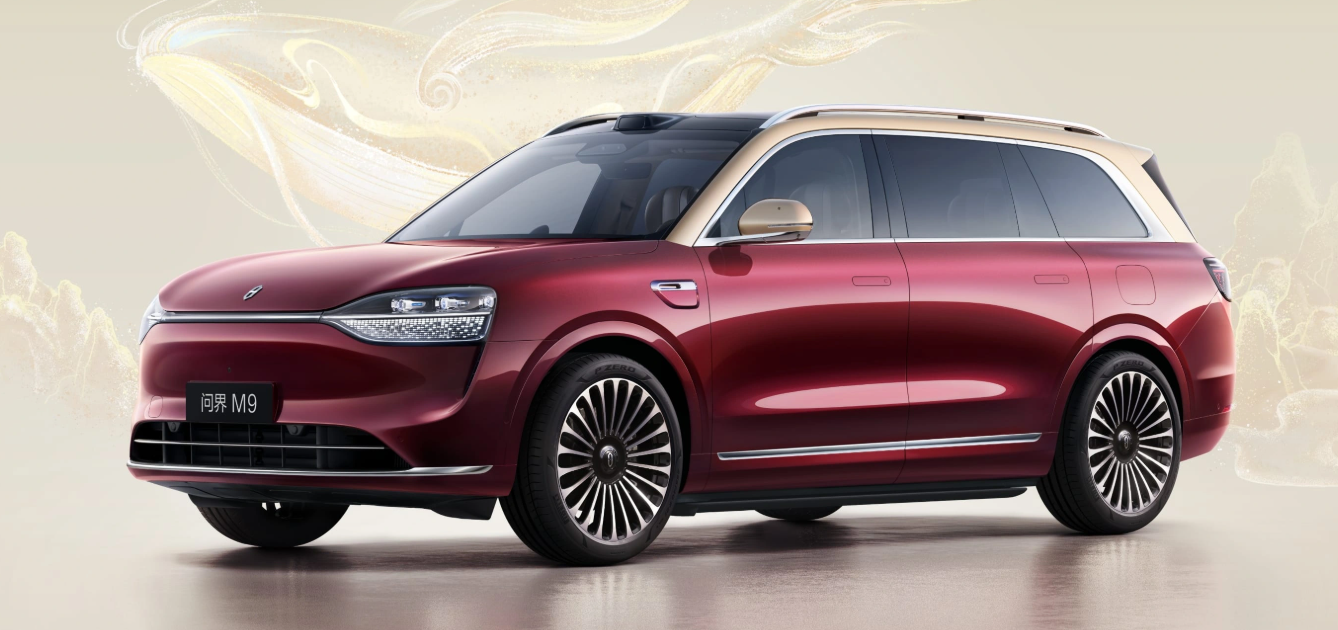
AITO M9; image source: AITO
The success of the AITO M9 offers a telling example. Leading the 500,000-yuan-plus luxury segment for 21 consecutive months, its edge lies not in spec inflation but in deep integration of Huawei technologies—from the HarmonySpace cockpit to advanced driver assistance—forming a coherent technological ecosystem. The Li L9 represents a different path, translating a precise understanding of family needs into the concept of a "home on wheels."
Together, these cases underline a simple truth: a true flagship is not built on numbers alone, but on core technologies, product substance and user trust.
For automakers rushing into the "9-series" arena, the message is unforgiving. You can load a vehicle with the best technologies available, but if they fail to translate into tangible user experience, and if the product lacks a distinct brand identity, the result is merely a powerful machine—not a genuine flagship.
In closing
From the vantage point of 2026, the traditional luxury trio—BMW, Mercedes-Benz and Audi—still command a substantial share of the premium market. Brand equity, design language and service ecosystems built over decades are not easily shaken by a handful of impressive spec sheets.
Yet change is unmistakably underway. As Chinese automakers move beyond price wars at the low end and begin to focus on brand culture, distinctive design and comprehensive service systems, a turning point is emerging.
The "9-series" battle will inevitably see some models fall away while others rise. Those that endure will combine technological depth with a genuine brand soul. They will shape the next decade of China's auto industry—not through a numeral on a badge, but through reasons consumers are truly willing to pay for.
The outcome of this contest may not become clear until late 2026. One thing, however, is already certain: the moment Chinese automakers seriously ask how to become luxury brands—rather than simply how to charge more—the real breakthrough has already begun.


