



Gasgoo Munich- In April 2026, Anyone shopping for a car in China would have been inundated with specifications the moment they opened an automotive app—computing power measured in TOPS, range stretching into the hundreds of kilometers, and charging rates expressed in ever-higher "C" counts. The figures are impressive, but also increasingly abstract, leaving many consumers wondering what they actually translate to in daily use.
The wave of more than a dozen major model launches this month offers a revealing snapshot of a market in transition. Strip away the numerical arms race, and a deeper shift becomes clear: China's auto industry is moving beyond hardware one-upmanship toward a new phase defined by the democratization of advanced technology and a wholesale rethinking of user experience. This is no longer a concept confined to slide decks—it is unfolding in real time across what could be described as an "April offensive" by automakers.
Smart driving: Closing the gap from functional to truly usable
Until recently, discussions around intelligent driving focused on highway navigation-assisted driving coverage or the specifications of LiDAR systems. But April's new models introduced a more meaningful benchmark: "parking space to parking space" autonomy.
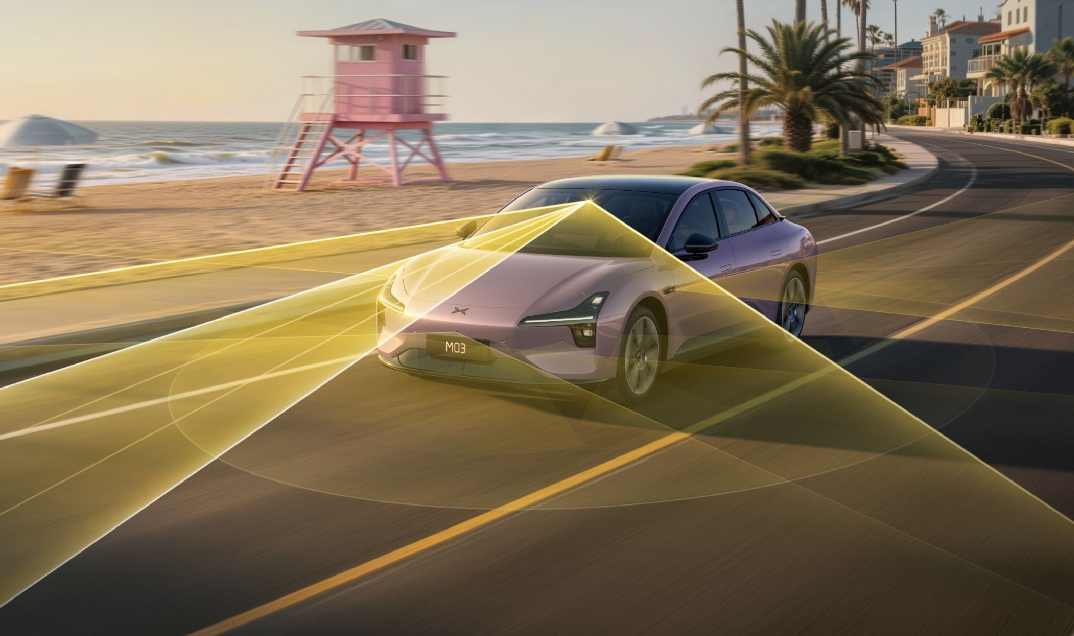
XPENG MONA M03; image source: XPENG
The 2026 MONA M03 from XPENG exemplifies this shift. Despite an entry price of just 119,800 yuan, the model prioritizes full-scenario NOA capability, enabling seamless navigation from one parking space to another across both urban and highway environments. In practical terms, this transforms the system from an advanced cruise control into a near end-to-end driving solution capable of handling dense city traffic and parking autonomously. By bringing such functionality into the entry-level segment, XPENG is dismantling the long-held equation of premium pricing with advanced autonomy, extending core smart-driving experiences to a much broader audience.
Other launches reinforce the same direction through different strategies. Volkswagen Anhui's ID. UNYX 08 adopts a pragmatic partnership model, integrating the China Electronic Architecture (CEA) co-developed with XPENG and the latter's Turing chip to deliver 1,500 TOPS of computing power alongside XPENG's second-generation VLA model. The move highlights how established global players are pivoting away from closed development toward rapid adoption of China's mature local tech stacks. Meanwhile, the updated AVATR 12 doubles down on its collaboration with Huawei, introducing a more advanced 896-line LiDAR system supported by three solid-state units to push perception capabilities further.
At its core, this "last mile" competition marks the transition of smart driving from a showcase feature to a genuinely useful tool. Once end-to-end autonomy becomes standard even in the 150,000–200,000 yuan range, intelligent driving will have effectively reached maturity.
Powertrain strategies: Converging toward energy flexibility
Battery-electric and range-extended technologies, once framed as competing solutions, are now evolving in parallel as complementary answers to the same question: how to deliver maximum flexibility in energy replenishment.
On one side, high-voltage platforms and ultra-fast charging are rapidly becoming mainstream. The Zeekr 007 refreshed lineup, including its updated sedan and GT variants, has transitioned to a 900V architecture, significantly boosting motor output and raising the performance ceiling for EVs. Nissan's NX8 EV, built on an 800V silicon carbide platform, supports 5C charging, a capability mirrored by Volkswagen's latest offerings. The implication is clear: adding 300–400 kilometers of range in just 10 minutes is moving from promise to reality, eroding one of the biggest barriers to EV adoption.
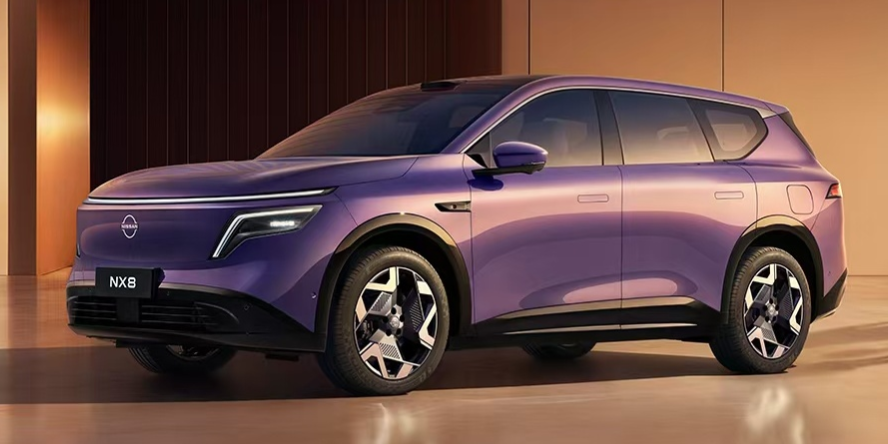
Nissan NX8; image source: Dongfeng Nissan
On the other side, range-extended systems are not fading—they are becoming more BEV-like. The NX8's range-extended variant offers up to 310 kilometers of battery-powered range, while Leapmotor's D19 pushes that figure to an extraordinary 500 kilometers. In practical terms, this allows such vehicles to function as all-electric vehicles for most daily driving, with weekly charging cycles well within reach. The onboard generator then serves as a fallback for long-distance travel, eliminating reliance on charging infrastructure during peak demand.
This convergence is perhaps most symbolic in the new-generation (8th) Lexus ES. Long associated with refined internal combustion engineering, the luxury marque has eliminated pure gasoline variants entirely in favor of hybrid and fully electric options. The message is unmistakable: even in traditionally conservative segments, electrification is now the dominant trajectory, while diversified powertrain offerings remain the most pragmatic bridge during the transition.
Joint ventures strike back: Pragmatism over prestige
One of the most telling developments in April's market unfolded among joint-venture automakers. Confronted with the rapid ascent of domestic brands, they are no longer leaning on intangible advantages such as brand cachet or perceived "German" and "Japanese" engineering DNA. Instead, they are pursuing a markedly different strategy—forming deep, technology-driven alliances with Chinese partners.
Dongfeng Nissan's NX8 alone may not fully capture the shift, but Volkswagen's latest releases—the ID. UNYX 08 and the flagship ID. ERA 9X—offer a far clearer signal of intent.
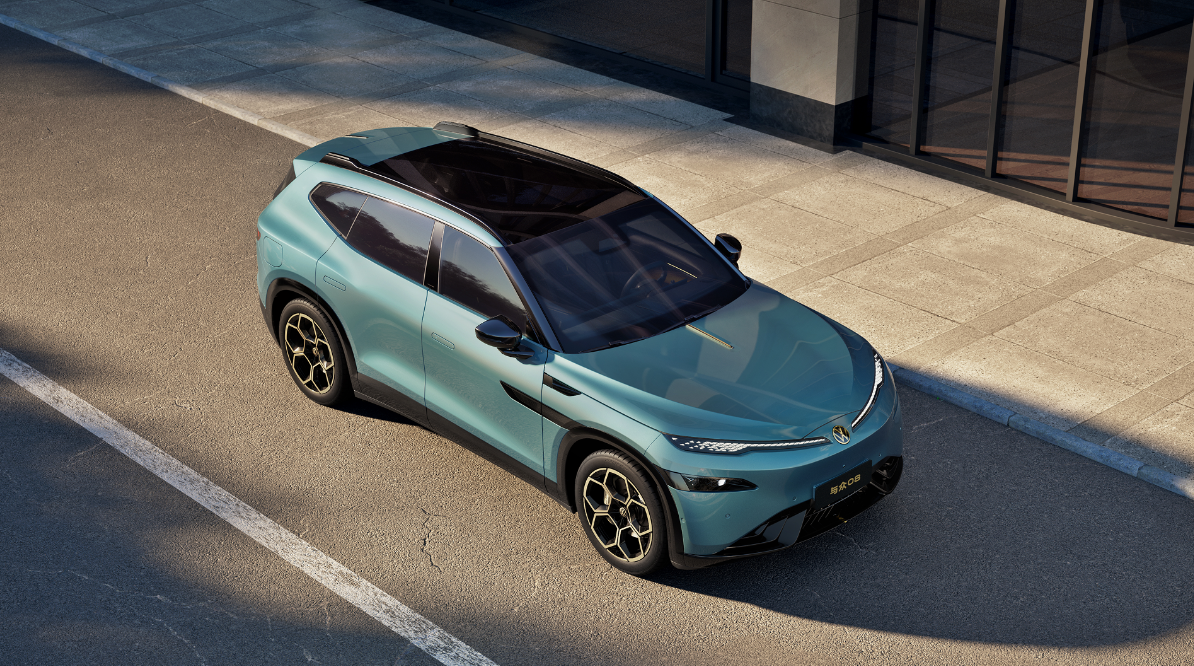
ID. UNYX 08; image source: Volkswagen Anhui
Volkswagen's partnership with XPENG has now moved beyond announcement into execution. The ID. UNYX 08 is the first to feature the jointly developed CEA, incorporating XPENG's AI-enabled chips and software stack. Meanwhile, the ID. ERA 9X relies on a next-generation ADAS system built on Momenta's R7 reinforcement learning world model. In both cases, the defining competitive edge no longer lies in Volkswagen's traditional strengths—such as powertrain engineering or chassis tuning—but in the integration of cutting-edge Chinese autonomous driving technologies.
This approach reflects a notable shift toward pragmatism. It acknowledges that, in the race toward vehicle intelligence, China has taken a leading position. Rather than investing heavily in in-house systems that risk lagging behind, global automakers are increasingly opting to integrate best-in-class local technologies. For Volkswagen, this is not merely a tactical adjustment but a blueprint for survival in China. More broadly, it signals a redefinition of the joint-venture model itself—from importing global products into China to exporting Chinese innovation into global brand portfolios.
Final thoughts
The sheer volume and intensity of April's product launches underscore a fundamental shift in China's automotive competition, which has now entered a more sophisticated phase.
The battleground is no longer defined by surface-level features such as interior materials or screen size. Instead, it centers on the depth of intelligent driving experiences, the efficiency of energy replenishment systems, and the ability to orchestrate global supply chains. For consumers, the benefits are tangible: vehicles are becoming faster, smarter, and more convenient to charge—often at lower price points than would have seemed possible just a few years ago.
For the industry, however, the implications run deeper. The "April offensive" makes one thing clear: the very definition of the automobile is being rewritten. No longer merely a mechanical product, the car is evolving into a software-defined, data-driven, electrically powered intelligent space on wheels. And this transformation is accelerating at a pace that leaves no participant untouched.


