



In 2025, China's automotive industry marked a significant milestone in the tide of globalization.
According to the China Passenger Car Association (CPCA), full-year exports reached 8.32 million units. This represents a 30% year-on-year jump, extending the high-growth streak that began after breaking the 1-million-unit mark in 2021. December alone saw 990,000 units shipped overseas, surging 73% from a year earlier and climbing 23% from November. This marked a powerful year-end rally.
These figures do more than cement China's status as the world's top auto exporter. They reveal a profound structural shift behind the relentless expansion. New energy vehicles (NEVs), particularly plug-in hybrids, are emerging as the core engine of growth. Meanwhile, a pattern of market diversification and high-quality development comes into sharper focus.
Sustained Volume Growth and Structural Optimization
The leap in Chinese auto exports did not happen overnight.
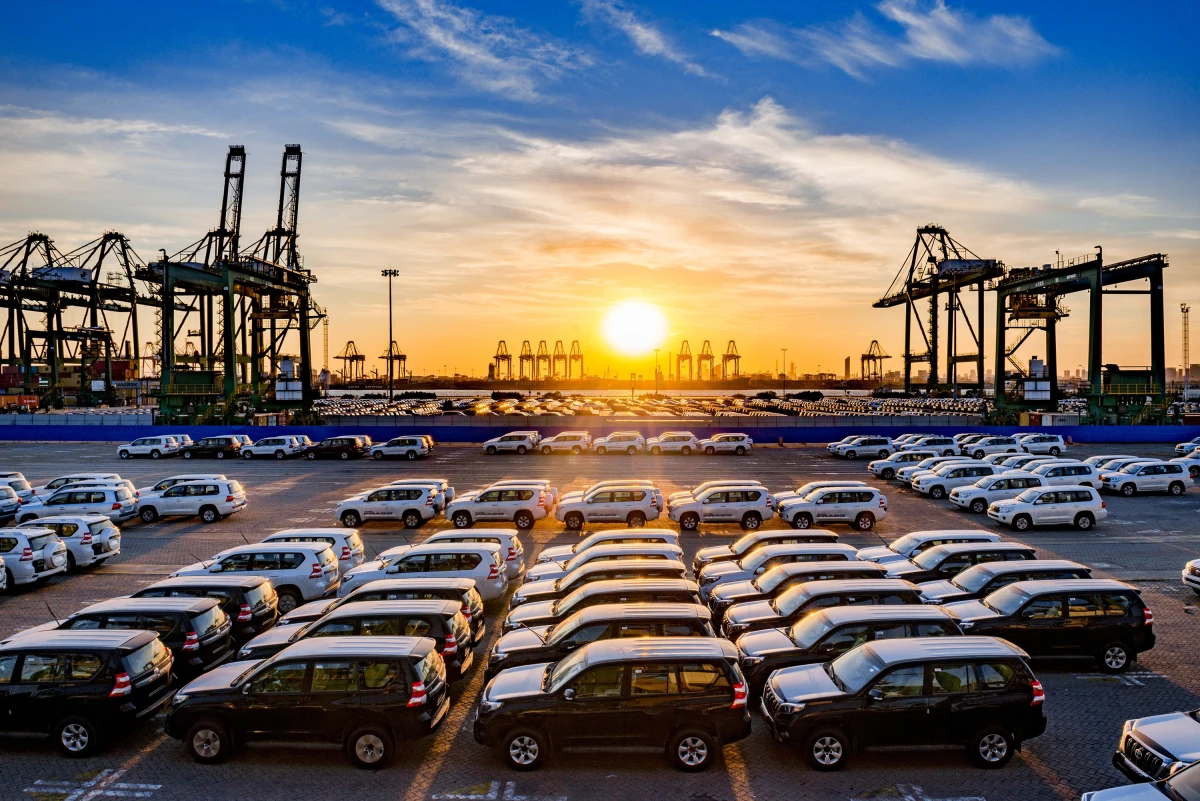
Image Source: Huaban
Looking back, after the trough of 2013–2016 and the plateau of 2017–2020, exports entered a rapid growth trajectory starting in 2021. The 30% growth rate in 2025 represents an acceleration on top of 2024's high base. This reflects a qualitative leap in the comprehensive competitiveness of China's auto industry.
Monthly trends highlight this resilience. The 2025 trajectory shows a clear recovery pattern. This included a strong start in January and a slowdown from February to April due to complex international trade factors. Momentum rapidly regained from May onward. Growth accelerated through the second half of the year, culminating in a record high in December. This volatility suggests export markets are highly dispersed. Consequently, China's auto exports have built stronger resistance to risks in single markets. This makes overall growth more resilient.
A fundamental shift in powertrain structure is the underlying driver. The value of export data is most visible in the changing mix of power sources. For the full year of 2025, traditional internal combustion engine vehicles accounted for just 43% of total exports. This marks an 11-percentage-point drop year-on-year. In their place, NEVs have risen across the board. Battery electric vehicles make up 28%, plug-in hybrids climbed to 13% with an 8-point gain, and hybrids account for 6%.
Notably, in December alone, the share of plug-in hybrid models jumped to 17%. This surged by 11 percentage points year-on-year, far outpacing other powertrain types.
This structural shift is no accident. It mirrors strong global demand, particularly in Europe, the Middle East, and Southeast Asia. Demand is high for vehicles that offer low energy consumption, long range, and freedom from range anxiety.
Chinese automakers have quickly converted their technological leadership and supply chain cost advantages in the plug-in hybrid sector into market competitiveness. Take pickups as an example. Chinese-brand pickups equipped with plug-in hybrid systems have become best-sellers in multiple markets. They became a standout highlight in commercial vehicle NEV exports. This is a concrete example of how structural optimization in technology drives market growth.
The dominance of passenger vehicles and the stability of commercial vehicles are solidifying. By vehicle type, passenger cars remain the absolute mainstay of China's auto exports. They hold steady at around 85% of the total. Within the passenger vehicle segment in 2025, alongside traditional strongholds like sedans and SUVs, exports of other passenger vehicles also improved. This serves as a testament to the vitality of product innovation.
Market Evolution and the Path to High-Quality Development
The 2025 export landscape shows more than just growth in points and lines. It reveals a broadening of scope and an elevation of quality. A profound adjustment in market patterns signals that Chinese automakers' international expansion strategy has entered a new phase. This phase involves intensive cultivation and value enhancement.
Traditional markets face pressure while emerging and developed markets advance in parallel. The shift in Russia is most representative. Domestic retail sales in Russia have held up well. Chinese brands like Geely, Changan, Chery, and BYD remain resilient. However, automakers proactively adjusted export strategies due to prudent assessments of geopolitical risks. Full-year exports to Russia fell significantly in 2025, causing it to slip from its usual top spot in cumulative rankings. This is not a loss of competitiveness, but a proactive move reflecting heightened risk awareness in global operations.
At the same time, new growth poles are rising rapidly. In terms of cumulative annual exports, Mexico, the UAE, the UK, and Brazil ranked at the forefront. In terms of incremental contribution, the UAE, Mexico, Algeria, the UK, and Australia became the top five drivers of growth.
This landscape clearly outlines two main threads. First is deepening penetration and market share gains in Global South nations like Mexico, the UAE, Algeria, and Brazil. Second is steady entry into developed markets such as the UK, Belgium, and Australia.
NEV exports point toward high-quality and high-value markets. The destinations for China's NEV exports reflect this high-quality trend even more sharply. The top five markets for Chinese NEVs in 2025 were Belgium, the UK, Mexico, Brazil, and the Philippines.
With Belgium and the UK, representatives of developed European markets, taking the top two spots, a clear trend emerges. Chinese NEVs now meet the world's most stringent requirements in product technology, safety standards, and environmental performance. European acceptance of Chinese NEVs serves as the strongest footnote to this industrial upgrade.
Looking at specific countries, the UAE took in 53,000 Chinese NEVs in December alone. The cumulative total reached nearly 192,000 for the year. This rapid year-on-year increase highlights the strong interest of the high-end Middle Eastern market in China's smart NEVs. Southeast Asian nations like Thailand, Indonesia, and the Philippines also ranked in the top ten for NEV exports. Chinese automakers capitalized on regional electrification trends to successfully establish local layouts and capture market share.
Conclusion
In summary, China's auto exports in 2025 delivered a report card of simultaneous growth in quantity and quality. The massive volume of 8.32 million units demonstrates scale and manufacturing strength. Meanwhile, the internal structure reveals a clear path driven by innovation and value climbing. NEVs approach half of total exports, plug-in hybrids lead growth, and shares rise in developed markets.
Looking ahead, although the international trade environment remains complex and volatile, China's auto industry still has vast room to expand. This is bolstered by increasing product competitiveness, flexible market strategies, and a continuously optimizing export structure. The deep transformation from product export to technology export and brand export will be the core mandate of the next stage.


