



Gasgoo Munich- Data for 2025 shows Chinese passenger vehicle exports—counting completely knocked-down (CKD) kits for overseas assembly but excluding locally built units—settled at 6.04 million units last year, a 21.85% increase from the previous year.
With an annual increase of over 1 million units and total volume crossing the 6 million threshold, the sheer scale of this leap is driving a qualitative shift. The globalization of Chinese autos has irreversibly entered a second phase defined by structural adjustment. According to Gasgoo Auto Institute, this stage is best summarized by four trends: market differentiation, concentration at the top, technology-driven growth, and shifting rules.
The core of export competition is pivoting from capacity and cost to technology and branding. Success is no longer just about entering a market, but about cultivating an ecosystem. The logic of growth is shifting from broad-based opportunities to structural advantages.
Concentration and Divergence in Export Growth
Export growth in 2025 presents a stark structural paradox: on one hand, gains are concentrating with unprecedented intensity among a handful of top players; on the other, regional markets are rapidly diverging in demand characteristics, competitive rules, and growth drivers.
This concentration and divergence are not contradictory but two sides of the same coin. They reflect the inevitable evolution of the industry’s globalization from extensive to intensive operations, and from homogeneity to heterogeneity.
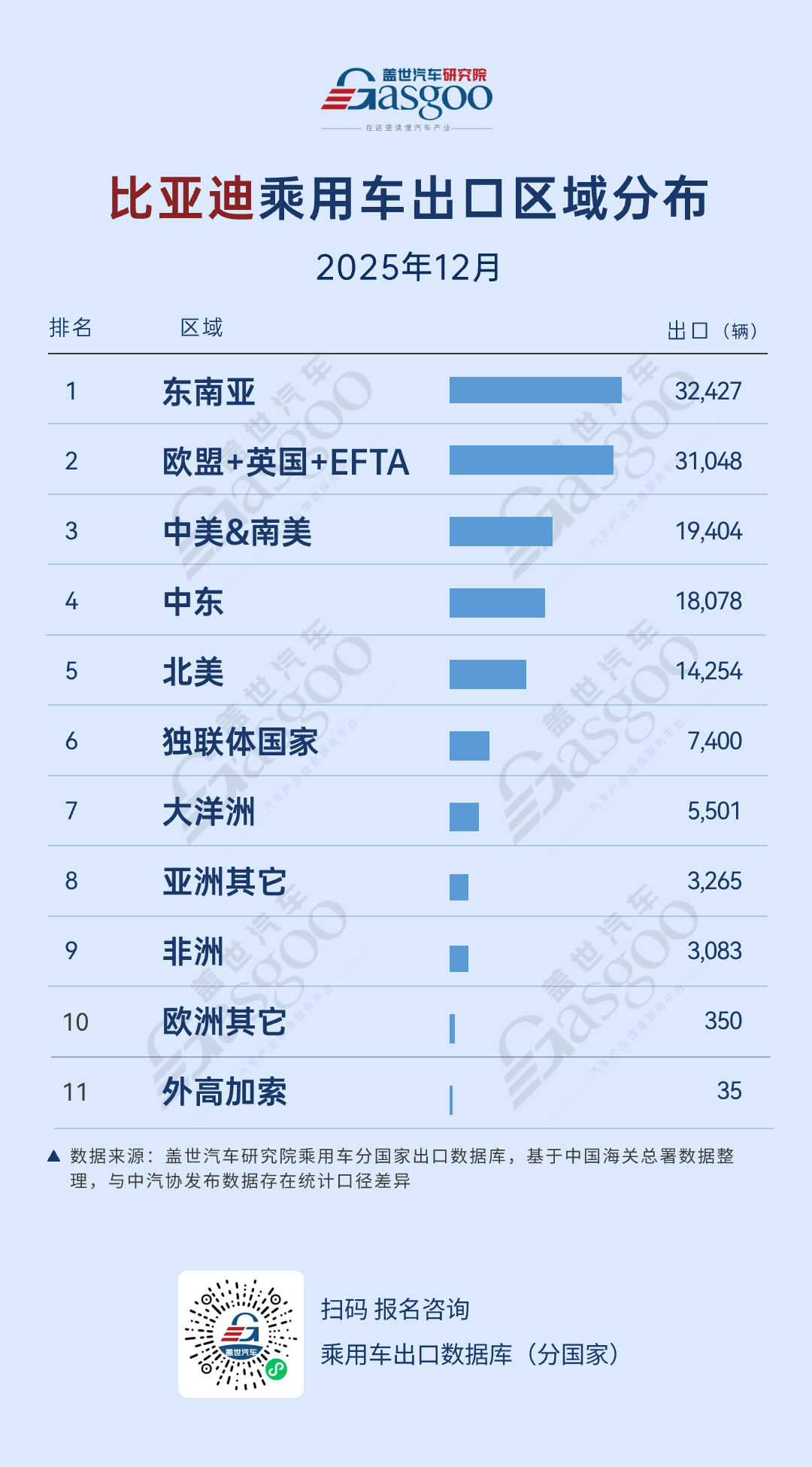
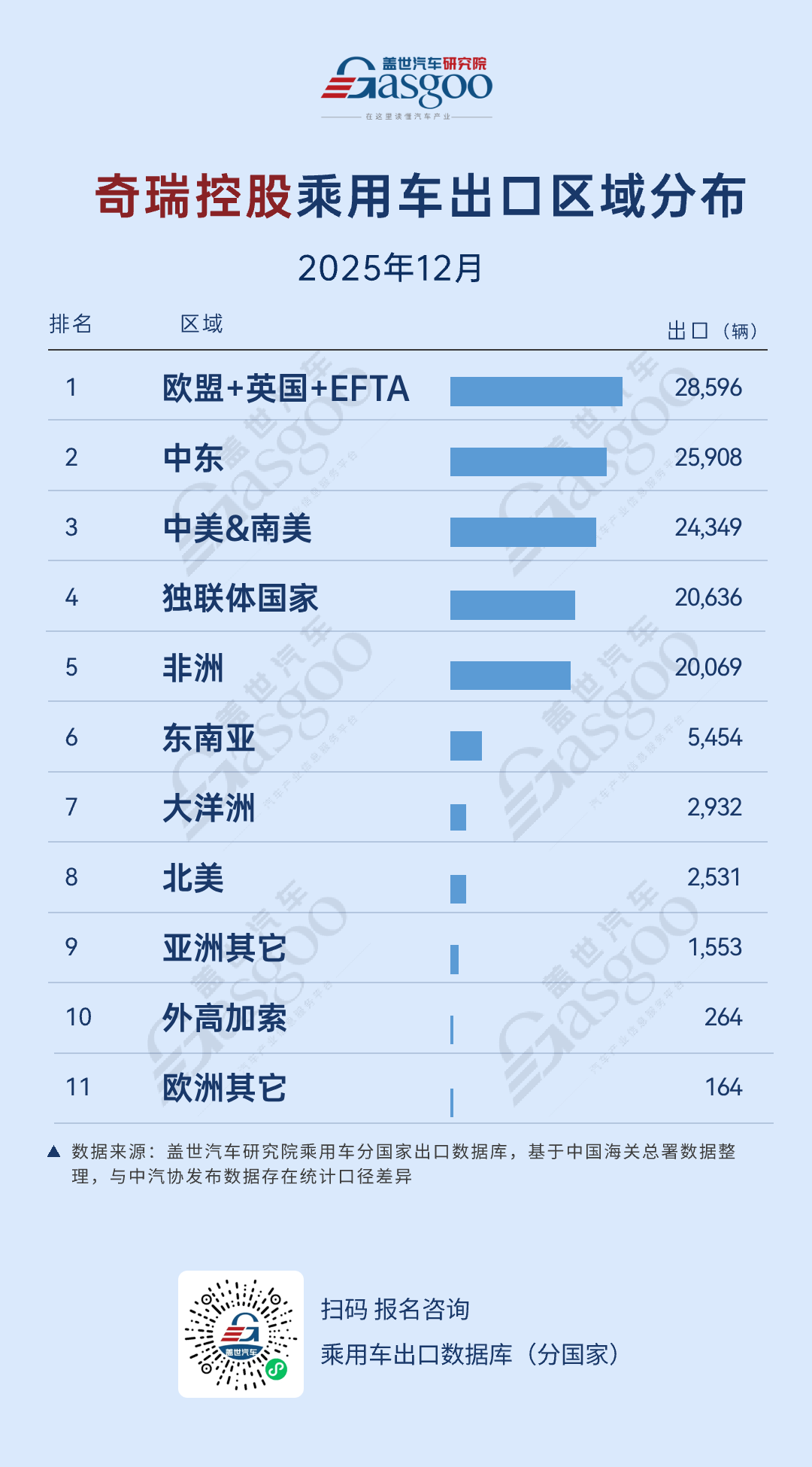
The concentration of growth at the top is a direct result of competitive barriers becoming visible in a maturing industry. Gasgoo Auto Institute notes that just two companies, BYD and Chery, contributed more than 72% of the incremental volume. This phenomenon must be viewed through the lens of dynamic capability building rather than static market share.
BYD’s comprehensive dominance represents the concentrated release of systemic capabilities forged through years of saturation-level investment in new energy. These capabilities include cost and supply chain security advantages derived from the vertical integration of core electrification technologies; a product development system featuring parallel, fast-iterating pure electric and plug-in hybrid platforms; and a unified, clear global narrative focused on technology and sustainability.
The fact that BYD ranks among the leaders in differentiated markets like China, Europe, North America, and Southeast Asia proves it has constructed a globally applicable "technology-product-brand" system, rather than relying on the specific opportunities of a single market.
Chery’s path illustrates a different form of long-termism. Through over two decades of cultivation overseas, it has built a deep channel network and localization experience that short-term capital cannot easily replicate. Chery’s dominance in markets like the Middle East and South America is rooted in a profound understanding of local consumer culture, usage scenarios, and regulatory environments—translating that understanding into highly targeted product definitions and service systems.
The common ground between BYD and Chery in the export market is that both have completed the transformation from traders to operators. Their competitiveness is rooted in complex internal capabilities that are difficult to imitate.
In stark contrast to the surge of top-tier players, some automakers are facing severe headwinds in export markets.
For instance, some companies that relied on joint-venture backgrounds or specific export windows have seen significant declines in key markets. This reveals that during periods of industry upheaval, past path dependencies can turn into obstacles. As the competitive focus shifts from simply providing products to delivering leading technology experiences and brand value, companies that underinvested in core proprietary R&D, global brand building, and agile organizational structures are quickly losing ground under the new rules of the game.
This widening gap is structural. It implies that while the number of Chinese auto "players" going abroad may shrink, the comprehensive strength and global influence of the survivors will grow exponentially.
Meanwhile, major regional markets globally are fragmenting at a stunning pace, each evolving into an independent track with its own set of rules.
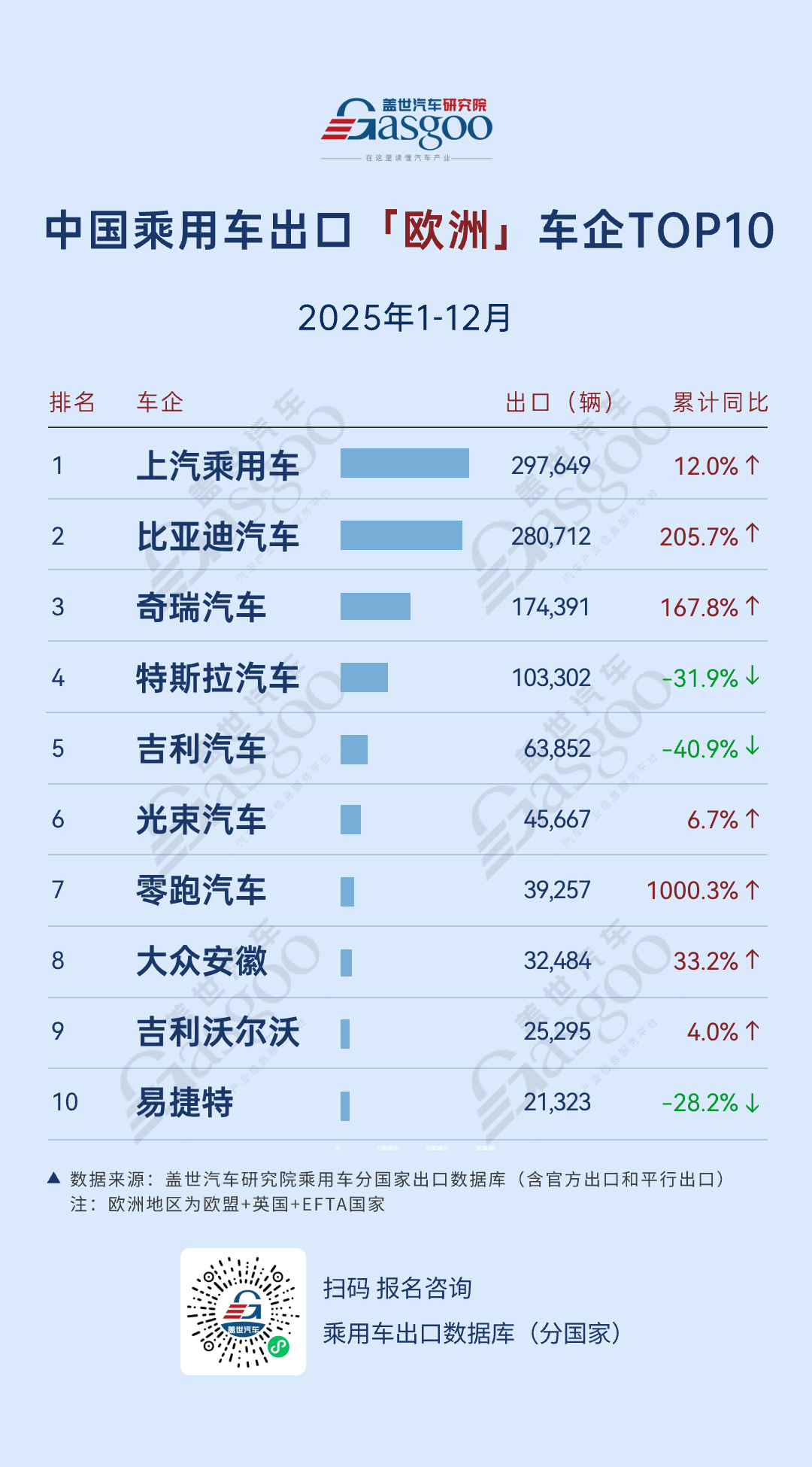
In Europe, the core issue has moved beyond commercial competition into the deep waters of geo-economic and industrial policy maneuvering. The EU’s anti-subsidy investigation is just the beginning; behind it lies a package of measures aimed at reshaping the global EV supply chain and securing European industrial safety and technological sovereignty. Against this backdrop, the criteria for success for Chinese automakers in Europe are being redefined: a pure export model based on high cost-performance is not only unsustainable but may even trigger a stronger backlash. SAIC’s relative stability with MG in Europe benefits from its long-term operations as a local brand; BYD’s rapid growth is built on recognized, irreplaceable technological leadership. Future competition in Europe will be a multi-dimensional race involving compliance cost control, carbon footprint transparency, local value chain contribution, and technological leadership.
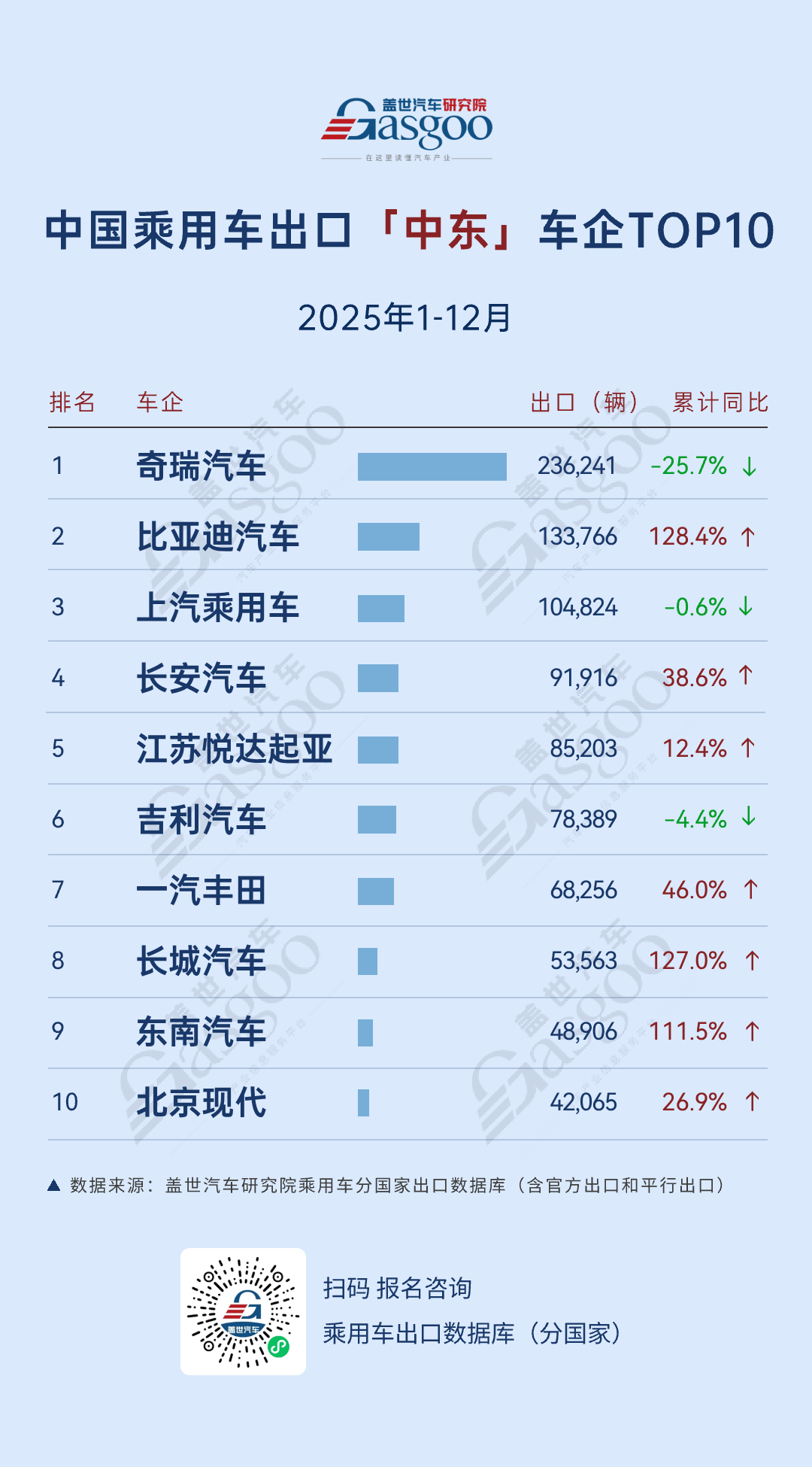
The Middle East presents a unique picture of "re-globalization." It has become a classic case where traditional multinational giants use their global brand equity and Chinese manufacturing efficiency to reconstruct costs and defend market share. Companies like FAW Toyota and Yueda Kia produce mature models in China for export to the Middle East—essentially the optimal solution for a global supply chain under cost pressure. This means Chinese brands in the Middle East face not only product competition but the competition of optimized global systems from multinational giants. Chery and BYD must prove, amidst this complexity, that their brand value transcends mere cost-performance, establishing deeper emotional and technological connections with users.
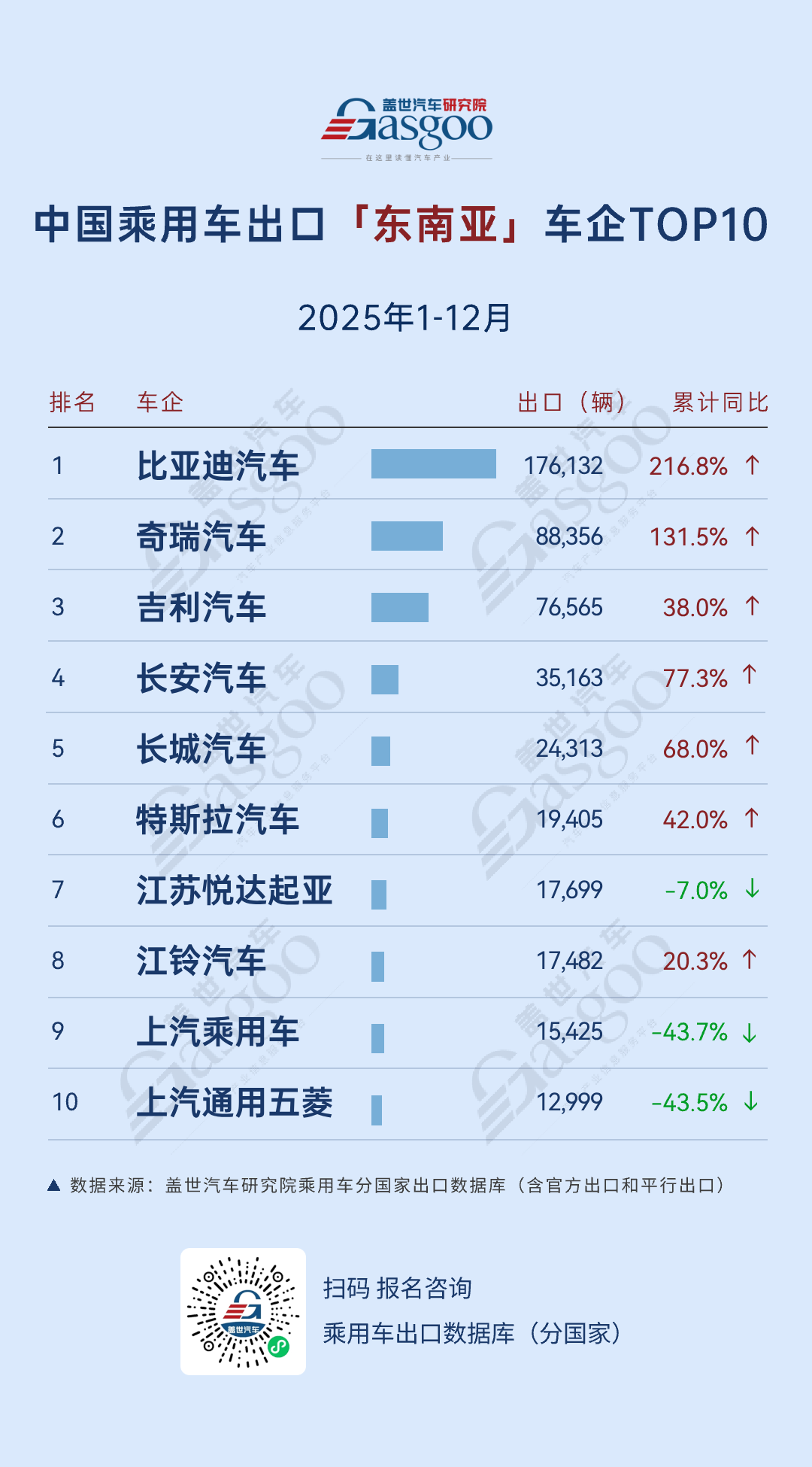
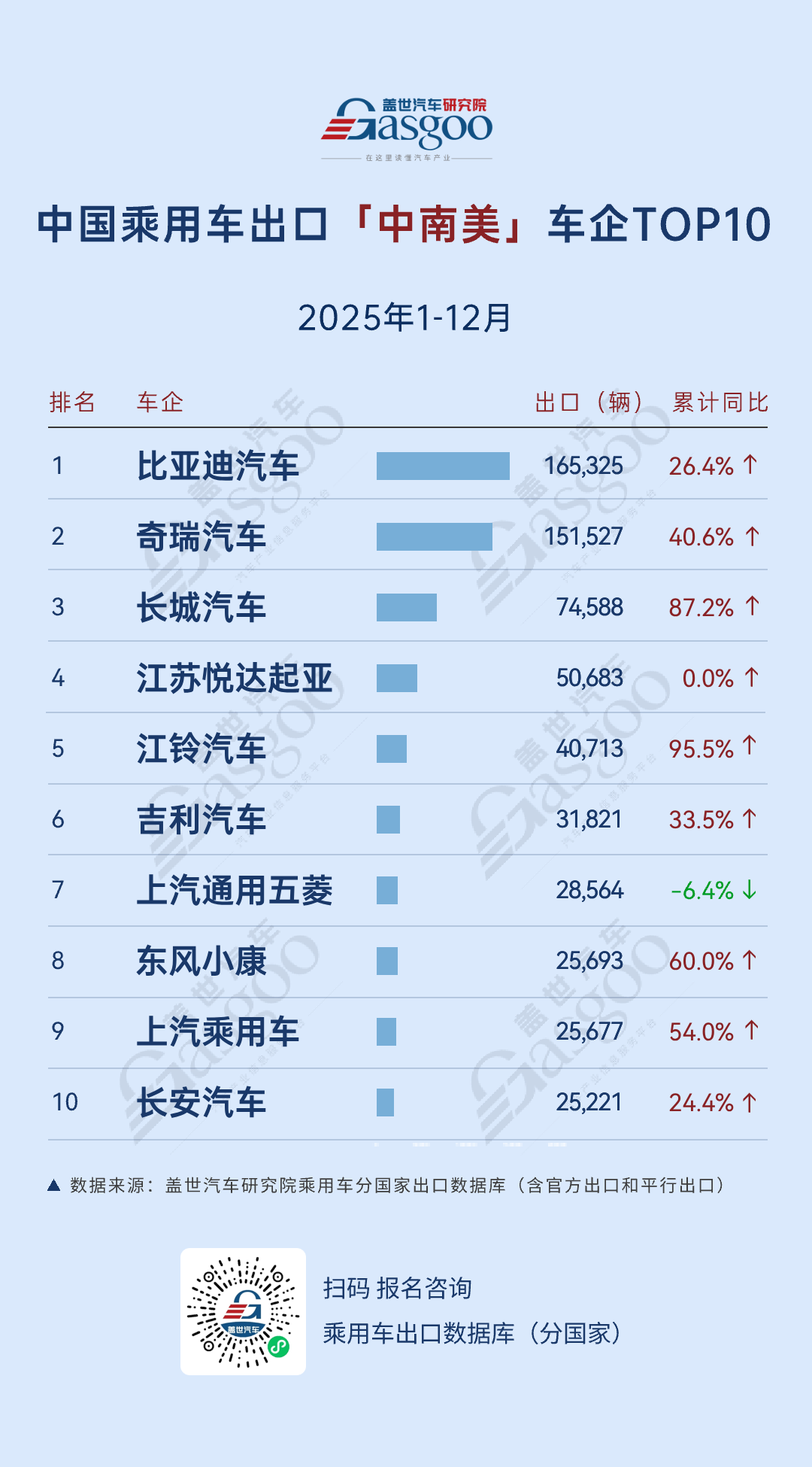
Southeast Asia and Central and South America, the "twin engines" of export growth, also see their bonus periods accompanied by rapidly intensifying competition and policy risks. The first-mover advantage of Chinese EV companies is attracting the attention and pursuit of global giants. More importantly, governments in these markets are rapidly shifting from encouraging imports to using "market for industry" strategies, continuously raising requirements for localized production ratios to cultivate domestic manufacturing. This means the current high-growth model, reliant mainly on completely built unit (CBU) exports, inherently contains a window of unsustainability. The ability—and speed—to complete the pivot from trade to localized manufacturing will be the key to deciding who wins the future in these markets.
The dynamics in North America (with Mexico as a hub) most directly reflect the overwhelming influence of geopolitics as an exogenous variable. The rules of competition here are deeply intertwined with supply chain security, technical standard alliances (such as the North American Charging Standard), and even diplomatic relations. Chinese automakers here need to demonstrate high strategic flexibility and risk-hedging capabilities. Their overall layout must focus more on long-term strategic positioning rather than maximizing short-term sales volume.
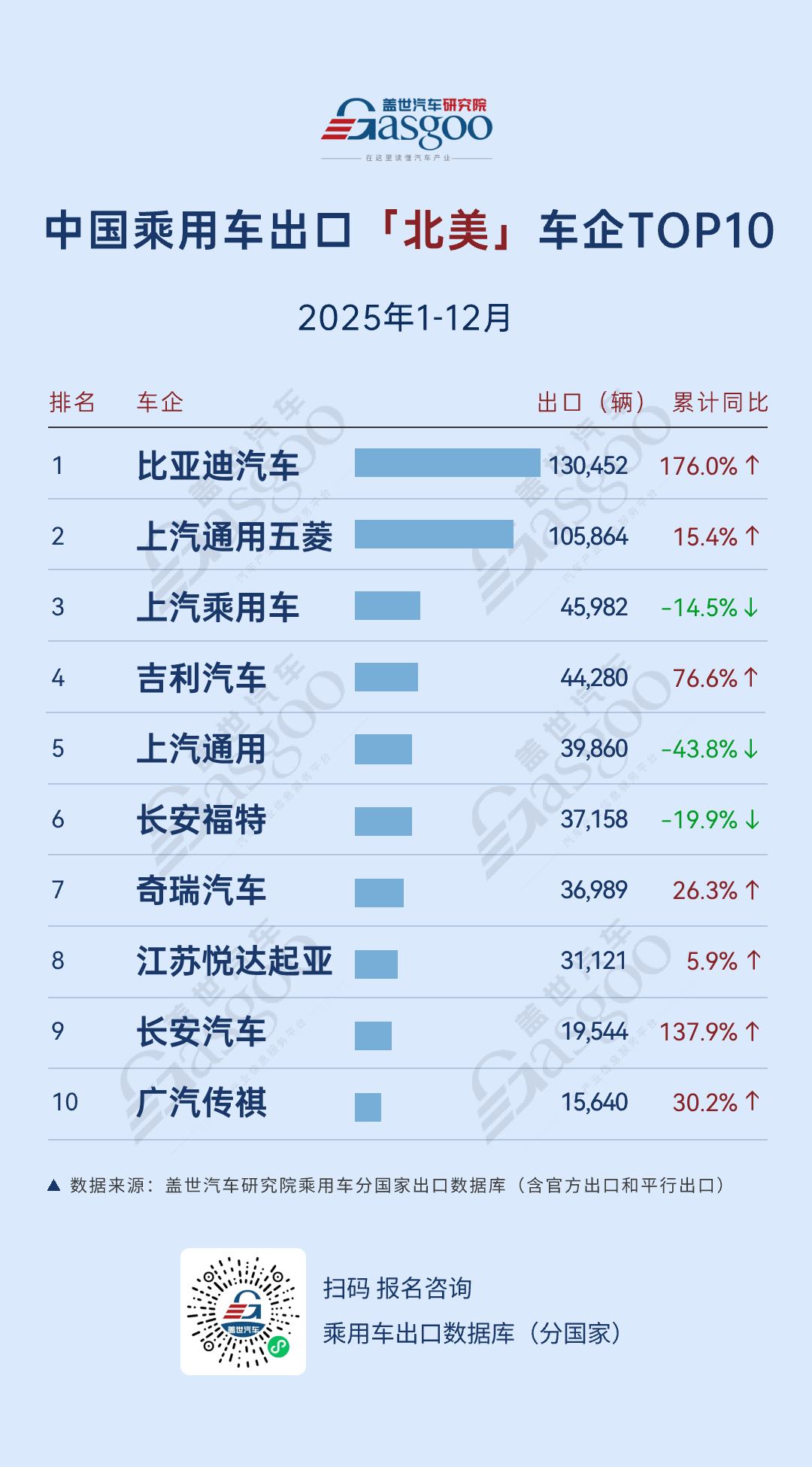
Recent reports suggest the Canadian government is actively reaching out to Chinese automakers.
Foreign media reports indicate that Canadian Industry Minister Mélanie Joly revealed the government is actively promoting the establishment of a Sino-Canadian joint venture automobile plant to produce electric vehicles for global export. Joly stated that Canadian auto parts companies such as Magna International Inc., Linamar Corp., and Martinrea International Inc., which already operate in China, are expected to participate in this joint venture assembly project located in Canada.
This profound market differentiation requires Chinese automakers to possess multi-national localization strategy management and execution capabilities comparable to multinational corporations. They must establish an independent competitive logic and operational system for every key market.
Redefining the Export Technology Roadmap
A deeper insight from the 2025 data is this: the Chinese auto industry is gradually shifting from being an acceptor and applier of global technical standards to becoming a definer and exporter of standards in specific fields. The core vehicle for this transformation is the strategic choice of technology roadmaps and the global projection of product philosophy.
Analysis by Gasgoo Auto Institute points out that exports of Chinese plug-in hybrid vehicles surged by 255% year-on-year in 2025, replacing pure electric vehicles as the core engine of a new round of growth. This is not merely a technological victory, but a precise response to and leadership of diverse global demands by the Chinese industrial chain.
The explosive global success of plug-in hybrid technology serves as a model of technological innovation led by Chinese enterprises addressing global pain points. It is not a simple transitional solution, but an adaptive solution created based on a profound insight into the unevenness of global infrastructure, the diversity of energy structures, and the variability of consumer habits.
The promotion of pure electric vehicles is a systematic project requiring synchronized changes in power grids, infrastructure, and consumer habits; the process is inevitably long and uneven. Chinese automakers have keenly seized this global structural opportunity, fusing their leadership in batteries and electronic controls with efficient improvements to internal combustion engines. They have created products that achieve an excellent balance between range, cost, convenience, and environmental protection. For instance, BYD’s DM-i technology has become a phenomenon precisely because it addresses the core concern of pragmatic users in developed nations and the mass of consumers in developing nations alike: "How to enjoy the benefits of electrification without being tethered to a charging network?" The success of this technological roadmap signals that the innovation capability of the Chinese auto industry has ascended from the level of engineering improvement to the definition of system solutions and business models.
Evolving in tandem with technological innovation is the global export of Chinese automotive product philosophy. In the past, Chinese auto exports were often criticized as "simply transplanting successful domestic models." Data from 2025, however, indicates that leading companies have established a mature product development and launch system featuring "global platform architecture plus regional scenario adaptation." The concentration of star models is the result of this system operating efficiently. The BYD Seagull, for example, has become a hit in Bangkok, São Paulo, and Mexico City simultaneously. Underlying this is the scale efficiency and quality consistency of a highly integrated global platform, while the differentiated configuration combinations, range versions, and even exterior details offered in different markets reflect a rapid adaptation capability based on local needs.
At a deeper level, successfully exported products have become carriers of new Chinese automotive values. They convey not just mobility functions, but a modern lifestyle proposition integrating intelligent technology, green concepts, and confidence in quality. In Europe, it might be the digital-native driving fun represented by the MG4 EV; in Southeast Asia, the fashionable, affordable urban electric mobility represented by the Seagull; in the Middle East, the reliability and spirit of exploration represented by the Chery Traveler. Chinese automobiles are establishing value resonance with consumers in different regions that transcends the attributes of a mere tool. This elevates the dimension of competition: evolving from a comparison of specifications to a contest of complete user experience and brand ecosystems. In certain fields, Chinese automakers are beginning to possess the potential to export product definition rights and value discourse power to the world.
Sustainability Challenges for Chinese Auto Exports
All optimistic narratives regarding growth and technology must be examined against an increasingly severe macroeconomic backdrop. The political and economic rules of the global automotive industry are undergoing fundamental restructuring. Trends such as trade protectionism and supply chain regionalization are systematically dismantling the "flat world" assumption of the past three decades, which was based on comparative advantage and global division of labor.
For Chinese auto exports, this means the trade export model reliant on low-cost manufacturing and efficient logistics has hit a ceiling. Future sustainability must be built on the new rules of localized symbiosis.
The core of this transformation is shifting from the radiation of the value chain to the co-construction of a value ecosystem. In key strategic markets, the role of Chinese automakers needs a fundamental shift: from external suppliers to internal participants, contributors, and stakeholders in the local economy. In Europe, this means not only establishing assembly plants (CKD/SKD) but also setting up R&D centers focused on product development that complies with European regulations and preferences. It requires deep cooperation with local suppliers to increase the localization ratio of the supply chain, and even investment in supporting industries like battery recycling and charging networks. The goal is simple: to increase value creation, employment contribution, and technology spillover in the local economy, thereby deeply binding one’s own interests with local social development in both political and economic dimensions to dissolve the systemic risks associated with being an "outsider."
In emerging markets like Southeast Asia and South America, the urgency of localization stems more from direct changes in market access rules. Governments there view new energy vehicles as a historic opportunity to drive industrialization and achieve industrial upgrading. Consequently, using tax incentives and subsidy policies as levers to mandate or encourage localized vehicle production has become a common policy tool. If Chinese automakers wish to enjoy the growth dividends of these markets over the long term, they must transfer advanced manufacturing capabilities, supply chain management experience, and some technologies locally. This is essentially a new stage of "technology for market" cooperation. Its success depends on whether automakers possess mature capabilities in overseas factory operations, cross-cultural management, and the cultivation of localized supply chains.
Meanwhile, compliance and ESG (Environmental, Social, and Governance) frameworks have evolved from a moral choice to a survival prerequisite with veto power. The EU’s New Battery Regulation, with its stringent requirements on lifecycle carbon footprint, raw material traceability, and recycling rates, has erected a towering green technology barrier. Global scrutiny of data security, privacy protection, and supply chain labor rights is also intensifying. The complexity and dynamism of these non-tariff barriers far exceed those of traditional tariffs. Constructing a new system that aligns with the highest international standards and spans the entire chain—from R&D, procurement, and production to sales and recycling—has become an indispensable foundational operation for Chinese automakers’ globalization. Building this capability takes a long time, requires heavy investment, and cannot be outsourced. It is becoming another major watershed distinguishing true global enterprises from trading companies.
Looking ahead, the story of Chinese auto exports will no longer be about the linear extrapolation of volume, but about the structural leap of quality. Head companies will continue their journey of exporting systemic capabilities, building regional "micro-ecosystems" that integrate R&D, manufacturing, marketing, and service in major global regions. Their identity will increasingly resemble that of true global citizen enterprises. For other companies, strategic focus will become more important than strategic expansion. Choosing specific regions or niche markets that best match their capabilities and resources for deep localization—and building irreplaceable niche advantages—may be the more realistic path to survival and development.
Summary:
The 2025 export data serves as a detailed medical report, clearly displaying the robust physique of the Chinese auto industry’s globalization while also revealing its structural pressure points. We have witnessed structural growth driven by technology and branding, observed the profound fracturing of market rules, and must sense the twilight of the old paradigm of globalization. The export of Chinese automobiles has already moved past the "Columbus Era" of opening up territories with guts and cost, and is entering a "Marco Polo Era" of intensive cultivation that relies on wisdom, technology, and the philosophy of symbiosis.
This profound transformation demands that Chinese automakers possess multiple capabilities: internally, continuous technological innovation and agile organizational metamorphosis; externally, deep localized integration and global resource consolidation. The ultimate goal of Chinese automakers going global is not to replicate the Chinese auto market across the world, but to cultivate a symbiotic industrial ecosystem in different foreign soils—one that can absorb local nutrients while blooming with the flowers of Chinese innovation.
This is undoubtedly a more challenging path, but it is also the only route toward attaining sustainable global leadership. When Chinese automobiles are not only sold globally but also take root and contribute globally, the image of a truly powerful automotive powerhouse will become fully realized.


