



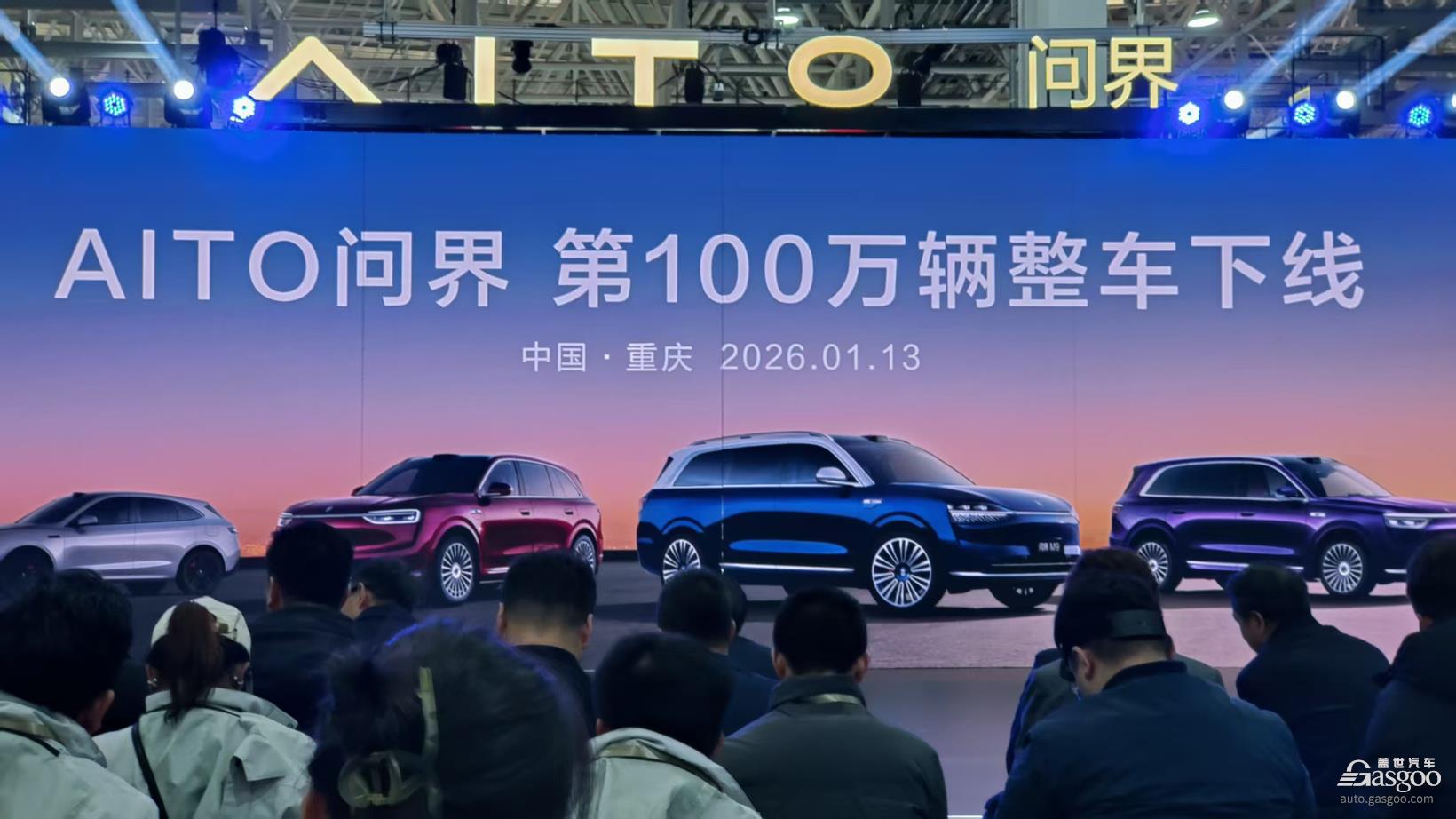
On Jan. 13, the AITO brand's 1 millionth vehicle rolled off the line at the SERES Super Factory. The vehicle was an AITO M9, which on the same day also marked its 270,000th delivery.
AITO's million-delivery milestone isn't unique. Over the past two years, several upstarts have in turn hit the 1 million mark in either vehicle production or deliveries.
Reaching the million mark, one after another
From a market standpoint, the competitive landscape among leading upstarts has come into clearer focus, with a front-running cohort formed by Li Auto, Harmony Intelligent Mobility, Leapmotor, XPENG, NIO and Xiaomi Auto. Except for Xiaomi Auto—which only began deliveries in early 2024—the other five have all joined the "million-unit club" over the past year or so.
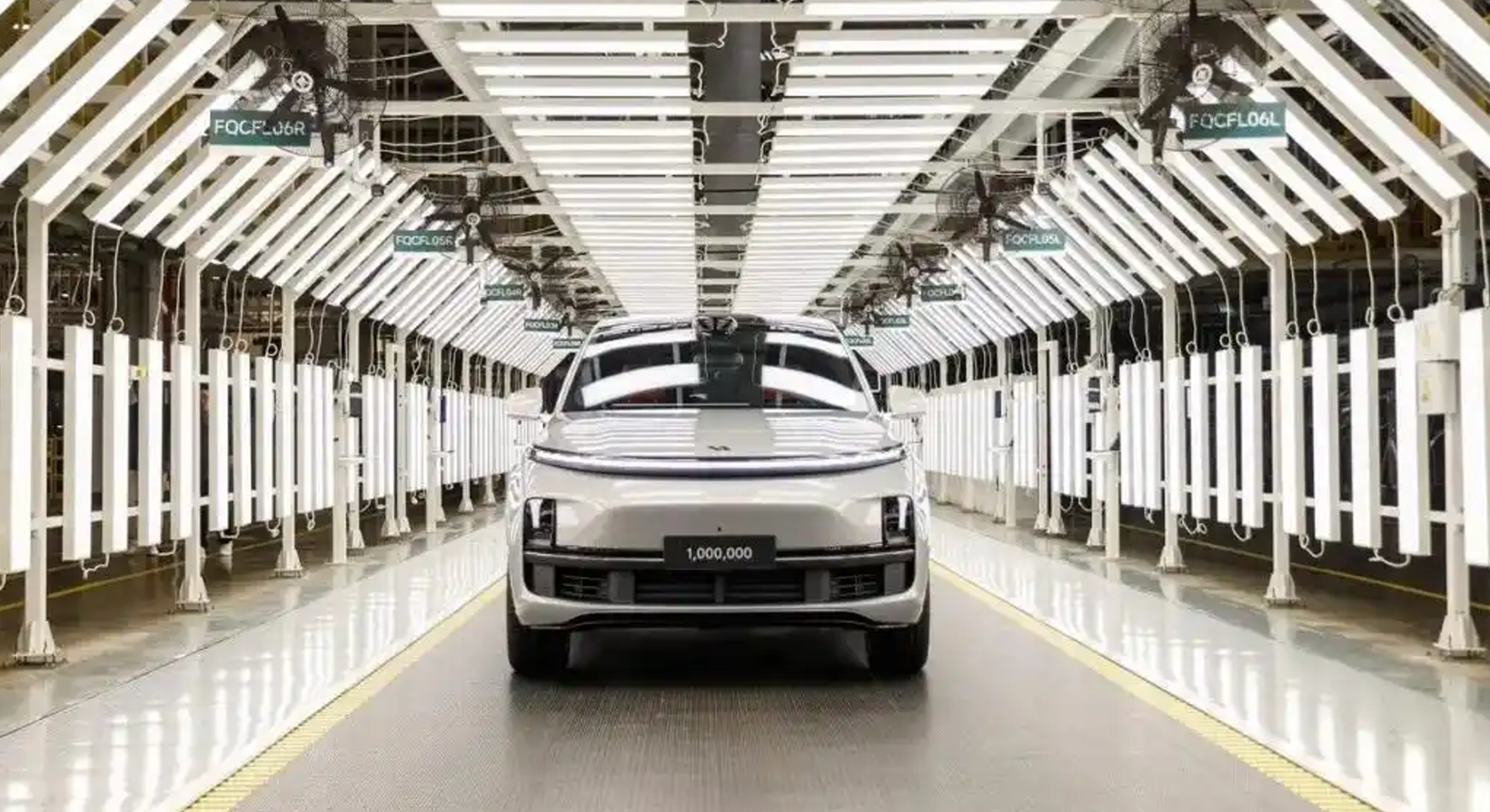
Image credit: Li Auto
Li Auto was the first to clear the 1 million threshold. On Oct. 15, 2024, its 1 millionth vehicle rolled off the line at the Changzhou base.
From first delivery to 1 million took about 58 months, making Li Auto the first Chinese EV upstart to reach that mark. Its lineup centers on L-series range-extended models, which have secured a steady share in the high-end family segment priced above CNY 300,000.
Leapmotor followed. On Sept. 25, 2025, its 1 millionth vehicle officially rolled off the line at the Jinhua plant.
Leapmotor's growth curve shows clear acceleration: it took more than five years to reach the first 500,000, but only 343 days to climb from 500,000 to 1 million. That momentum stems largely from cost control enabled by its "full-stack in-house development" approach and a dual powertrain strategy of range-extended plus pure electric, which sped its penetration of the mid-market.
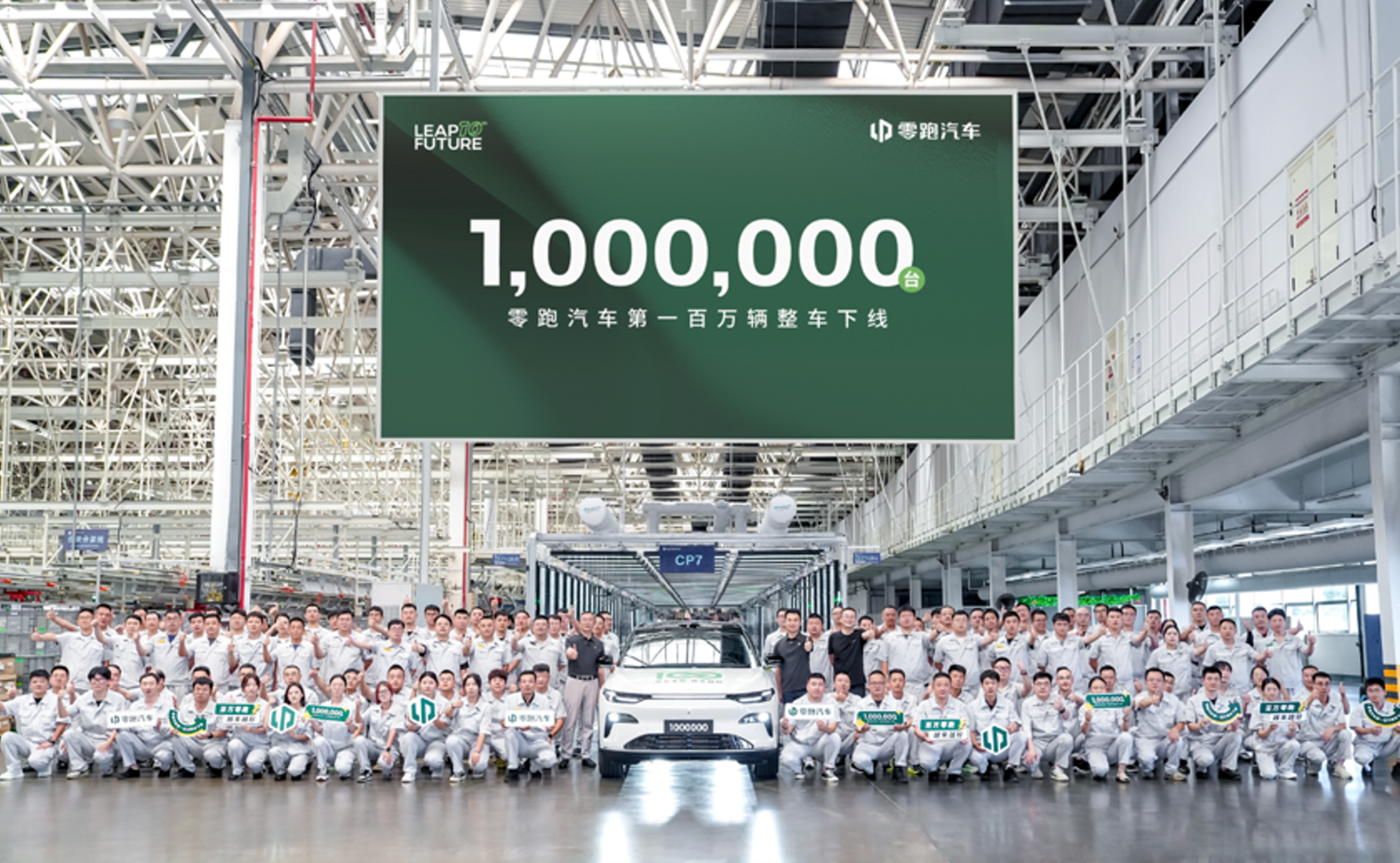
Image credit: Leapmotor
Under a cross-industry collaboration model, Harmony Intelligent Mobility has stood out as well. On Oct. 28, 2025, it announced cumulative deliveries had topped 1 million, taking just 43 months.
As the sales core of Harmony Intelligent Mobility, the AITO brand has been especially steady. On Jan. 13, 2026, AITO independently reached 1 million vehicles off the line, over roughly 46 months. The sustained popularity of the AITO M7 and M9 in their respective segments has validated the viability of "intelligence-empowered manufacturing" at scale.
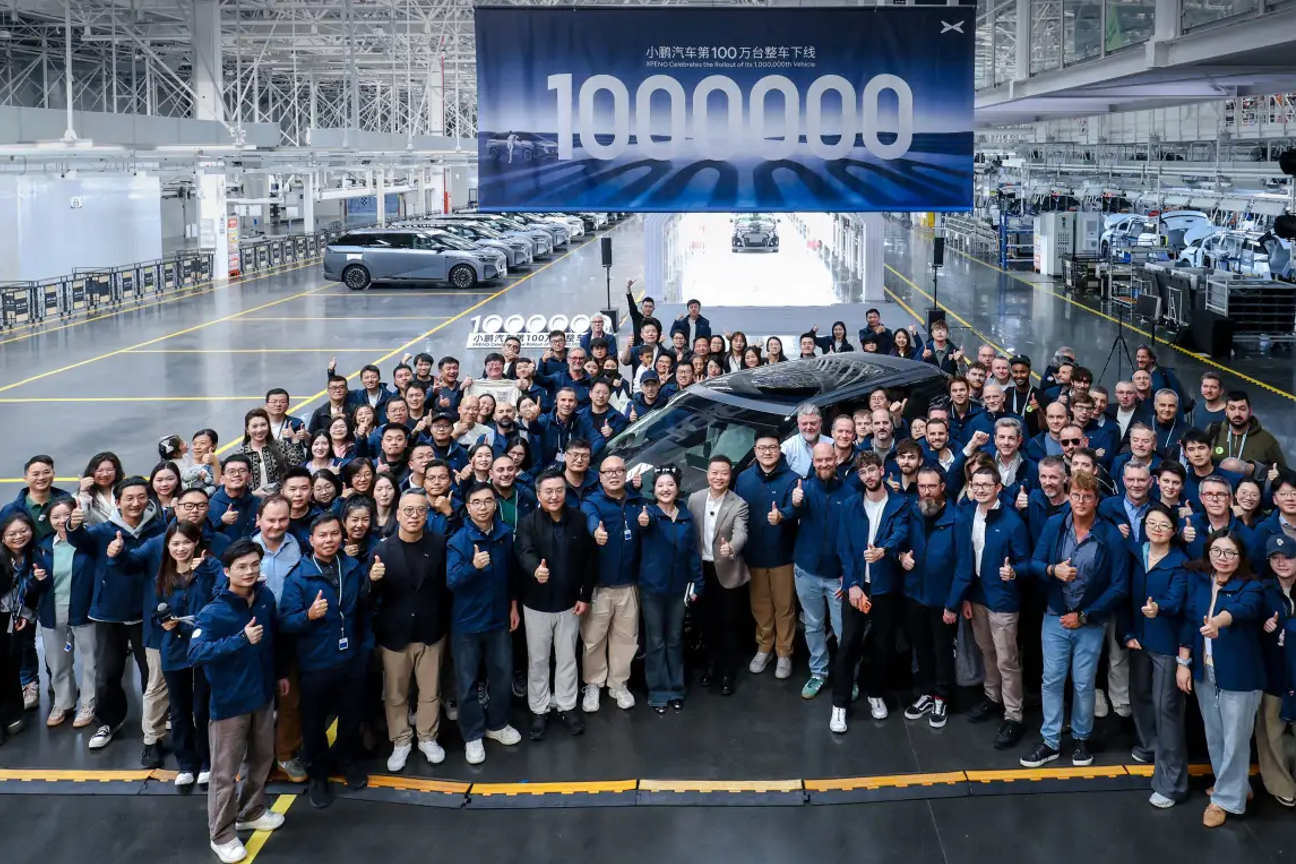
Image credit: XPENG
XPENG and NIO made the leap in late 2025 and early 2026, respectively. On Nov. 21, 2025, XPENG's 1 millionth vehicle rolled off the line at its Guangzhou plant—an XPENG X9 Super Range-Extended edition. On Jan. 6, 2026, NIO's 1 millionth mass-produced car came off the line in Hefei.
For these two carmakers that insist on full-stack in-house technology, the 1 million mark means R&D outlays in heavy-investment areas such as charging and energy-replenishment networks and autonomous-driving algorithms can be amortized more efficiently.
Within this cohort, Xiaomi Auto hasn't reached 1 million yet simply because it started later, with deliveries beginning in early 2024.
By November 2025, it had taken just 20 months to hit 500,000 units off the line. Based on its 2026 delivery target of 550,000 units, Xiaomi Auto is on track to cross 1 million within 2026. Such a rapid ramp underscores how efficiently a mature electronics supply chain can migrate into auto manufacturing.
Stepping into a new milestone
Crossing the million-delivery threshold marks the start of a new phase for these brands. With the 15th Five-Year Plan kicking off in 2026, top players are shifting from survival and scale to high-quality, sustainable growth.
Some upstarts are aligning their operating philosophy with "world-class company" standards rather than "startup survival." Take Leapmotor: on its 10th anniversary, founder Zhu Jiangming said the company no longer sees itself as a "new force," but aims to become a world-class automaker built for sustainable development.
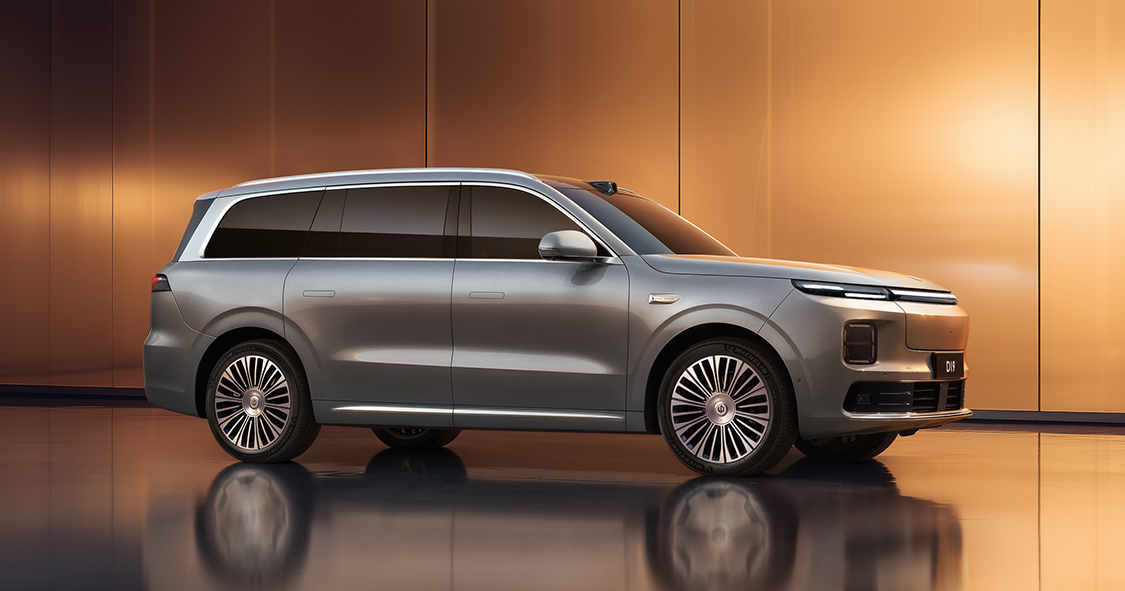
Image credit: Leapmotor
After posting consecutive quarterly profits and turning net income positive, Leapmotor is focusing its future edge on balancing gross margin and cash flow, with plans to leap to 1 million annual sales in 2026. That goal signals a shift: beyond the first million, carmakers are prioritizing self-sustaining cash generation over financing and volume for their own sake.
The technology playbook is entering a phase of deep verticalization and AI-led competition. The next race centers on foundational, core technologies.
NIO plans to keep investing across 12 full-stack technologies for smart EVs and to iterate its world model for autonomous driving. XPENG is targeting breakthroughs in "physical AI" and full autonomy. Leapmotor, for its part, is doubling down on "full-stack in-house development" and bringing technologies such as centralized domain-control architectures into mass production.
Competition is set to evolve from single-feature innovation to full-stack battles spanning driver assistance, E/E architectures and energy systems.
Infrastructure and ecosystem coordination are emerging as new high ground. Once fleets reach the million level, user expectations for aftersales, charging and battery-swap services grow exponentially.
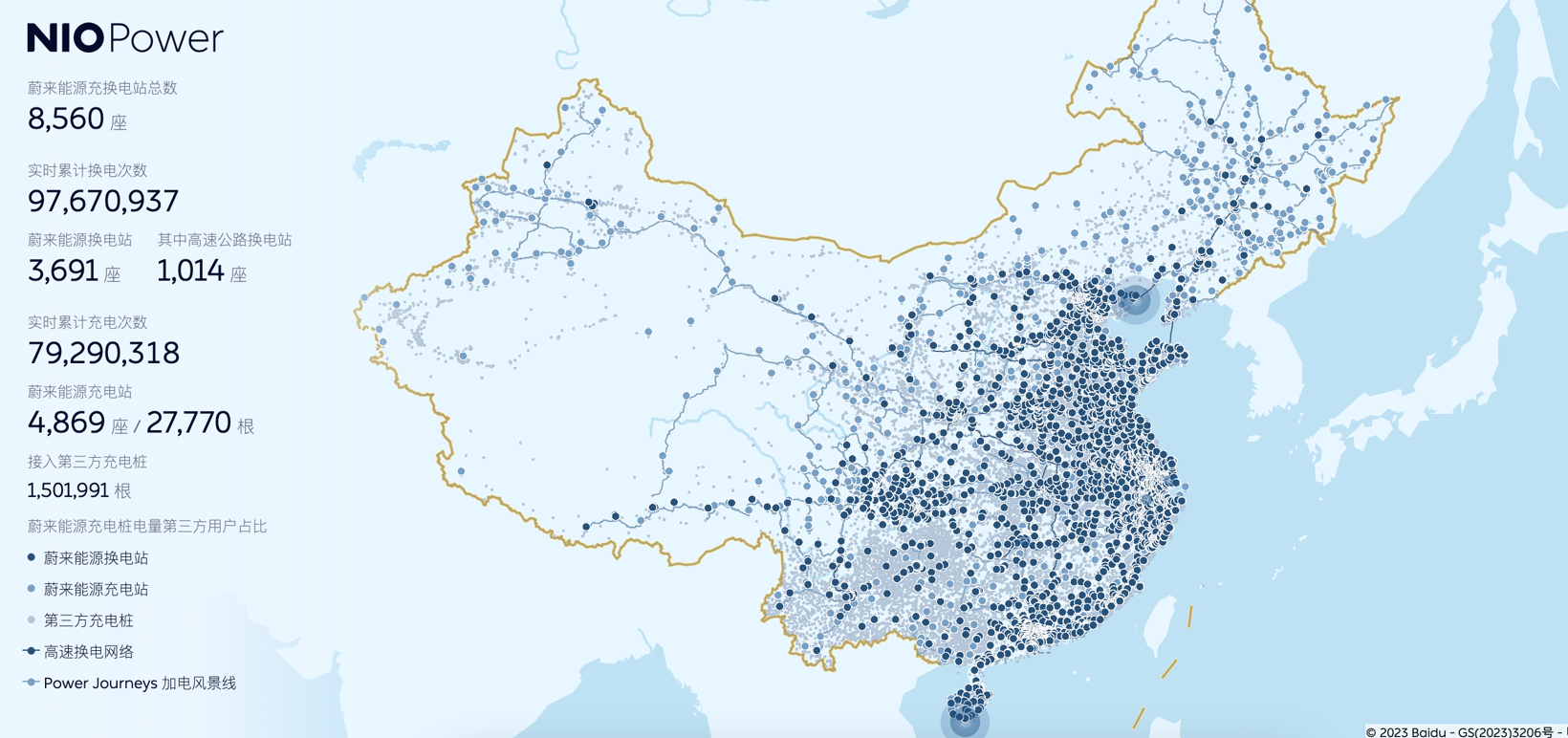
Image credit: NIO
NIO aims to surpass 10,000 charging stations and 10,000 battery-swap stations by 2030. Through the combined efforts of NIO, ONVO and Firefly, it is seeking to build a closed-loop ecosystem that spans price bands while sharing a common service network. Harmony Intelligent Mobility, meanwhile, is building a coordinated ecosystem via a multi-brand, full-price-band lineup.
Market expansion is unfolding on two fronts: globalization and deeper local reach. Leveraging its partnership with Stellantis, Leapmotor has entered more than 30 countries; XPENG plans to lift the share of overseas sales; NIO and Li Auto are also advancing their global footprints. At home, networks are pushing into lower-tier cities to tap incremental demand.
From Li Auto to AITO, the 1 millionth vehicle off the line marks a shift from zero-to-one to a scaled, systems-level contest. In this phase, the contest isn’t just about clever product definitions; it hinges on deep supply-chain integration, global operating muscle and the ability to deliver profits over the long haul.


