



On Jan. 6, NIO signed a framework agreement with Chery Automobile and JAC Group to jointly build a collaborative innovation platform for automotive industry development, and also inked a collaborative auto-chip industrialization project with Lontium Semiconductor Corporation.
The four-company partnership zeroes in on technical collaboration and joint innovation across the auto sector. Notably, NIO, Chery, JAC Group and Lontium Semiconductor are all Anhui-based. The pairing of provincial automakers with local chipmakers is still rare in today's automotive supply-chain landscape.
The focus, moreover, falls squarely on collaborative R&D and the industrialization of automotive chips — suggesting deeper coordination on chip definition, technical validation and real-world deployment.
Automakers Seek Chip Independence
The auto industry's heavy reliance on chips has been repeatedly underscored over the past few years.
NIO, Chery and JAC Group, as high-volume automakers active in powertrains, body control, smart cockpits and driver assistance, require large quantities of chips with strong supply stability. NIO previously had to adjust production due to tight chip supply, while Chery cut output amid shortages.
This is not an isolated corporate issue but a sector-wide challenge. Recently, some of Honda's joint ventures in China repeatedly delayed restarts due to insufficient semiconductor supply, with its home market in Japan and North America also affected. The more globalized the automaker, the more exposed it is to chip constraints.
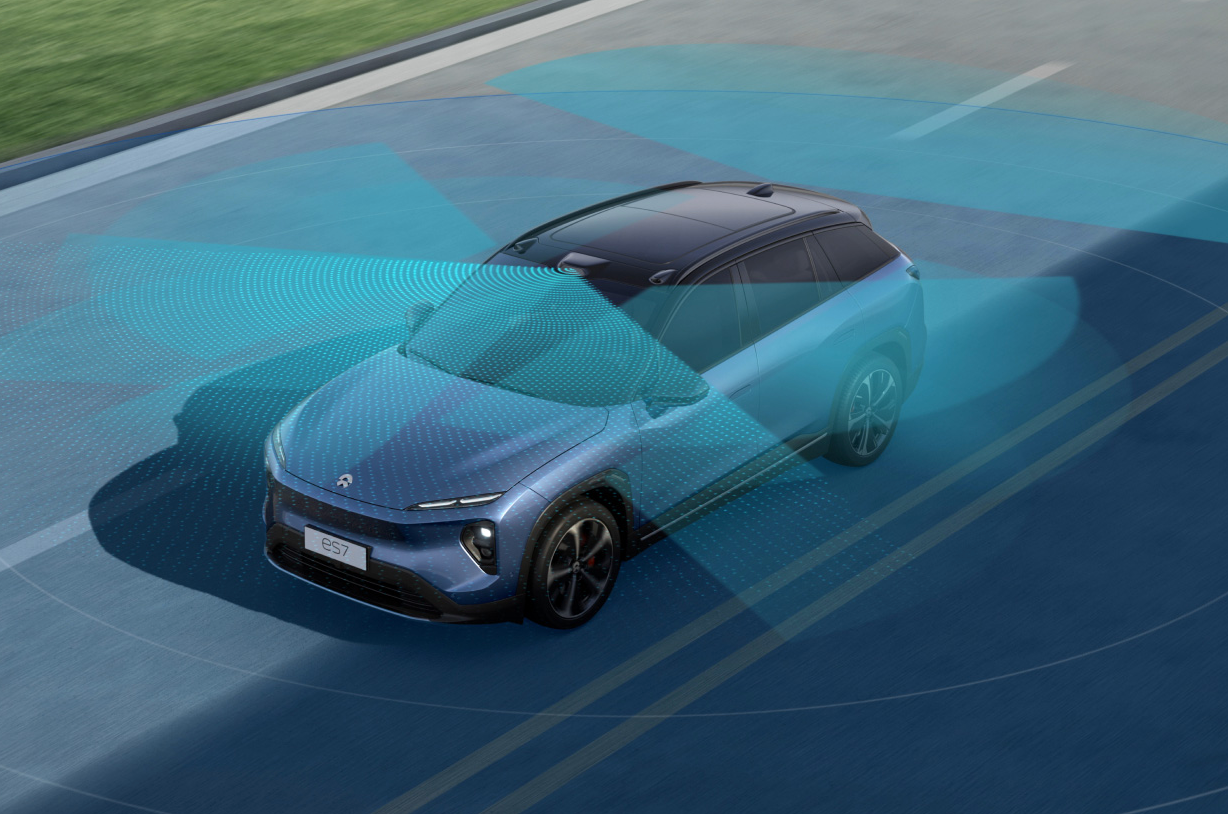
Image source: NIO
Auto chips have long leaned on overseas supply systems, while automotive-grade certification cycles are lengthy and substitution is difficult. When upstream disruptions hit, automakers often resort to production cuts, suspensions or configuration changes. That vulnerability has become more pronounced as vehicle intelligence and electrification advance.
By volume, a traditional internal-combustion car carries around 400 chips, a new-energy vehicle near 1,000, and highly intelligent models can exceed 1,500. Chips have shifted from auxiliary components to the foundation that determines delivery capacity and product features.
As a result, "chip freedom" is no longer a mere technical slogan — it directly ties to operational stability.
Against this backdrop, several domestic brands are investing in in-house chips or expanding local supply chains. NIO, for instance, is developing the Shenji NX9031 assisted-driving chip, built on a 5-nanometer automotive-grade process and packing more than 50 billion transistors. Dongfeng Motor, working with Hubei-based partners, has developed the DF30, a high-performance automotive-grade MCU.

Image source: Lontium Semiconductor
In the four-firm alliance, Lontium Semiconductor is the keystone. Lontium Semiconductor (Hefei) Co., Ltd., founded in 2006 and headquartered in Hefei, is among China's earlier designers of high-speed mixed-signal chips, long focused on intelligent video and high-speed interconnect ICs. The company listed on the STAR Market in 2023 and began its Hong Kong IPO in 2025.
Lontium's portfolio spans video bridging, signal processing and high-speed interface protocols, with broad applications in smart displays and industrial vision. In recent years, it has accelerated its automotive push, with multiple products earning automotive-grade certification and entering smart cockpit displays and in-vehicle interconnect systems.
For NIO, Chery and JAC Group, partnering with Lontium enables joint R&D and early involvement at the chip-definition stage — reducing uncertainty in later adaptation and scale-up, and giving automakers more leverage in the chip supply system.
Anhui doubles down on auto industry
The quartet's ability to coordinate also reflects Anhui's systematic buildout in autos and semiconductors in recent years.
On auto industry, Anhui has become a major vehicle manufacturing base. In the first 11 months of 2025, provincial vehicle production topped 3.30 million, with new-energy vehicle output exceeding 1.60 million — overtaking Guangdong to become China's leading auto province.
Hefei and Wuhu have formed a dual-core cluster, home to NIO, Chery, JAC Group, Volkswagen Anhui and BYD, and drawing in more than 3,000 parts suppliers across power, electronics and intelligent systems.
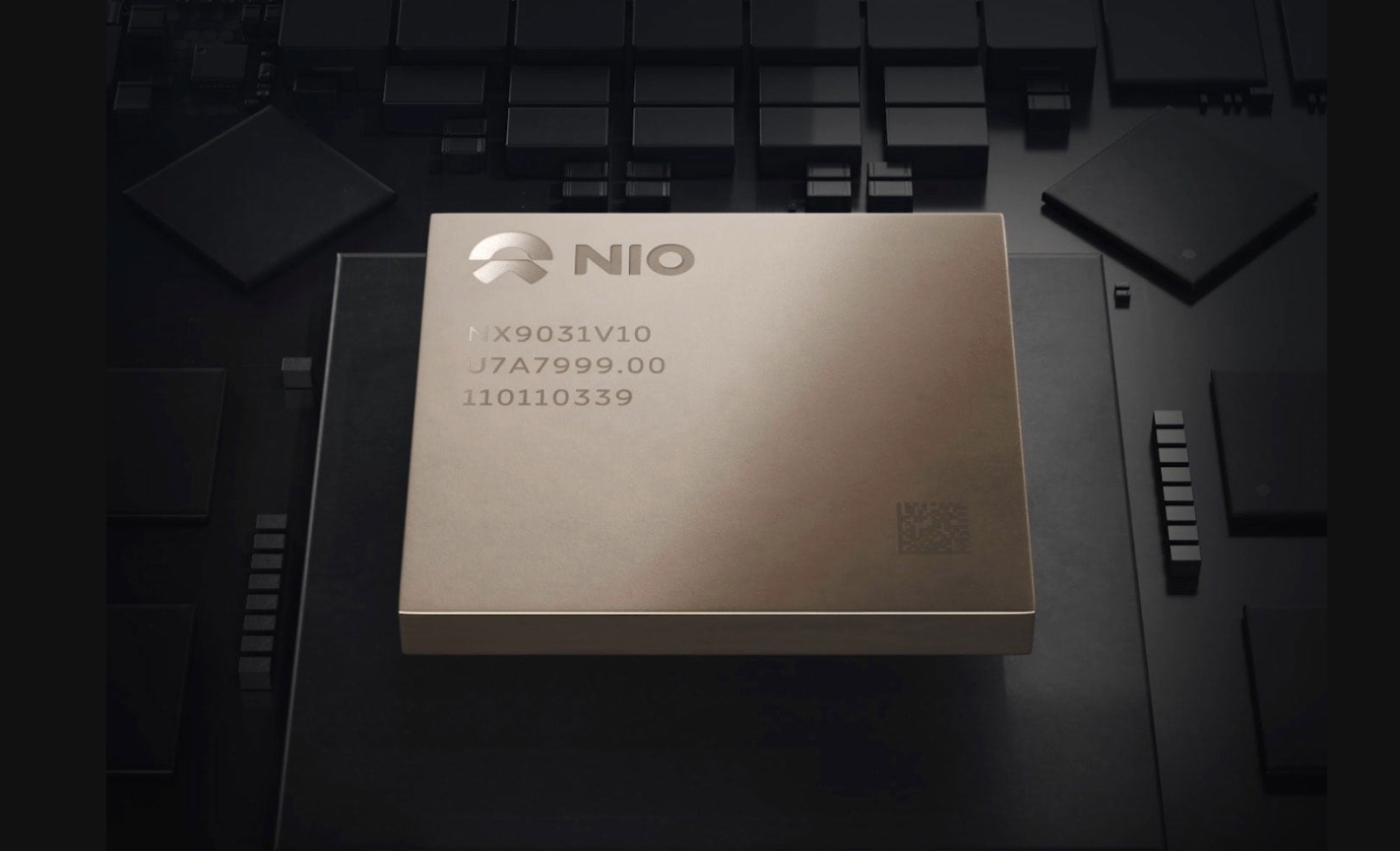
Image source: NIO
On semiconductors, Anhui — especially Hefei — has built a relatively complete ecosystem. Nexchip Semiconductor Corporation provides 12-inch wafer foundry capacity; ChangXin Memory Technologies (CXMT) is expanding in DRAM; and the design side has gathered local players such as Lontium and NuVolta, steadily extending into automotive- and industrial-grade applications. From design to manufacturing, that support underpins local deployment of auto chips.
By 2027, Hefei's new-energy vehicles are expected to use about 4.83 billion chips, worth roughly 40.8 billion yuan.
Automakers, meanwhile, are shifting from pure demand-side buyers to active participants. NIO has located its China headquarters in Hefei and continues to work with universities and local firms, ramping investment in chips and intelligence; Chery is stepping up R&D in electrification and smart technologies, using open collaboration to speed deployment; and JAC Group's pivot toward new energy and premium segments raises the bar for stable supply of key components.
Chipmakers, guided by automaker demand, are clarifying product directions and accelerating automotive-grade certification and industrialization. Automakers provide application scenarios; chip firms bring technical capabilities; and the regional ecosystem offers manufacturing and support — together forging tighter collaboration.
Overall, the four Anhui firms' joint push on auto-chip collaboration signals Anhui's auto industry extending from scale advantages to system capabilities.
NIO also said it will work with industry partners to promote technology sharing among Anhui companies, further advancing an open, collaborative and mutually beneficial industrial ecosystem in Anhui and Hefei.


