As autonomous driving technology moves out of controlled test environments and into everyday urban life, the Middle East is emerging as one of the most ambitious and open arenas for real-world deployment.
On February 6, 2026, Chinese autonomous driving firm WeRide and global ride-hailing platform Uber announced an expanded strategic partnership, targeting the rollout of at least 1,200 Robotaxis across Abu Dhabi, Dubai and Riyadh by 2027. If executed as planned, the initiative would mark a major step-change in both the scale and geographic reach of Robotaxi services in the region.
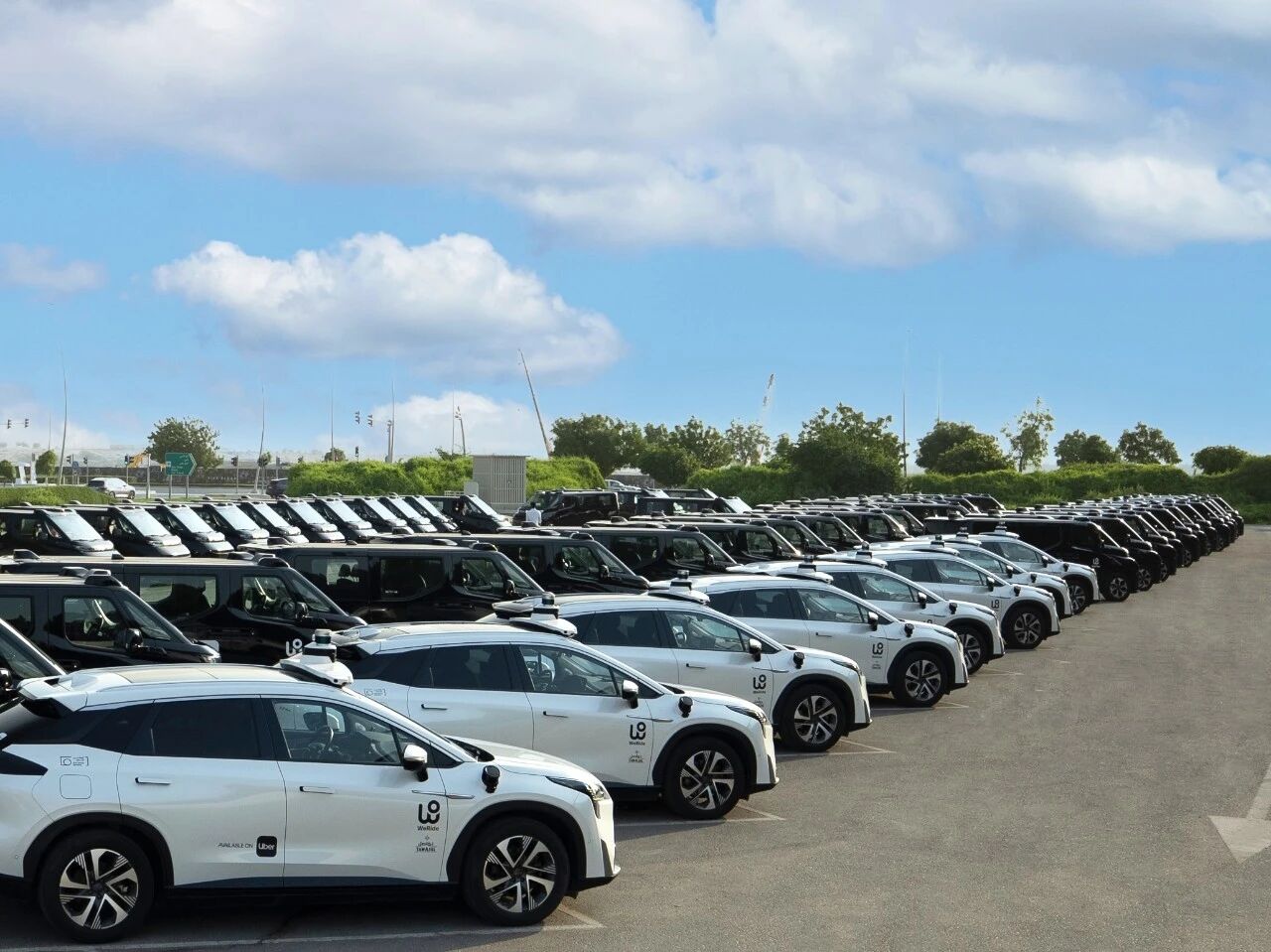
WeRide's Robotaxi fleet in Abu Dhabi; image source: WeRide
A new smart mobility hub in the desert: Why the Middle East?
For decades, the Middle East was best known internationally for oil wealth and high-end consumption. That image is now being deliberately reshaped.
Countries such as the United Arab Emirates and Saudi Arabia are pushing economic diversification strategies that place technology and smart infrastructure at the center. National programs like the Saudi Vision 2030 and Dubai's goal of making 25% of all transportation operated in autonomous mode by 2030 underline a clear commitment to intelligent, low-carbon and efficient mobility. Proactive policymaking and comparatively open regulatory frameworks have turned the region into a testing ground for global technology companies.
Against this backdrop, WeRide has been building a sustained presence in the Middle East since 2021, starting in Abu Dhabi and gradually assembling what it describes as the region's largest and most operationally mature Robotaxi fleet. Securing the UAE's first national license covering multiple vehicle types cleared regulatory hurdles for testing and deployment in complex urban settings.
Uber, meanwhile, brings something equally critical: a massive global user base, proven operational systems and brand recognition that can bridge advanced technology with real passenger demand. The partnership effectively aligns cutting-edge autonomy with scalable commercial platforms.
From pilot projects to a connected network: A phased expansion strategy
Tracing the evolution of WeRide and Uber's collaboration in the Middle East reveals a deliberate and methodical expansion path. Rather than rapid, high-risk scaling, the partnership has followed a classic commercialization arc: validation through testing, transition to live operations, and then measured geographic and fleet expansion.
The first phase focused squarely on Abu Dhabi, where the partners set out to validate both technology and business models. After formalizing their cooperation in September 2024, WeRide and Uber launched Robotaxi services with safety drivers in December.
Momentum continued into 2025: by September, WeRide's vehicles were integrated into Uber's first global "Autonomous" service category, and in November fully driverless Level 4 commercial operations began on Yas Island. Performance metrics from this stage showed strong utilization, with individual vehicles completing dozens of trips per day.
Besides, WeRide disclosed that its Middle East Robotaxi unit had reached operating profitability in 2025, while Abu Dhabi's driverless services moved close to vehicle-level breakeven, laying a solid foundation for broader rollout.
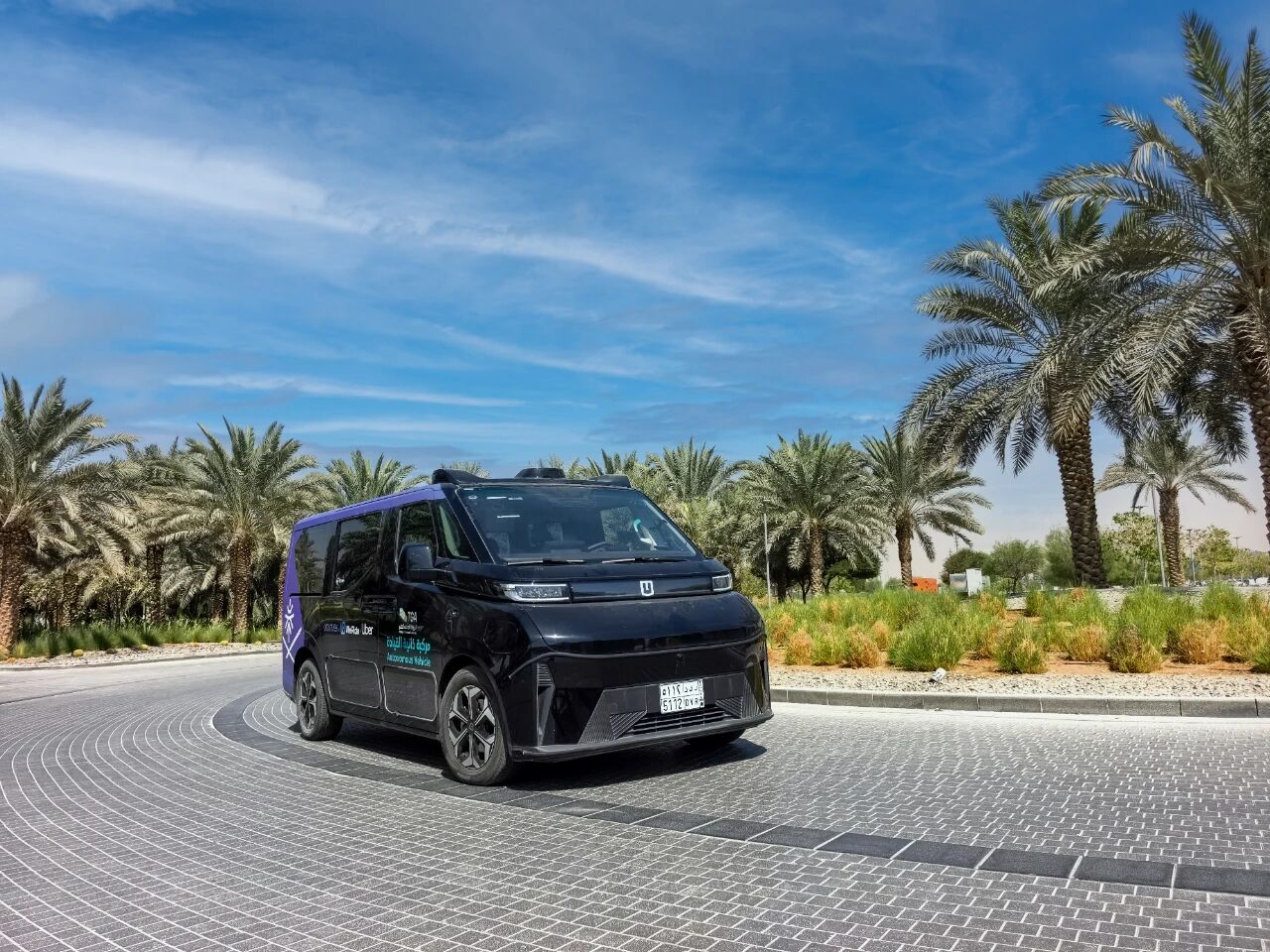
WeRide's Robotaxi GXR; image source: WeRide
With the Abu Dhabi model validated, expansion accelerated into other strategic cities. In 2025, the partnership moved into Riyadh and Dubai, two urban centers central to regional mobility transformation plans.
On October 24, 2025, local time, WeRide and Uber officially launched public Robotaxi services in Riyadh. The move marked the first time autonomous vehicles were available through the Uber app in Saudi Arabia and represented a key milestone in collaboration with Saudi Arabia's Transport General Authority. The rollout closely aligned with the Vision 2030's emphasis on intelligent and sustainable transportation.
In Dubai, a three-way partnership with the Roads & Transport Authority led to the public launch of Robotaxi services in December 2025. The initiative directly supports Dubai's target of making autonomous travel account for a quarter of all trips by 2030.
With Abu Dhabi, Riyadh and Dubai now connected, Robotaxis have gained a foothold across the Gulf's three most influential urban markets.
The third phase marks a shift from expansion to scale. Buoyed by encouraging operational data, rising vehicle utilization and constructive engagement with regulators, the partners announced in February 2026 a plan to deploy at least 1,200 Robotaxis across the three cities by 2027.
This target signals more than just a larger fleet. It implies a transition from limited zones and showcase routes to deeper integration into everyday urban mobility. WeRide's asset-light model—supplying autonomous technology while Uber or local partners handle operations—amplifies its ability to scale quickly, allowing the company to concentrate on system upgrades and platform support as deployment accelerates across the region.
Beyond transportation: How large-scale Robotaxi deployment could reshape cities and industries
When Robotaxis enter urban streets not by the dozens but by the thousands, their impact extends far beyond becoming just another ride-hailing option.
At the most immediate level, large-scale autonomous ride services have the potential to reshape the urban mobility ecosystem itself. In cities such as Dubai and Riyadh, where governments are simultaneously investing heavily in public transport, shared and automated mobility could become a structural complement rather than a competitor. Integrated effectively, such systems may help rebalance traffic flows, ease congestion and reduce per-capita carbon emissions. Early demand signals appear encouraging.
According to data disclosed by Uber, weekly orders linked to its "Autonomous" category in Abu Dhabi rose by around 20% after the category went live, suggesting a tangible and growing appetite for technology-driven mobility services.
Beyond transport, the ripple effects are likely to be felt across the regional technology and economic landscape.
Scaling Robotaxi fleets requires far more than vehicles alone. It drives demand for local data centers, high-definition mapping, vehicle-to-everything (V2X) communications, as well as fleet operations and maintenance capabilities, all of which translate into new industrial clusters and skilled jobs. As the Integrated Transport Centre (Abu Dhabi Mobility) has framed it, the objective is not only to deploy sustainable, innovative mobility solutions, but also to improve overall quality of life. In this sense, the gradual formation of an autonomous driving value chain offers a concrete, ground-level illustration of the Middle East's broader economic diversification ambitions.
Perhaps most importantly, the Middle East is emerging as a critical proving ground for the global commercialization of autonomous driving. Its road conditions, climate extremes and culturally diverse traffic behaviors pose demanding real-world tests for system robustness and adaptability.
The experience accumulated by WeRide and Uber in achieving fully driverless commercial operations under multiple regulatory regimes is therefore highly transferable. It offers a practical reference for other markets considering similar deployments. The partners' ambition to add 15 new international cities over the next five years draws much of its confidence from the operational lessons and regulatory trust established in the region.
Challenges and horizons: the long road toward fleets of tens of thousands
Despite the strong momentum, the path toward operating Robotaxi fleets measured in the tens of thousands by 2030—a goal set by WeRide— remains far from straightforward.
On the technical front, expanding service coverage from well-defined core zones to truly citywide, all-scenario operations will require sustained algorithm refinement and long-term data accumulation to address so-called "long-tail" edge cases.
Operationally, managing fleets at the thousand-vehicle scale—and eventually beyond—poses its own set of challenges, from real-time dispatch and maintenance efficiency to cost discipline. Regulatory alignment and public acceptance add further layers of complexity. As fully driverless services move beyond limited areas, close coordination with regulators and consistently safe, reliable operations will be essential to building lasting public trust.
Competitive pressure is also set to intensify. As the Middle East's Robotaxi deployments increasingly serve as a global reference case, other autonomous driving developers and mobility platforms are likely to follow closely—or enter the market directly. Early-mover advantages and the deep trust built with local authorities give WeRide and Uber a meaningful defensive moat, but sustaining that edge will depend on continued technological leadership and disciplined execution at scale.
Final thoughts
What began as an exploratory partnership between WeRide and Uber in the Middle East has now entered a far more demanding phase of accelerated scaling. The target of deploying 1,200 Robotaxis is not merely a numerical milestone, but a signal that autonomous driving is moving beyond eye-catching demonstrations toward services that can be operated, monetized and expanded within real cities.
The collaboration aligns closely with the Middle East's broader ambitions for economic transformation and technological leadership, while also validating a model that brings together autonomous technology providers, global mobility platforms and proactive government support. This experiment in smart mobility—originating in Abu Dhabi and spreading across the Gulf—may ultimately influence how cities worldwide think about integrating autonomous vehicles into everyday transport systems.