Gasgoo Munich - For GAC Group, 2025 marks a turning point defined by the most severe challenges and profound transformations in nearly two decades.
The group’s annual scorecard reveals a stark contrast between fire and ice. On one hand, net profit attributable to shareholders is expected to post a loss of 8 billion to 9 billion yuan, while full-year sales slipped year-on-year, highlighting intense operational pressure. On the other, sales have climbed for three consecutive quarters on a quarterly basis starting from the second quarter of 2025. Reform measures are taking effect, and the first month of 2026 delivered a strong start.
This sharp contrast mirrors the complex transition of a legacy automaker struggling to break free from old systems and reshape its core competitiveness amid the industry’s electrification and intelligentization waves—a journey intertwined with both pain and hope.
Glimmers Amid the Growing Pains
GAC Group’s 2025 performance exemplifies the characteristics of a traditional automotive giant navigating industry upheaval: overall results are under deep pressure, yet internal structures are diverging rapidly, with positive signals of the transition emerging despite the headwinds.
In 2025, GAC Group’s attributable net profit is projected to land between a loss of 8 billion and 9 billion yuan—a fundamental reversal from the 824 million yuan profit recorded in 2024.
The deficit on net profit after deducting non-recurring items widened further, projected to reach 8.9 billion to 9.9 billion yuan, placing unprecedented pressure on the bottom line.
Image Source: GAC
Yet, massive losses are not unique to GAC; they are a true microcosm of an entire auto industry squeezed by price wars, technological iteration, and market restructuring. GAC’s losses stem from a mix of proactive adjustments and reactive pressures—a “transition cost” essential for long-term transformation.
On the sales front, GAC Group moved 1.72 million vehicles in 2025—a year-on-year decline that fell short of annual targets. However, beneath the headline drop, performance diverged sharply across brands, reflecting the uneven pace of transformation within the group.
GAC Toyota stood as the only major brand within the group to achieve positive sales growth. Against an industry-wide downturn, it sold 756,000 units last year, managing a slight increase against the current.
The key to its resilience lies in a steadfast strategy of balancing both fuel and electric power. While shoring up its internal combustion engine base with models like the Camry, it broke into the new energy market with the China-led *bZ3X*. For months, it topped sales charts among joint-venture electric vehicles, effectively solidifying the foundation of its joint-venture sector.
In sharp contrast stands GAC Honda, which suffered a significant year-on-year sales decline. The core issue: a lag in the pace of electrification. Key pure electric models arrived late, and localization efforts were sluggish. Failing to roll out competitive new energy products quickly enough in a rapidly iterating market, the brand missed its window of opportunity.
On the proprietary brand front, both Aion and Trumpchi are navigating a deep adjustment period, facing distinct challenges. After a period of rapid early growth, GAC Aion hit bottlenecks in 2025, including white-hot competition in its core models and obstacles in its efforts to move upmarket.
GAC Trumpchi, meanwhile, is seeking a balance between maintaining its traditional stronghold in the MPV market and pushing forward a comprehensive new energy transition. There remains significant room for improvement in its new energy penetration rate.
Notably, the group’s sales curve achieved a significant “V-shaped” recovery throughout 2025. Starting in the second quarter, sales climbed for three consecutive quarters on a quarterly basis, with the growth rate steadily accelerating.
This positive momentum extended into January 2026, with total group sales rising 18.47% year-on-year—a sign that various reform measures are finally transmitting to the market and delivering tangible results.
Betting on the Future
GAC Group’s 2025 performance scorecard is the inevitable result of an external industry winter colliding with internal radical reform.
The Chinese auto market officially entered an elimination phase in 2025. New energy vehicle penetration rates climbed relentlessly, price wars raged from start to finish, and industry profit margins were severely compressed. Every automaker faced the dilemma of growing revenue without growing profits—or worse, seeing both sales volume and price decline simultaneously.
Meanwhile, leading players like BYD and the Huawei-backed camp leveraged full supply chain advantages and distinct intelligent features to expand market share. This intense cutthroat competition squeezed traditional automakers like GAC, directly eroding the profit foundation of its various brands.
GAC Group defined 2025 as the first year of deep implementation for its “Panyu Action” reform plan, explicitly acknowledging it is in a comprehensive “adjustment period.”
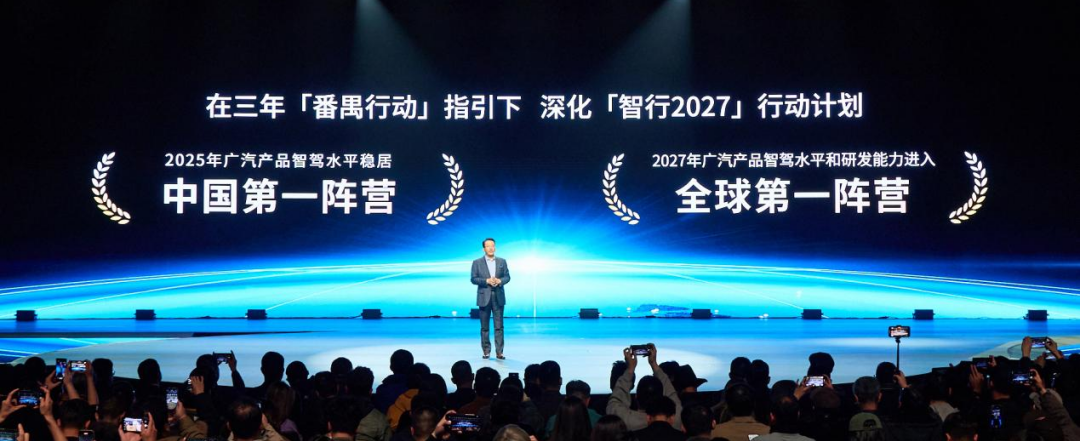
Image Source: GAC
To actively cope with market upheaval, the company decisively adopted several strategic measures—moves that exacerbated losses in the short term but are focused on long-term development:
First, strategic sales investment increased significantly. To seize new energy market share and aggressively promote new energy models, the company ramped up spending on the sales front, facilitating the launch and market penetration of new products.
Second, asset impairment provisions increased. Due to missed sales targets and proactive adjustments to proprietary brand new energy product lines, the company booked higher impairment charges on relevant intangible assets and inventory compared to the previous year. Essentially a one-time financial cleanup, this move aims to shed redundancy and streamline operations, clearing obstacles for future growth.
Third, joint venture transitions weighed on investment income. Joint ventures like GAC Toyota and GAC Honda optimized existing production lines to accelerate their new energy transitions, generating significant asset impairment. This led to a corresponding decrease in investment income for GAC Group under the equity method.
These three factors—proactive marketing expansion, proactive asset cleanup, and a reactive decline in investment income—collectively formed the core financial drivers behind the massive losses in 2025.
The divergent market performances across brands are, ultimately, a direct reflection of how well their strategic execution matched market rhythms.
GAC Toyota’s resilience stems from a timely and decisive localized R&D strategy and a pragmatic “dual-track” approach for both fuel and electric vehicles, allowing it to precisely capture consumer demand during the market transition.
Conversely, GAC Honda’s decline exposed hesitation and sluggishness at a critical industry turning point, causing it to miss market opportunities.
The adjustments at GAC Aion and Trumpchi represent a proactive move under the group’s “strong proprietary brand” strategy. By the end of 2025, GAC Group pushed for the integration of Aion and Hyper into a “Hyper-Aion BU,” aiming to resolve issues such as scattered internal resources and internal brand competition.
In January 2026, the Trumpchi BU was officially established to integrate full value-chain resources and accelerate market responsiveness.
These profound organizational changes inevitably bring short-term pain, but the core objective is to build a more combat-ready proprietary sector and strengthen the core competitiveness of its own brands.
Although the 2025 financial data is undeniably severe, the series of deep reforms implemented by GAC Group have laid the groundwork for a future revaluation of its value.
The core objective of the “Panyu Action” is to cure the ills of corporate bureaucracy and reshape organizational agility. By introducing advanced management systems like IPD (Integrated Product Development), GAC has slashed its new vehicle development cycle from roughly 26 months to 18–21 months. R&D costs have dropped by over 10%, and overall business efficiency has improved by about 50%.
The full implementation of the BU system marks a shift from a traditional functional organization to a process-oriented one centered on users and products—a move that will fundamentally enhance the company’s market responsiveness and core competitiveness.