



Here are the major stories shaping the global auto industry this week.
Changan Auto Reshuffles Management; Chen Zhuo and Di Zhirui Named Vice Presidents
On June 16, Gasgoo learned that Changan Automobile Co., Ltd. released a board resolution announcing the formal appointment of two veteran executives, Chen Zhuo and Di Zhirui, as vice presidents. Their terms will run from the board's approval until the expiration of the ninth board of directors.

Chen Zhuo; Image credit: Avatr
Public records show Chen Zhuo, 42, is a Chongqing native. He joined Changan in 2006, building a career in brand public relations and high-end brand operations. He has served as deputy general manager and general manager of Changan's brand PR department, as well as company spokesperson. During his tenure leading Avatr, he held roles including senior executive vice president, general manager, party secretary, and president. He played a key role in the strategic rollout and market expansion of the premium smart EV brand.
The other new vice president, Di Zhirui, 45, hails from Liyang, Jiangsu province. Since starting his career in 2003, he has worked through product planning, market operations, and multi-brand management. His past roles include general manager of Changan's product planning department, marketing director for Deepal, and general manager and party secretary of the Oshan Automotive Division, where he led the OX project. Within the Changan Brand Division and Qiyuan sequence, he served as executive deputy general manager, company spokesperson, and Qiyuan product CEO. He accumulated extensive experience in product definition and customer engagement across multiple brands.
Gasgoo Take: By promoting veteran insiders and refining its executive structure, Changan is strengthening its marketing and product management capabilities—essentially paving the way for the long-term development of its full vehicle lineup.
BMW Cuts Profit Outlook Amid Double Whammy
Hit by sluggish sales in its core Chinese market and the negative fallout from the Iran conflict, BMW Group significantly lowered its 2026 performance forecast on June 16. The automaker now expects an operating margin of 1% to 3% for its core automotive business in 2026, down from a previous range of 4% to 6%. It also anticipates a slight decline in core vehicle deliveries this year, reversing an earlier expectation of flat volumes.
BMW also expects its pre-tax profit to shrink significantly, dropping by more than 15%, whereas it had previously forecast only a slight dip. Following the announcement, BMW shares listed in Frankfurt tumbled 6.6% to 181 euros by 6 p.m. local time on the 16th.
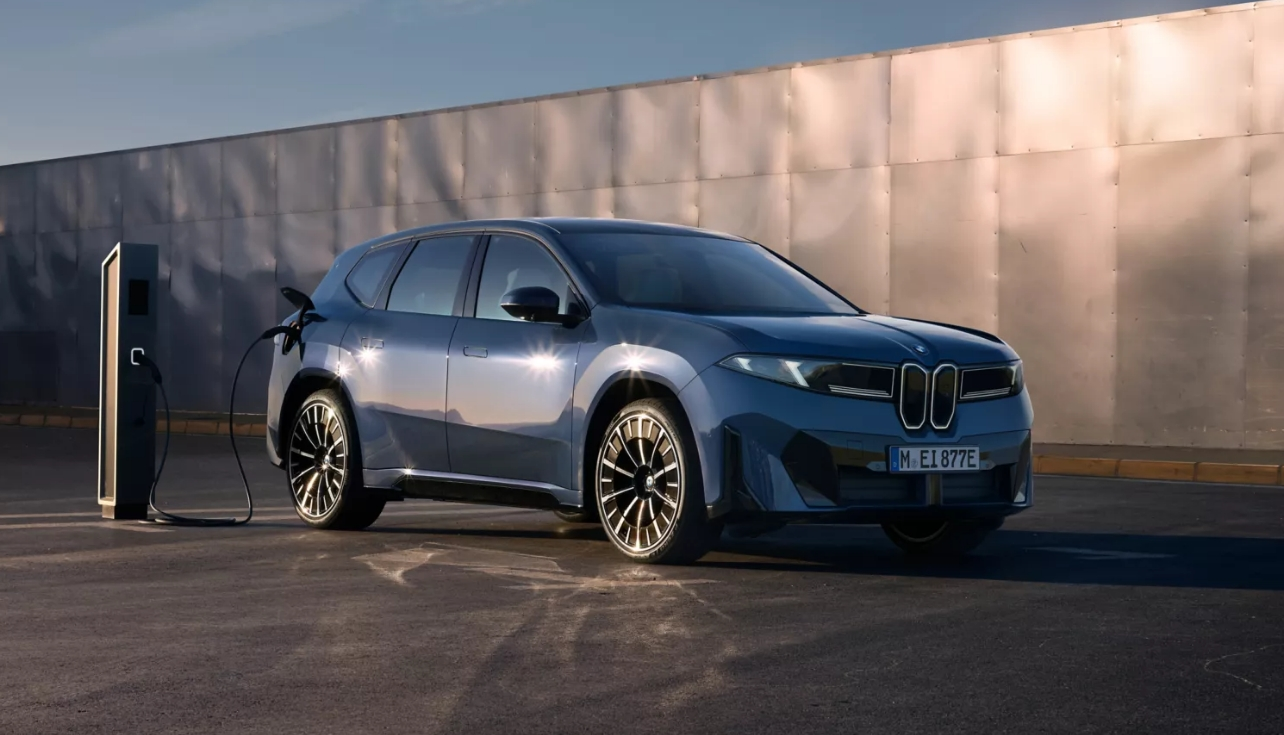
Image credit: BMW
BMW's statement underscores the mounting pressures on Europe's auto industry: weak domestic demand, fierce competition from Asian rivals, and now escalating tensions in the Middle East. The automaker said the impact of the Middle East conflict has exceeded initial estimates, with rising energy prices and regional instability dampening global consumer appetite for cars.
BMW Chief Executive Milan Nedeljković said the company will "significantly increase and accelerate" cost-cutting measures. The group will adjust its organizational structure and business processes to cope with the deteriorating market environment. However, the automaker did not disclose details of the cost-reduction plan, only stating that the adjustments will result in a one-time financial loss in the second half of 2026.
China remains the largest single market for German automakers. Volkswagen, Porsche, Mercedes-Benz, and BMW are all mired in a price war that industry executives describe as a battle of "survival of the fittest."
BMW acknowledges it cannot remain immune to the current market environment. Growth momentum in the U.S. and Europe is insufficient to offset the sales decline in the world's largest auto market: China.
Gasgoo Take: BMW's profit cut reflects growing headwinds for German luxury automakers, as Middle East geopolitical risks and intensifying competition make the sector's downturn increasingly visible.
Stellantis in Talks With Two Potential Partners Over Maserati Business
According to Bloomberg, Stellantis Group Chief Executive Antonio Filosa said the company is engaging with two potential partners for its Maserati brand. These discussions will affect several factories that produce models for the luxury marque.

Image credit: Maserati
On June 17, Antonio Filosa faced questions from Italian lawmakers at a parliamentary hearing in Rome. When asked about the future of Maserati and the Cassino plant—which builds both Maserati and Alfa Romeo models—Filosa replied: "We are in talks with two important, capable partners." He noted they can bring advanced technology and high-quality solutions. "We are currently finalizing which one to collaborate with," he said. However, he did not reveal the identities of the potential partners.
Antonio Filosa, 52, has been in his role for a year. As Stellantis plans to shift most future investment outside Europe, key stakeholders like the Italian government are concerned, and Filosa is working to soothe their anxieties. Recent partnerships between Stellantis and several Chinese automakers have further fueled unease among unions and politicians.
Antonio Filosa made it clear that Stellantis has no plans to sell the Maserati brand or transfer the underutilized Cassino plant near Rome. He said the Cassino plant's future is deeply tied to Maserati, and the brand will continue to exist as an "iconic brand of Italian style."
Antonio Filosa revealed that a new development plan for Maserati will be officially announced in December. The plan is ambitious and includes two new core models.
Antonio Filosa added: "It is certain that Maserati will not be sold, and the Cassino plant will not be handed over. But like other plants, Cassino may operate under a cooperative joint venture model in the future for joint R&D and vehicle production."
Antonio Filosa told lawmakers that the discussions regarding Maserati will also impact Stellantis' Modena plant, which assembles certain Maserati models.
A third factory could also be brought into the partnership: the Pomigliano plant near Naples, where Stellantis plans to focus on producing affordable, high-volume electric vehicles.
Antonio Filosa stated that all cooperation projects in Italy will follow the structure of Stellantis' partnerships with China's Leapmotor and Dongfeng Motor. This involves establishing joint ventures in which Stellantis holds a 51% controlling stake.
Gasgoo Take: Stellantis is holding firm on Maserati's sovereignty while pursuing joint ventures—a strategy aimed at balancing local capacity with the pace of its electric transition.
Bosch Wins New Project From Major Chinese Automaker
On June 16, Gasgoo learned that Bosch Smart Driving has recently secured a contract for a next-generation AI smart cockpit project from a major Chinese automaker. Relying on Bosch's cross-domain integration capabilities, the project is based on the Qualcomm Snapdragon Cockpit Platform Premium (Snapdragon 8397) and is slated for mass production in the third quarter of 2027.

Image credit: Bosch
Based on Qualcomm's fifth-generation Snapdragon 8397 chip, Bosch's AI smart cockpit enables flexible deployment and intelligent scheduling of multi-ecosystem large models. By integrating the strengths of various advanced models, it offers users scenario-based, personalized, and proactive intelligent services. Additionally, the project will apply Bosch's full-lifecycle AI information security mechanisms and global data compliance solutions to safeguard user privacy and data security.
Official data shows that as of April 2026, global shipments of Bosch's smart cockpit platform, built on high-computing chips, have surpassed 10 million units. Bosch believes its deep mass production experience and supply chain management capabilities provide a foundation for rapidly responding to automakers' customized demands in the AI era.
Gasgoo Take: By securing this project, Bosch is leveraging its mature mass-production capabilities to seize a first-mover advantage in the upgrade of in-vehicle AI intelligence.
EVE Energy H1 Net Profit Seen Exceeding 3.3 Billion Yuan
EVE Energy released its 2026 semi-annual performance forecast, projecting net profit attributable to shareholders of 3.13 billion yuan to 3.371 billion yuan for the first half—a year-on-year increase of 95% to 110%. Excluding non-recurring items, net profit is expected to reach 2.43 billion yuan to 2.603 billion yuan, up 110% to 125%.

Image credit: Company Announcement Screenshot
Regarding the significant growth, EVE Energy stated in the announcement that it has driven continuous business expansion by adhering to product iteration and service upgrades while seizing market opportunities. Revenue rose approximately 60% during the period. Facing pressure from significantly rising supply chain costs, the company implemented proactive management measures. These include supply chain diversification, strategic procurement planning, and prudent use of financial instruments. These measures effectively buffer against raw material cost fluctuations and ensure the stability of its core business profitability.
Official data shows that in the first quarter, EVE Energy achieved revenue of 20.68 billion yuan, a 61.61% increase year-on-year, while net profit attributable to shareholders reached 1.446 billion yuan, up 31.35%. Based on this, Q2 net profit is projected at 1.684 billion yuan to 1.925 billion yuan, representing a quarter-on-quarter increase of 16.46% to 33.13%.
In terms of shipments, EVE Energy delivered 14.34 GWh of power batteries in the first quarter, up 40.93% year-on-year, and 20.38 GWh of energy storage batteries, an increase of 60.82%.
Gasgoo Take: EVE Energy's first-half performance surged, driven by a leading energy storage business and refined cost control that helped hedge against cost volatility in the lithium battery sector.
Another Headquarters Project Lands in Anting
According to "Anting Guanwei," the town of Anting in Shanghai's Jiading District recently signed a strategic cooperation agreement with Ningbo GENMONO Technology Co., Ltd. GENMONO's national headquarters project will be established in Anting.

Image credit: Anting Guanwei
Once operational, the project will introduce high-end technical talent and drive collaborative innovation across the industrial chain. It aims to strengthen and supplement the regional intelligent connected vehicle industry, further consolidating Anting and Jiading's core competitive advantages in automotive electronics.
Under the agreement, GENMONO will establish its national headquarters and sales settlement center in Anting, creating a dual-center layout with headquarters in Shanghai and a production base in Ningbo. The project plans a cumulative output value of over 1.68 billion yuan and an economic contribution exceeding 100 million yuan over the next five years. This will inject sustained momentum into local economic development.
Founded in 2023, Ningbo GENMONO Technology focuses on key areas such as automotive electronic intelligent actuators and embodied intelligence sensors. It has built complete in-house software and hardware development capabilities, alongside the capacity for product production, sales, and overseas expansion.
Currently, the company's mass-produced products include body controllers, new energy exhaust electronic valves, high-pressure fuel tank control modules, cell monitoring modules, smart table controllers, as well as MPS sensors and fingertip controllers for embodied intelligence. Its customer base covers state-owned enterprises, joint ventures, and emerging automakers, as well as several top-tier automotive parts suppliers.
Gasgoo Take: GENMONO is setting up its national headquarters in Anting to leverage local industrial strengths for R&D, creating a pattern of synergistic development between Shanghai and Ningbo.


