



What moved the needle in the global auto industry this week?
China's Auto Industry Profit Margin Falls to 1.8% in December 2025
The full-year production and sales figures for China's auto industry in 2025 have arrived, but one chilling number stands out: in December alone, the industry's sales profit margin slumped to just 1.8%.
What does this figure signify? It represents not only a sharp slide from November but also a reduction of more than half compared to the 4.1% recorded in December of the previous year. Even viewed across the full year, the industry's average profit margin of 4.1% remains at a historical low for the second consecutive year—significantly below the 5.9% average for the broader industrial sector.
While the full-year production figure of 34.78 million units—a 10% year-on-year increase—appears impressive, and the penetration rate of new energy vehicles has climbed to 48%, the dilemma of "diseconomies of scale" intensified sharply at year's end. In December, industry revenue dipped 0.8% year-on-year while costs rose 0.8%; squeezed between these opposing forces, total profits plunged 57.4%. This makes it clear that pricing pressure in the retail market and persistently high manufacturing costs have severely eroded the profitability of automakers.
Gasgoo Take: Caught between the electrification transition and brutal price competition, auto manufacturing is falling into a scale trap where revenue rises but profits do not.
Li Auto Responds to R&D Restructuring
Recent media reports suggest Li Auto is launching a new round of organizational restructuring. The R&D system will be reorganized into three major teams: the Base Model Team, the Software Entity Team, and the Hardware Entity Team. The focal point of this adjustment is the breakup of the autonomous driving team.
Specifically, reports indicate that Lang Xianpeng, formerly senior vice president of autonomous driving business, will become head of the Hardware Entity. He will focus on robotics development and report to Li Auto President Ma Donghui, stepping away from autonomous driving duties. Concurrently, the autonomous driving team will be merged into the Software Entity Team, led by Gou Xiaofei, vice president of Li Auto Smart Space.
Following the reshuffle, Gou will oversee R&D for Li Auto's smart cockpit and smart driving. He will also report to Ma Donghui. The Base Model Team will be led by Zhan Kun, who is responsible for coordinating the integration of VLA (Vision-Language-Action) models and in-house developed chips; he will report to Li Auto CTO Xie Yan.
When approached for comment on January 29, a Li Auto spokesperson confirmed the reports to Gasgoo, stating simply: "It is true."
Gasgoo Take: Merging autonomous driving into the software entity signals a shift in R&D from "function-driven" to "system-driven" development. Full-stack integration capability is becoming the new focal point of competition.
Aptiv to Spin Off EDS Business in April
On the evening of January 27, Aptiv (NYSE: APTV) announced key management appointments for its Electrical Distribution Systems (EDS) business. The unit is slated for a tax-free spin-off to shareholders on April 1, 2026, and will operate independently under the new name Versigent. The standalone company will trade on the New York Stock Exchange under the ticker symbol "VGNT."
Image Source: Aptiv China
Joseph Liotine has been named chief executive officer of Versigent and appointed to the company's board of directors. Liotine joined Aptiv in April 2024 as president of the Signal & Power Solutions business. In November of that year, he became executive vice president and president of EDS, driving the unit's global strategy with a focus on optimizing the business portfolio, improving operational efficiency, and achieving profitable revenue growth in the automotive and commercial vehicle markets.
"Upon completion of the spin-off, Versigent will emerge as a new public company," Liotine said. "Leveraging unique strengths—including top-tier talent, global scale, and industry-leading vehicle architecture optimization capabilities—Versigent is well-positioned to meet the growing demand for next-generation electrical architectures and provide robust support for feature-rich modern vehicle platforms."
Gasgoo Take: A major supplier is streamlining its operations in the deep waters of electrification, spinning off a unit to seize the high ground in next-generation electronic/electrical architectures.
Eaton Plans to Spin Off its Mobility Group
On January 27, Eaton (NYSE: ETN) officially announced plans to spin off its Vehicle and eMobility segments (together, "Mobility Group" or "Mobility") into an independent, publicly traded company. The separation is expected to be completed in the first quarter of 2027, subject to regulatory approval and final board confirmation.
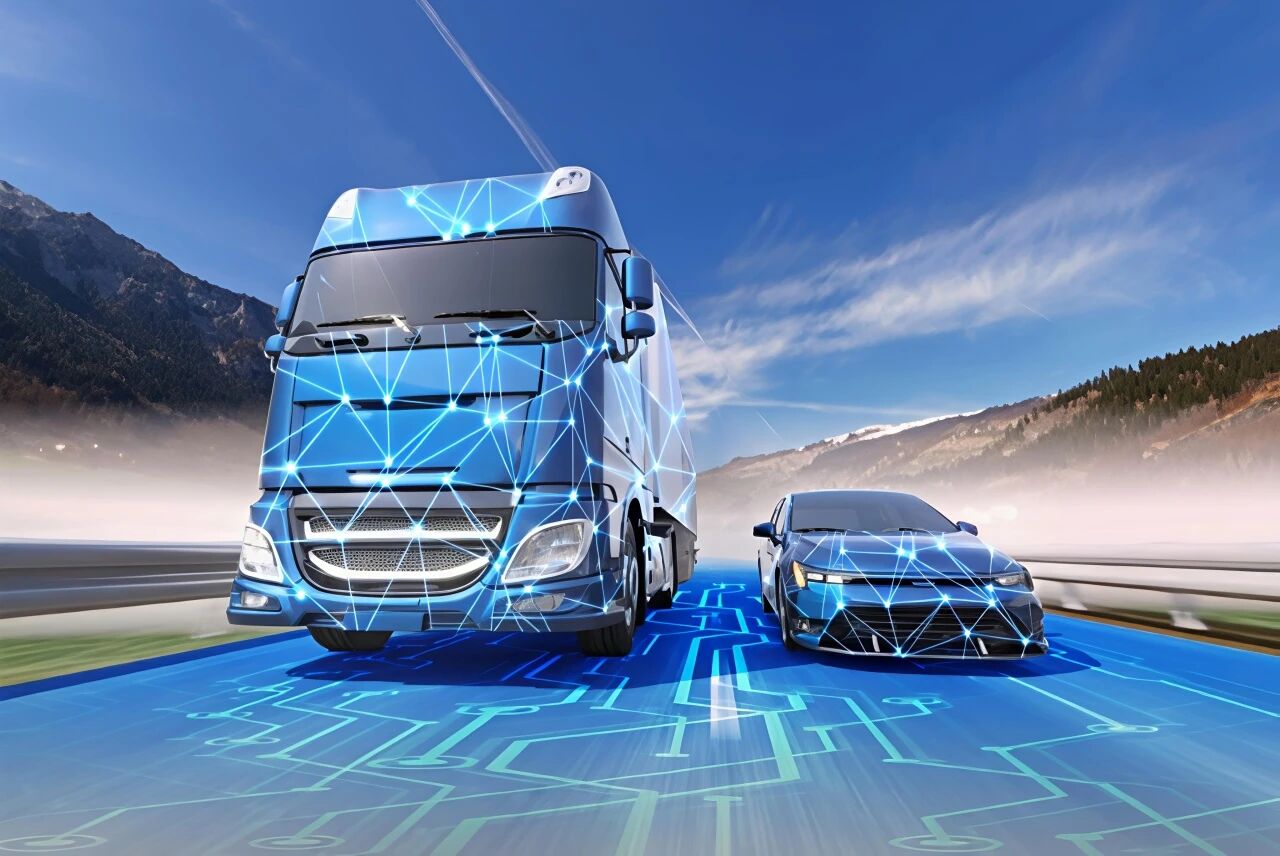
Image Source: Eaton
Eaton Chairman and CEO Paulo Ruiz noted that the move is a critical step in advancing the company's "Lead, Invest, Execute for Growth" strategy for 2030. Following the spin-off, Eaton will sharpen its focus on its two core businesses: Electrical and Aerospace. This allows the company to capitalize on market trends including electrification, digitalization, artificial intelligence, and infrastructure investment.
Ruiz added that this strategic focus will optimize capital allocation, supporting sustained expansion in high-growth, high-margin sectors and creating long-term value for shareholders.
The Mobility Group is a key provider of engineering solutions for commercial vehicle power generation, distribution, and optimization. It holds a leading position in the North American commercial vehicle transmission and clutch markets and boasts strengths in global high-voltage EV fuse and engine actuation technologies.
As an independent entity, the group will benefit from greater agility in strategic decision-making and resource allocation. It will focus on serving customers in the heavy-, medium-, and light-duty truck segments, as well as off-highway markets, accelerating the transition to electrification.
Gasgoo Take: Traditional giants are shedding slower-growth businesses through structural restructuring to gain strategic agility on the electrification and digitalization tracks.
Mandatory National Standard for Auto Steering Released, Effective July 1
On January 26, reports from CCTV stated that the State Administration for Market Regulation (Standardization Administration) has approved the mandatory national standard "Basic Requirements for Automobile Steering Systems." The standard will officially take effect on July 1.
The release clarifies technical requirements and test methods for automotive steering systems, establishing clear safety boundaries for new technologies like steer-by-wire. This is significant for promoting the application of steer-by-wire technology and guiding the standardized development of China's automotive steering systems.
To further solidify the industry's safety baseline and adapt to technological advancements, the revision refines technical requirements for steer-by-wire, traditional steering systems, and functional safety requirements for steering assist devices. While safeguarding public safety, it leverages standardization to support breakthroughs in key core technologies—such as new chassis architectures—further guiding the iterative progress of China's automotive steering technology.
First, strengthening safety guarantees. The update focuses on refining failure regulations for steer-by-wire. It clarifies safety response strategies for various failure scenarios—such as power source or power supply failure, control transmission failure, and energy transmission failure—to ensure driving safety.
Second, improving alarm mechanisms. The standard specifies how to alert drivers to aging or insufficient performance in steer-by-wire energy storage devices, mitigating potential risks and ensuring the long-term safe operation of the system.
Third, ensuring reliable operation. Given the trend toward increased reliance on electronic control systems—particularly the fact that steer-by-wire systems rely entirely on electronics for steering operations—the standard clarifies functional safety requirements for steering electronic control systems. This aims to prevent unreasonable risks caused by functional anomalies in electrical or electronic systems.
Fourth, strengthening enforcement. To enhance enforceability, the revision updates requirements for functional safety verification tests and clarifies typical test cases. This provides a technical basis for inspection and testing bodies to conduct document reviews and experimental verifications.
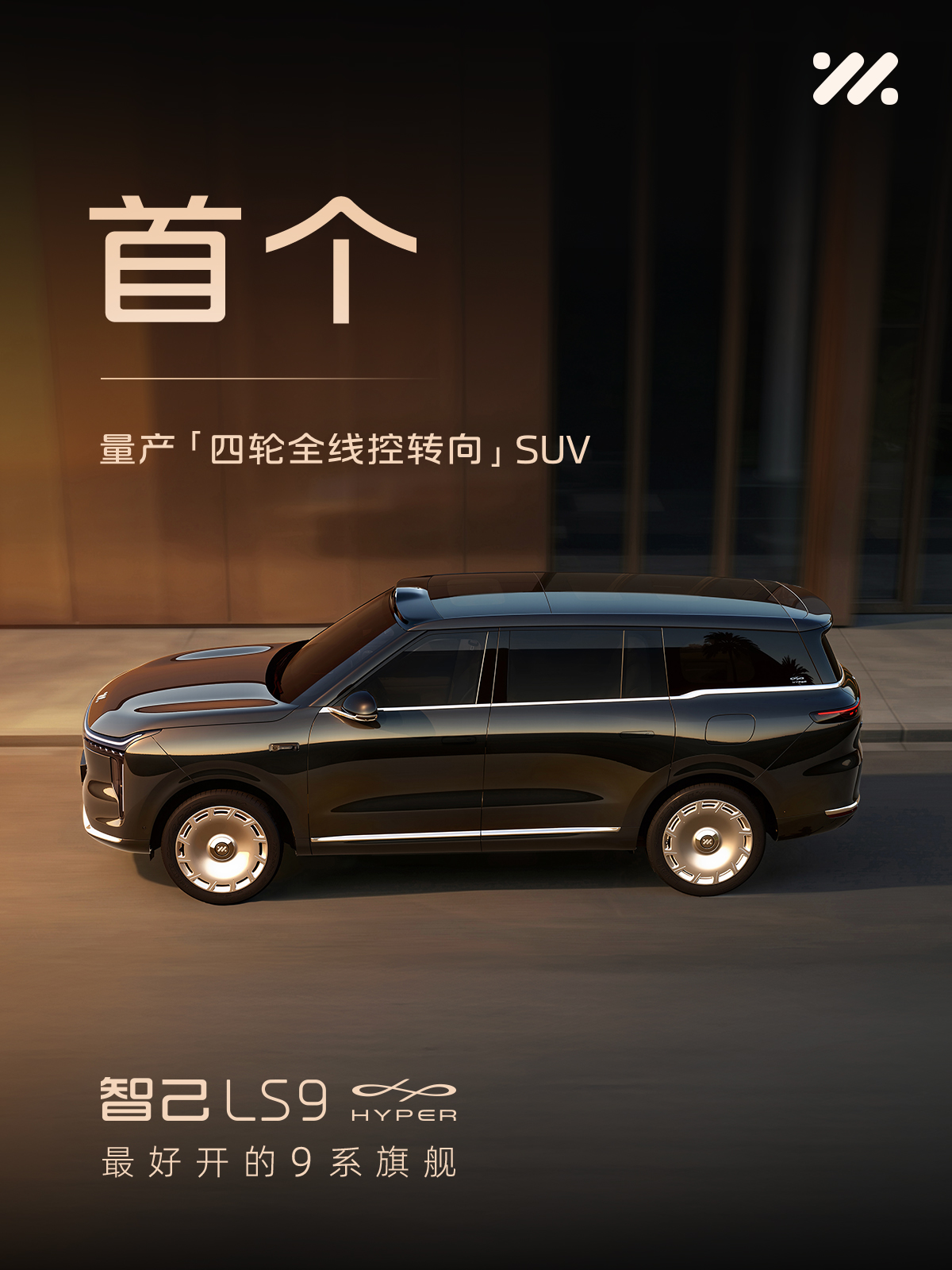
Image Source: IM Motors
Four days later, IM Motors officially announced the upcoming launch of its flagship SUV, the IM LS9 Hyper. This model is the first mass-produced SUV in the industry equipped with a four-wheel steer-by-wire system. It has also passed the reliability challenge certification by the China Automotive Technology and Research Center (CATARC), making it the first mass-produced steer-by-wire vehicle to receive this certification. Additionally, the new model will feature SAIC Motor's first mass-produced tri-motor vector all-wheel-drive system.
Gasgoo Take: The new national standard establishes a safety baseline for steer-by-wire technology. As the technology sprint enters a regulated lane, leading with regulations is a necessary prerequisite for mass adoption.
Nidec Builds Two EMB Brake Motor Production Lines, Annual Capacity Exceeds 2.5 Million Units
On January 28, Nidec Motor (Dalian) Limited, a subsidiary of the Nidec Group, announced it has built two dedicated production lines for Electromechanical Brake (EMB) motors—the first within the group. This comes after six years of R&D and an investment of several hundred million yuan, resulting in an annual production capacity exceeding 2.5 million units.
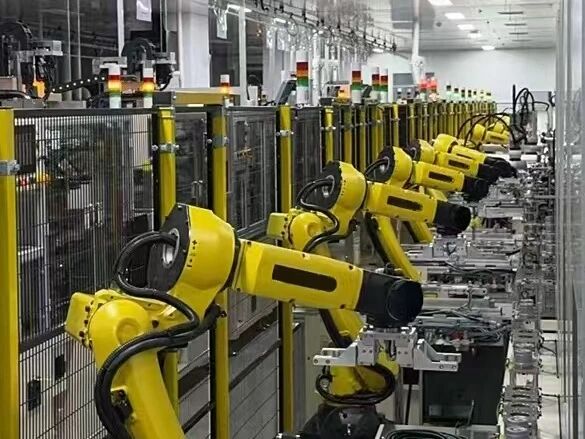
Image Source: Nidec
As the core actuating component of an EMB system, the motor must operate stably in the harsh environment of the wheel end, characterized by high vibration and extreme temperatures. To meet these challenges, Nidec employed a platform-based design covering motor sizes from φ47mm to φ92mm and applied special treatments to the stator to enhance heat dissipation and vibration resistance. The company has completed two full rounds of Design Verification (DV) and one round of Product Verification (PV), fully validating motor quality and reliability.
Currently, major players including Bosch, ZF, and domestic Chinese firms like BTL and Global Technology are actively entering the EMB space. Nidec revealed that its EMB motors have secured over 20 collaborative projects globally, covering mainstream chassis system manufacturers at home and abroad. The company also offers customized EMB system solutions.
Gasgoo Take: The bottleneck segment of brake-by-wire is approaching mass production. The local supply chain now has the production capacity foundation to compete head-to-head with international giants in the high-end actuator sector.


