



Gasgoo Munich- On February 26, 2026, German Chancellor Merz arrived in Hangzhou with a delegation of nearly 30 business leaders. By the shores of West Lake, they gathered for a group photo with their Chinese counterparts—a snapshot rich with implication.
The frame captured German industrial titans like BMW, Mercedes-Benz, Siemens, and Airbus alongside Zhejiang manufacturing leaders such as Geely, Leapmotor, and Chint. Yet the most striking presence was that of Hangzhou's rising tech innovators: Unitree Robotics and BrainCo.
As the heads of German industrial giants stood shoulder-to-shoulder with young Chinese founders building robots and brain-computer interfaces, the image hinted at a subtle yet profound shift in the nature of Sino-German economic cooperation.
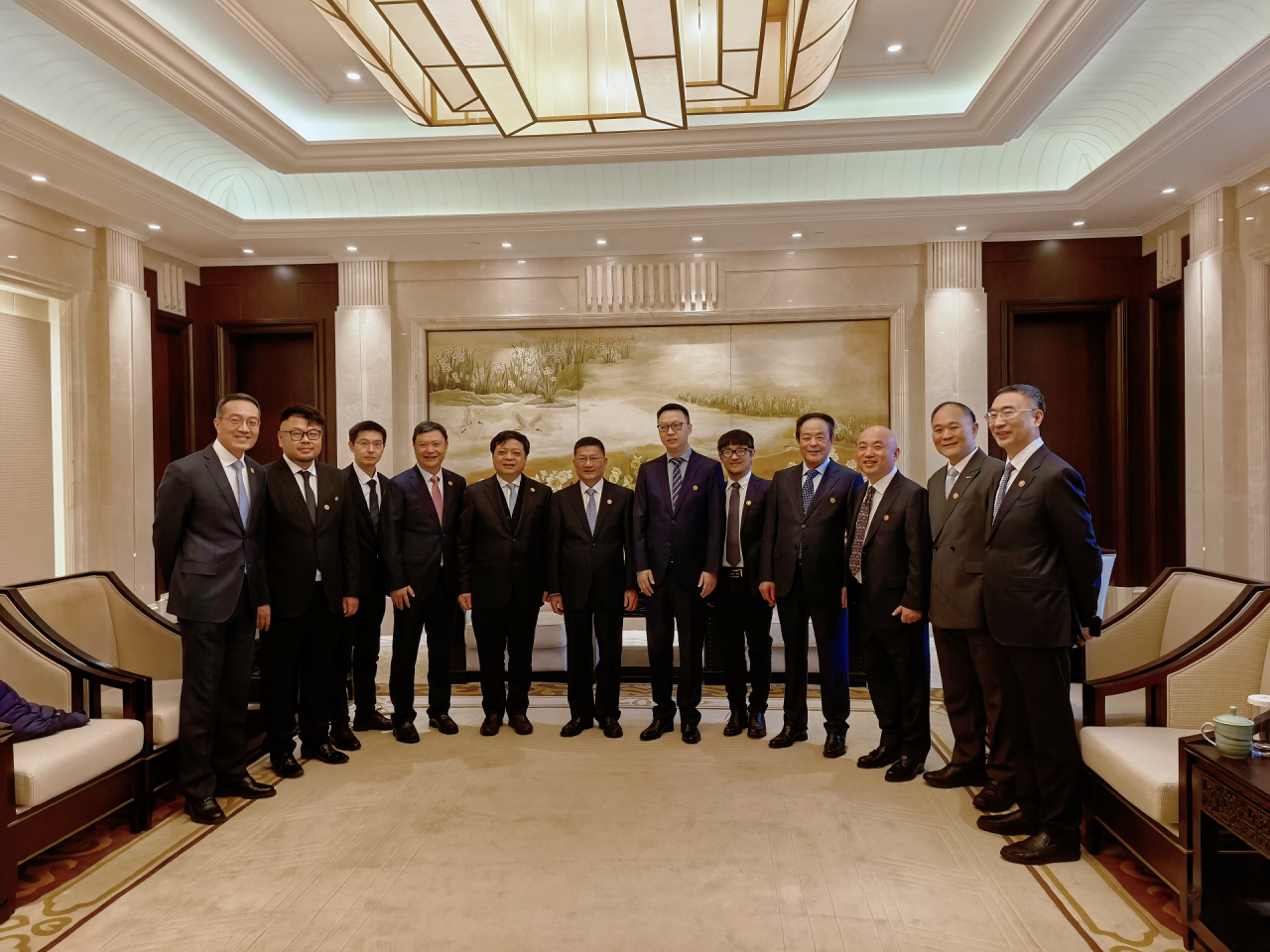
Image Source: BrainCo
Why Unitree and BrainCo?
To answer that, it helps to look at exactly what Merz witnessed during his "Hangzhou tour."
Inside Unitree's showroom, Merz was met by a troupe of humanoid robots capable of performing backflips, sword dances, and parkour.
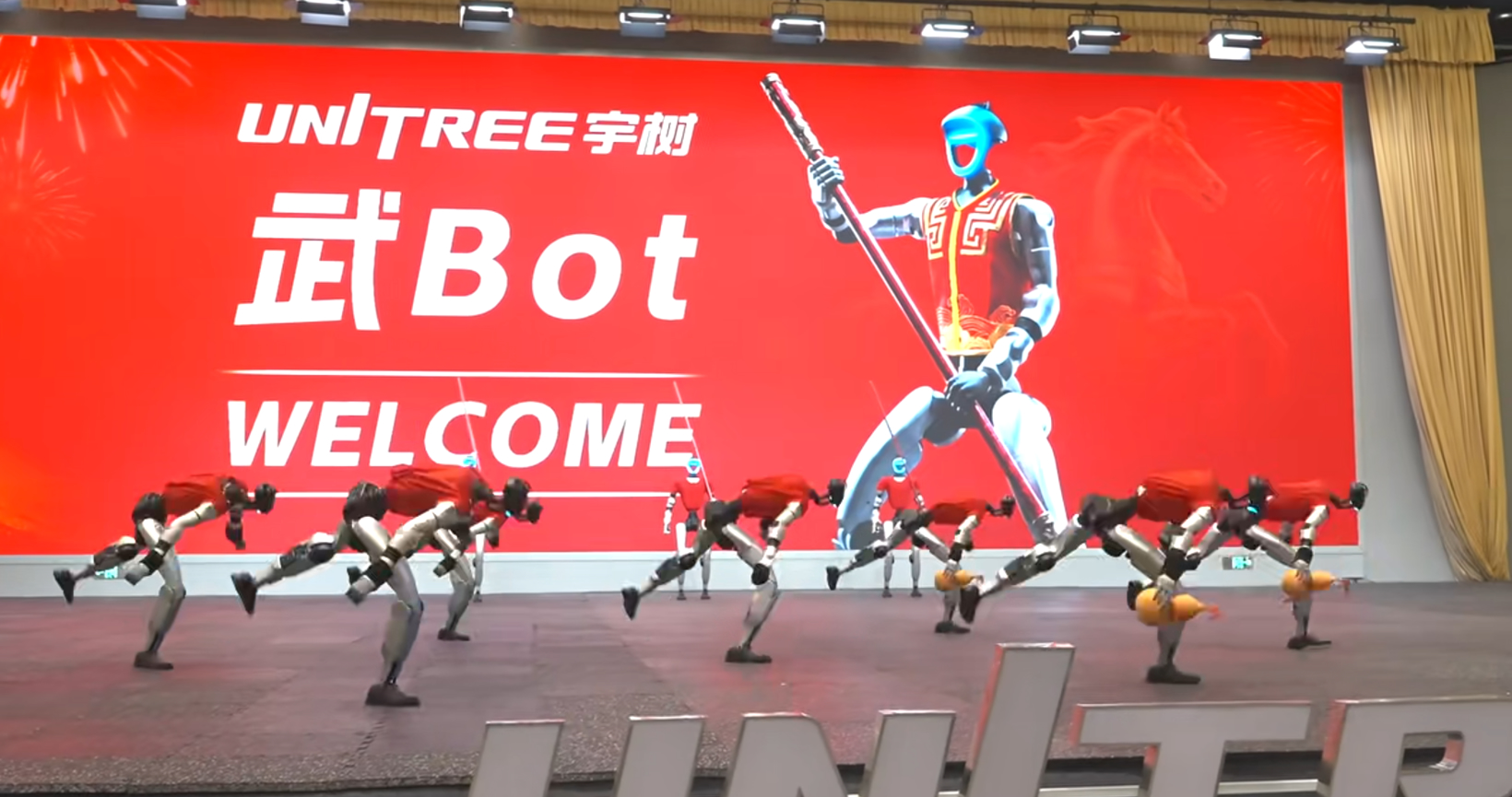
Image Source: Unitree Robotics
These same robots stole the show at the 2026 CCTV Spring Festival Gala, executing a string of high-difficulty maneuvers—continuous backflips, sword dances, and parkour—that set multiple "world first" records. Among them: the first continuous single-leg backflip and the highest catapulted backflip, exceeding 3 meters.
Behind the spectacle lies a series of systematic breakthroughs by Unitree in core technologies, ranging from humanoid motion control algorithms and high-power-density joint motors to reinforcement learning training frameworks.
More notably, Unitree's humanoid robots have moved well beyond the laboratory. According to official data, the company shipped over 5,500 pure humanoid units in 2025, while mass production of robot bodies topped 6,500 units during the same period.
This means Unitree has crossed the threshold from "prototype" to "product," entering the phase of scalable mass production. The story of industrialization truly begins only when robots can leave the factory in batches and step into real-world scenarios.
BrainCo, for its part, pursues a completely different technological path.
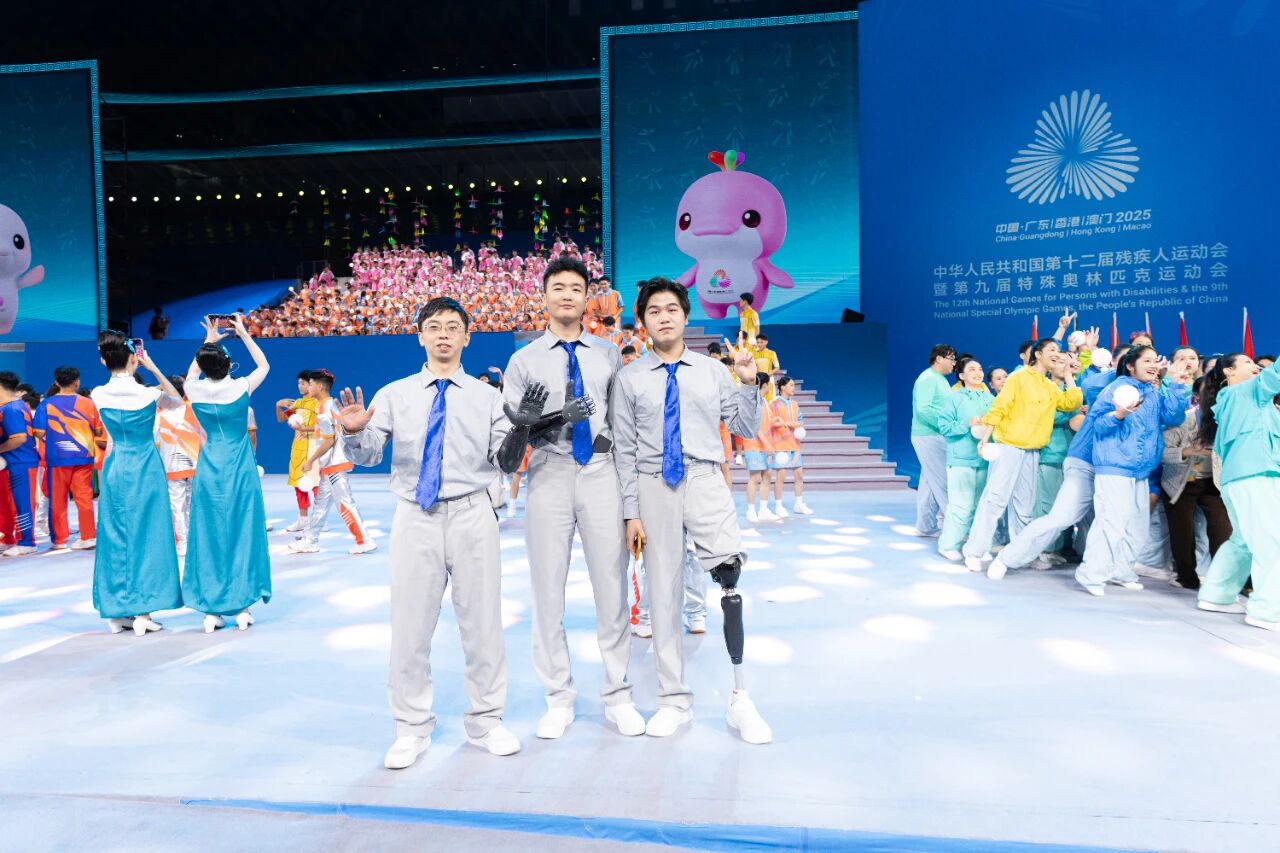
Image Source: BrainCo
The company specializes in non-invasive brain-computer interfaces—collecting brain signals via headsets or wearable devices, eliminating the need for surgically implanted electrodes. To date, BrainCo has launched products like intelligent bionic limbs, helping people with disabilities regain mobility.
Earlier this year, BrainCo closed a funding round of roughly 2 billion yuan—the second-largest in the global BCI (brain-computer interface) sector, trailing only Elon Musk's Neuralink.
Among the participants was consumer electronics giant Lens Technology, which became a strategic shareholder and took on the mass production of BrainCo's core hardware modules. This pairing of a tech firm with a manufacturing giant suggests brain-computer interfaces are on the eve of moving from the lab to scalable production.
Moreover, BrainCo's intelligent bionic hand successfully secured FDA certification—the first non-invasive brain-computer interface device in China to receive such approval.
So, why did these two companies capture the German delegation's interest?
One explanation is that they happen to align with two key directions of Germany's industrial upgrade.
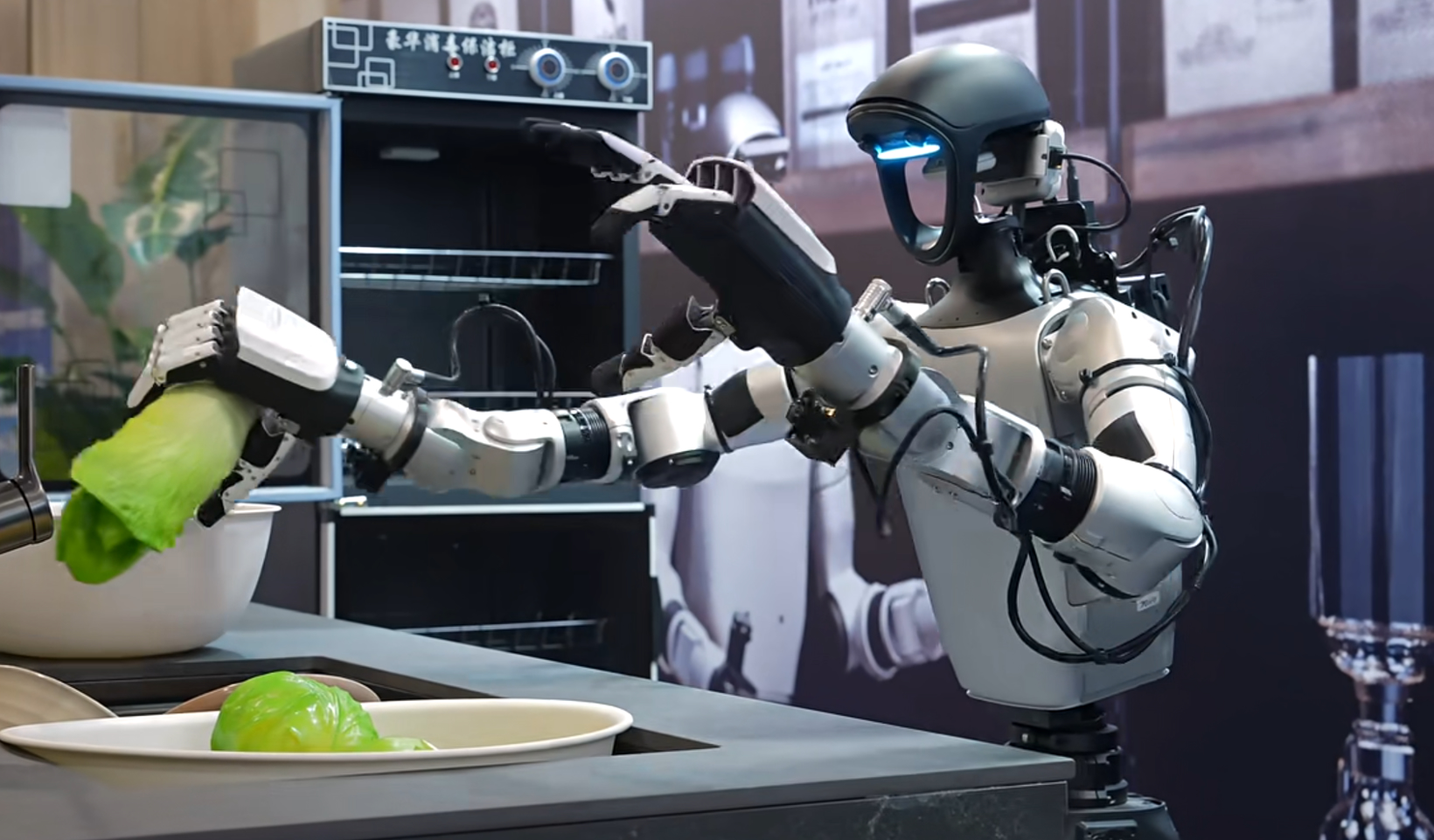
Image Source: Unitree Robotics
Inside Unitree's showroom, a display board titled "Partners & Users" lists top German research institutions like the University of Bonn, RWTH Aachen University, and the Fraunhofer Society, alongside industrial giants such as Volkswagen, Bosch, Siemens, and DHL.
Unitree founder Wang Xingxing revealed that the company already has deep cooperation with DHL and Siemens. This implies Unitree is deeply embedded in Germany's "industry-academia-research" ecosystem.
For Germany, facing high labor costs and an urgent need for industrial automation, Unitree's cost-effective, high-mobility robotic solutions may be exactly what its Industry 4.0 push requires. Industry analysts argue that because industrial settings are singular and repetitive, the demands on motion control and scene complexity are relatively low—meaning humanoid robots are likely to land in industrial scenarios first.
By comparison, commercial scenarios requiring human interaction, consulting, and guidance place higher demands on large AI models. Domestic service settings are largely unstructured, imposing strict requirements on both AI and hardware. Constrained by bottlenecks in environmental perception, decision-making generalization, and actuator flexibility, humanoid robots still struggle with the high randomness and complexity of household chores at this stage.
BrainCo's situation, however, is different.
Founder Han Bicheng noted during the exchange that about 30% to 40% of the company's revenue comes from overseas, with Germany being a key market for non-invasive BCI technology. "Germany has set extremely high production process standards early on, which is worth learning from," Han said. "Meanwhile, China has taken a leading role in the explosive power of innovation in recent years."
These remarks point to another possibility for cooperation: Germany's strength lies in precision manufacturing and process standards, while China excels in innovation speed and product iteration. Together, they could be complementary.
Roland Busch, CEO of Siemens AG, even called for both sides to "reinvent the way we cooperate" rather than continuing along old paths. "German companies are deeply rooted in China's industrial ecosystem, and in the future, we also hope Chinese companies will become part of Germany's industrial ecosystem," Busch stated.
From a broader industrial perspective, these two companies represent distinct paths to technology commercialization. Unitree is moving from "showcasing skills to being useful"—its robots can perform on stage or work on the factory floor, already applied in scenarios like industrial inspection, logistics sorting, and education research.
BrainCo, meanwhile, focuses on solving real problems. Its intelligent bionic hands serve people with limb disabilities, and its sleep aids target those with sleep disorders. Its commercial logic is "solving real problems" rather than "chasing sci-fi concepts."
This pragmatic technological approach may resonate more deeply with German industry.
Embodied Robotics: How Strong Is Germany?
If the choice of Unitree and BrainCo reflects Germany's expectations for future industries, understanding Germany's own position in embodied robotics provides a clearer picture of the visit's context.
In terms of complete robots, NEURA Robotics is virtually the only German humanoid company that can go toe-to-toe with leading U.S. and Chinese firms.
Founded in 2019, the company champions the concept of "cognitive robotics," emphasizing multimodal perception and autonomous decision-making. Its core product, the cognitive collaborative robot MAiRA, leverages multi-sensor fusion and intelligent technology to achieve integrated "see, hear, and touch" human-machine interaction capabilities.
Beyond that, NEURA's product line includes the autonomous mobile platform MAV, the lightweight robot assistant LARA, the personal assistant robot MiPA, and the humanoid robot 4NE-1—forming a matrix covering industrial, medical, logistics, and service scenarios.
By 2025, NEURA's total orders had surpassed 1 billion euros, with clients including international giants like Kawasaki Heavy Industries and Omron.
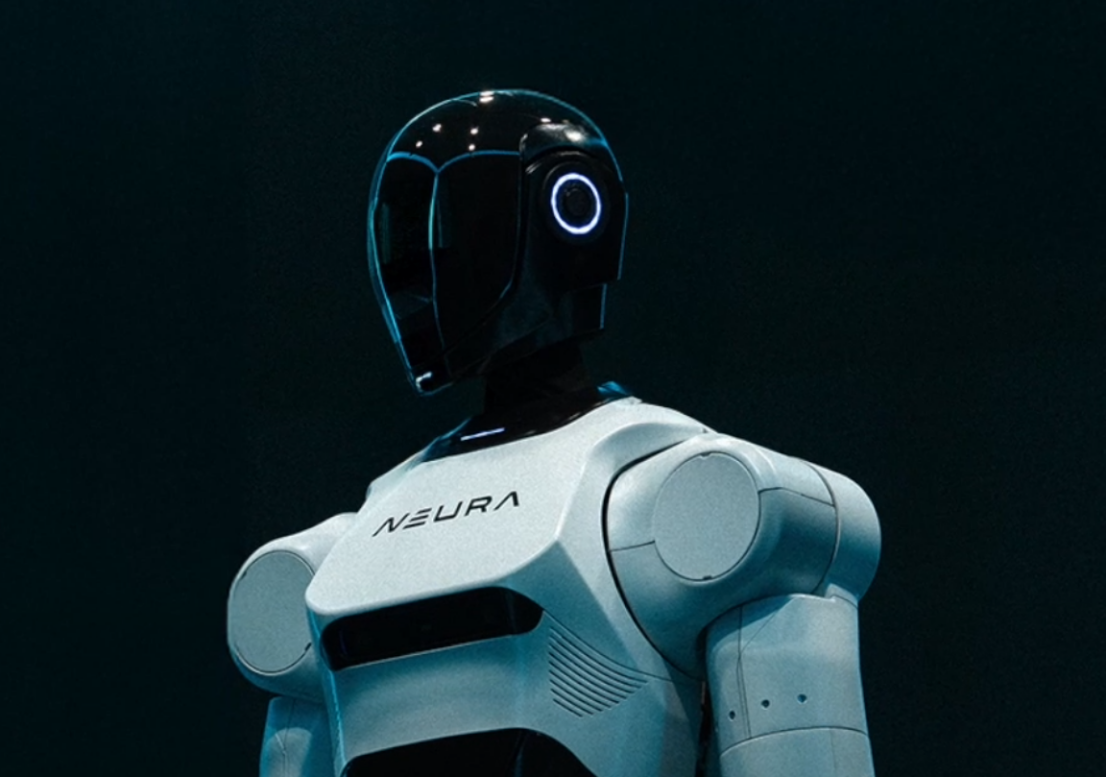
Image Source: Neura Robotics
Building on this, NEURA is engaging in deep cooperation with German mechanical and automotive parts giants like Schaeffler and Bosch to jointly advance humanoid robot R&D and application.
In November 2025, Schaeffler announced a strategic partnership with NEURA to jointly develop and supply key components for humanoid robots and actuators. Simultaneously, Schaeffler plans to deploy humanoid robots within its own production network. In a statement, Schaeffler said it aims to introduce thousands of humanoid robots into its production processes by 2035.
This January, NEURA further cemented a comprehensive partnership with Bosch aimed at developing humanoid robots for the mass market. The two parties are committed to creating a robust European product to rival competitors from the U.S. and China.
Furthermore, in September 2025, Neura made a move in Xiaoshan, Hangzhou, establishing its China headquarters. It signed strategic cooperation agreements with numerous renowned German and Chinese companies—including Volkswagen, ThyssenKrupp, Alibaba Cloud, Transfar, Zhaofeng Mechatronics, and Asia Pacific Mechatronics—to build a robotics ecosystem spanning China and Germany.
Yet beyond NEURA, a second company with comparable influence in complete robots has yet to emerge in Germany.
By contrast, China's humanoid robot sector already displays a pattern of "battling strongholds." Companies like Unitree, Zhiyuan Robotics, UBTECH, Galaxy General, Magic Atom, and Songyan Dynamics each have their own strengths, engaging in differentiated competition across high-dynamic motion control, embodied large models, industrial applications, and lightweight design.
This richness of ecosystem may be exactly what Germany lacks.
However, if the perspective shifts from complete robots to the industrial chain, the picture changes: Germany's accumulation in core robotic components remains profound.
During CES 2026, Schaeffler announced a strategic technical partnership with British humanoid robot company Humanoid. The two will collaborate deeply on key humanoid components, with Schaeffler becoming the preferred supplier for Humanoid's joint actuators and participating in the entire process from R&D and validation to mass production.
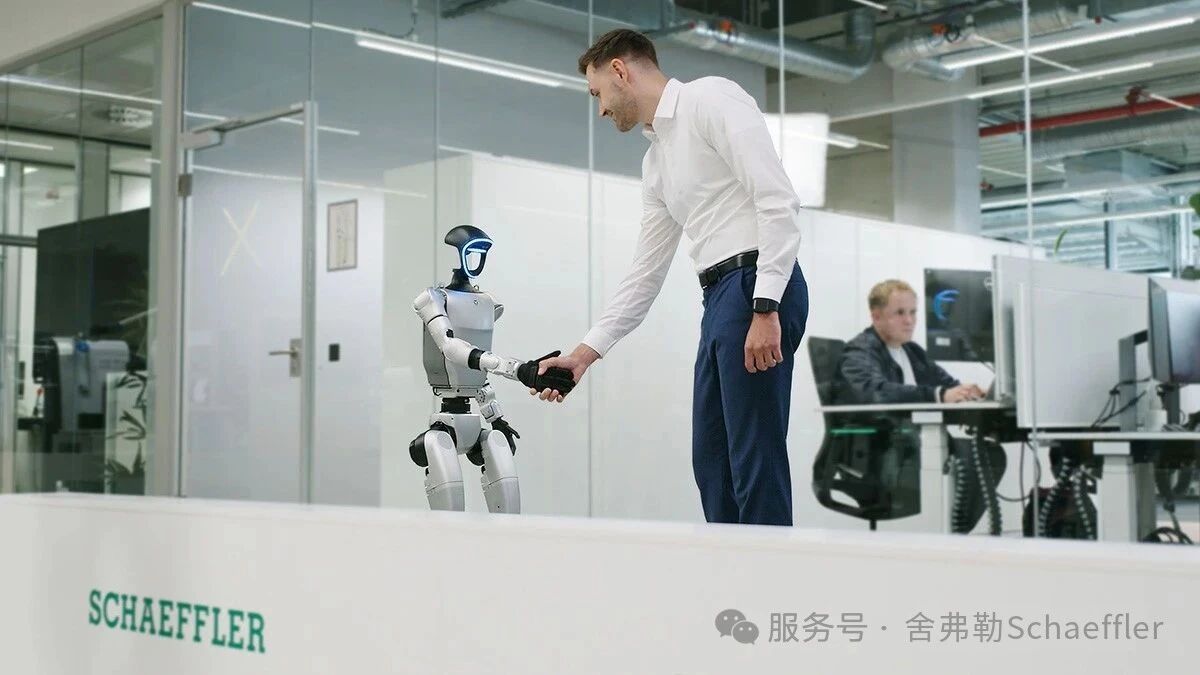
Image Source: Schaeffler
Just recently, Schaeffler also announced the establishment of an embodied intelligence robotics company in Taicang, Suzhou. Targeting core humanoid components and key subsystems, the move aims to establish a technological edge in this emerging sector.
On the application front, Germany's industrial giants are also embracing humanoid robots in a more pragmatic manner.
Previously, BMW Group implemented a humanoid robot pilot project at its Spartanburg plant in the U.S. Recently, the group further announced the launch of a pilot at its Leipzig plant to integrate humanoid robot technology into existing mass production automotive workflows.
According to BMW, the "AEON" robots it plans to deploy, provided by Swedish company Hexagon, will be used on assembly lines and in high-voltage battery manufacturing—roles where employees typically must wear cumbersome protective gear.
BMW specifically noted in its statement that the goal of adopting humanoid robots is to supplement existing automation technology, alleviate the burden on human employees, and further improve working conditions. This stance perhaps reflects the basic attitude of German industry toward robots: viewing them as tools, not replacements.
From this, it is clear that while Germany temporarily trails leading U.S. and Chinese firms in complete robots, it still holds advantages in core components and industrial application scenarios.
This pattern of "lagging complete machines, strong components" is consistent with its historical accumulation in industrial automation. From a core component perspective, Germany boasts giants like Bosch, Schaeffler, and Siemens. Their technological legacy in precision manufacturing, sensors, and industrial software forms the "infrastructure" of the robotics industry.
However, the challenges Germany faces in embodied robotics are also evident.
It is widely known that one of the core drivers of embodied intelligence is massive, real-world physical training data. Yet the reality is that a huge data shortage exists in the robotics field. As Xie Chen, founder and CEO of Guanglun Intelligence, sees it, "The bottleneck of embodied intelligence is not solving the 1% of edge cases, but how to cost-effectively acquire the 99% of common scenario data." Behind this lies a core reason: there are simply not enough robots in the real world continuously collecting data.
Although German industry is already working to address this issue, compared with China's data advantages derived from its vast consumer market and diverse industrial and commercial ecosystems, Germany's data scale and diversity may remain a weak point.
At the same time, the relatively cautious iteration culture of German enterprises could face challenges in the AI era, which pursues "rapid trial and error." Some observers point out that Germany's inability to field a local complete-robot company to rival Unitree may not be a question of technical capability, but rather the result of differences in industrial ecosystems and capital environments.
Whatever the true cause, if Germany hopes to replay its glory from the industrial automation era in the field of embodied robotics, it still has a considerable road ahead.
Conclusion
Counting from Volkswagen's entry into China in 1978, Sino-German cooperation in the automotive industry has spanned nearly half a century. During this time, the central axis of cooperation has constantly evolved—from "market for technology" to supply chain collaboration, and then to mutual shareholding at the capital level.
This time, however, the German Chancellor stood in Hangzhou with nearly 30 business representatives alongside a few young companies in manufacturing, robotics, and brain-computer interfaces. That image itself may be part of the shift. Future Sino-German cooperation may no longer be the old story of "German heart, Chinese body," but a more complex, intertwined relationship of collaborative innovation and mutual benefit.
The contours of this relationship may not yet be fully clear, but at least some companies are already boldly moving forward.


