



The global automotive industry is currently mired in an unprecedentedly complex mix of technological roadmaps and business models. While the electrification wave is unstoppable, a landscape featuring pure electric, hybrid, range-extended, hydrogen fuel cell, and even efficient internal combustion engines is becoming increasingly clear—no single global solution has yet emerged.
At the same time, the rapid penetration of software-defined vehicles and artificial intelligence is fundamentally reconstructing the core of the product experience and the definition of value from the ground up.
Amid this industry upheaval, strategic choices for automakers are no longer simple matters of technological followership; they are about defining the roadmap and reconstructing the system—decisions that dictate future survival.
On January 16, Great Wall Motor laid its strategic cards on the table at a launch event. Beyond officially unveiling its new ONE platform, the event grabbed industry headlines thanks to a provocative slogan from Great Wall Motor President Mu Feng: "We will never do extended-range electric vehicles (EREVs)."
Clearly, this launch was more than just a showcase of new technology; it was a systematic manifesto born of long preparation. It declared that Great Wall Motor refuses to engage in the industry's "involution"—the mindless race to follow trends. Instead, it is choosing to return to the essence of technology and industrial logic, attempting to cut through the fog of technological routes with a highly integrated, flexible platform system to face the diverse challenges of the global market.
The birth of the ONE platform signals a critical and difficult transition in Great Wall Motor's strategic focus: moving from isolated breakthroughs in niche markets to "systematic warfare" that spans all brands, all categories, all powertrains, and all markets.
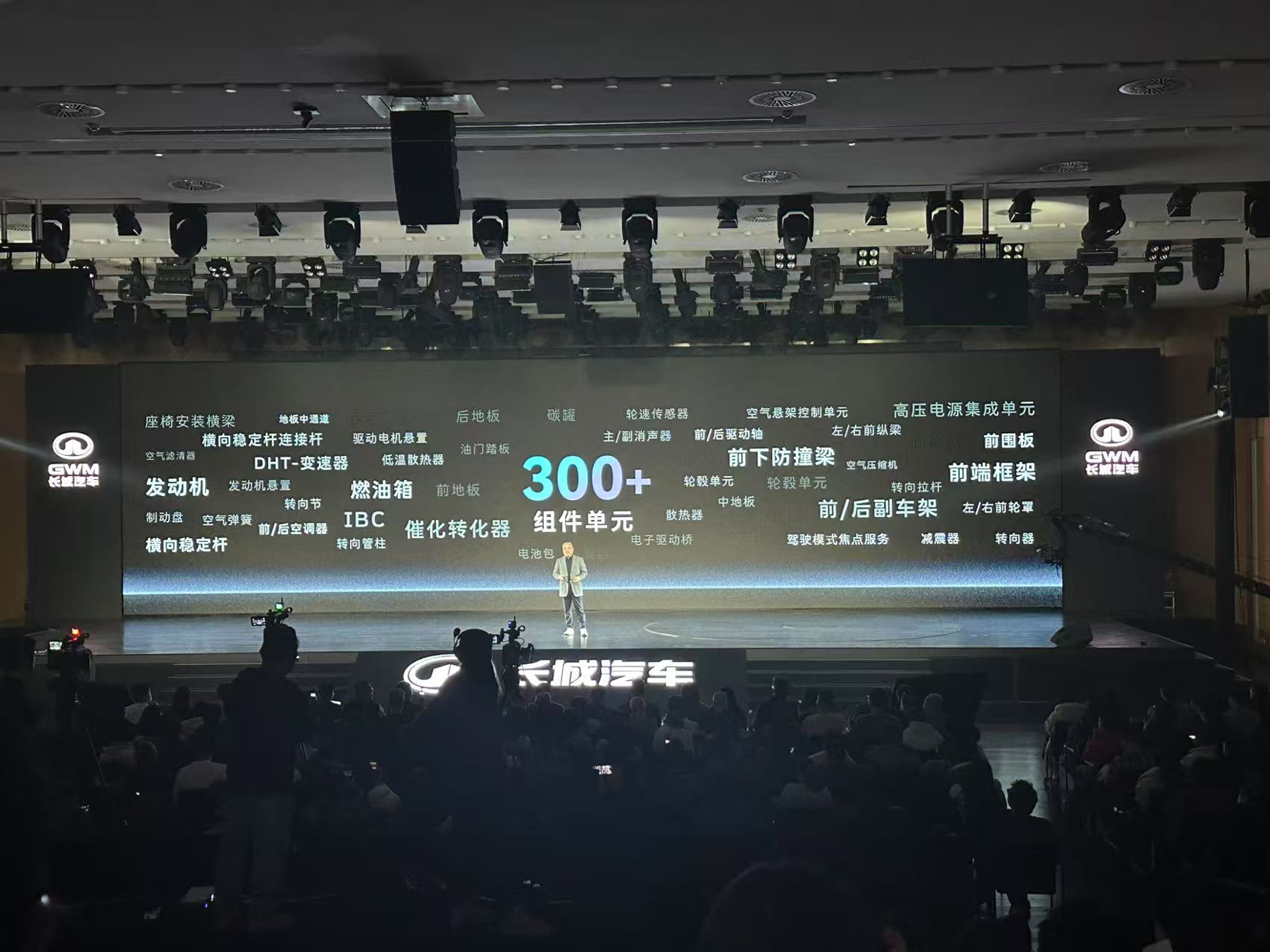
Image Source: Great Wall Motor
Decoding the Underlying Logic of "ONE"
The name "ONE" itself reflects Great Wall Motor's reflection on the current state of the industry and its contemplation of the path forward.
Great Wall Motor's Mu Feng officially explained it this way: "Guided fundamentally by first principles, we peel away layers of technical packaging and market concepts to return to the essential laws of the auto industry and the ultimate source of user value."
The core of the "ONE" platform is "one vehicle, multiple powertrains; one vehicle, multiple categories"—essentially an extension of modular design philosophy in vehicle development. Great Wall Chairman Wei Jianjun likened it to "movable type printing." Its technical substance lies in achieving efficient reuse of R&D resources and maximum flexibility in product combinations through high standardization and unified interfaces. "It precisely interprets our platform's R&D logic: returning to the origin," Mu Feng stated, adding that the new platform discards redundant conceptual packaging and returns to the basic manufacturing proposition of solving complexity and cost through standardization.
From an engineering perspective, two main features of the "ONE" platform are worth watching.
The first is full powertrain compatibility. The new platform claims to cover five powertrain forms: PHEV, HEV, BEV, FCEV, and ICE. From a technical implementation standpoint, this requires the platform's physical architecture to possess extreme inclusivity. For instance, the chassis must accommodate the exhaust systems of fuel vehicles, the batteries and fuel tanks of hybrids, the battery packs of pure electric vehicles, and the hydrogen storage tanks of fuel cell vehicles.
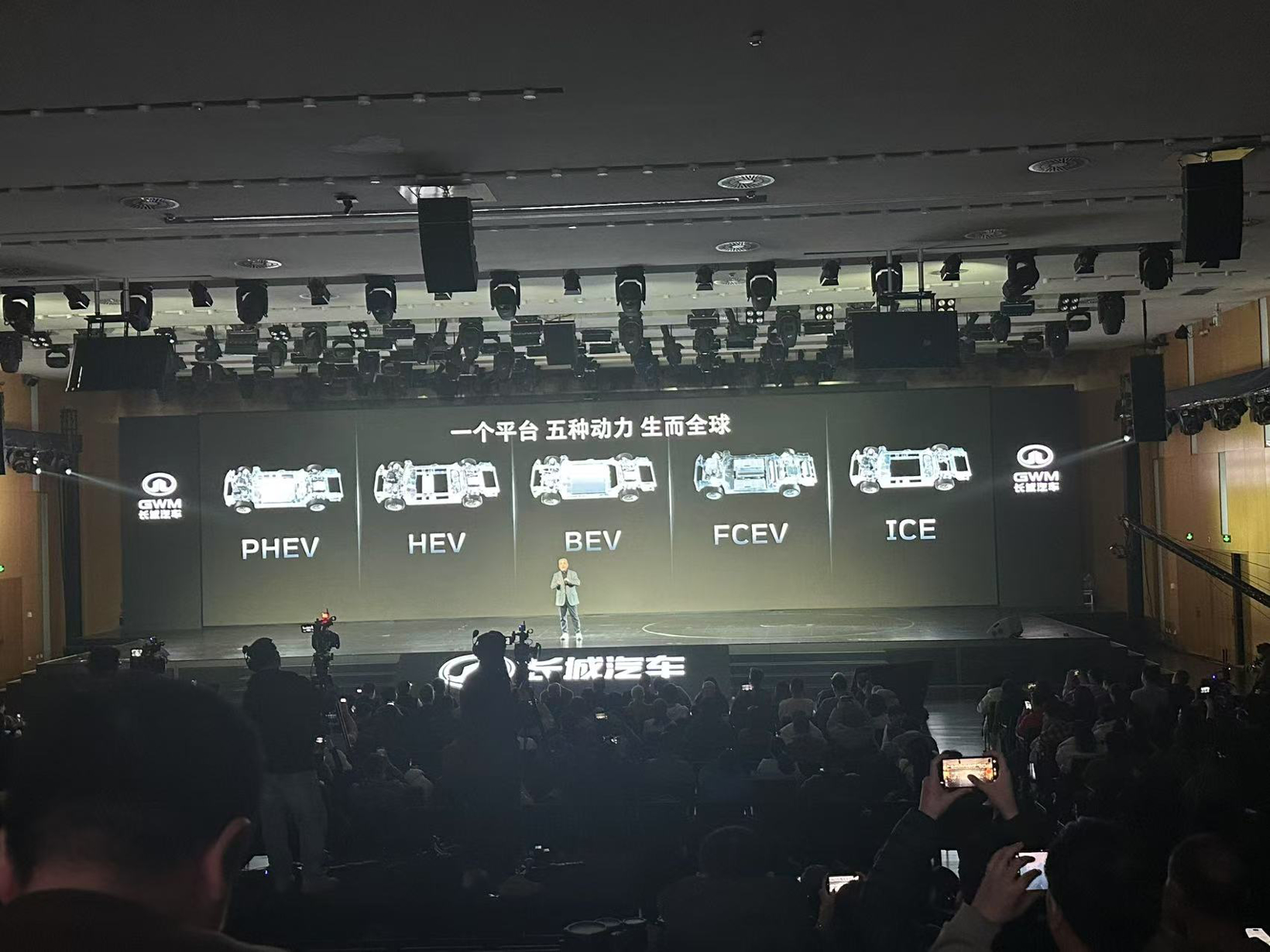
Image Source: Great Wall Motor
Against a backdrop where powertrain technology routes have not yet converged, the advantage of the new platform is obvious: it not only avoids the strategic risk of "betting on the wrong horse" but also better meets the differentiated needs of different global markets. Supporting this is Great Wall's years of vertical integration layout in the powertrain field, giving it the capability for self-development and self-supply from engines and transmissions to electric axles, batteries, and stacks.
The second is the transformation of native AI and electronic-electrical (EE) architecture. The concepts proposed by the "ONE" platform—hardware functional atomization, software experience labeling, and native AI scheduling—point to the core characteristics of the next-generation automotive EE architecture. This involves an evolution from traditional distributed ECUs to a centralized architecture of "central computing + zone control," aiming to decouple vehicle functions into standardized services that can be called uniformly, thereby improving software development efficiency and the flexibility of function iteration.
Positioning AI as the "scheduling hub" is intended to allow the vehicle to dynamically combine features according to different scenarios, achieving a smarter experience. "Great Wall hopes that through this technical path, concepts closer to the user gain a foundation for engineering realization," Mu Feng emphasized. Of course, achieving this goal relies heavily on underlying chip computing power and the reliability of AI algorithms in understanding complex scenarios; its actual effectiveness remains to be verified in mass production.
Mu Feng's critique of extended-range technology around the new platform concept directly reveals Great Wall's value choice on technology routes. Mu Feng described extended-range technology as "energy converted again and again, with efficiency dropping by at least 13%," calling it "cutting corners" and a "compromise." From a thermodynamic analysis, extended-range (series) vehicles do indeed experience efficiency loss during the secondary conversion of engine-generated electricity to motor drive, especially in conditions like high-speed cruising where the engine could drive efficiently directly. Great Wall's Hi4 and other multi-gear series-parallel hybrid technologies, by adding a mechanical direct drive path, can theoretically optimize energy efficiency across all conditions.
In essence, Mu Feng's remarks use the "ONE" platform as a technical basis to establish the rationality of Great Wall's hybrid route based on physical principles in public opinion, distinguishing it from the mainstream extended-range solutions on the market and shaping an image of "seeking truth in technology" for itself. Therefore, the controversial comments at the launch appear, on the surface, to be an automaker's rejection of a specific technology route, but in reality, they are a carefully orchestrated battle for industry discourse power.
For now, the battle between extended-range and hybrid technologies clearly won't be a fight to the death. What companies have always needed to do is find their respective optimal ecological niches in different market segments and user scenarios.
Strategic Value Assessment of Great Wall's New Platform
Launching a platform concept with philosophical height is merely the beginning of a grand narrative. The ultimate standard for judging its success is whether it can build a sustainable, multi-dimensional strategic advantage for Great Wall Motor in the brutal market competition and truly broaden the territory for its survival and development.
The systematic power contained within the "ONE" platform is expected to reshape or even redefine Great Wall's core competitiveness across multiple key dimensions. The first to bear the brunt is the ultimate weapon for addressing the eternal proposition of the auto industry: economies of scale and cost control.
In a current market environment where profit margins are severely squeezed and price wars have become the norm, cost advantage is the cornerstone of all business strategies. Through modularity, standardization, and interface unification, the ONE platform is expected to fundamentally optimize the cost structure of vehicle R&D and manufacturing. The same core "skeleton" architecture and a large number of common "organ" components can support a vast product spectrum ranging from compact sedans to full-size SUVs, and from urban crossovers to hardcore off-road pickup trucks—all while simultaneously compatible with five distinctly different powertrain systems.
This means Great Wall can launch a "product fleet" that is highly differentiated yet internally coordinated, with unprecedented speed and density, relying on marginal inputs far lower than traditional modes, to precisely cover the needs of every global market segment.
This capability for cost optimization and efficiency improvement, stemming from the platform's foundation and genetic level, is incomparable to any cost-reduction measure for a single model. It will become Great Wall's "cost moat" in the era of stock competition, and is the economic prerequisite for supporting its upcoming massive "army" of new products while maintaining a healthy financial model.
In short, if the ONE platform is successfully implemented, it could build potential advantages for Great Wall Motor in cost control, strategic flexibility, and intelligent competition. However, the realization of every advantage comes with explicit prerequisites and potential risks.
For example, excessively pursuing modularity may weaken the personality and specificity of product design, while early-stage redundant architecture designs made to accommodate multiple powertrain forms could also drive up the material cost per vehicle in the initial phase. The platform's true economic benefits need to be fully released by a sufficiently large production and sales scale in the global market, placing higher demands on Great Wall's global operations capabilities. Furthermore, in terms of software capability, core competitiveness depends not only on the advanced nature of the architecture but also closely on software talent density, iterative development processes, and ecosystem building capabilities—areas where many traditional automakers face universal shortcomings during their transformation.
Additionally, observing from the perspective of brand and system image, launching a platform with high integration and technical foresight helps demonstrate Great Wall's systematic technical strength as a mature automaker to the industry, capital markets, and consumers. This has positive significance for driving the brand image to evolve from a product manufacturer to a technology solution provider. One of Mu Feng's goals in detailing the platform's technical specs at the launch was to convey this system capability. However, it must be clear that the ultimate establishment and elevation of brand image fundamentally depends on the actual market performance, user reputation, and long-term reliability of the mass-produced models on the platform, not on a single technical presentation.
Great Wall Motor's actual results remain to be seen, with further answers to be provided by the market.
The Real Test Lies Ahead
History has repeatedly proven that grand strategic blueprints and ingenious technical architectures, if unable to cross the "Darwinian chasm" of internal corporate execution, will inevitably end up as paper exercises.
Transforming the "ONE" platform from launch event PPTs and exquisite technical white papers into a continuous stream of specific products with strong competitiveness in the global market is a challenge far more arduous than technological R&D itself.
This is essentially a profound "internal revolution" that touches the soul of the enterprise. Success or failure depends on whether Great Wall can achieve synchronous or even leading breakthroughs in multiple interconnected hard capabilities and soft dimensions.
Whether Great Wall is ready is the key to deciding its success or failure.
Let's look at the answer Great Wall has provided.
Great Wall's vertical integration and self-development capabilities are key. Currently, Great Wall Motor possesses self-manufacturing capabilities in over 150 key areas, achieving a full-industry-chain layout covering power, chassis, the "three electric" components (battery, motor, control), smart driving, smart cockpits, and even hydrogen fuel. This provides the possibility for the "ONE" platform to achieve high modularity, interface standardization, and cost control.
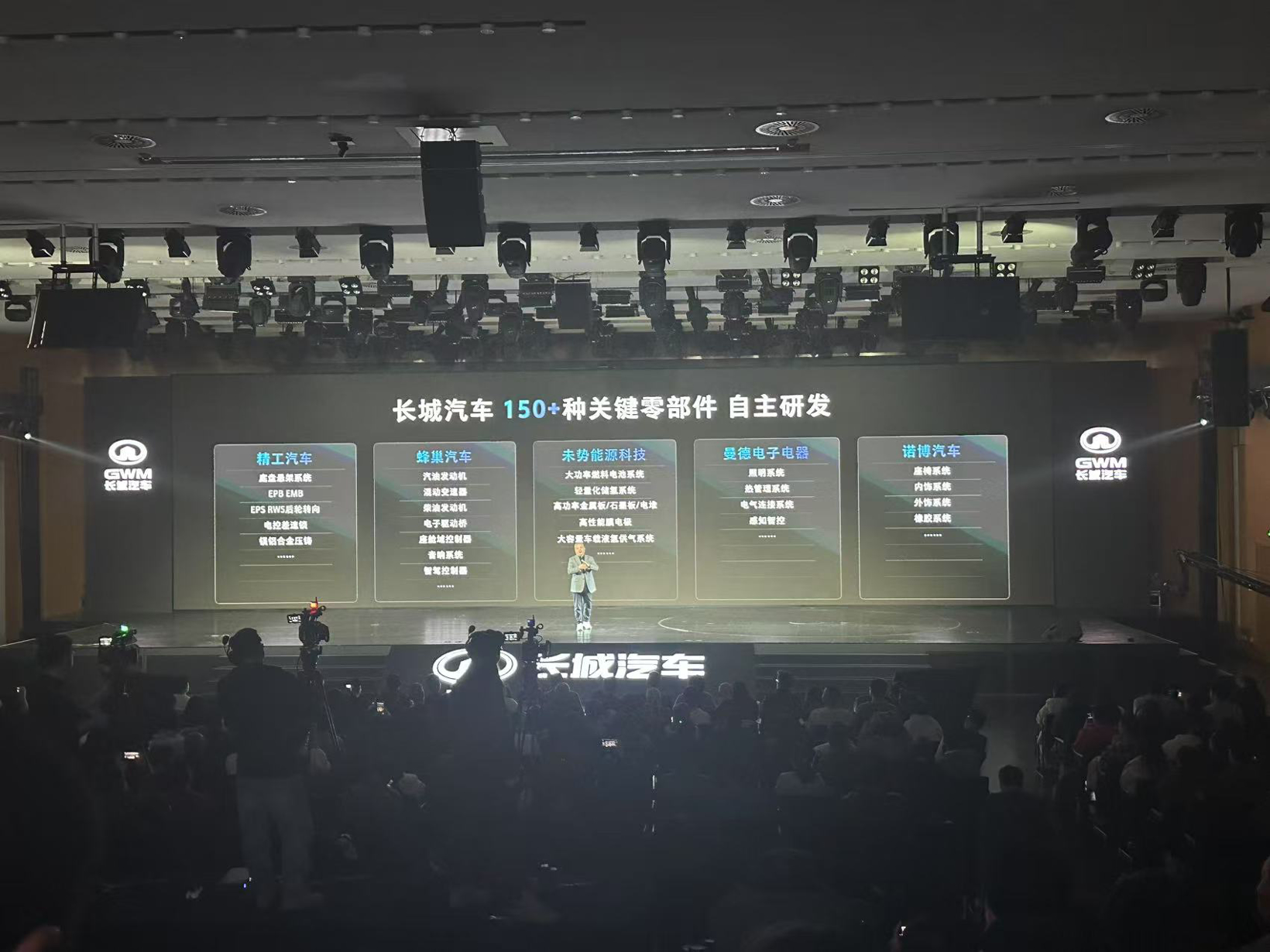
Image Source: Great Wall Motor
Beyond technical accumulation, another major core test comes from the coordination of organization and process.
Hardware modularity and software atomization require thoroughly breaking down traditional "chimney-style" departmental barriers. Teams in chassis, powertrain, EE architecture, software, and other fields must work under a unified architectural blueprint, following completely consistent standards, development processes, and data protocols.
This requires Great Wall Motor to establish a "platform-based" governance system that transcends traditional functional departments to conduct module definition, technical route decision-making, and resource allocation from a holistic perspective. At the same time, the software development model must fully shift from a project system serving single models to a product system and agile development model that supports the continuous iteration and combinatorial innovation of atomic capabilities.
This internal revolution, involving the reconstruction of power and a fundamental shift in working methods, is perhaps more complex and likely to encounter greater resistance than conquering any single technical problem.
Furthermore, the "born-global" positioning of the ONE platform places higher demands on Great Wall's global operations and deep localization capabilities. The concept of "domestic basic development + overseas local verification" requires not only strong local R&D centers but also teams in major global markets that possess deep local knowledge and can "combine" and tune the platform's basic modules in a targeted manner.
These teams need a profound understanding of local regulations, road conditions, culture, and user habits. Whether Great Wall's overseas brand awareness, channel networks, and service systems can effectively support the commercial success of products equipped with the latest "ONE" platform technology is another major exam testing the platform's strategic value.
Ultimately, all these changes point to a fundamental cultural transformation: shifting from a past engineering mindset that may have focused more on engineering parameters and hardware performance, to a user scenario mindset that truly starts from the user's specific driving journey and scenario pain points. Only when product definition, technology development, and AI algorithms all revolve around real user scenarios can the intelligent experience of "making the car understand you better" promised by the "ONE" platform truly take root.
Summary:
Against the complex backdrop of divergent technological routes, white-hot market competition, and business model reconstruction in the global auto industry, the release of Great Wall Motor's "ONE" platform is a proactive offensive with considerable strategic depth and risk awareness. It is not just a platform, but a complete methodology attempting to cope with industry uncertainty using "first principles" and "movable type" wisdom. It ensures strategic safety through full-powertrain compatibility in technology, reshapes the experience core with native AI, and pursues efficiency and scale through high modularity, clearly outlining Great Wall's development blueprint for the future.
However, the more grand the blueprint, the more arduous the challenge of realization. The success of the "ONE" platform will depend highly on whether Great Wall can successfully initiate and manage a deep internal revolution—breaking down organizational barriers, reshaping development processes, building global operational capabilities, and ultimately completing the cultural transformation to a user scenario mindset. Its massive vertical integration system is a valuable asset, but it also places extreme demands on internal coordination.
The "ONE" platform is a potent dose of strong medicine Great Wall Motor has prescribed for itself in the deep waters of industrial transformation, and it is also a self-revolution that allows for no failure. It signals that Great Wall is no longer satisfied with being a leader in niche markets, but intends to rely on systematic power to join the ranks of definers of core rules and technological paths in the global auto industry. The process and result of this revolution will not only determine Great Wall Motor's new standing in the future global automotive landscape but also provide a crucial observation sample for the Chinese automotive industry's transition from market leadership to technological system leadership.


