



With the 2026 Lunar New Year approaching, a fierce battle for the CCTV Spring Festival Gala stage is unfolding across the robotics sector.
On the evening of January 26, Unitree Technology officially announced its status as a robotics partner for the 2026 Gala. Preceding Unitree, MagicLab and Galbot had already confirmed their spots on the 2026 CCTV stage—named as the gala's "Strategic Partner for Intelligent Robotics" and "Designated Embodied Large Model Robot," respectively.
Unitree has form when it comes to showing off on the Gala stage. Its H1 humanoid robot stole the show with a creative dance performance called "YangBOT" at the 2025 Year of the Snake Gala—a classic example of technology breaking into the mainstream. This year, as more robotics firms vie for a spot, it signals that this premier national stage is becoming a strategic high ground where top players battle for brand recognition, showcase their tech roadmaps, and shape capital market narratives.
The High-Stakes Logic: Beyond Going Viral, Is It About Survival?
Rumor has it that the bidding war for this "admission ticket" soared as high as 100 million yuan. For robotics startups still heavily reliant on funding to stay afloat, that is undoubtedly a massive gamble.
Yet clearly, the wager isn't on just a few minutes of airtime. At a critical juncture where technology is moving from the lab to the market, the Gala's unique national platform serves, in some measure, as a strategic fulcrum for a comprehensive "critical leap" in brand, capital, and technology.
Breaking into the mainstream is the primary driver.
Statistics show the 2025 CCTV Spring Festival Gala generated 16.8 billion views across all media channels. That implies that by landing on the CCTV stage, humanoid robots from Unitree, MagicLab, and Galbot stand to reach hundreds of millions of households domestically and abroad.
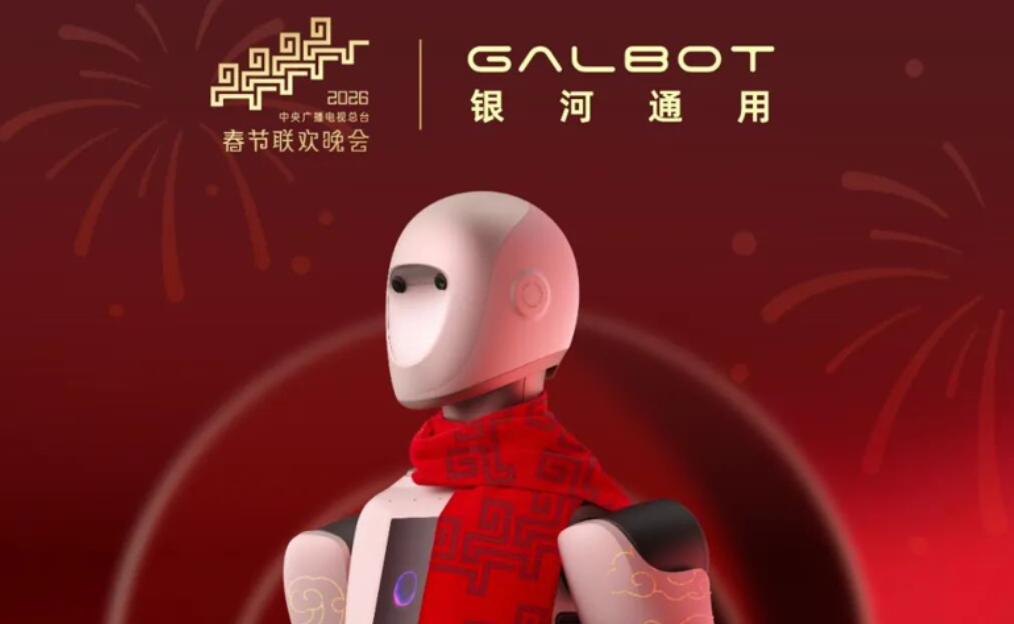
Image Source: Galbot
Bridging the gap from "industry recognition" to "household recognition" is something no trade show or online marketing campaign can easily achieve. For a robotics sector where technology is not yet fully mature and market education remains a work in progress, this breakout effect can rapidly shorten the market cultivation cycle, converting brand awareness into a potential user base and market demand. Unitree has already offered proof of this—likely a key reason for its return to the Gala.
Unitree's "Benben" robot cow first took the stage back in 2021. With the upcoming Year of the Horse Gala, the company is set to make its third appearance.
Then there is the link to capital markets.
On the very day MagicLab announced its 2026 Gala slot, co-founder Gu Shitao revealed the company is accelerating its IPO timeline, with potential news from the secondary market as early as 2026.
Similarly, Galbot completed a shareholding restructuring in late 2025. While the company denied the move was specifically for an IPO, it explicitly stated the aim was to facilitate future financing by bringing in new primary market investors.
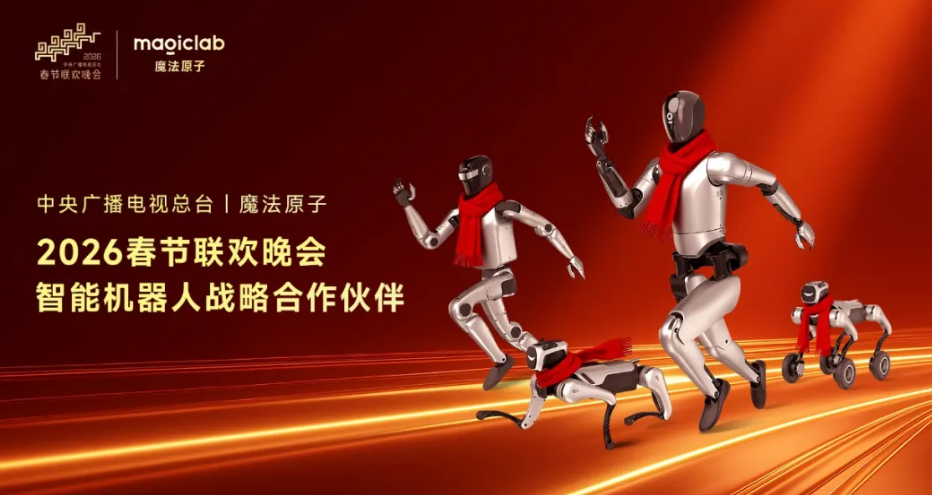
Image Source: MagicLab
Robotics is both capital- and technology-intensive, demanding massive R&D investment with long return cycles, making continued investor favor crucial. Against this backdrop, securing a Gala slot—especially as a "strategic partner" or "designated robot"—serves as a powerful endorsement of a company's strength.
Moreover, the Gala spotlight allows for a full display of technical highlights, product design, and application scenarios. That visibility makes it easier to attract capital market attention, laying a solid foundation for subsequent funding rounds, valuation boosts, or an eventual IPO.
Even more pressing, however, is the battle for industry positioning.
In 2025, investment in humanoid robots hit unprecedented levels, with global financing exceeding 50 billion yuan. Domestically, the trend of capital concentrating on top-tier players became unmistakable.
After Unitree successfully leveraged the Gala to break into the mainstream, latecomers have had to consider how to make an equally loud—or louder—noise. Compared to other channels, Gala sponsorship slots are not only scarce but also carry a top-tier endorsement. Whoever secures one first is best positioned to establish an initial image of "industry leader" in the minds of the public and investors alike.
Furthermore, the Gala's rigorous standards are expected to drive corporate technical iteration and validation.
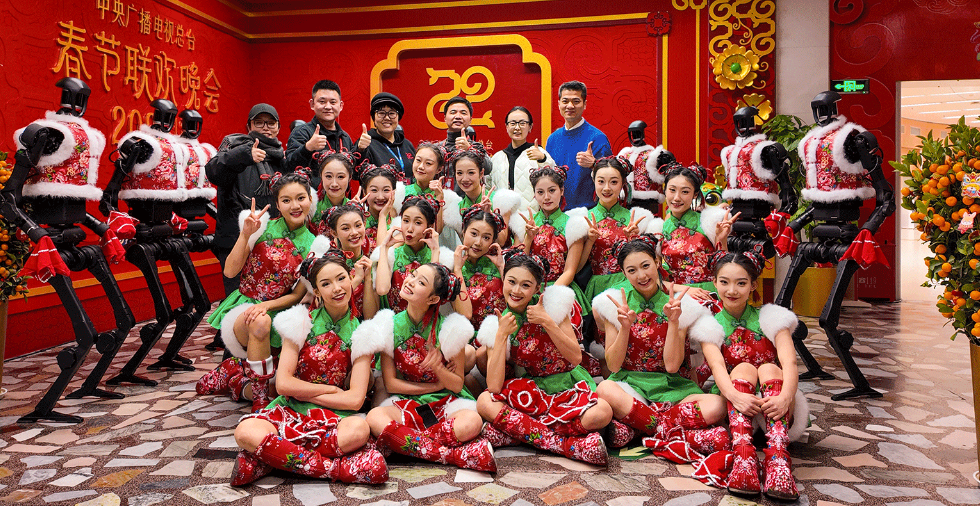
Image Source: Unitree Robotics
Delivering a flawless performance in front of a global audience of billions subjects a robot's stability, reliability, and interaction capabilities to the ultimate test—any single flaw risks being magnified in the live broadcast.
Consequently, to meet the Gala's performance requirements, companies must concentrate their best resources on overcoming technical hurdles and solving real-world application problems in complex scenarios. This "stress test" not only quickly exposes and fixes technical weaknesses but also accumulates valuable engineering experience, pushing technology from laboratory prototypes toward commercial products.
However, while a CCTV Gala appearance brings significant exposure and brand appreciation, the heavy financial outlay has sparked skepticism among industry insiders: pouring such vast sums into R&D might generate more long-term value. After all, the traffic dividend eventually fades, and what ultimately retains users is product reliability and utility.
One Stage, Two Paths
Yet while they are about to step onto the same stage, MagicLab and Galbot represent two distinctly different business and technology philosophies.
MagicLab has chosen the path of an "ecosystem builder." Its strategy can be summarized as "1+2+N": using full-stack proprietary technology as a foundation, it leverages humanoid and quadruped robot product lines to drive the integration of "Embodied AI + X" across countless scenarios.
Specifically, MagicLab has developed its core software and hardware in-house, including full-joint modules, dexterous hands, reducers, and drivers. It holds a leading edge in algorithms for motion control, navigation, multimodal perception, and embodied manipulation.
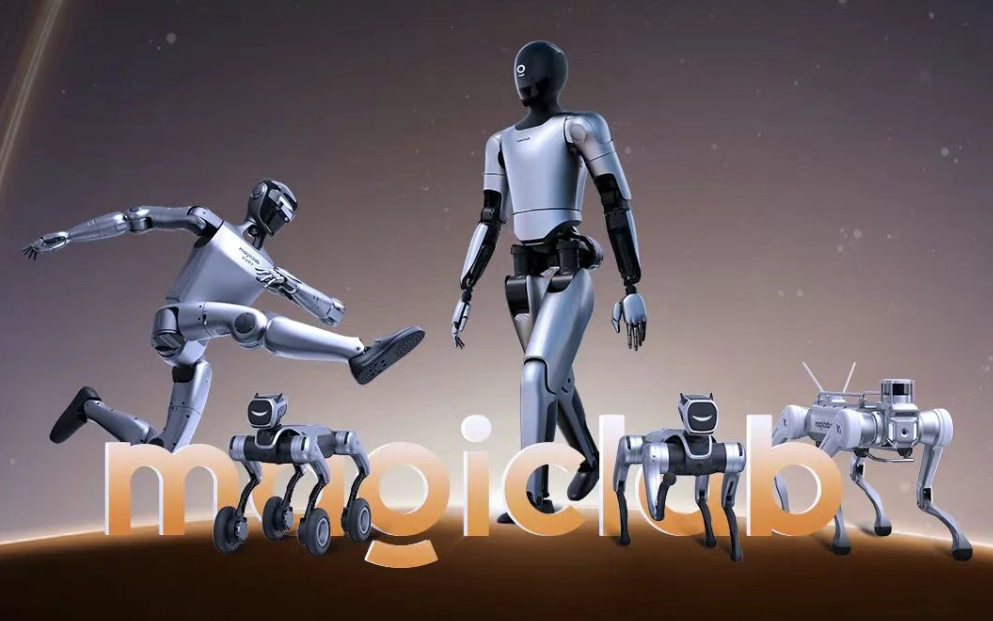
Image Source: MagicLab
Building on this technical foundation, MagicLab has launched a suite of products, including the consumer-grade MagicDog quadruped, the wheeled MagicDog W, the industrial-grade MagicDog Y1, and the high-dynamic bipedal humanoid MagicBot Z1. These cover research, education, entertainment, and industrial scenarios, with all achieving mass delivery.
According to official data from MagicLab, overseas business accounted for over 30% of its operations in 2025, covering 27 countries and regions, with localized expansion underway in Europe, the Americas, and Southeast Asia.
Over the next one to two years, MagicLab plans to expand its global team further, partnering with over 1,000 channel and ecosystem partners to cover 1,000 cities and establish a presence in 10,000 stores.
To that end, MagicLab recently launched an open-source initiative, the "Morning Star" production-research cooperation plan, and the "Gathering Light" global partner ecosystem strategy. It also introduced a suite of "unmanned store" solutions—spanning unmanned coffee, bubble tea, ice cream, pharmacies, and bookstores—aimed at rapidly accelerating the large-scale deployment of embodied AI across various scenarios.
Galbot, by contrast, is a staunch "industrial pragmatist." Its core strategy focuses on converting embodied AI into reliable, scalable industrial productivity.
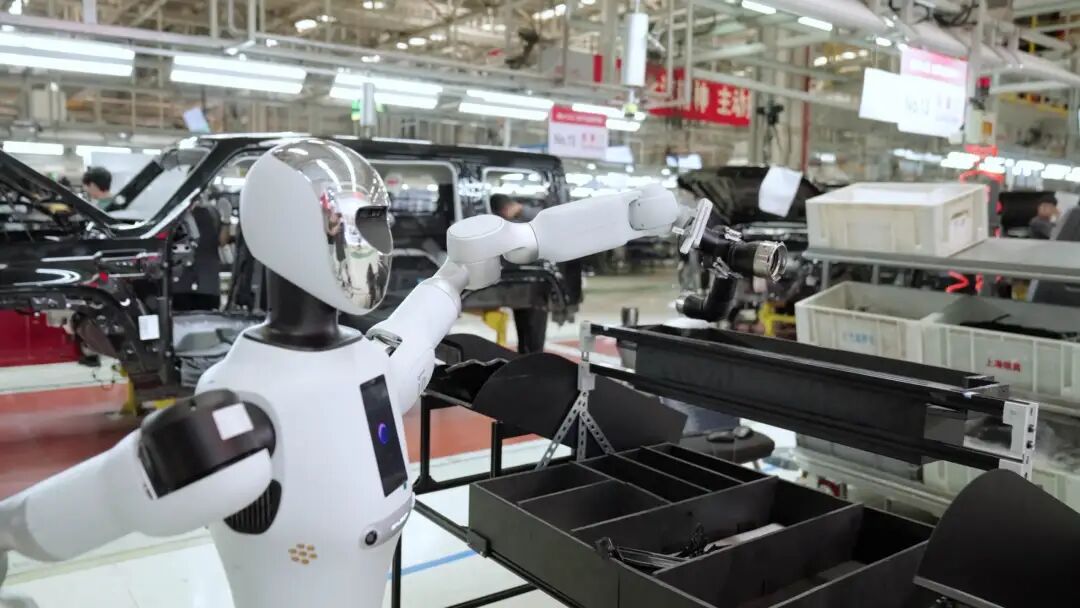
Image Source: Galbot
To achieve this, Galbot has constructed a dataset of 10 billion robot action points using a training pipeline that combines virtual simulation with real-world data collection. Anchored by end-to-end embodied large models like GraspVLA, GroceryVLA, and NavFoM, its robots possess industrial-grade generalization capabilities. They can autonomously complete tasks such as grasping, transporting, loading and unloading, and navigation, achieving cross-scenario adaptability without the need for frequent debugging.
Currently, Galbot's robots have achieved large-scale deployment in industrial manufacturing, instant retail warehousing, smart city services, and healthcare. The company has established deep partnerships with domestic and global giants like Bosch, CATL, Toyota, BAIC, and SAIC, with cumulative orders reaching several thousand units.
Moreover, in the retail sector, Galbot has launched the world's first and only deployment of hundreds of robots capable of 7×24-hour autonomous sales in retail stores and warehouses.
These divergent choices—one pursuing the breadth of scenario coverage, the other the depth of application in specific fields—reflect differing judgments about core strengths and market opportunities during this exploratory phase of commercialization.
And to validate these judgments, the need to demonstrate technological maturity to the widest possible audience is likely a key reason why they have both converged on the Gala as their stage of choice.
Conclusion
Looking back at 2025, Unitree's "Gala Effect" set the stage for today's contest. The phenomenal attention generated by that yangge dance significantly boosted its brand awareness and commercial progress. That case undoubtedly validated the massive short-term value of the Gala as a brand accelerator—and ignited the ambitions of those who followed.
Now, with MagicLab and Galbot following suit, "appearing on the Gala" is evolving from an isolated marketing stunt into a strategic standard for top-tier companies. Behind this shift lies the collective restlessness of an industry marching toward maturity: capital is ramping up, scenarios are being explored, and IPO pathways are opening.
Yet the spotlight will eventually fade. After the highlight reel ends, the long road to commercialization is where the real test begins.


