



Gasgoo Munich- By 2026, the global expansion of Chinese humanoid robots is entering a new phase.
Across the market, Chinese robotics firms are effectively "copying" capabilities honed over years at home to foreign markets. This spans everything from core components and complete machines to scenario-based solutions, and even the localized deployment of R&D and service networks.
Consider AGIBOT partnering with Minth in Germany and opening an experience center in Malaysia, Magic Atom setting up an R&D team in the US, and DeepRobotics building a systematic local support network in North America. These moves all point to a single trend: Chinese humanoid robots are shifting from simple tech demos or product exports to systematic, on-the-ground implementation.
For some humanoid robot makers, overseas operations already contribute more than 50% of their business.
As top players make their moves abroad, does this signal the "Year One" for humanoid robots going global?
Humanoid Robots Rush Overseas
On February 9, at UN headquarters, a Lunar New Year celebration welcomed a group of special "guests."

Image Source: AGIBOT
A "robot squad" from AGIBOT—featuring the Yuanzheng A2, Lingxi X2, and Kuto D1—made a high-profile "diplomatic debut" in front of 13 UN under-secretaries-general, permanent representatives from over 120 countries, and more than 500 guests from across the US East Coast.
In the Chinese humanoid robot sector, this was arguably the most high-profile moment for domestic solutions to date.
Behind the scenes, AGIBOT showcased not only China's leading technical prowess but also a posture of actively integrating into the global supply chain and participating in international cooperation.
Over the past month, AGIBOT has been busy making moves in overseas markets.
On February 24, AGIBOT held a launch in Munich, officially announcing its entry into the German market. There, it unveiled a full matrix of general-purpose embodied robot products and system-level industry solutions for Germany, while signing a strategic partnership with Minth Group to jointly expand in Europe.
On January 30, AGIBOT hosted its first European launch in Milan, Italy, marking its foray into that market. It also partnered with local system integrator SIR Spa, which will handle system integration, on-site deployment, and operational support to ensure AGIBOT's solutions are deeply adapted to local industrial and service environments.
In mid-January, AGIBOT opened its first overseas AI robot experience center in i-City, Shah Alam, Selangor, Malaysia. This is not only Malaysia's first AI robot experience center but also the first time a Chinese robotics firm has landed an "experience center" abroad. It marks a significant step in AGIBOT's global strategy, shifting from simple tech and product displays to offering users immersive experiences and localized services.
AGIBOT's flurry of activity is just a microcosm of the broader push by Chinese humanoid robots going abroad.
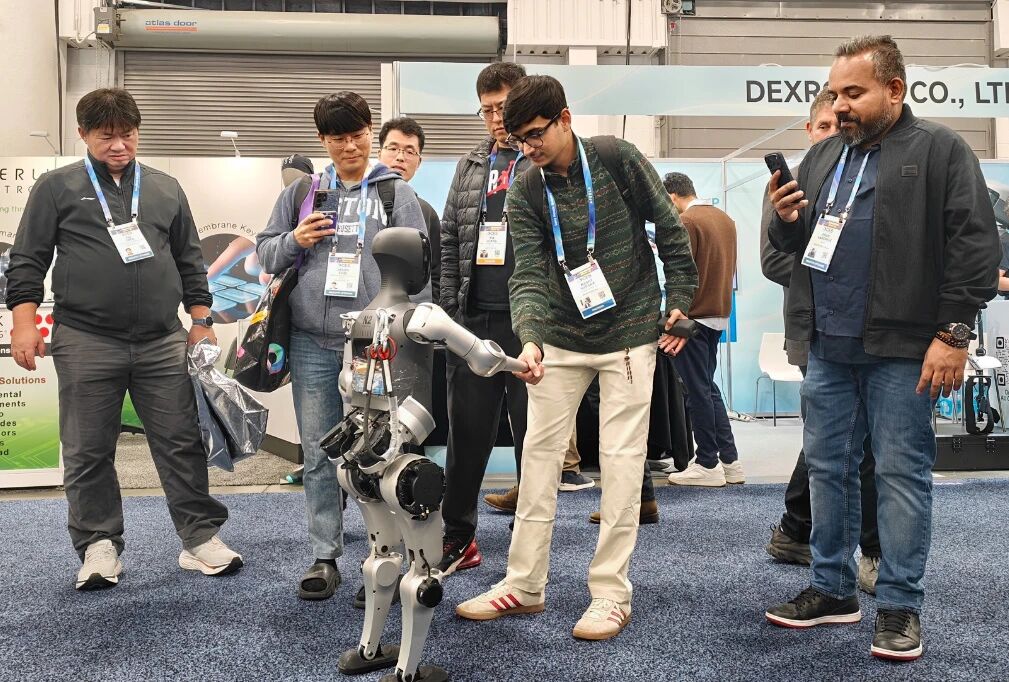
Image Source: Songyan Dynamics
Songyan Dynamics previously stated it will target five core regions this year: North America, the Middle East, Europe, Southeast Asia, and Japan-Korea. It aims to achieve market expansion on the scale of thousands of units by the second quarter.
To do this, Songyan Dynamics is building a reliable ERP+MES flexible overseas inquiry and production supply system to meet product demand in foreign consumer markets and ensure adequate after-sales service.
Unitree laid out its global expansion plans as early as 2018. Founder Wang Xingxing previously revealed that overseas business has accounted for about 50% of Unitree Robotics' annual performance in past years.
Magic Atom also established localized R&D, product, and delivery teams in the US early on. "We position ourselves as a global brand. China accounts for about 17% of global GDP, so we believe China should account for about 17% of our future global sales. Therefore, when we first planned our global market layout, we strictly followed the principle of configuring global localized teams according to how global resources are allocated," said Gu Shitao, co-founder of Magic Atom.
Additionally, embodied robotics companies like UBTECH, Accelerated Evolution, YOUIBOT, and Keenon Robotics are actively expanding overseas. Overall, the Chinese humanoid robot push has evolved from sporadic forays into a collective movement, shifting from simple product sales to deep localized deployment.
AGIBOT, for instance, has set up local teams in 10 markets including Malaysia, Singapore, Thailand, and Australia. It is expanding comprehensively through five cooperation models—joint ventures, distribution, experience centers, leasing alliances, and e-commerce platforms—combined with four core capabilities: fulfillment and after-sales, scenario solutions, brand marketing, and partner empowerment.
Magic Atom has also built comprehensive sales and after-sales support teams in the US, Middle East, and Europe, covering 27 countries and regions overall. In 2025, its overseas business share exceeded 30%, with monthly peaks surpassing 60%.
Building on this, Magic Atom plans to replicate the "closed loops" it has validated in fields like fire safety, education, industrial manufacturing, and cultural tourism on a global scale this year, further expanding its overseas business volume.
So, as top players compete aggressively, does this mean the "Year One" for Chinese humanoid robots going overseas has officially arrived? Zhou Xiaoying, CEO of Gasgoo, believes discussing an "export year one" might be premature; "mass production year one" would be more appropriate.
In her view, the global expansion of China's smart EVs serves as a good reference. Smart EV exports only moved into a new phase of regionalized ecosystem construction after the trade model neared its ceiling. "Seen this way, the current overseas push for humanoid robots is still in a very, very early exploratory stage. Global shipments in 2025 are estimated at just 13,000 to 18,000 units. The actual volume isn't large, and application scenarios aren't yet mature, requiring deep exploration from robot manufacturers, operators, and the supply chain together," Zhou said.
This means the current boom in humanoid robot exports is more like the start of a marathon.
What's Sustaining This Wave of Expansion?
As Chinese humanoid robots shift from "selling products" to "taking root" overseas, a more fundamental question arises: Is the timing really right for this global push?
To answer that, we need to clarify the core drivers behind this expansion wave.
First, there is the "accumulated strength" of China's supply chain.
After years of development and consolidation, China's humanoid robot supply chain boasts significant competitive advantages—whether in core components or overall assembly and manufacturing capabilities. This provides powerful "hardware" support for going global.

Image Source: CCTV Spring Festival Gala Live Stream Screenshot
Data released by IDC this February illustrates the point: global humanoid robot shipments in 2025 approached 18,000 units, a massive year-on-year surge of 508%. Chinese manufacturers dominate the global market, with AGIBOT and Unitree Robotics each shipping more than 5,000 units, while players like Leju and Accelerated Evolution achieved deliveries in the thousands.
By contrast, overseas rivals like Apptronik, Figure AI, and Agility Robotics are still in the pilot testing phase, handling volumes in the tens or hundreds.
Behind this mass-production capability lies the cost and technological advantage China has established in core components.
According to Gasgoo Automotive Research Institute, the domestic localization rate for core components like controllers, batteries, and structural parts has already exceeded 50%. In key technical areas such as ball screws, servo motors, encoders, and reducers, while localization rates are relatively lower, leading enterprises have achieved technological breakthroughs and entered mass production, with rates steadily improving.
For example, in the ball screw sector, domestic companies like Shuanglin, Xinjian Transmission, and Wuzhou Spring are actively laying out their plans. Shuanglin revealed on an investor interaction platform that it has developed 63 robot-use ball and planetary screw products for 3 customers. In the harmonic reducer field, Leader Harmonic Drive has engaged with almost all top Chinese humanoid robot makers and has begun bulk shipments.
This landscape—where some core parts lead and key technologies are catching up—has not only significantly reduced manufacturing costs but also ensured supply chain stability and controllability, laying a solid foundation for Chinese manufacturers to expand globally.
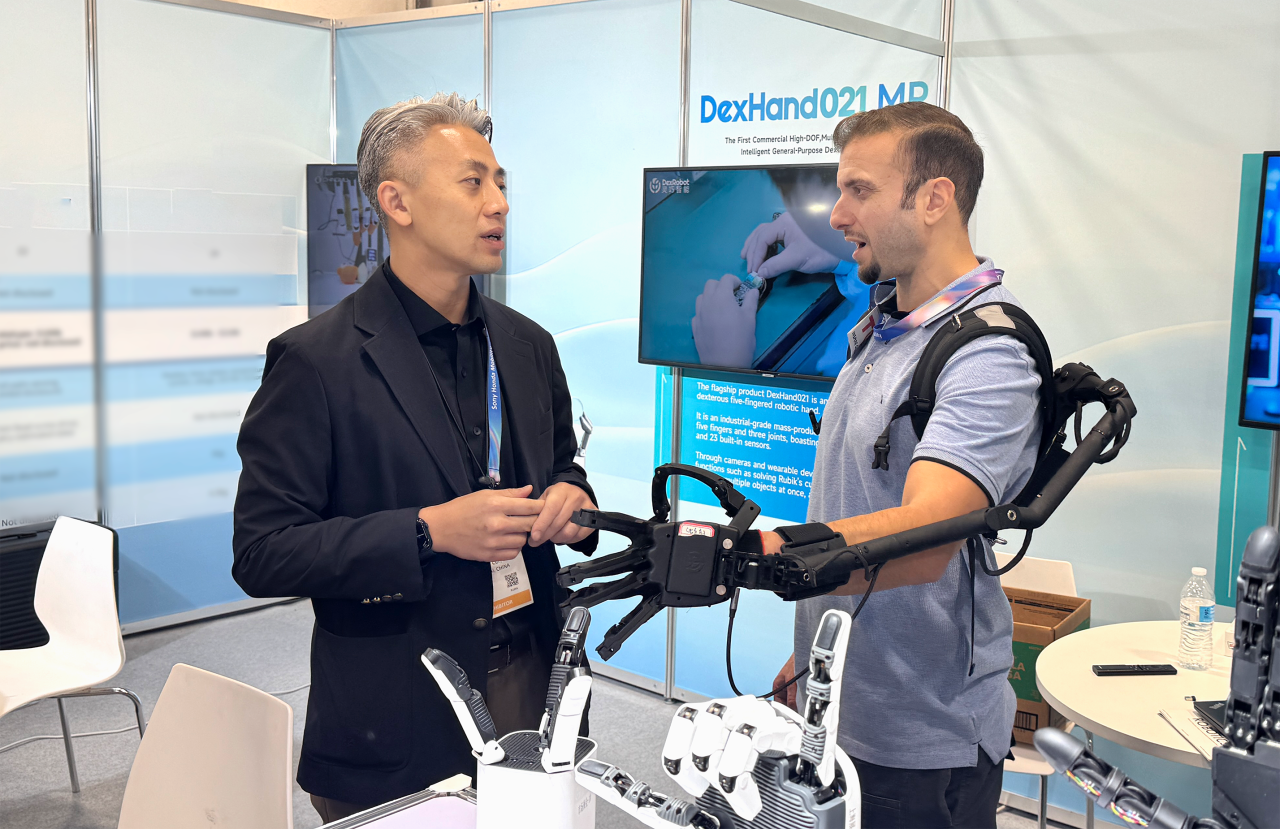
Image Source: Lingqiao Intelligence
Analysis by Gasgoo Automotive Research Institute suggests that after domestic substitution, major core components of humanoid robots hold a 50% to 70% cost advantage over foreign counterparts. For instance, Lingqiao Intelligence's DexHand021 Pro high-performance dexterous hand offers 22 degrees of freedom while dropping the price into the $14,000 to $28,000 range—just one-fifth of similar international products.
If a robust domestic supply chain is the core driver, then strong demand from overseas markets is the crucial pull.
From a policy perspective, many nations have written robotics into their core strategic plans. AGIBOT's entry into Malaysia, for example, is inseparable from the active support of Malaysia's "National Industry 4.0" strategy.
In Europe, the UK's "Smart Machines Strategy 2035," Germany's "Action Plan for Robotics Technology Research," France's "France 2030" investment plan, and Saudi Arabia's "Vision 2030" all explicitly identify robotics as a key development focus, providing policy-level opportunities for Chinese robotics firms to enter these markets.
Many developed nations are facing labor shortages and aging populations. Humanoid robots have vast potential application space in industrial manufacturing, home services, and healthcare. These markets have strong demand for intelligent robots that can boost efficiency, cut labor costs, and improve quality of life, offering a broad stage for Chinese companies.
Furthermore, from a corporate development perspective, going global is an inevitable choice for domestic robot companies at a certain stage of growth.
On one hand, after validating technology and business models at home, entering the broader global market is key to seeking growth—the global market volume is far larger than China's alone. On the other hand, competing with global rivals internationally forces rapid iteration of domestic humanoid robot technology and helps build a high-end brand image.
Beyond these points, Gasgoo CEO Zhou Xiaoying views this wave of humanoid robot expansion as a "spillover effect" from the automotive sector's global push.
"Domestic competition is fierce, and the overlap between supply chains for robots and smart EVs is very high. As Chinese auto exports continue to hit record highs, it's natural for players in the robotics sector to place their market layout on a global scale," Zhou said.
Currently, this "industrial spillover" is happening on multiple levels—supply chains can be reused, channels can be shared, and even overseas localization experience can be borrowed.
Crucially, the pitfalls and "tuition fees" paid by the auto industry during its expansion abroad can now serve as signposts for robotics companies.
The Great Age of Robotics Exploration Is Still a Way Off
There is no doubt that Chinese humanoid robots are marching out of the country in strides. Yet, behind the bustling scene of expansion, hidden reefs abound.
Compliance is the ticket, localization is the cornerstone, technology is the moat, and the ecosystem is the extension of that moat—these are the core propositions Chinese embodied robot makers cannot avoid.
Compliance certification is the first hard hurdle that cannot be bypassed.
Humanoid robots integrate numerous sensors and AI algorithms, touching on electronic product safety, cross-border data flows, and battery transport. Regulations abroad are intricate, with different markets focusing on different priorities—North America emphasizes safety standards, while Europe places high importance on environmental protection and privacy. These differences alone pose a complex test.
An even thornier challenge comes from the policy level. Recently, the "Humanoid Robot Act of 2025" (S. 3275) proposed in the US Congress calls for banning the federal government from procuring AI-integrated humanoid robots from entities in specific countries, including China.
This is reportedly the first time the US has discussed humanoid robots separately at the federal legislative level—a signal whose meaning is clear.
If compliance is the entry ticket, then localization and trust are the second barrier determining how far Chinese companies can go.
Selling products overseas is just the first step; the real test lies in building long-term credibility and service systems abroad. This is not a simple export but a profound journey of "cultural adaptation," requiring a deep understanding of the target market's cultural traditions, consumption habits, and even legal details to build a solid foundation of trust.
After-sales service is another major pain point. Humanoid robots often require deep adaptation and debugging. When customers are across the ocean, service teams based in China struggle to respond quickly. Consulting firm Interact Analysis notes that Chinese manufacturers urgently need to strengthen "on-the-ground support" services in European and American markets.
For this reason, many robotics companies are currently focusing on perfecting overseas localized delivery and after-sales support networks.
The match between technology and scenario constitutes a third test.
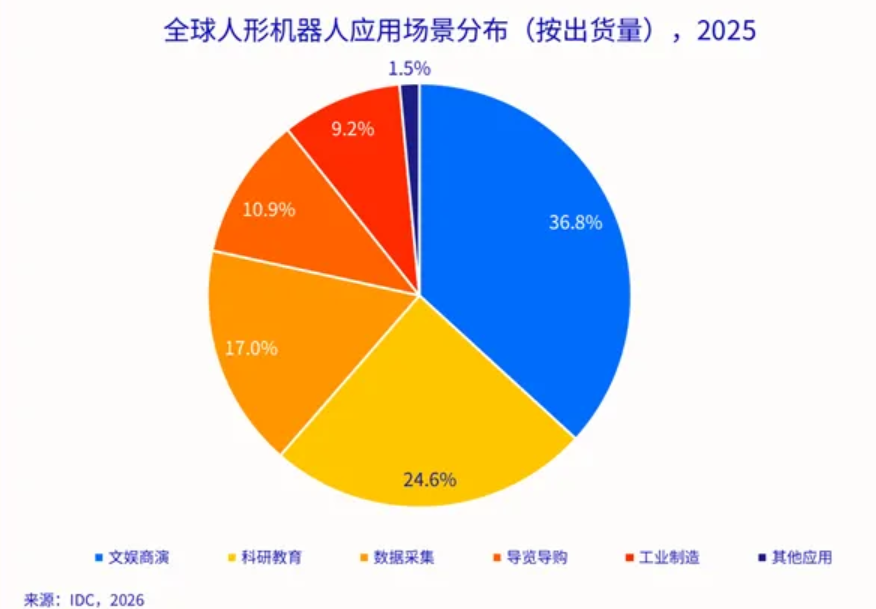
Image Source: IDC Screenshot
Current commercial deployment of humanoid robots remains focused on research, education, entertainment, and security patrols, with no large-scale penetration yet in complex scenarios like industrial manufacturing or home services. "While application scenarios are broad at this stage, there is a lack of volume buyers. Scenarios that can truly form scalable, continuous procurement—such as manufacturing, public services, and elderly care—are still in the validation phase," Zhou pointed out.
Moreover, compared to smart EVs, humanoid robots face higher thresholds regarding safety liability, data compliance, and operational stability. Many overseas clients prioritize "controllability and reliability" far above "leading performance." Referencing the development of the auto industry or autonomous driving, Zhou suggests that for humanoid robots going abroad, "we can start with edge scenarios, trading engineering reliability and localization capability for trust."
As individual capabilities mature, a fourth test emerges: building an industrial ecosystem.
Chinese enterprises overseas face not just competition from individual products but also established industrial ecosystems. This means that simply selling hardware is unlikely to build long-term barriers; systematic capabilities must be constructed.
RoboSense CEO Qiunchun Qiu summarizes this shift as a leap from "product export" to "system export"—where Chinese companies provide technical standards and complete solutions, implemented globally through overseas partners.
In terms of capability requirements, this model certainly places extremely high demands on Chinese firms' technology levels and their ability to provide continuous service and iteration. Yet, it is the only path from a "brief appearance" overseas to "long-term roots."
Ultimately, only when these hurdles are crossed one by one can the "Age of Great Navigation" for humanoid robots truly begin.
Conclusion
The 2026 wave of humanoid robot expansion is, in essence, a "coming-of-age ceremony" for China's humanoid robot industry.
From the tech carnival at CES to scenario implementation in the heart of the Dubai desert, from the independent breakthrough in core components to the global layout of complete machines, Chinese humanoid robots are moving out collectively.
But the real test begins after the products clear customs. Only by crossing the "four gates" of compliance, service, technology, and ecosystem can Chinese embodied robot companies truly grow from "participants" into "definers."
This is not just a commercial journey, but a deep friction and integration between Chinese intelligent manufacturing and global rules.


