



Gasgoo Munich- ENGINEAI Robotics Technology said on January 26 that it has formed a strategic partnership with Interstellor to launch the Humanoid Robot Astronaut Exploration Program. The initiative centers on the PM01, a self-developed embodied general intelligent agent by ENGINEAI, which will serve as the core platform for validating missions in space environments.
This marks the first time a humanoid robot system has been applied to space exploration scenarios in China, representing a significant intersection between embodied intelligence technology and aerospace engineering.
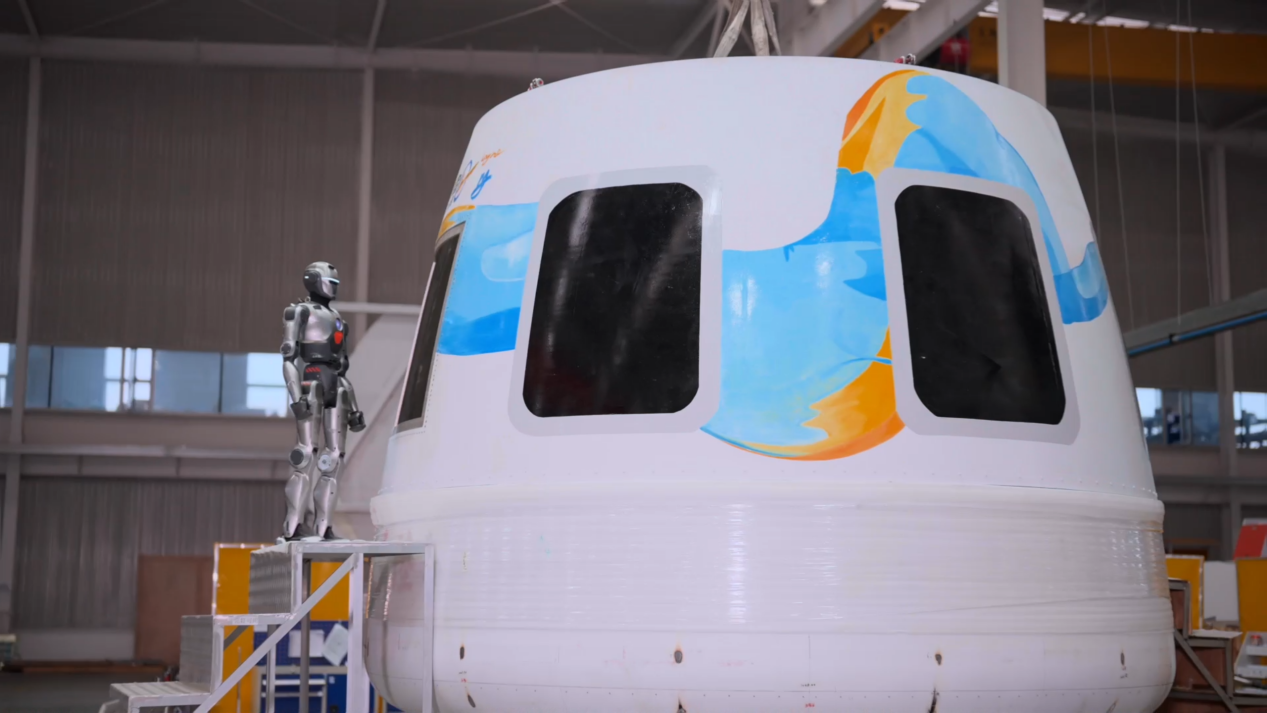
Image Credit: ENGINEAI Robotics Technology
As ENGINEAI's core robot platform, the PM01 is equipped with a high-precision environmental perception system. It is powered by multi-sensor fusion, millisecond-level real-time motion control, and a decision-planning framework built on proprietary algorithms. It is designed to perceive, assess, and execute continuous tasks in dynamic environments. The robot has completed multiple rounds of rigorous ground testing. It is now preparing for the void, where its technology stack will face the direct test of vacuum, microgravity, extreme temperatures, and radiation.
Space demands reliability and autonomy far beyond what is required on Earth. The partnership leverages complementary strengths: ENGINEAI brings expertise in motion control, complex environment adaptation, and embodied intelligence algorithms, while Interstellor contributes aerospace engineering experience and mission-specific adaptability. The teams have already conducted multiple rounds of joint simulation and risk assessment.
In space missions, robots can handle extravehicular inspections, equipment maintenance, and hazardous environment exploration—easing the workload and risk for astronauts. Conversely, the extreme conditions of space offer a high-level proving ground for the reliability and robustness of embodied intelligence systems. Insights gained here are expected to drive iterative upgrades for industrial applications on Earth. Ultimately, "human-machine collaboration" is set to become a cornerstone of sustainable space operations.
Moving forward, joint technical teams will focus on adapting the PM01 for the space environment, optimizing algorithms for on-orbit tasks, and boosting system reliability. The goal is to transition the project from ground validation to space experiments. This collaboration is viewed as a substantive step forward in cross-sector integration between China's intelligent robotics and aerospace industries.


