



Gasgoo Munich- On March 30, SAIC Volkswagen kicked off pre-sales for its large flagship SUV, the ID. ERA 9X. The lineup includes three all-wheel-drive trims—Pro, Max, and Ultra—priced between 329,800 and 379,800 yuan.
As the first range-extended flagship under SAIC Volkswagen's "Joint Venture 2.0" strategy, the ID. ERA 9X is tasked with expanding the Volkswagen brand's share in China's new-energy market. It also marks a deep integration of German engineering with Chinese technological prowess.
A "Super Volkswagen" Under Joint Venture 2.0
SAIC Volkswagen defines the ID. ERA 9X as the representative of a "Super Volkswagen." The concept reflects a broader attempt by joint ventures to carve out a differentiated path in the era of electrification.
Traditional joint ventures often followed a simple formula: the foreign partner supplies the tech platform, while the Chinese partner handles production and sales. With the ID. ERA 9X, however, SAIC Volkswagen is pursuing a deeper, two-way fusion. It combines the Volkswagen Group's EA211 engine, chassis tuning expertise, and global quality control with batteries, intelligent driving solutions, and cockpit ecosystems from local Chinese suppliers.
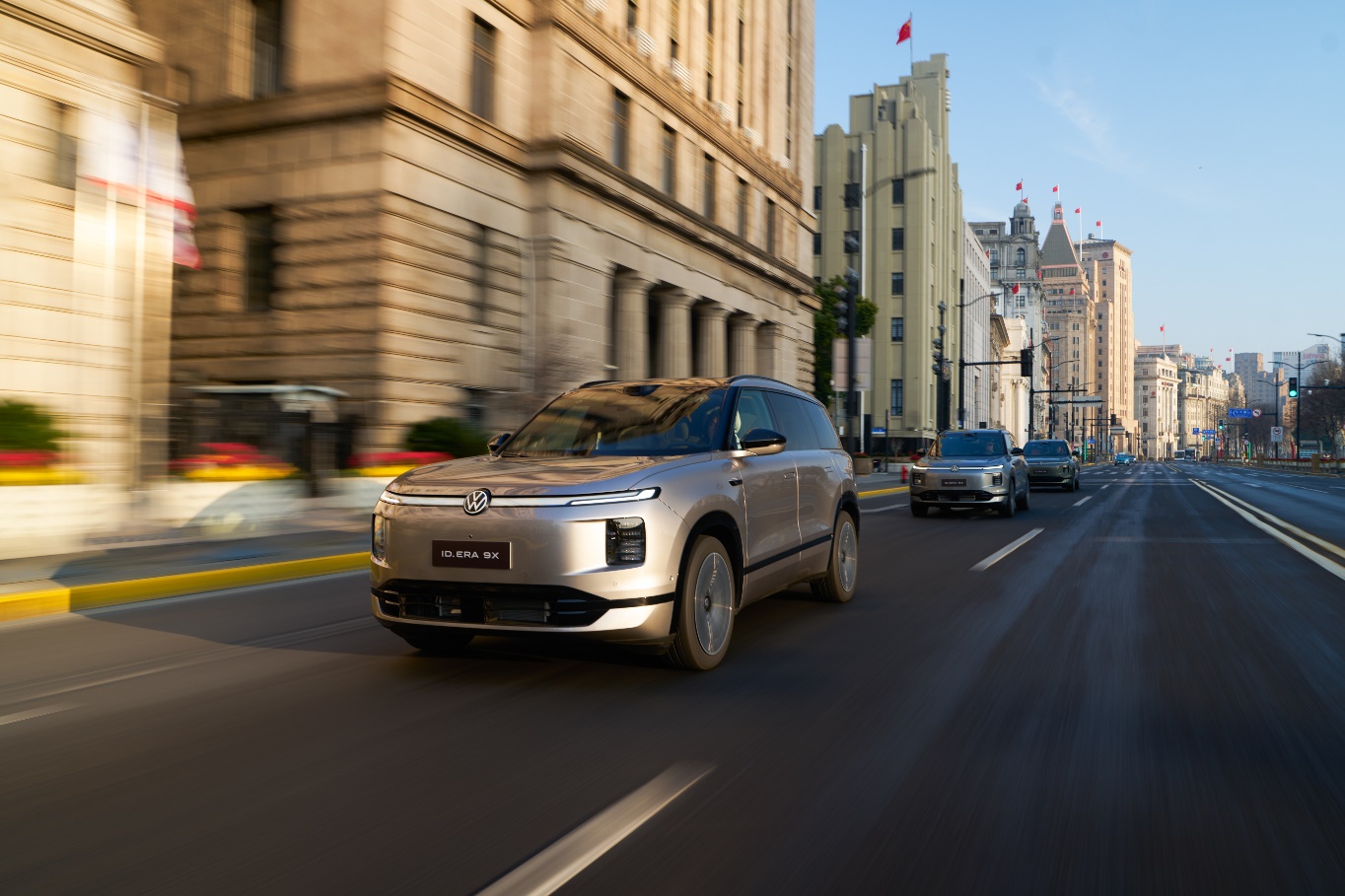
Image Source: SAIC Volkswagen
Under the hood, the EA211 "gold" range extender is a proven workhorse from the Volkswagen Group, with more than 25 million units installed globally over 15 years and three generations of iterations.
For electrification components, SAIC Volkswagen tapped CATL as its battery supplier. The vehicle is equipped with a 65.2 kWh Xiaoyao battery that supports 800V high-voltage fast charging.
On the intelligent driving front, the ID. ERA 9X makes its global debut with the Momenta R7 reinforcement learning world model, utilizing a 192-line LiDAR and multi-sensor fusion setup. This combination of "German mechanical heritage and Chinese smart supply chain" defines the core of its "Joint Venture 2.0" identity.
Additionally, SAIC Volkswagen announced a crossover partnership between the ID. ERA series and Disney's Star Wars IP. The company also launched the "Song of the Long Journey," a 12,000-kilometer intercontinental expedition from China to Wolfsburg, Germany. That long-distance test run symbolizes a shift in role for joint ventures: from "bringing in" technology to "going global."
"Fully Loaded" From Exterior to Powertrain
The ID. ERA 9X measures 5,207 mm in length, 1,997 mm in width, and 1,810 mm in height, with a 3,070 mm wheelbase—making it the largest SUV in the Volkswagen brand's global lineup.
Visually, the new car adopts a design language described as "grand, pure, and robust," incorporating the Bauhaus principle that "form follows function." A continuous shoulder line dominates the side profile, while a gently sloping roofline and an upturned skirt line create a yacht-like stance.
The ID. ERA 9X achieves a drag coefficient of Cd 0.253, earning it the "Low Wind Resistance Vehicle" certification from China Automotive Engineering Research Institute. For a large range-extended SUV, that figure isn't just for show; 15 aerodynamic optimizations translate to a range gain of roughly 53 km.
The exterior is available in six nature-inspired colors, with Desert Gold and Wizard Green offered as premium bespoke options.
The interior, dubbed the "Cloud Perch Smart Cabin," prioritizes "technology serving people" over sheer spec sheet bragging. It features a nine-screen linkage system, including a 15.6-inch dual central screen for the front row, a 21.4-inch ceiling-mounted rear screen, smart WHUD, a streaming rearview mirror, and three Smart Surface displays.
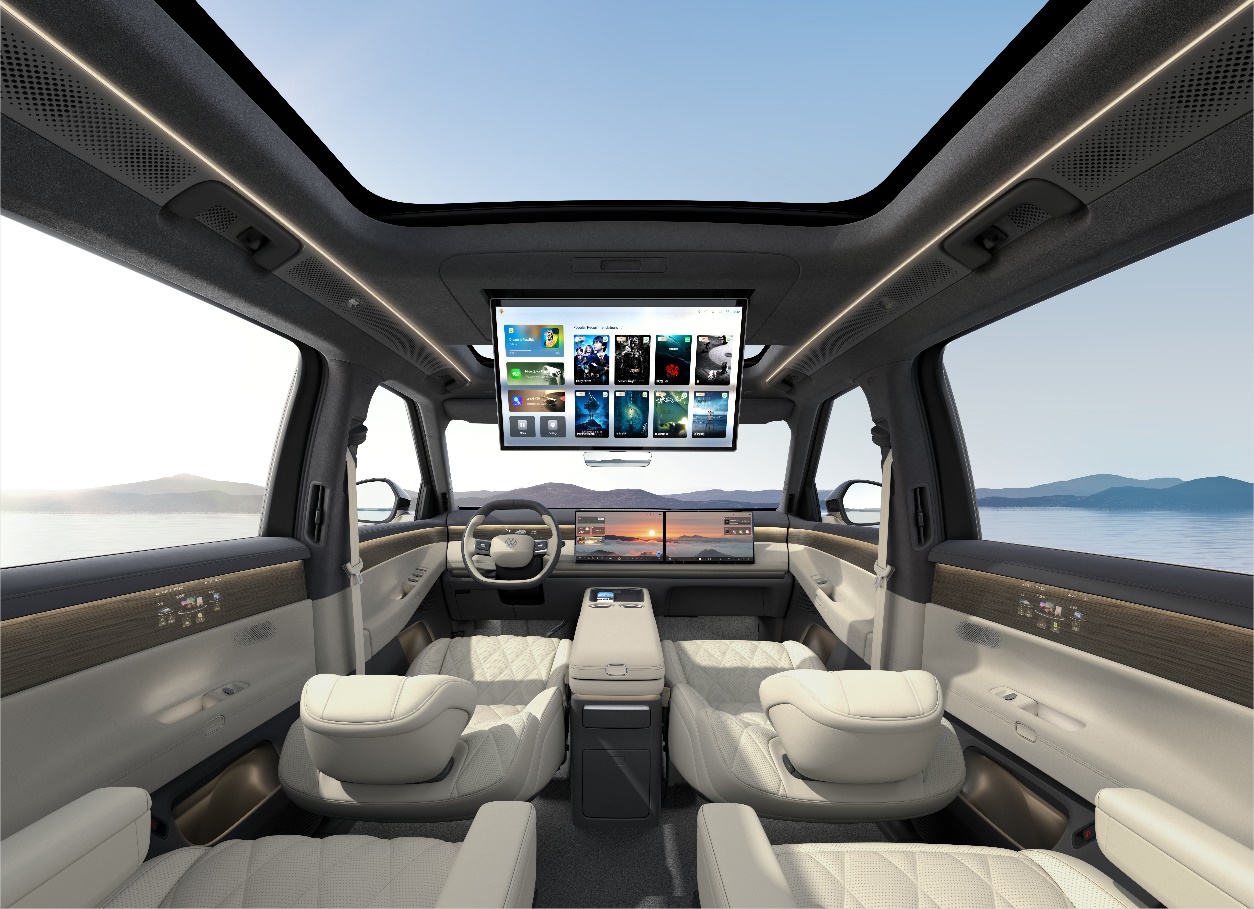
Image Source: SAIC Volkswagen
The Smart Surface screens are an industry-first design. Typically hidden beneath wood-grain interior panels, they use laser-perforation technology to allow light through, waking up automatically when needed. Located on the rear door panels and elsewhere, they display rear-side traffic conditions and allow control of the air conditioning and seats.
Seating is generous across the lineup: standard features include a zero-gravity front passenger seat and a dynamic zero-gravity seat on the second-row passenger side. The latter adds an integrated seatbelt and a 12-liter cushion airbag to the usual zero-gravity setup. Additionally, the cabin offers 36 storage spaces, and rear doors open up to 80 degrees to make entry and exit easier for children and the elderly.
The climate control system uses "senseless" vents that mimic the random variations of a natural breeze to reduce direct airflow. Rear passengers get a roof-mounted soft-air system, while the cabin is equipped with ANC active noise cancellation.
Intelligent driving is a key selling point for the ID. ERA 9X. The vehicle marks the global debut of an upgraded Momenta R7 reinforcement learning world model—an attempt to apply physical AI in a mass-produced car.
Unlike traditional rule-based or purely data-driven systems, the reinforcement learning world model aims to enable the system to predict and plan based on an understanding of the physical world—such as the inertia of moving objects and causal interactions—rather than relying solely on lane markings or preset logic.
On the hardware front, all trims come standard with a 192-line LiDAR, 11 high-definition cameras, 12 ultrasonic sensors, and an Aptiv seventh-generation millimeter-wave radar.
This "Flowing Cloud" intelligent driving system covers full door-to-door scenarios. In urban settings, it handles unprotected left turns, roundabouts, and avoidance of vulnerable road users. On highways, it supports autonomous ETC passage and active avoidance of large trucks. For parking, it offers remote entry, memory trace reversing (automatically backing out along the original path), and narrow passage assistance. When disengaging, the system follows a "sense, remind, then exit" logic to prevent sudden hands-off situations.
It should be noted that official documentation specifies the Momenta R7 reinforcement learning world model will be delivered via OTA upgrades, with specific functions subject to the final mass-production status.
The ID. ERA 9X is powered by an EA211 1.5T range extender paired with a smart all-wheel-drive system comprising front and rear dual motors. Total system output is 380 kW, with peak torque of 660 N·m. The range extender features VTG variable geometry turbocharging and APS atmospheric plasma spraying technology, with officials claiming minimal power loss even in a low-battery state.
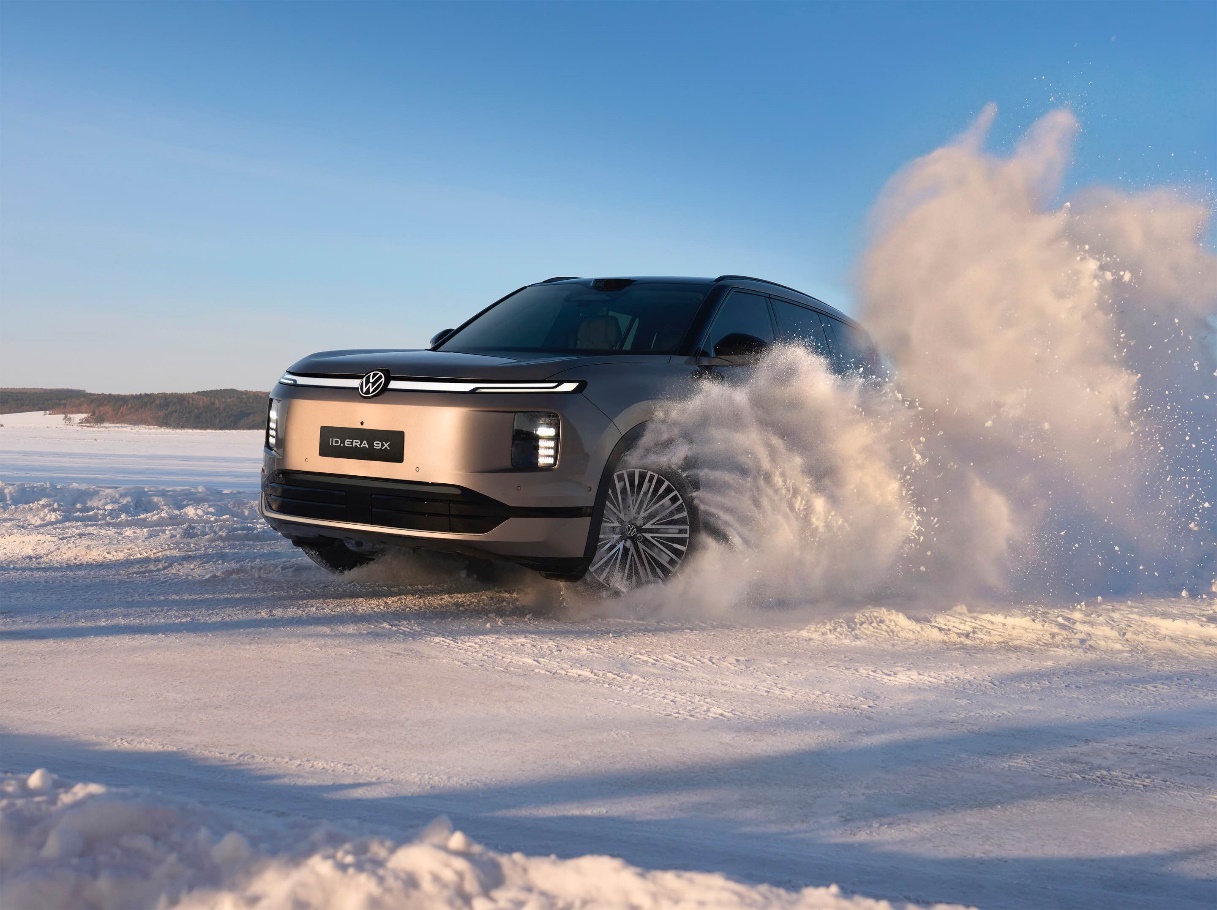
Image Source: SAIC Volkswagen
Regarding range, the 65.2 kWh battery delivers a CLTC pure-electric range of over 400 km and a total range of 1,651 km. It supports 800V fast charging, capable of adding 210 km of range in 10 minutes at peak power. The battery's bottom protection rating is 2,000 Joules, surpassing the national standard requirement of 150 Joules.
Chassis tuning has long been a Volkswagen strength. The ID. ERA 9X employs front double wishbone and rear five-link suspension with extensive use of aluminum components. Active rear-wheel steering comes standard across the lineup, yielding a turning radius of just 4.85 meters—smaller than that of a Polo hatchback. A dual-chamber air suspension and DCC adaptive damping system offer 150 mm of height adjustment (+80/-70 mm). Working with the VMC chassis control hub, the system scans the road 15 meters ahead to adjust damping in real time. The vehicle also features a one-touch leveling function that auto-levels the body when parked on a slope. Braking is handled by Continental all-aluminum four-piston fixed calipers.
In summary, the ID. ERA 9X is a vehicle that attempts to balance "German tradition" with "Chinese efficiency" in its product definition. With a starting pre-sale price of 329,800 yuan, standard active rear-wheel steering, and lifetime access to intelligent driving features, SAIC Volkswagen is signaling its competitive strategy in the high-end new-energy market. Actual market performance, however, will hinge on real-world user feedback once mass deliveries begin.


