



Gasgoo Munich- Leapmotor officially put its new flagship SUV, the D19, onto the market on April 16, introducing seven variants priced between 219,800 yuan and 269,800 yuan.
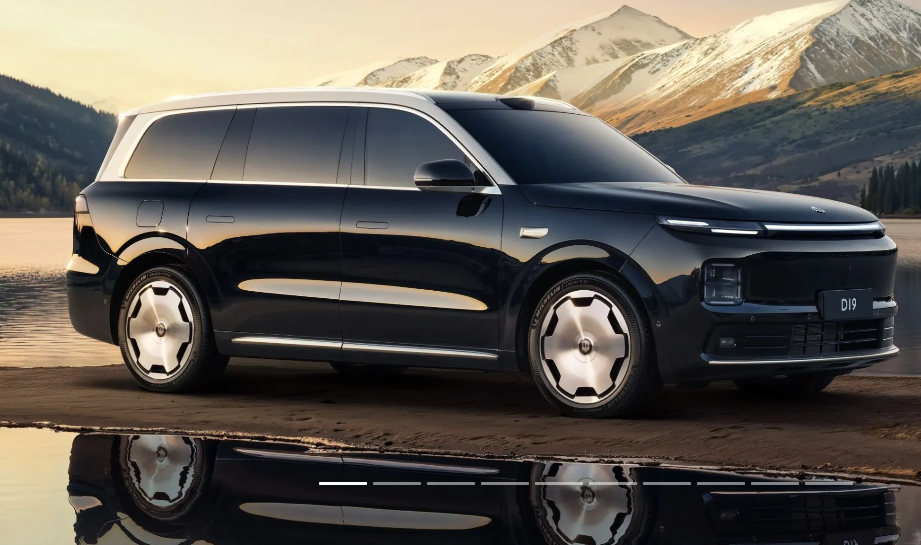
Image source: Leapmotor
As the debut model of the brand's new D-series, the D19 is built on the LEAP 4.0 architecture and positioned in the full-size SUV segment. It offers both six- and seven-seat configurations and is equipped with a range of high-end features, including dual Qualcomm 8797 chips delivering 1,280 TOPS of computing power, a 1,000V high-voltage platform, extended-range CTC (cell-to-chassis) technology, dual-chamber closed air suspension, and an automotive-grade in-cabin oxygen system. Deliveries are scheduled to begin immediately.
The launch coincides with Leapmotor's 10th anniversary, a moment the company is framing as a strategic inflection point. Over the past decade, Leapmotor built its presence through its A-, B-, and C-series models, largely competing in the 100,000–200,000 yuan price range and often positioned as a value-driven alternative in the market.
Looking ahead, the company aims to evolve from a startup NEV maker into a global automaker targeting annual sales of 4 million units. The D19, as a move into a higher price band, is central to that transition.
As the first model under the LEAP 4.0 platform, the D19 represents the culmination of a decade of in-house R&D efforts across hardware and software. It is designed to anchor Leapmotor's push into the 250,000-yuan segment and elevate the brand's positioning.
In 2025, the company delivered nearly 600,000 vehicles—a record high—and achieved full-year profitability for the first time. Having moved beyond survival mode, Leapmotor is now aiming to scale rapidly, with a target of 1 million units in annual sales by 2026. The D19 is expected to play a pivotal role in that next phase of growth.
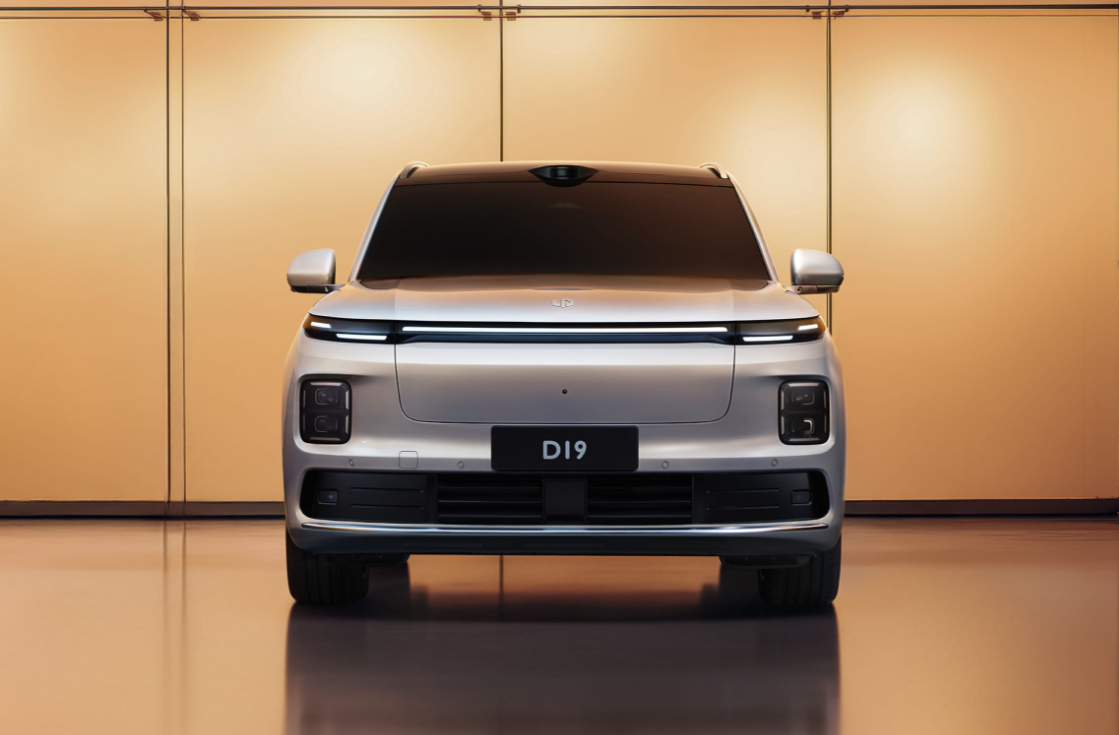
In terms of design, the D19 adopts what Leapmotor calls a "cosmic horizon" front fascia, with a largely unified look across both battery electric and extended-range variants. The BEV version adds a 176-liter front trunk and active air intake.
Lighting is a standout feature, with a three-stage full-width daytime running light and high-resolution DLP projection headlights capable of casting dynamic light patterns, along with adaptive high-beam functionality.
The model is offered in five single-tone exterior colors—green, silver, black, gray, and white—alongside three dual-tone combinations that pair select body colors with a contrasting silver roof finish.
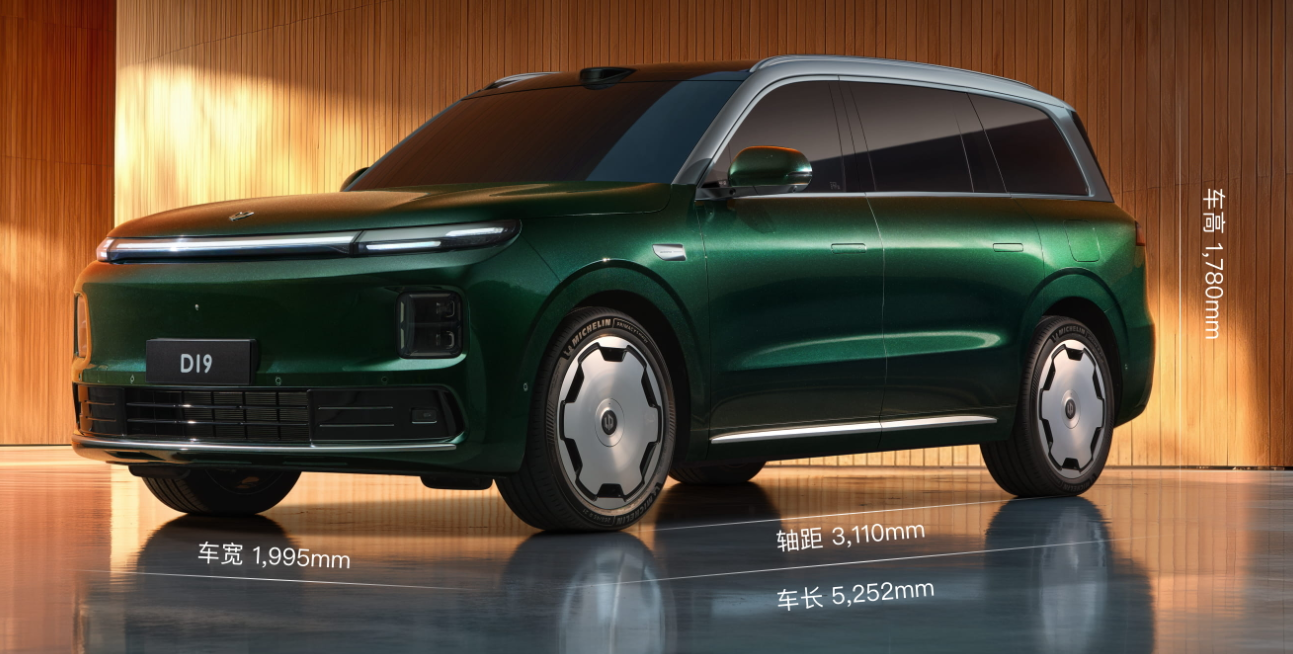
The SUV features flush side windows, hidden door handles, and sculpted body surfaces. It measures 5,252 mm in length, 1,995 mm in width, and 1,780 mm in height, with a wheelbase of 3,110 mm. All variants come standard with 21-inch wheels, available in multiple designs.
At the rear, the D19 features a 1,958 mm-wide ISD intelligent interactive light panel capable of displaying customizable lighting signals. The trunk offers 337 liters of cargo space, complemented by an additional 81-liter hidden storage compartment.
Inside, the cabin adopts a dual-layer wraparound layout with a distinctive elliptical digital design. Buyers can choose from three interior color schemes. Materials emphasize comfort and sustainability, featuring extensive soft-touch surfaces, eco-friendly treatments, velvet headlining, premium leather upholstery, a Nappa leather steering wheel, and wood trim.
The interior also integrates a fragrance system with three scent options, soft ambient wall lighting, and a 16-million-color ambient lighting system that can synchronize with different driving scenarios.
The front cockpit is anchored by a 60-inch augmented reality head-up display, a 10.25-inch digital instrument cluster, and a 17.3-inch central touchscreen. The system runs on an on-device large AI model, enabling advanced voice interaction, high-resolution graphics, 3D vehicle visualization, and lane-level navigation.
A notable feature is the in-cabin oxygen generation system, capable of producing up to 8 liters of oxygen per minute, combined with air purification functions to enhance in-car air quality.
Seating configurations emphasize comfort across all three rows. The front seats come standard with electric adjustment, heating, ventilation, massage, and memory functions, along with a heated steering wheel.
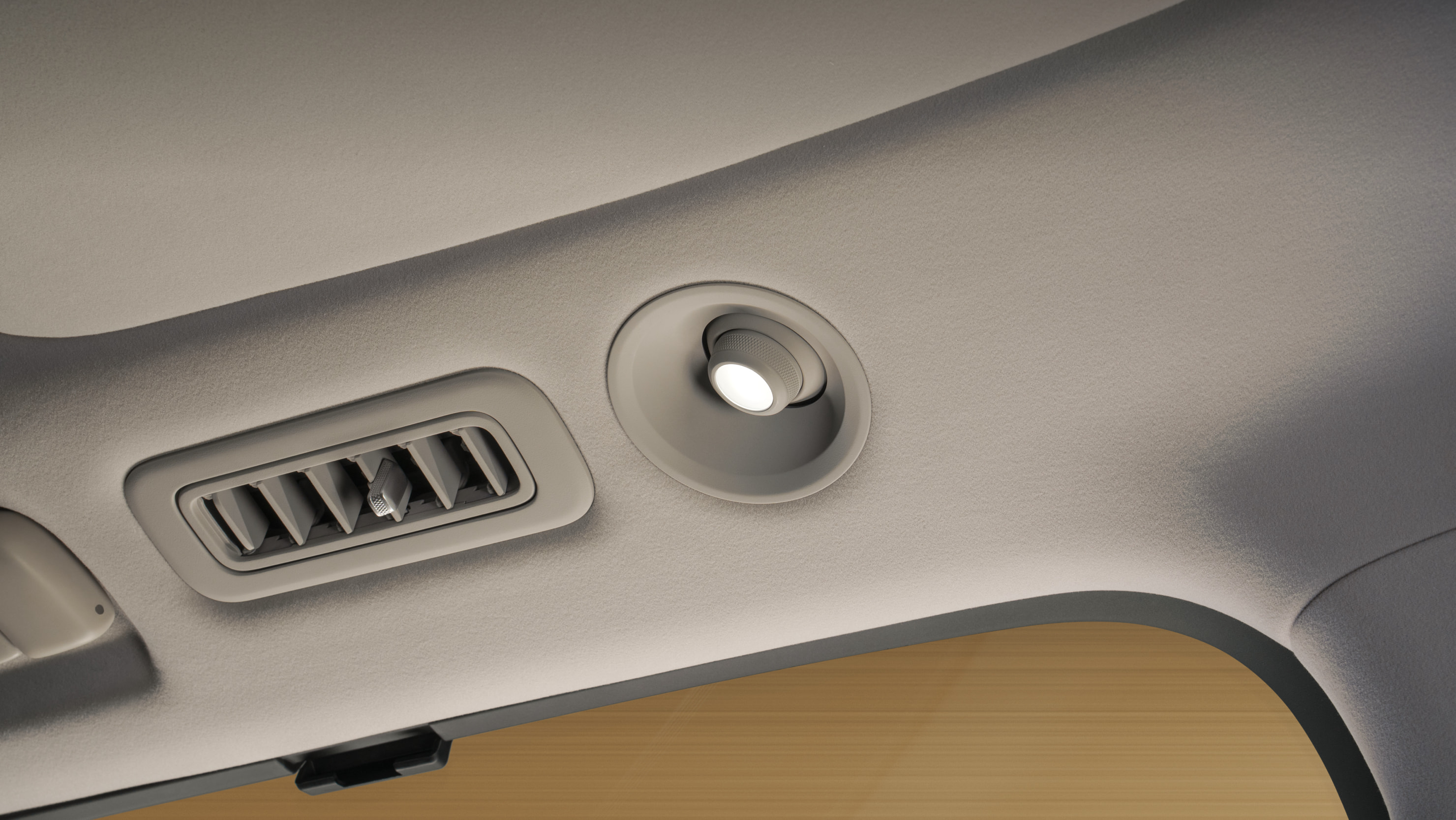
Image source: Leapmotor
In the six-seat version, the second row features zero-gravity seats capable of reclining to a 120-degree "zero-pressure" position, with four-way leg rests and a 195 mm central aisle; the right-side seat also supports lateral electric sliding. In the seven-seat layout, second-row seats recline up to 145 degrees and support one-touch folding. Both configurations include heating, ventilation, massage, and memory functions.
Third-row seats are electrically adjustable, recline up to 131 degrees, and offer heating and memory functions, along with one-touch folding. Electric sunshades are standard for both the second and third rows, reinforcing the D19's positioning as a comfort-focused flagship SUV.
In the rear cabin, the D19 is equipped with a 6-inch multifunction control screen and a 21.4-inch 3K motorized entertainment display certified for low blue light emissions. Additional amenities include fold-out tray tables, an 8.1-liter heating and cooling compartment with a temperature range from -6°C to 50°C, sunshades, a panoramic glass roof, and double-layer acoustic windows.
The vehicle also comes standard with a 23-speaker Leap Sound audio system, including two headrest speakers for the driver, delivering a peak output of 2,304 watts.
On the intelligence front, the D19 is powered by dual Qualcomm Snapdragon 8797 chips, delivering a combined computing capacity of 1,280 TOPS. The system is supported by 28 perception sensors, including a LiDAR unit, enabling advanced driver assistance under a vehicle-level autonomy (VLA) framework. Functions include point-to-point navigation assistance, highway navigation assist, and urban navigation assist.
Active safety features cover an automatic emergency braking system operational between 4 km/h and 150 km/h, as well as an active emergency steering assist system functioning between 80 km/h and 130 km/h. Passive safety is reinforced through a cage-type body structure, a five-layer reinforced A-pillar design, more than 75% high-strength steel usage, a ten-layer battery protection system, stability control in the event of dual tire blowouts at speeds up to 120 km/h, and a standard suite of 10 airbags.
The extended-range version of the D19 features a 1.5T range extender paired with a dual-motor all-wheel-drive system, delivering a combined output of 300 kW, split between a 100 kW front motor and a 200 kW rear motor.
Two battery and fuel tank configurations are available: a 63.7 kWh battery with a 52-liter fuel tank, offering a CLTC battery-powered range of 400 km and a total range of 1,300 km; and an 80.3 kWh battery with a 40-liter tank, providing a 500 km battery-powered range and 1,180 km combined range. The model introduces a CTC (cell-to-chassis) battery structure for extended-range systems, paired with an integrated exhaust layout to maximize battery packaging space. Built on an 800V platform, it can charge from 30% to 80% in just 15 minutes.
The BEV version adopts a 1,000V high-voltage architecture, enabling more than 350 km of range to be added in 15 minutes of charging.
The dual-motor variant delivers up to 410 kW of power (180 kW front, 230 kW rear), paired with battery options of 99.6 kWh and 115 kWh, offering CLTC ranges of 620 km and 720 km, respectively. A higher-performance tri-motor version boosts output to 540 kW (180 kW front, 360 kW rear), accelerates from 0 to 100 km/h in 3.94 seconds, and delivers a CLTC range of 680 km with a 115 kWh battery pack.
Underpinning the D19 is a chassis setup featuring a double wishbone front suspension and a five-link rear independent suspension, with CDC (Continuous Damping Control) as standard across the lineup.
Higher-spec variants add dual-chamber air suspension capable of raising the ride height by 40 mm or lowering it by 55 mm. Additional technologies include predictive road-scanning suspension control, zero-radius turning, and, on top trims, "compass turn" functionality for enhanced maneuverability. The vehicle is also equipped with four-piston front brake calipers, MK C2 brake-by-wire technology, Bosch R-EPS steering, and the LMC 2.0 chassis control system.
Positioned as a new entrant in the flagship three-row SUV segment, the D19 will compete with models such as the ONVO L90 and Geely Galaxy M9. Although it arrives roughly a year later than some rivals, the model stands out with a comprehensive package spanning intelligent driving, comfort features, powertrain diversity, and advanced chassis technologies.
This combination could allow Leapmotor to leverage a late-mover advantage, potentially reshaping competition in the segment and strengthening its push into the premium market.


