



Gasgoo Munich- China's Ministry of Industry and Information Technology (MIIT), alongside the Ministry of Commerce and the State Administration for Market Regulation, has jointly released the "Artificial Intelligence Terminal Intelligence Grading" (GB/Z 177—2026) series of national standards. Smart vehicle cockpits are now officially part of the first batch of seven standardized categories — a move that signals the country's automotive intelligence drive is entering a new phase of regulated development.
The framework introduces an innovative "2+N" architecture. The "2" represents the "Reference Framework" and "General Requirements," defining an evolution path from Level 1 response to Level 4 collaboration. The "N" covers evaluation dimensions tailored to specific devices. Notably, the Level 3 "auxiliary" standard for smart cockpits — representative of high-computing terminals — has become an industry focal point. Cockpits hitting this mark must demonstrate complex multimodal intent understanding, chain-of-thought reasoning, dynamic task planning, and adaptive contextual learning, effectively bridging the gap from "passive command response" to "active intelligent collaboration."
Industry experts point out that the smart cockpit sector has long lacked a unified yardstick. The introduction of this standard offers automakers a clear R&D baseline while optimizing the supply-side structure through market selection. For consumers, it provides an authoritative reference when shopping, enabling them to accurately gauge the true intelligence of a vehicle's cockpit and make more informed decisions.
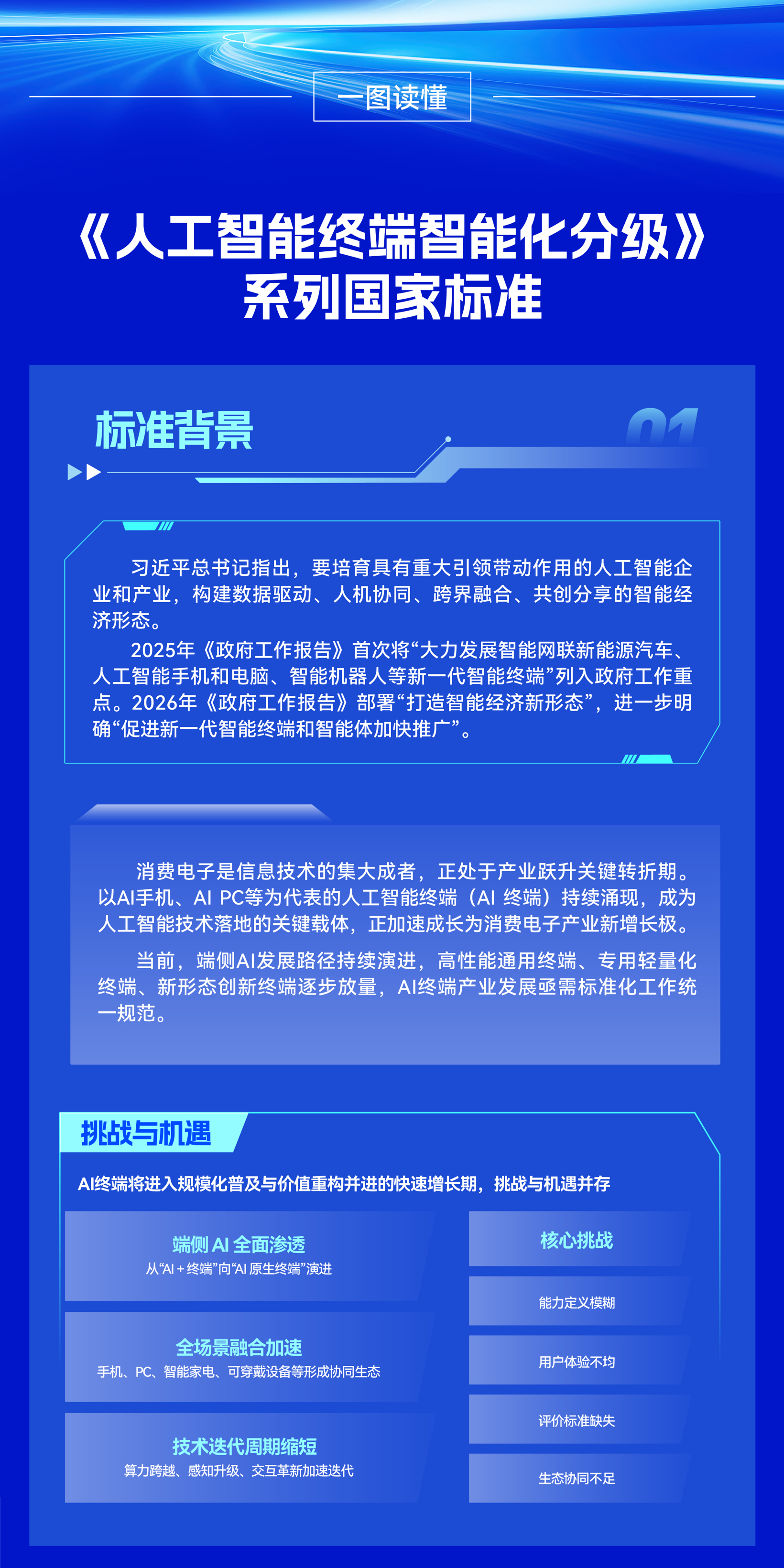
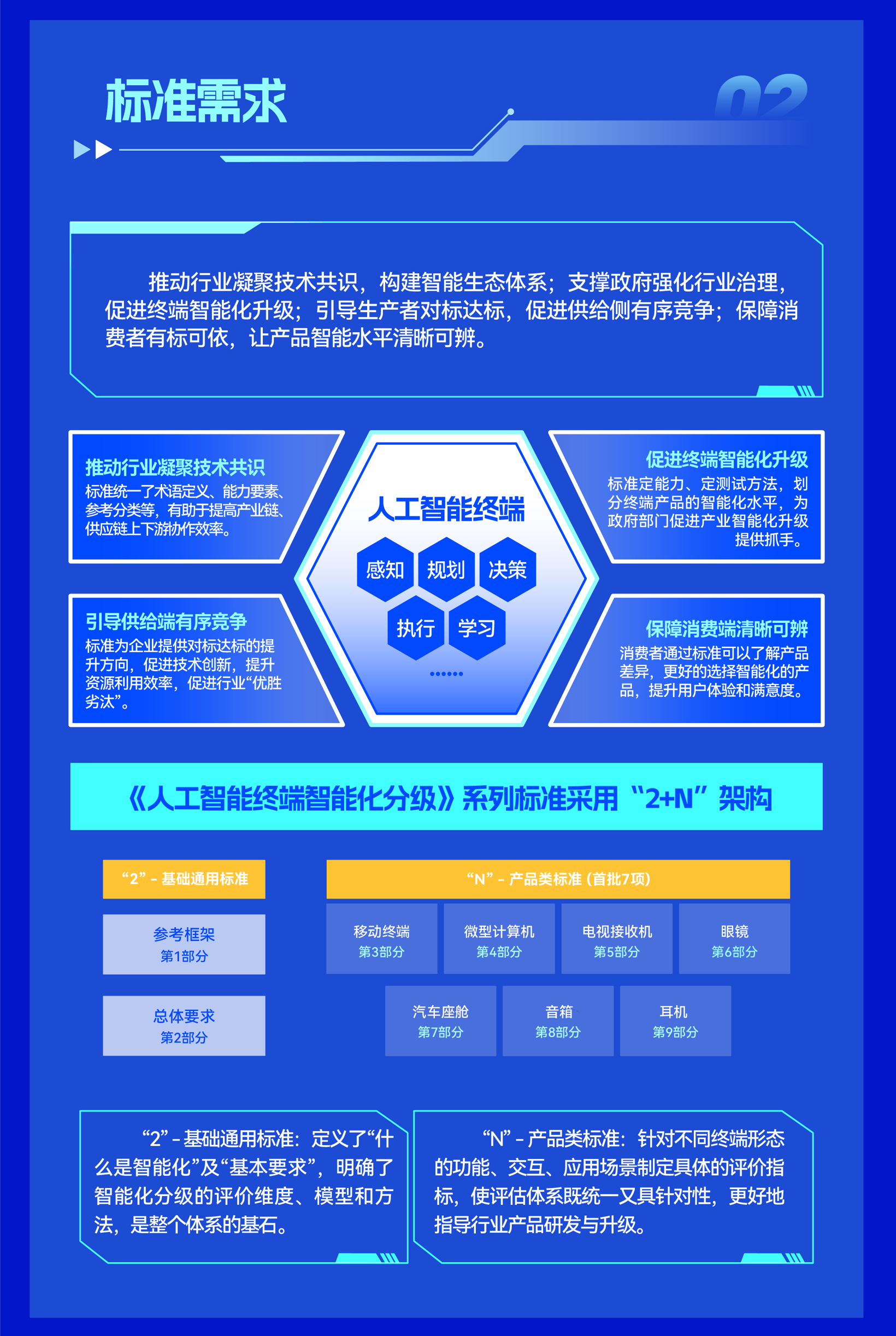
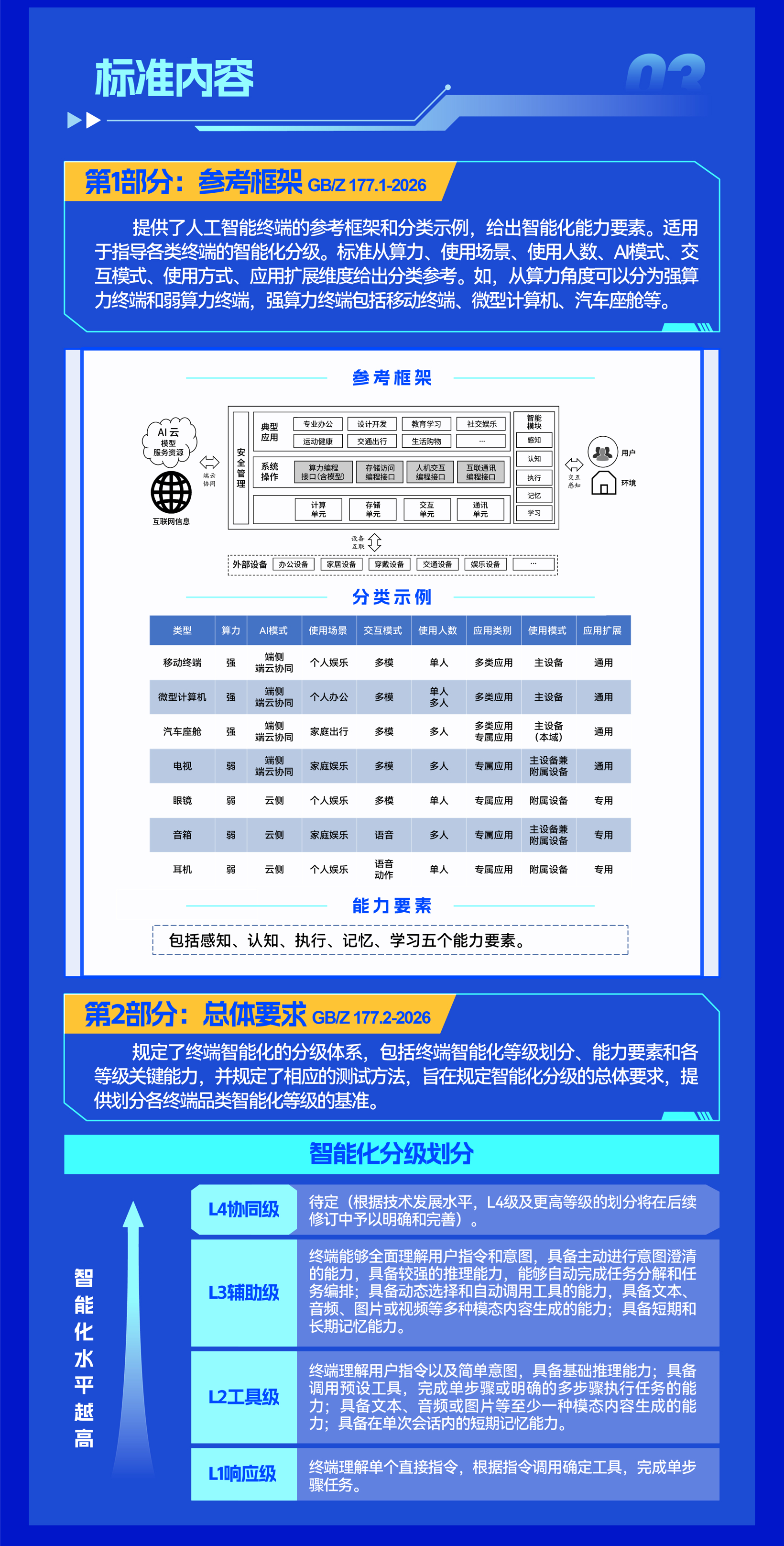
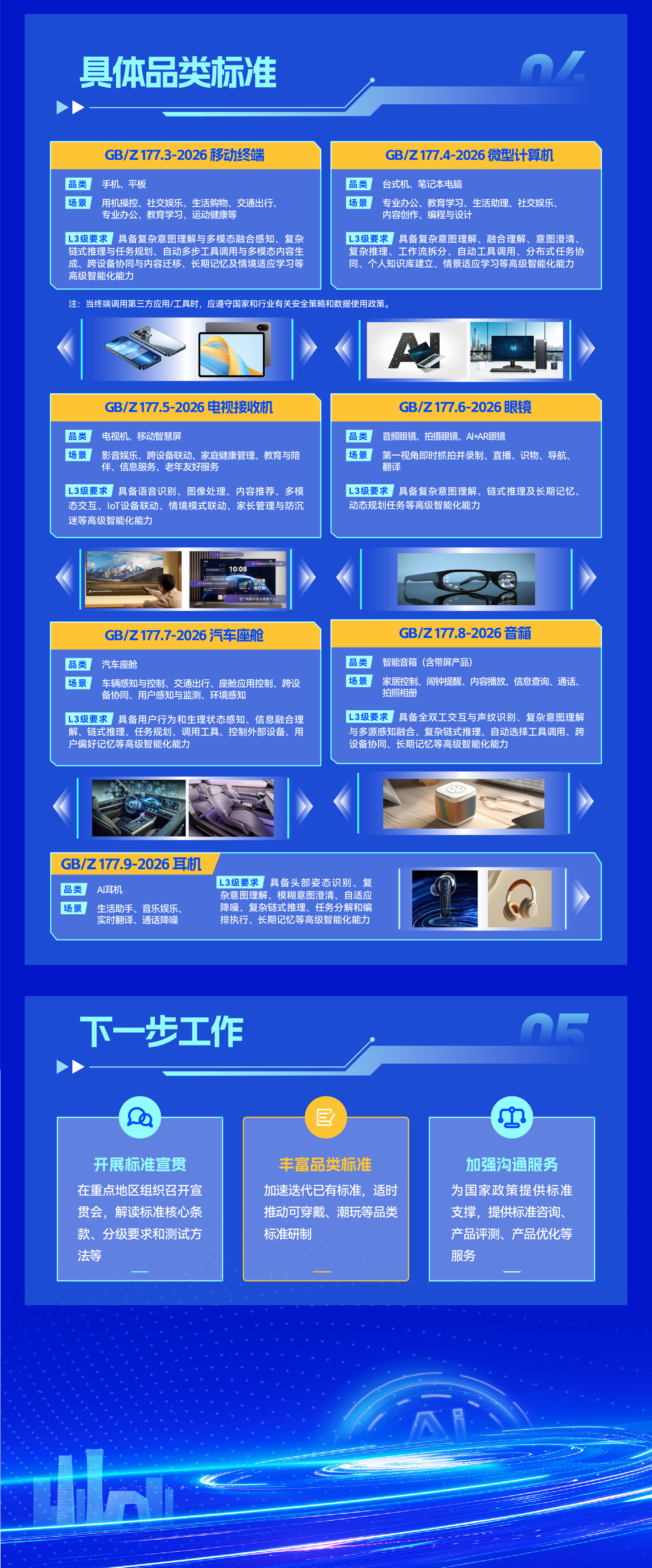
Image Source: MIIT Department of Electronic Information


