



Gasgoo Munich- Media reports indicate that Canadian Prime Minister Carney paid an official visit to China from January 14 to 17. During the visit, the two sides reached a broad consensus on deepening economic and trade cooperation, signing the "China-Canada Economic and Trade Cooperation Roadmap" and establishing preliminary joint arrangements for handling bilateral economic and trade issues.
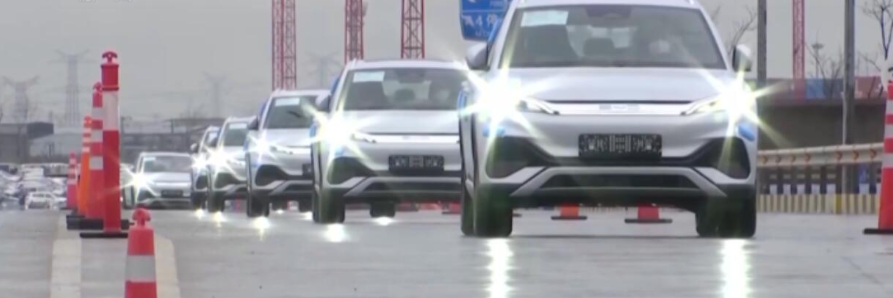
Image Source: China Association of Automobile Manufacturers
On January 15, witnessed by Premier Li Qiang and Prime Minister Carney, Minister of Commerce Wang Wentao and Canadian International Trade Minister Sidhu signed the "China-Canada Economic and Trade Cooperation Roadmap" on behalf of their respective authorities. This marks a significant phased achievement under the framework of the new strategic partnership between the two nations and represents the first high-level cooperation document in the history of bilateral economic and trade relations.
Notably, the Canadian side stated in media interviews that it will make positive adjustments to measures regarding Chinese electric vehicle exports to Canada. The Chinese side has taken note of these remarks.
In 2024, Canada imposed a 100% surtax on Chinese electric vehicles, significantly impacting exports. Under the latest adjustment, Canada will grant an annual quota of 49,000 units for Chinese electric vehicles. Within this quota, vehicles will be subject to a 6.1% most-favored-nation tariff rate instead of the 100% surtax, with the quota volume set to increase annually by a certain percentage.
China views this as a positive step by Canada and a favorable development for Chinese electric vehicles entering the Canadian market. Beijing hopes Canada will honor its commitments and continue to reciprocate. Through friendly consultation, the two sides aim to create a fairer, more stable, and non-discriminatory environment for expanding trade and investment cooperation in electric vehicles. Industries are encouraged to seize opportunities, strengthen alignment, and achieve mutual benefit.
Furthermore, Canada will make positive adjustments regarding unilateral measures against Chinese electric vehicles and steel and aluminum products, as well as specific cases involving Chinese corporate operations and investments in Canada. In accordance with relevant laws and regulations, China will adjust anti-dumping measures on canola and anti-discrimination measures on certain Canadian agricultural and aquatic products—issues of concern to Canada. These arrangements are expected to deepen cooperation between relevant industries and enhance the well-being of both peoples.


