



The first mass-produced Bozhi 4X Robotaxi has officially rolled off the assembly line, marking a milestone for the strategic partnership between Pony.ai, Toyota China, and GAC Toyota as they enter a new phase of large-scale production and operations. It also signals a pivotal turning point for the autonomous driving sector: the shift from technical demonstrations to commercial deployment.
Under the plan, the joint venture formed by Pony.ai, Toyota China, and GAC Toyota will deploy a fleet of 1,000 Bozhi 4X Robotaxis by 2026, launching operations across China's Tier-1 cities.
A New "Manufacturing + Tech" Paradigm for Autonomous Commercialization Emerges
Collaboration between traditional automakers and tech firms is fast becoming the dominant model on the road to commercializing autonomous driving. Pony.ai's partnership with Toyota, which began in 2019, offers a viable blueprint for the industry.
Unlike building vehicles entirely in-house or offering simple technology licensing, this partnership deeply integrates the distinct strengths of both parties.
Pony.ai focuses on autonomous driving algorithms and system development, having accumulated years of technical validation in complex urban scenarios across Beijing, Shanghai, Guangzhou, and Shenzhen. Toyota brings decades of manufacturing expertise to the table—specifically the Toyota Production System and its QDR (Quality, Durability, Reliability) philosophy.
A key innovation in this model is the establishment of a dedicated Robotaxi production line. Jointly developed by GAC Toyota and Pony.ai, the line fully incorporates the Toyota Production System to create a bespoke management framework for production, quality, and safety tailored specifically for Robotaxis.
To meet the rigorous demands for safety and reliability, the production line embeds Toyota's core "Quality, Durability, Reliability" principles throughout the entire manufacturing process.
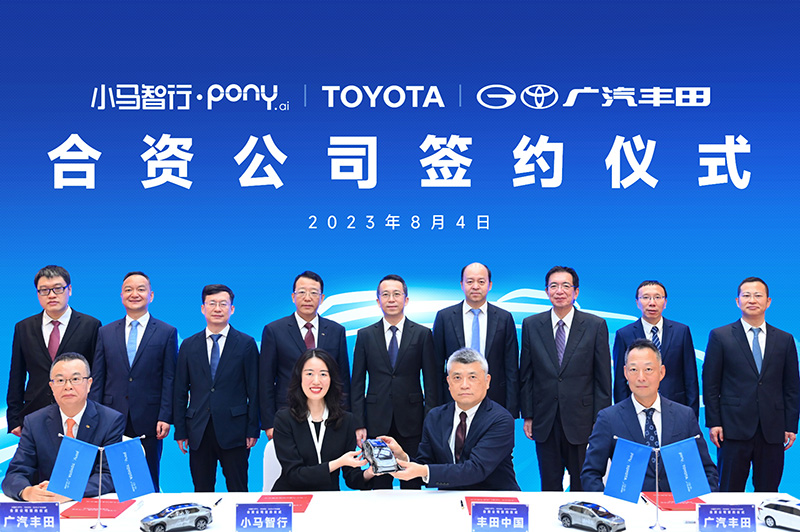
Image source: Toyota China Official Website
Pony.ai Vice President Mo Luyi noted that the rollout of the mass-produced Bozhi 4X Robotaxi represents a critical leap for the tripartite partnership—from technological breakthrough to mass production—while providing a robust platform for deploying Pony.ai's autonomous driving technology.
The success of this model offers a template for other companies pursuing autonomous commercialization.
7th-Generation Autonomous System Ushers in Era of 1,000-Unit Robotaxi Deployment
The new vehicle is equipped with Pony.ai's latest 7th-generation autonomous passenger vehicle system. This system integrates technical validation experience gathered from complex traffic scenarios in Tier-1 cities like Beijing, Shanghai, Guangzhou, and Shenzhen. It has undergone system-level optimization for operational scenarios, delivering comprehensive upgrades in safety, cost, and user experience.
The system marks a critical technical preparation as autonomous driving moves from the lab to the marketplace, featuring all-around optimizations designed for large-scale operations.
Significant strides have been made in cost control: the total hardware kit cost has dropped by 70% compared to the previous generation, while supporting flexible adaptation across multiple vehicle models and platforms. This substantial reduction removes economic barriers to the large-scale deployment of Robotaxis.
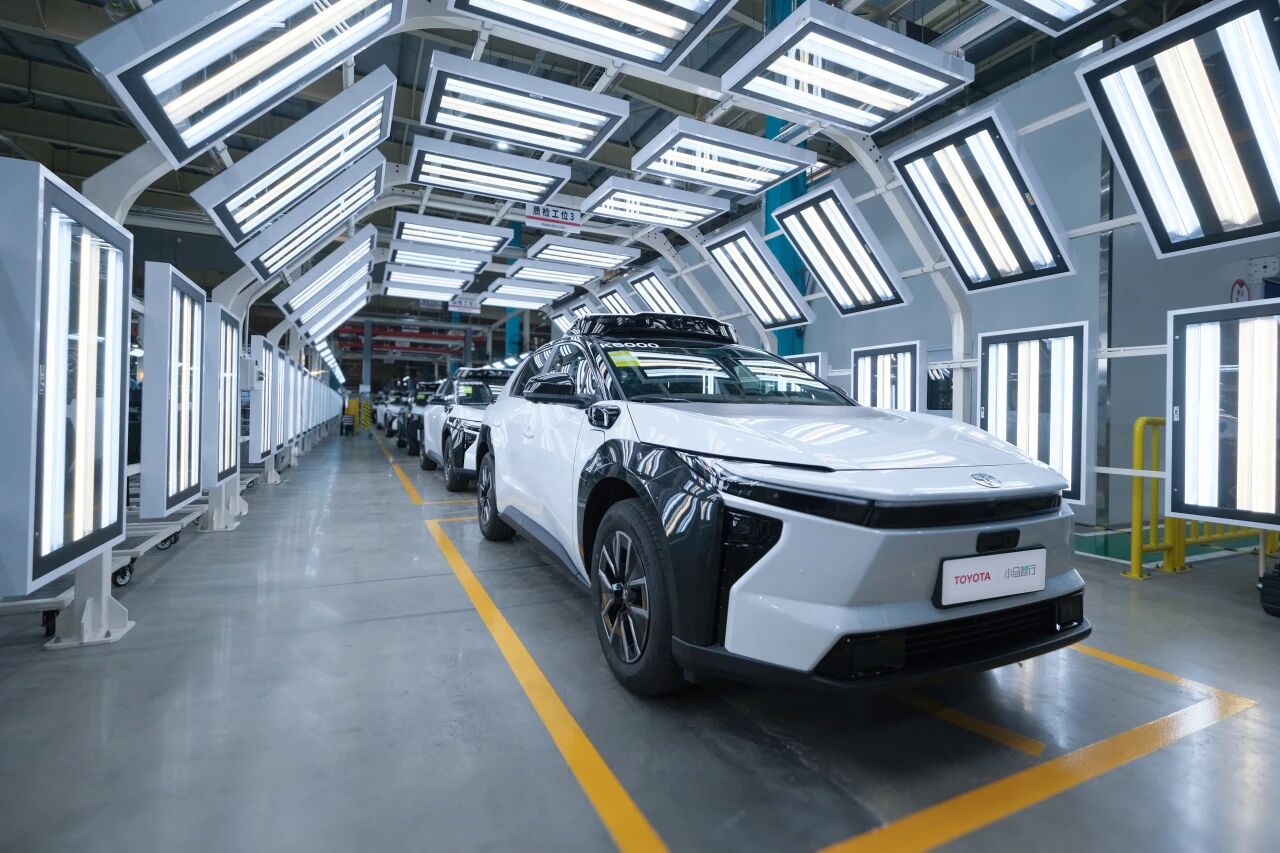
Image Source: Pony.ai
Safety performance has seen a marked improvement, with core autonomous components achieving 100% automotive-grade certification and the establishment of a comprehensive multi-layer redundancy system. These standards ensure that Robotaxis can meet the rigorous safety demands of daily commercial operations.
On the user experience front, the system integrates features such as Bluetooth unlocking, voice interaction, and online music services—enhancing convenience and comfort without compromising safety. These detailed optimizations bring Robotaxi services closer to the travel habits of everyday consumers.
Notably, the 7th-generation system deeply incorporates Pony.ai's long-term validation experience in China's complex urban environments. This means the system has been stress-tested against unique Chinese traffic scenarios, including challenging conditions like mixed traffic flows and highly unpredictable pedestrian behavior.
Large-scale deployment involves more than just increasing vehicle numbers; it requires a comprehensive upgrade of operational models, service systems, and technical support capabilities. A fleet of 1,000 vehicles will generate massive amounts of operational data, which will further feed back into technical optimization and create a virtuous cycle of iteration.
As the first Bozhi 4X Robotaxi rolled off the GAC Toyota production line, the focus of the autonomous driving industry shifted from "Can it be done?" to "How do we scale?"
The plan to deploy 1,000 units is no longer a distant blueprint but a commercial initiative with a clear timeline. The introduction of the Toyota Production System and the full implementation of automotive-grade standards have provided an assurance of reliability for Robotaxis comparable to that of traditional vehicles.
As these vehicles gradually enter service, autonomous driving technology will face its most authentic commercial test. The outcome of this test may well determine the direction of urban mobility over the next decade.


