



"As the pie shrinks, the number of diners at the table must be reassessed."
That was how Alexander Pollich, President and CEO of Porsche China, explained the company's decision to drastically scale back its sales network in the country in early 2026.
Yet the "diners at the table" are not just the dealers — Porsche itself is sitting there.
When Porsche executives were besieged by angry questioning at the national dealer conference, it became clear that the "King of Sports Cars" — which once commanded premiums of hundreds of thousands of yuan — has seen its fortunes in China plummet to a freezing point.
Pollich's reference to a "shrinking pie" is far more than a mere understatement.
The year 2025, which just passed, was viewed by Porsche as a year of recalibration, prompting adjustments across the board. The most visible shift came in the dealership network: Porsche gradually reduced its sales outlets from roughly 150 in 2024 to 114 by the end of 2025.
According to global delivery data released by Porsche, the company delivered 279,449 vehicles to customers worldwide for the full year of 2025 — a 10% decline from 310,700 units in 2024, marking the steepest drop since the 2009 global financial crisis.
The most astonishing slide occurred in China. Porsche cited a double blow from a pressured luxury market and intensifying competition in pure electric models, noting that its 2025 sales in the country plunged 26%. Compared with industry rivals BMW and Mercedes-Benz, Porsche's decline was steeper — BMW and Mercedes saw China sales fall 12.5% and 19%, respectively, in 2025.
When the hood is lifted on the Chinese market, what we see is no longer the "dream totem" that once commanded fanatical worship, but a somewhat hesitant and sluggish giant struggling to adapt amid the electric tidal wave and the fierce encirclement by local brands.
Porsche's predicament serves as an extreme stress test for the traditional luxury empire, forcing a reset of survival rules in a new era.
Does Porsche's struggle imply that a quiet power shift is underway in the global luxury car market?
Porsche Reassesses Its 'Dinner Guests' — and Is Reassessed by the Market
This sales slide is no accident.
Research by Gasgoo indicates that over 60% of consumers believe the electrified offerings of traditional luxury brands "lack sincerity."
From a global perspective, Porsche's dilemma reflects the collective anxiety of traditional luxury brands facing a once-in-a-century upheaval in the auto industry. The dramatic transformation of the Chinese market has become the ultimate exam testing the mettle of global automakers' transitions.
Not long ago, the Chinese luxury market above 400,000 yuan was the exclusive territory of Porsche, the BBA joint ventures, and import brands; above 1 million yuan, Chinese automakers were virtually invisible.
But today, that landscape has been completely shattered.
In 2022, BYD launched YANGWANG, a high-end new energy brand targeting the million-yuan class, covering lineups such as hardcore off-roaders, flagship sedans, and pure electric supercars.
In terms of market performance, YANGWANG has already set new records in China's million-yuan luxury segment. Its cumulative sales surpassed 10,000 units by April 2025. In October 2025 alone, YANGWANG sold 654 vehicles, with the U8 contributing 455 units, while the U7 and U9 sold 197 and 2 units, respectively. From January to October 2025, YANGWANG's cumulative sales reached 3,159 units. Currently, the brand's portfolio includes high-end models such as the U8, U9, U7, and U8L, with an increasingly mature product matrix.
In November 2025, Stella Li, BYD Executive Vice President, revealed the global promotion plan for the ultra-luxury YANGWANG brand. According to the plan, the brand will enter the Middle East market in early 2026, following its debut there, and gradually expand to Europe and the Americas.
BYD had previously confirmed that YANGWANG would land in Europe, a plan to be rolled out after the Denza brand enters the market early next year. Li revealed in September 2025 that YANGWANG plans to officially enter the UK market in 2027. The decision to launch in the UK in 2027 aims to ensure the brand has sufficient competitiveness locally, having already built its UK team and laid the market groundwork.
Positioned as a D+ class flagship sedan, the MAEXTRO S800 is priced between 708,000 and 1.018 million yuan. Since its launch, order growth has been rapid. Data shows that confirmed orders surpassed 1,000 units within one hour, hit 3,600 in seven days, topped 5,000 in 19 days, and exceeded 8,000 in 50 days. By November 20, confirmed orders for the model had surpassed 18,000 units.
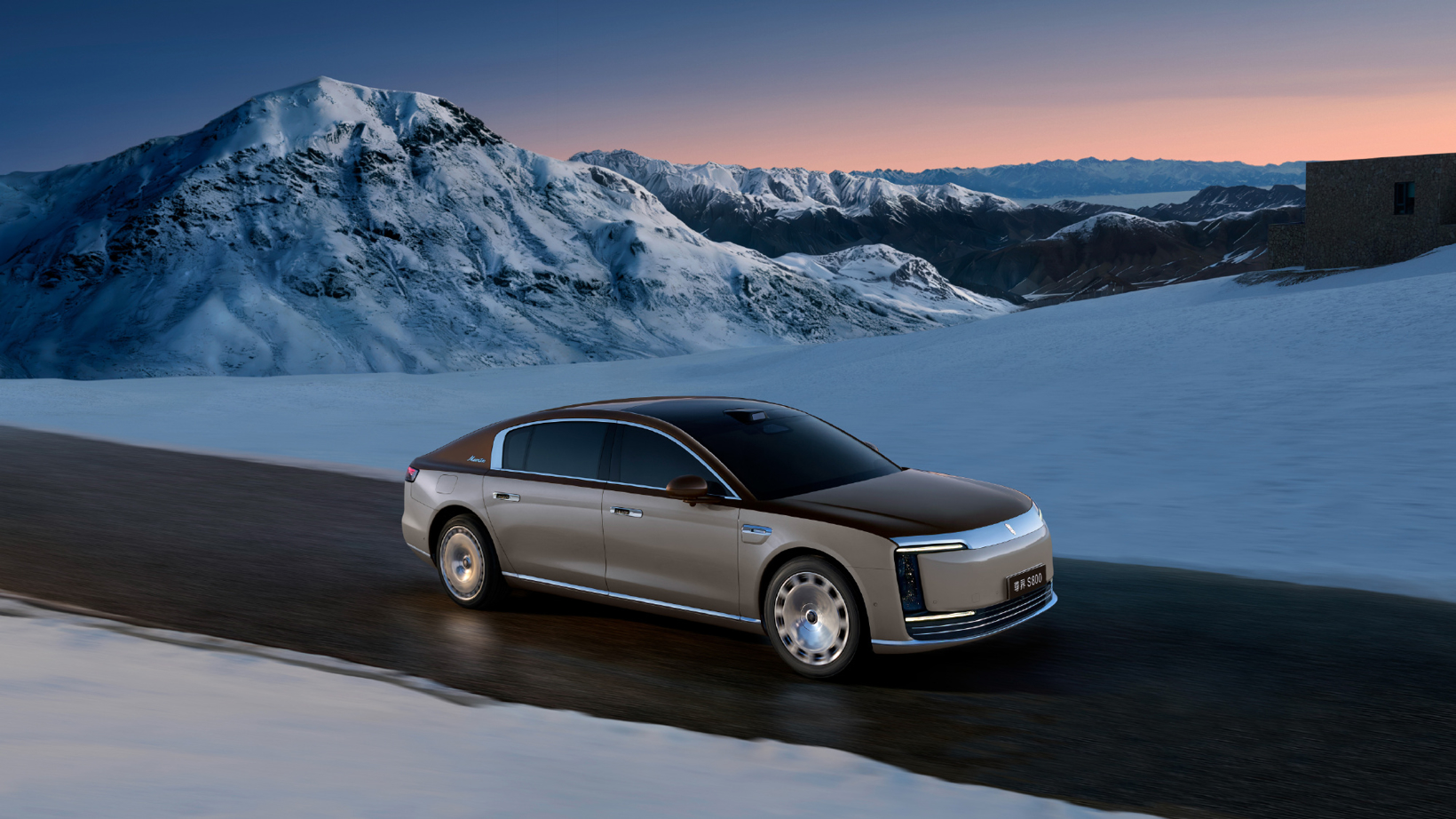
Image Source: MAEXTRO Weibo
Additionally, the 2025 AITO M9 launched in March 2025 with a starting price of 469,800 yuan. According to a promotional video released by Kangbo, Vice President of Seres Group, on December 27, 2025, cumulative deliveries of the AITO M9 have exceeded 260,000 units since launch, setting a new record for the 500,000-yuan class. The climb from 260,000 to 270,000 units took less than a month.
These domestic brands have torn open the defenses of traditional luxury marques using a dual advantage of "technology plus configuration."
Li Yanwei, a member of the Expert Committee at the China Automobile Dealers Association, points out that entering 2026, the core objective for traditional luxury brands including the BBA may no longer be scale expansion, but rather "stabilizing prices and stabilizing market share."
Zhang Xiang, Secretary-General of the International Intelligent Vehicle Engineering Association, offers a more direct observation: "The luxury car market used to be dominated by the BBA and imports. Now, Chinese brands can sell for over 1 million yuan with strong sales, directly squeezing Porsche's core market space."
This squeeze is not simple price competition, but a transfer of product definition power — domestic brands have reconstructed luxury standards with a "full-spec strategy."
By comparison, Porsche's entry-level pure electric model, the Taycan, starts at a steep 918,000 yuan yet does not come standard with advanced intelligent driving features; seat ventilation and premium audio still require extra payment for options.
In Gasgoo's research, targeting the luxury market above 700,000 yuan, over half of consumers believe the intelligent experience is just as important as the brand's historical halo.
Research by J.D. Power's China Data Insights General Manager Wang Shen confirms this trend. Wang Shen cites the example of the Leapmotor B10 at the Auto Shanghai 2025, which featured an 8295P chip; its 30 TOPS of AI computing power and on-device AI capabilities surpassed the existing configurations of traditional luxury brands like Rolls-Royce, yet at a more accessible price point.
With the rapid adoption of intelligent features, the weight of smart tech in luxury purchase decisions is drawing intense attention. Wang Shen notes that in the market above 400,000 yuan, the emphasis on intelligence is high, with models from tech-focused brands like AITO and Li Auto performing exceptionally well. Even in the traditional fuel sector, consumers now demand more intelligence — intuitive cockpits, reliable navigation, rich driver assistance features, and voice interaction have become necessities.
Consumer survey data also confirms this shift. In Gasgoo's poll, when asked if they would change their purchasing decision if Porsche's intelligence level lagged behind that of NIO or YANGWANG, the majority of respondents answered yes.
Notably, as an ultra-luxury brand, if Porsche were willing to increase investment in electrification and intelligent technology, its configurations could certainly be impressive. So why can't Porsche, with its deep pockets, keep pace with the electrification and intelligence revolution?
Secretary-General Zhang Xiang hits the nail on the head: "Porsche insists on 'developing what makes money,' resting on the laurels of its core fuel vehicle technology. Chinese automakers, meanwhile, are willing to invest for long-term strategy. This difference is ultimately reflected in the shifting market share."
Conversely, Chinese automakers continue to pour resources into R&D even if their luxury operations are unprofitable in the short term. BYD relies on the scale effects of its Dynasty and Ocean series to support YANGWANG's tech development; AITO, Li Auto, XPENG, and others continue to iterate on smart cockpits and range-extender technology.
What Is Porsche Hesitating About?
"The barefoot fear nothing."
Everything has two sides. Often, when you have nothing, it can mean you have everything.
Relatively speaking, the root of Porsche's predicament lies in its indecision over its electrification strategy.
Porsche's electrification transition was conservative from the start, carrying a distinctly "tentative" tone.
To date, Porsche has launched precious few pure electric models. Beyond the Taycan introduced in 2019, its second pure electric model, the Macan Electric, was officially delivered in 2024; built on the PPE platform, it is positioned as a pure electric SUV. The Cayenne Electric is currently under development and expected to launch in 2026 as Porsche's third EV. The pure electric 718 is planned for release before 2027, built on a new platform and targeting the pure electric sports car market.
However, as of 2025, the earliest launched Taycan has received only minor configuration adjustments, with no fundamental upgrades to core battery technology or the smart cockpit system.
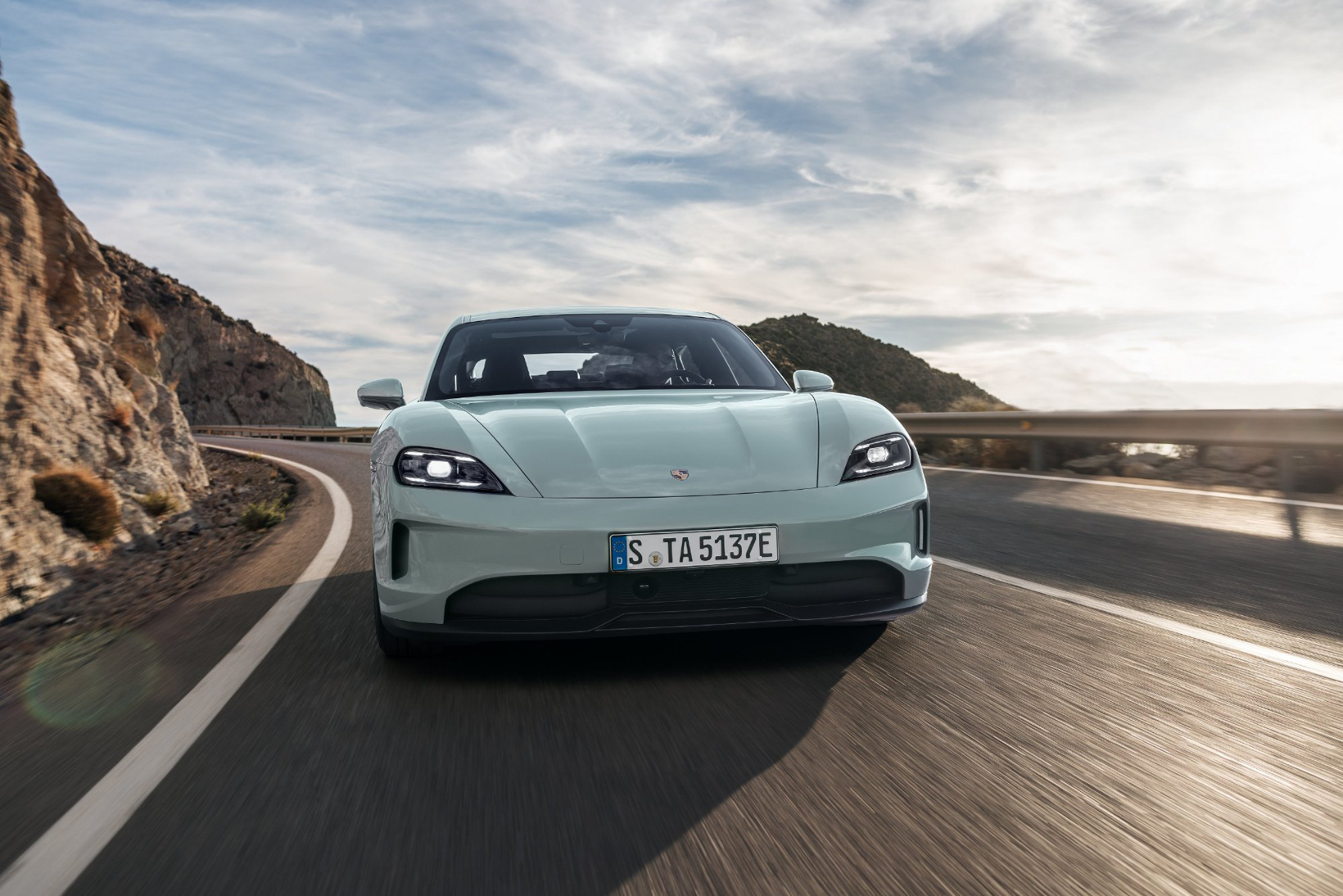
Image Source: Porsche Weibo
In 2025, 34.4% of Porsche's global deliveries were electrified models, with pure electrics accounting for 22.2% and plug-in hybrids 12.1%. This figure pushed the share of pure electric models to the upper limit of its 2025 target range (20%-22%).
The 718 series (Boxster/Cayman) delivered 18,612 units, down 21% year-on-year. Porsche attributed this mainly to the model line being in a phase-out transition (officially discontinued in October 2025). The Taycan (pure electric) delivered 16,339 units, down 22%; the Cayenne delivered 80,886 units, down 21%.
Secretary-General Zhang Xiang put it bluntly: "With the Taycan selling poorly, Porsche's willingness to pour funds into new R&D diminishes, creating a vicious cycle of 'lagging product — sliding sales — reduced R&D.'"
Back in November 2023, Porsche set targets for "over 50% of new cars electrified by 2025" and "over 80% pure electric by 2030," yet by 2024, the actual delivery share of new energy vehicles was only 27%.
In September 2025, Porsche announced adjustments to its electrification strategy, including retaining internal combustion engines for high-performance models and delaying certain electric models.
This decision stands in stark contrast to its previously stated goal of "80% pure electric share by 2030," exposing its wavering commitment during the transition.
Porsche Chief Financial Officer Lutz Meschke admitted that "high R&D investment in new energy vehicles, sales falling short of expectations, and sluggish demand for fuel vehicles have combined to create financial pressure."
Auto analyst Ling Ran believes that balancing product rhythm with market demand will be the core proposition for Porsche to break through its electrification impasse.
Secretary-General Zhang Xiang told Gasgoo, "Porsche's strategy is essentially profit maximization. Fuel vehicles still bring high profits, so it is unwilling to give them up. Chinese automakers, even if their luxury cars don't make money, will invest in R&D, relying on profits from other models to support technological iteration."
This strategic conservatism caused Porsche to miss the critical window for electrification transition.
While automakers like BYD and Li Auto continue to increase investment in electrification and intelligent R&D annually, the bulk of Porsche's R&D spending remains concentrated on optimizing internal combustion and plug-in hybrid models.
In 2025, Porsche announced that due to sluggish electric vehicle demand, it would restructure its high-performance battery subsidiary Cellforce, abandoning plans for proprietary battery production and transforming it into an independent R&D department. Meanwhile, of Cellforce's existing 286 employees, about 200 will be laid off, retaining only a small R&D team of roughly 80.
This project, once seen as the core of Porsche's future, has suffered a major setback. It means the core technology for its pure electric models will rely on external suppliers, further eroding its technological autonomy.
"Winning Back China" Won't Be Easy
Secretary-General Zhang Xiang summarizes this difference as "a collision of two business logics": "International automakers insist on 'R&D only after earning,' while Chinese automakers believe in 'R&D to earn long term.' When the speed of transition in the Chinese market far exceeds the global average, this logic gap translates into a gap in market share."
In fact, Porsche is not an isolated case; traditional luxury brands like the BBA face similar dilemmas. Yet they have not abandoned electrification investment, instead pushing forward with a model of "using fuel vehicle profits to subsidize electrification R&D." Porsche's strategic retreat, in essence, reflects an over-pursuit of short-term profit.
Facing this impasse, Porsche is attempting a series of self-rescue measures.
Most notably, Porsche appointed Dr. Michael Leiters as CEO of Porsche AG, effective January 1, 2026. Dr. Oliver Blume, who has led Porsche AG for a decade, will continue as CEO of the Volkswagen Group.
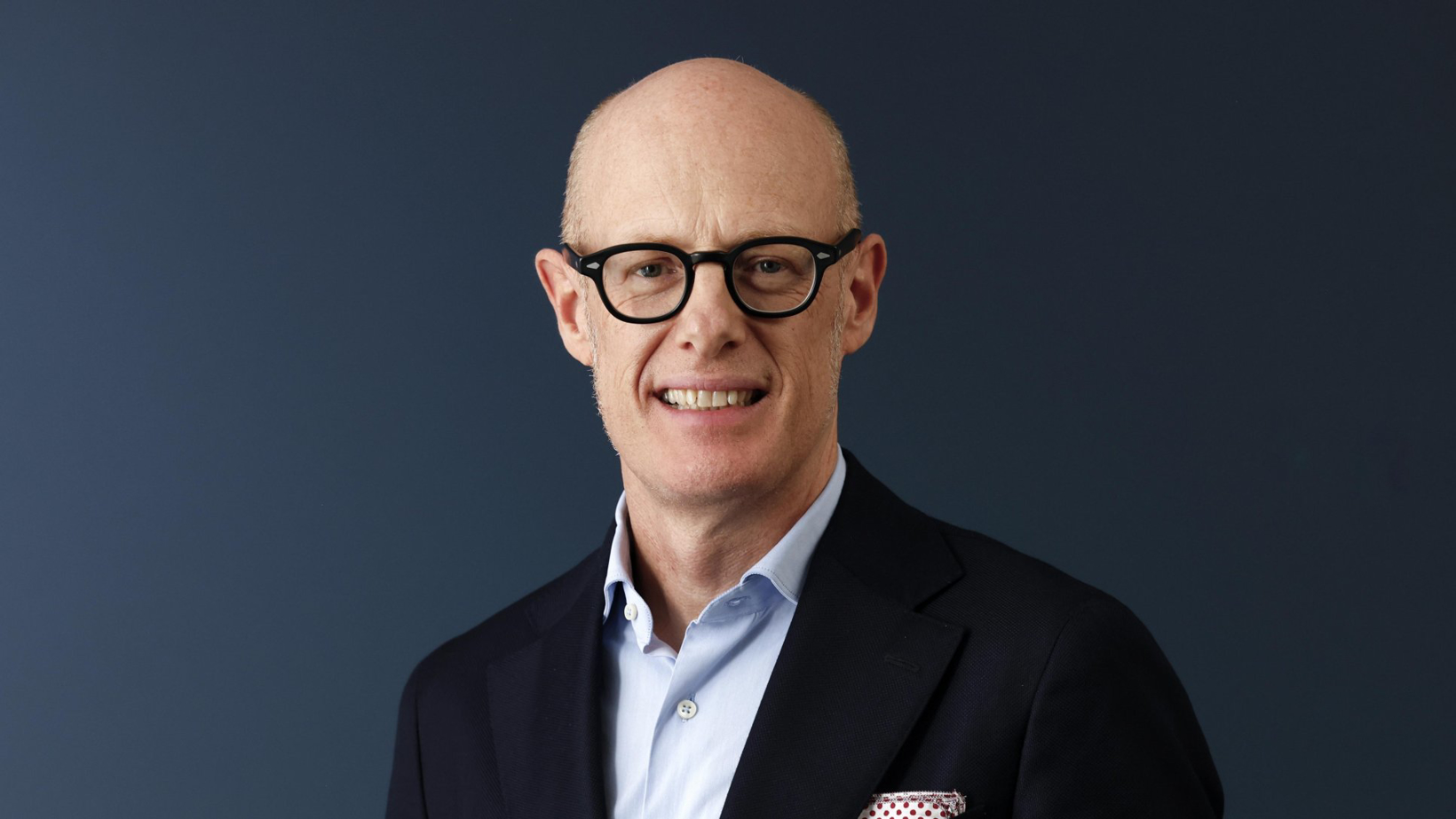
Image Source: Porsche China Official Website
But whether this new helmsman can guide Porsche back to its lost glory remains an unknown.
At the tactical level, Porsche has proposed a "Winning Back China" strategy.
Responding to market shifts, Porsche implemented a series of adjustments in 2025, including optimizing its China dealer system and establishing a China R&D center, aimed at strengthening local adaptability and long-term resilience. Internally, 2026 is viewed as a year for consolidation and aggression.
"'Winning Back China' is a comprehensive, long-term systematic project. We have formulated a clear roadmap and are executing it firmly," said Pollich.
However, industry insiders are not optimistic about the extent to which these measures can reverse Porsche's decline in the Chinese market.
One auto industry analyst pointed out: "When the Chinese market no longer worships 'foreign brands,' and when smart electric cars redefine luxury standards, relying solely on historical heritage and brand halo is no longer enough to hold the ground."
In Gasgoo's consumer survey, only 15% of respondents indicated that Porsche shrinking its channels or intensifying elite circle activities would enhance their acceptance of its brand premium.
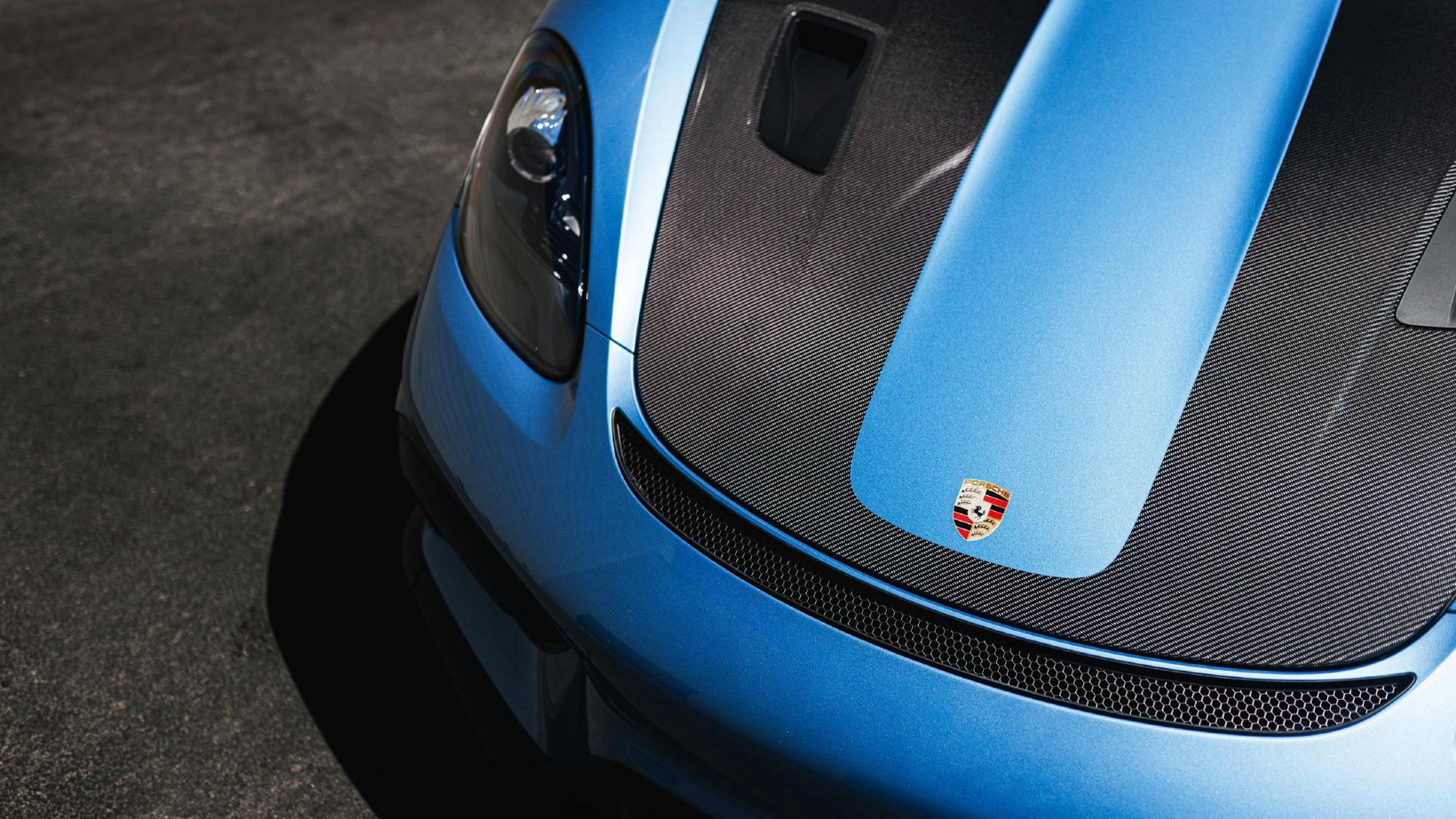
Image Source: Porsche Weibo
This hesitation and uncertainty precisely reflect Porsche's current awkward position in the hearts of consumers. The myth of the luxury car of one era is being redefined by the era of smart electric vehicles.
Porsche's stall is not just its own predicament, but a collective microcosm of traditional luxury brands standing at the crossroads of transition.
The arrogant will eventually pay a price, and the sluggish will be eliminated by the times — this is the heavy lesson Porsche's "stall" in China teaches all brands that cling to tradition.


