



Gasgoo Munich- Pony.ai took the stage at the Auto China 2026 on April 24, where Founder and CEO James Peng announced a major cost breakthrough. The total cost of its 2027 fully unmanned Robotaxi—encompassing the vehicle, autonomous driving kit, and battery—will slide to under 230,000 yuan. That undercuts the starting price of a domestically built Tesla Model 3. This price drop unlocks economic feasibility for expansion into more Chinese cities, while a tailored overseas version will cater to local regulations and demand, paving the way for a deployment exceeding 1,000 units abroad.
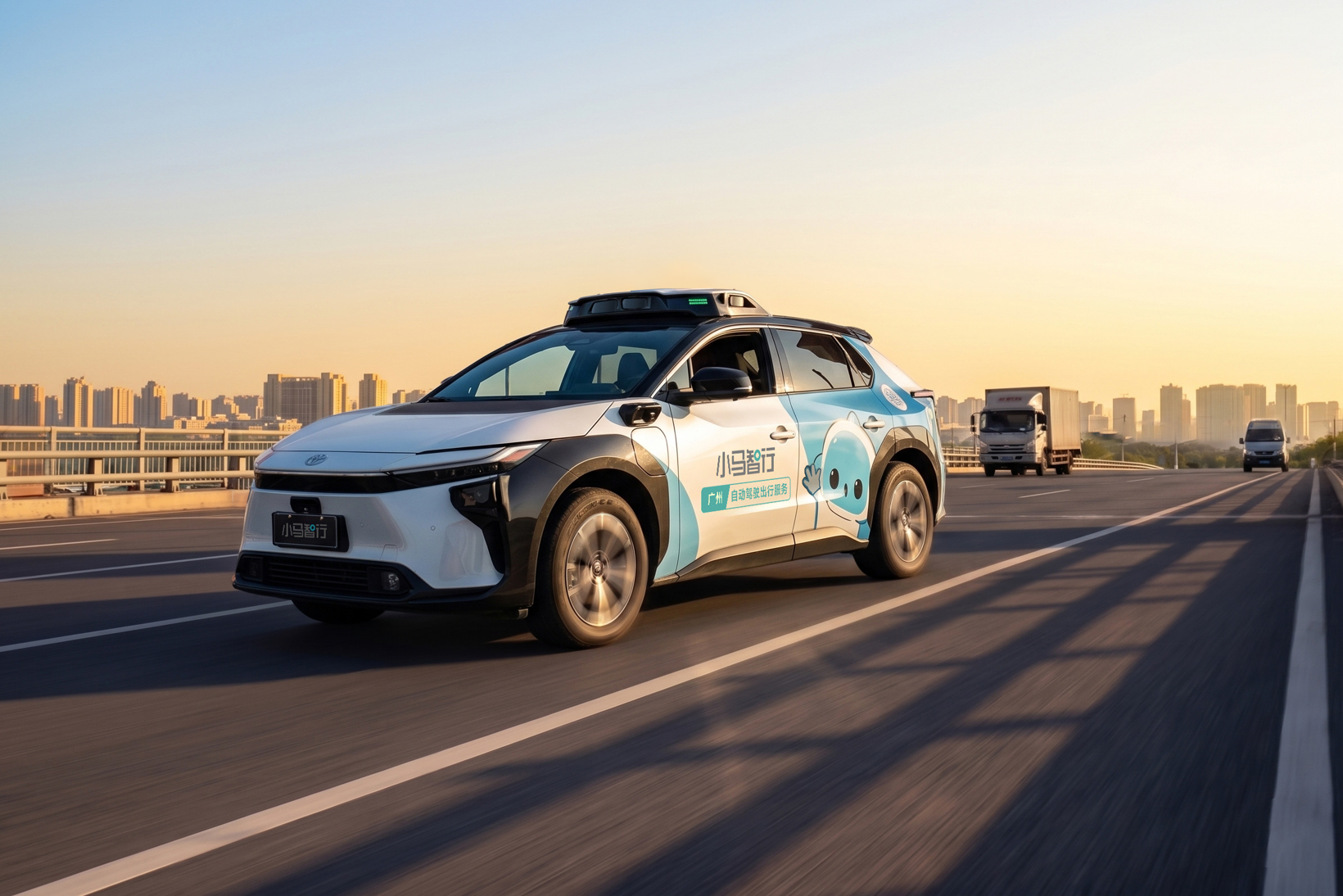
Image Source: Pony.ai (same below)
At the Shanghai Auto Show in April 2025, Pony.ai unveiled its seventh-generation Robotaxi. Within just six months, the vehicle was operational in Beijing, Guangzhou, and Shenzhen, having already achieved positive unit economics in the Guangdong cities. To date, the company's Robotaxi fleet has surpassed 1,400 units, serving a user base that has topped 1 million—nearly triple the figure from a year ago.
To accelerate the virtuous cycle of cost and scale, Pony.ai is rolling out a "dual-engine strategy." The plan centers on scaling up fleets and operational zones in Tier-1 hubs like Beijing, Shanghai, Guangzhou, and Shenzhen to replicate a proven business model. Simultaneously, the company is pushing into "New Tier-1" cities like Hangzhou and Changsha, while launching services and tests in overseas markets including Croatia and Singapore. Pony.ai expects to establish a presence in over 20 cities globally by 2026, with a total fleet exceeding 3,000 vehicles. Notably, 1,000 units of the Toyota Bozhi 4X Robotaxi are slated for deployment; fully unmanned testing has already begun, with commercial operations in Tier-1 cities imminent.
Pony.ai also partnered with CATL to debut the world's first fully vehicle-grade, fully redundant L4 autonomous light truck. Sharing the same complex urban road capabilities and L4 architecture as the Robotaxi, the truck integrates a comprehensive unmanned operational ecosystem—including charging, ground support, and remote assistance. By leveraging shared technology and resources, the company aims to drive down costs and boost efficiency across both city logistics and mobility businesses.
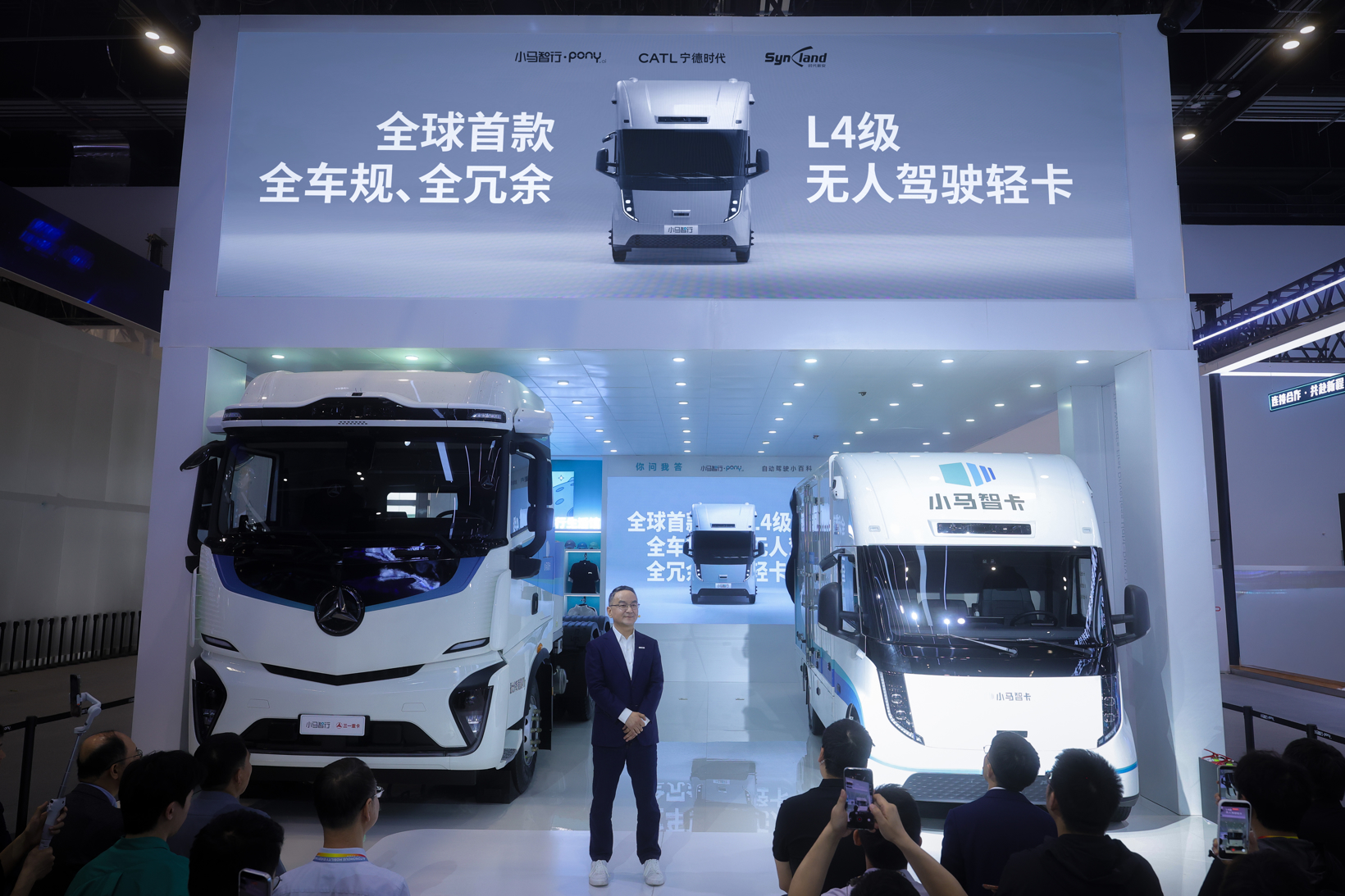
The autonomous light truck offers a cargo volume of 18 cubic meters—2.6 times that of low-speed delivery vehicles. Its freight cost per kilometer is 40–50% lower than manual operations, with a battery range of 320–450 kilometers covering B2B scenarios like express sorting and supermarket replenishment. Boasting all-scenario, all-weather L4 capabilities, the truck hits a top speed of 70–100 km/h and features a fully redundant architecture designed for a service life of 600,000 kilometers or 20,000 hours.
Additionally, Pony.ai announced the mass production and debut of its fourth-generation L4 autonomous heavy truck, with initial cargo operations planned for later this year targeting trunk lines and ports. On April 22, the company secured China's first permit for unmanned cargo operations in autonomous truck platoons, allowing "1+N" unmanned convoys to operate on routes like the Beijing-Tianjin Expressway.


