Gasgoo Munich- The "Shanghai Intelligent Connected Vehicle Development Report" was officially released on February 9.
The Report reveals that Shanghai's intelligent connected vehicle industry made systematic progress in 2025, continuing to lead the country in testing scale, scenario innovation, and institutional development. By the end of 2025, the city had opened 5,238.82 km of autonomous driving test roads, covering roughly one-third of its administrative area and achieving cross-regional road network connectivity. Authorities issued a total of 932 test and demonstration licenses to 41 companies, with cumulative test mileage exceeding 34.55 million km.
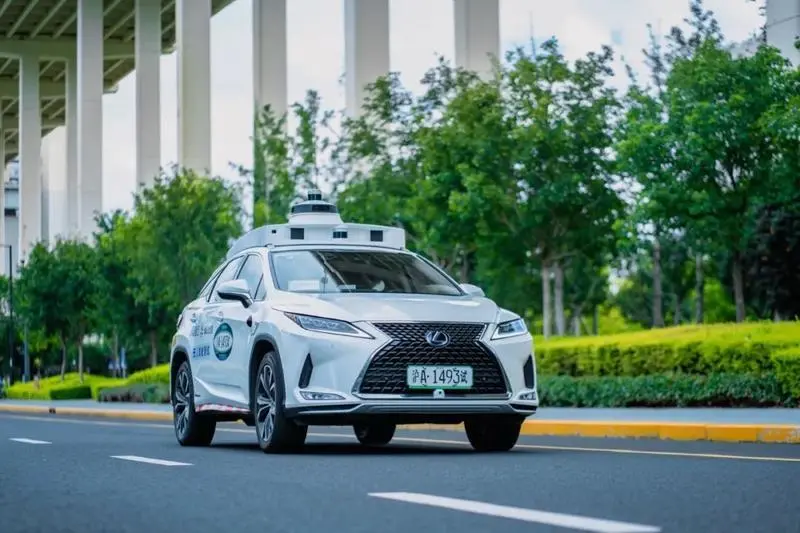
Image source: Pony.ai
On the demonstration front, 192 vehicles from 13 corporate consortiums have secured demonstration operation licenses, completing approximately 556,000 orders. Smart heavy trucks at Yangshan Port have surpassed 800,000 km in total autonomous driving mileage, moving over 636,000 TEUs of containers—fully unmanned operations accounted for more than 5,200 km of that total. The Fengpu Express Line in Fengxian District, the country's first autonomous BRT line, has operated safely for 45,000 km. Meanwhile, the Lingang Special Area deployed 15 smart buses, serving 90,000 passengers throughout the year.
The policy and standards framework has been further strengthened. Shanghai has issued the country's first government regulation on intelligent connected vehicles and introduced local legislation focused on Level 4 and higher autonomous driving. In data applications, the city established the nation's first city-level digital twin platform and a high-quality autonomous driving dataset containing tens of millions of entries. It also opened real-time traffic signal data from 7,600 intersections to support high-level intelligent driving R&D.
The regulatory system continues to mature, forming a full-chain policy loop covering "pre-access approval, mid-event supervision, and post-event safeguards." Leveraging an integrated regulatory platform, the city enables real-time aggregation and AI analysis of vehicle dynamics, environmental perception, and operational data. Through the "Shield 2025" cybersecurity defense drills, Shanghai verified and bolstered its system protection capabilities.
Entering the "15th Five-Year Plan" period, Shanghai aims to establish a globally leading pilot zone for high-level autonomous driving. The city will drive collaborative breakthroughs in key supply chain links—including autonomous driving large models, high-computing power chips, and vehicle operating systems—while further expanding fully open scenarios and commercial operation frameworks.