



Gasgoo Munich- In February 2026, UniX AI introduced its next-generation embodied AI robot: the Panther series. Built on a highly integrated joint platform, the robot features mass-producible 8-degree-of-freedom (8-DOF) bionic arms and adaptive intelligent grippers. Paired with an omnidirectional four-wheel steering and drive chassis, these upgrades enhance mobility and operational stability in complex environments.
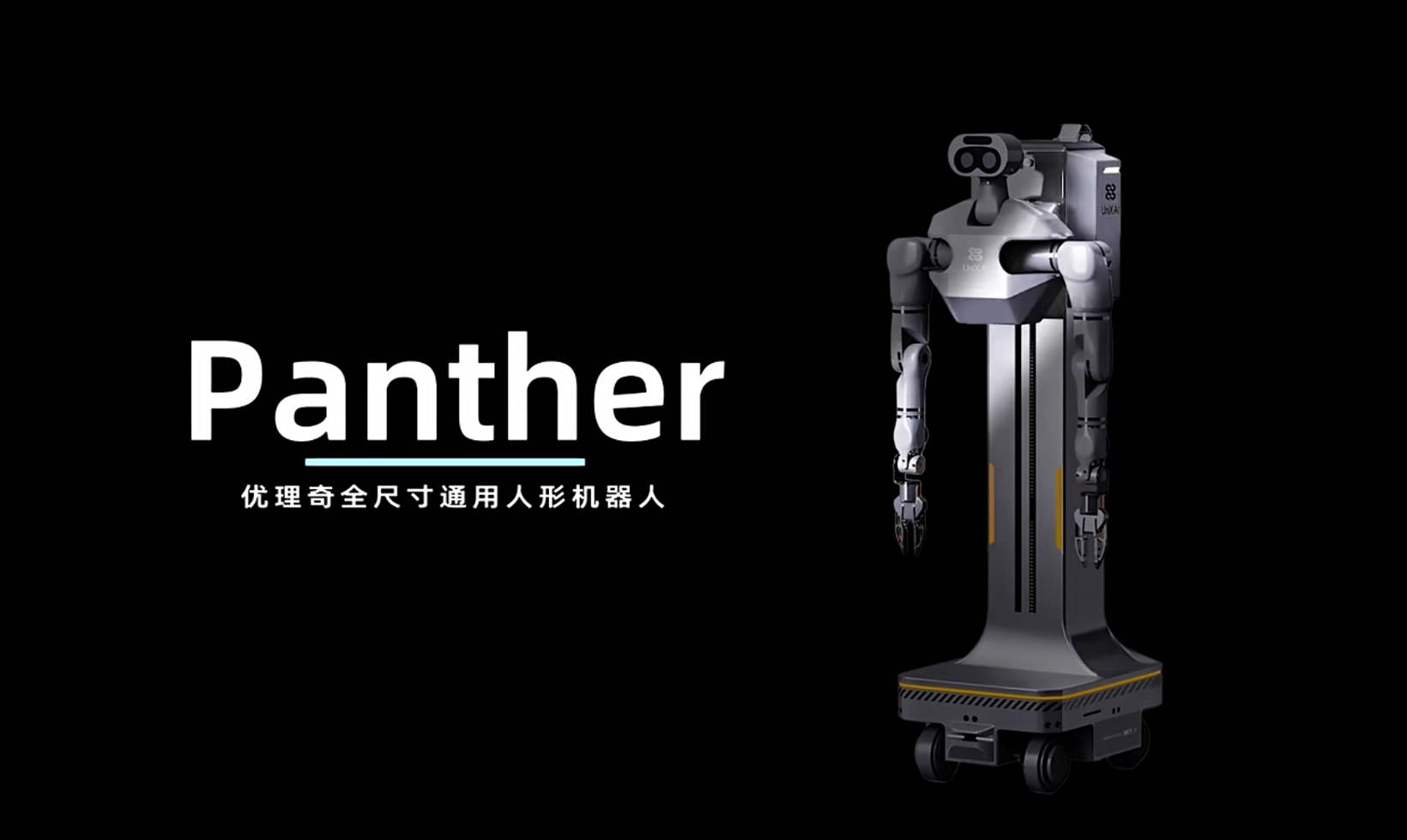
Image source: UniX AI
The Panther's platform-level upgrades target performance in real-world scenarios. On the mobility front, the omnidirectional chassis supports side-to-side translation, in-place rotation, and edge alignment. This allows precise positioning in tight spaces like commercial kitchens and store aisles without wide turns. In terms of workspace, an 80 cm vertical lift range enables the robot to handle tasks from floor level to multi-tier shelving. This minimizes the need to reposition the base. The power system shifts to a 48V platform, maintaining posture control during high-speed actions like swinging or striking. The upper body boasts an 8-DOF dual-arm configuration. It offers higher redundancy for obstacle avoidance and complex path planning in confined spaces compared to traditional 7-axis arms.
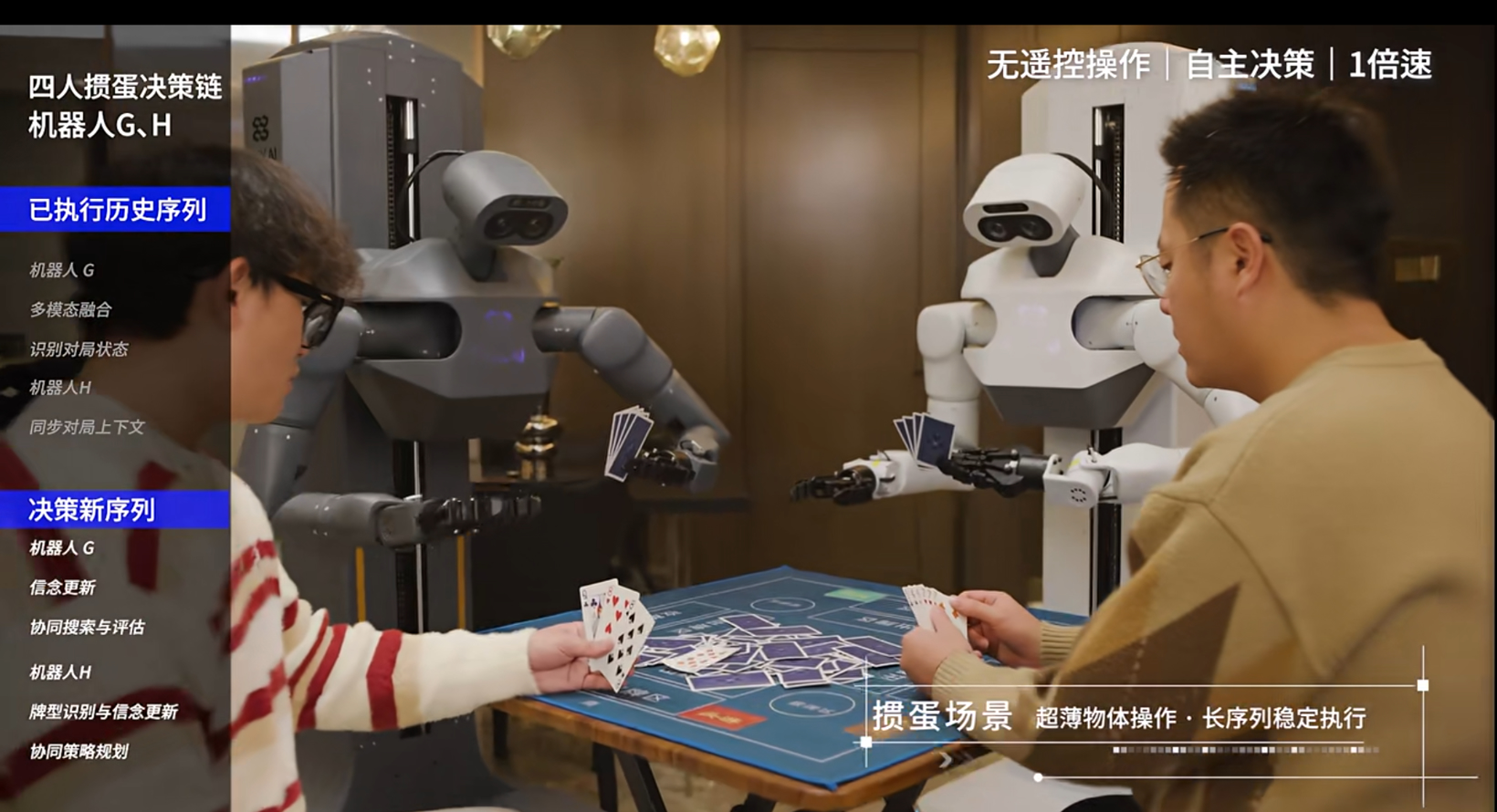
Image source: UniX AI
A demo video released alongside the launch showcases technical validation across several extreme scenarios. In the kitchen, the robot demonstrated multi-machine coordination for cutting, serving, and cleaning. A wine-pouring task used a liquid flow model to predict rising liquid levels, achieving a "full but not overflowing" pour. A card-playing scenario tested thin-sheet separation and stability over long sequences. Embroidery tasks achieved millimeter-level trajectory control. For hospitality, the robot used pose recognition to dynamically update grip points when retrieving clothes, ensuring smooth interaction. Finally, a golf swing verified torque coordination and center-of-gravity compensation under dual-arm closed-chain control.
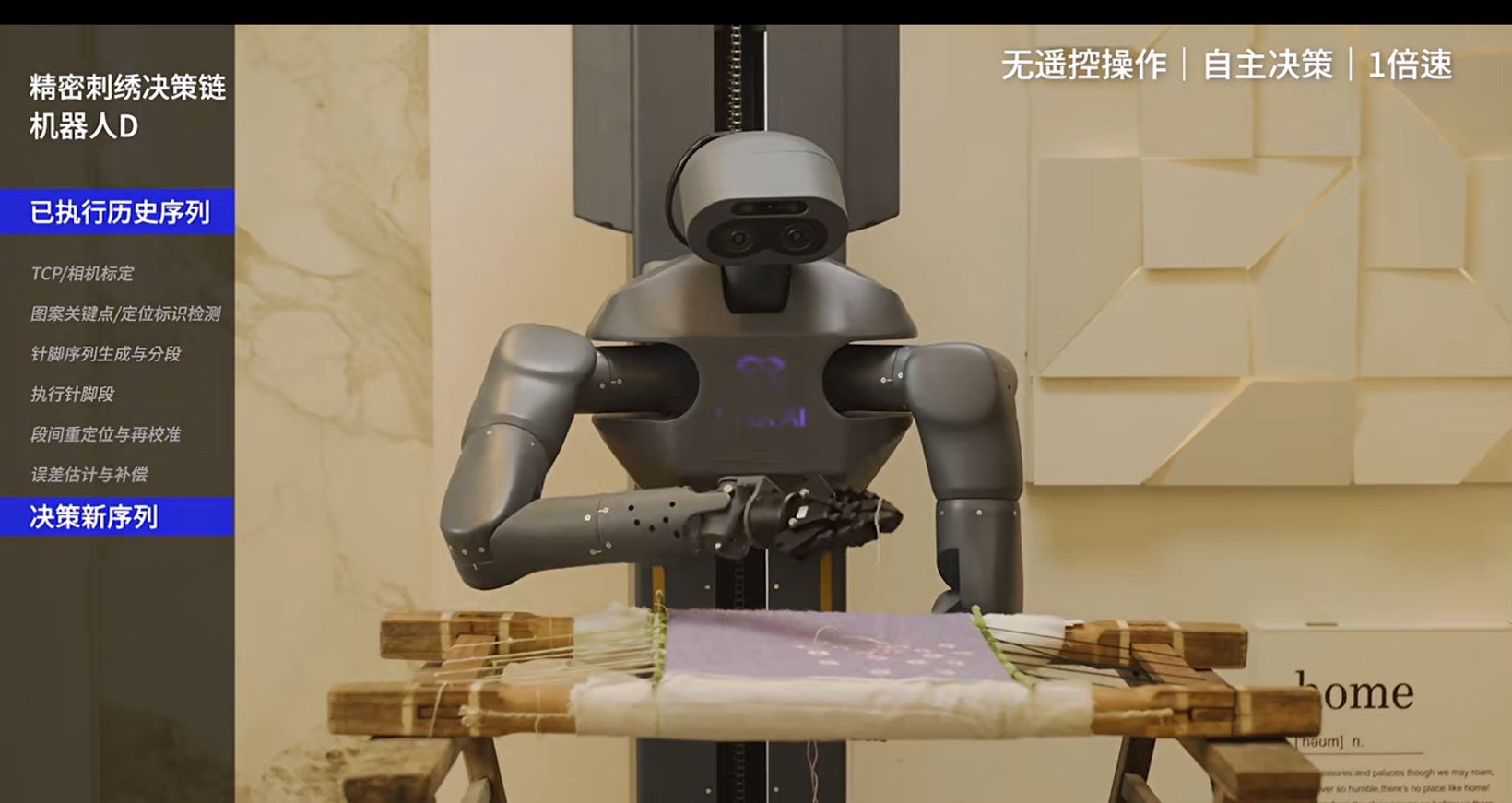
Image source: UniX AI
These capabilities are powered by UniX AI's "Trinity" core architecture. The algorithm layer comprises UniFlex (generalizable imitation learning), UniTouch (visuotactile fusion), and UniCortex (long-horizon task decomposition). This enables the robot to master complex tasks quickly with minimal demonstration and handle multi-step transitions. On the hardware side, the company maintains a full-stack self-developed approach for the chassis, joint modules, and end-effectors, creating a closed loop for algorithm iteration.
On the commercialization front, UniX AI is entering through high-value business-end scenarios. The company is validating long-term operational capabilities in elderly care, commercial services, and semi-structured environments. Subsequently, it plans to co-create a "technology platform + industry solution" model with industry partners. Eventually, it will expand into general home services as costs come down with scale.


