Gasgoo Munich- Valeo is shortening development cycles as automakers accelerate the rollout of electrification, advanced driver assistance and software-defined vehicles, CEO Christophe Périllat said at the Paris Motor Show 2026, pointing to projects developed in China and supply programs with Nissan, BMW, Renault and General Motors.

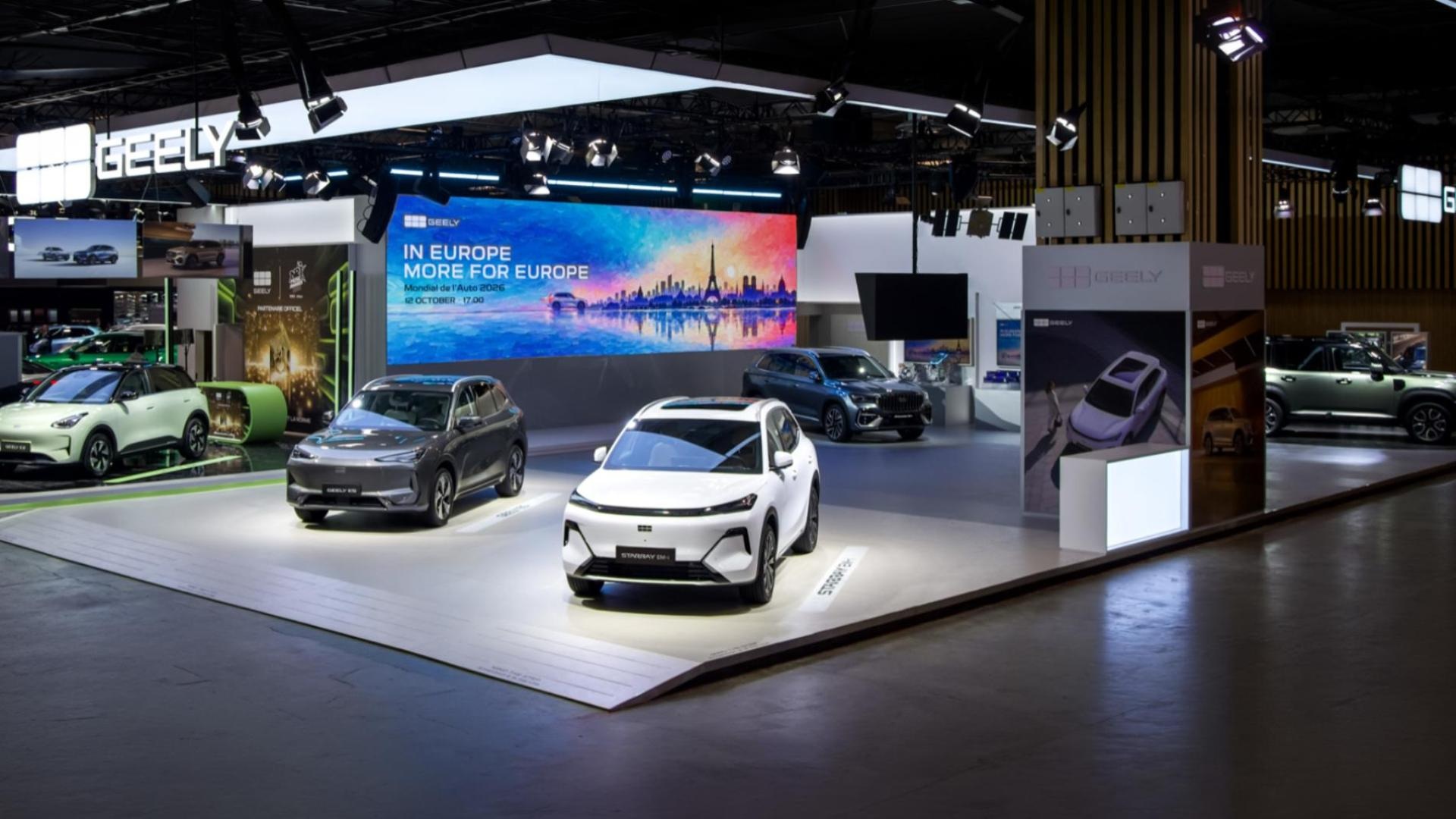
Image source: Valeo
Speaking at the show's opening-day press conference on October 12, Périllat said the industry's defining shift was increasingly the speed at which new technologies reach production. Some new vehicle models in China now move from concept to production in less than 24 months, he said.
"But what is really changing today is not only the technologies themselves. It is the speed at which they are reaching the market," Périllat said.
For some technologies, Valeo has cut development times by up to two-thirds, he said, citing a new headlamp that took seven months to progress from design to the start of production. The supplier is also supporting Chinese automakers as they localize in Europe, he added.
China-developed driver assistance moves toward Level 2+
One example of the faster development approach is a complete, affordable Level 2 driver-assistance system developed in China in eight months. According to Périllat, the system has secured 10 business wins, with eight already in production. It now incorporates a highway Navigation on Autopilot function, extending its capabilities to Level 2+.
Valeo's advanced driver-assistance system (ADAS) domain controllers are already installed in vehicles from 10 automakers, seven of them in China, with seven additional programs under development, he said.
Périllat also outlined Valeo's role in Nissan's Level 2+ system alongside Wayve. Valeo supplies the ADAS domain controller, integrates the software and provides sensors and automated-parking software, while taking responsibility for the overall function.
Automated parking is another focus. Valeo demonstrated its latest AI-powered parking software at the show, with the technology set to equip all future vehicles based on BMW's Neue Klasse platform, according to Périllat. He said Valeo's automated-parking technologies have already equipped 60 million vehicles.
Looking further ahead, Périllat described AI as the final key building block needed to make autonomous driving accessible to the general public over the next 10 to 15 years. He said the path would involve vehicles offering progressively higher levels of driving delegation.
The expansion of advanced driver assistance and robotaxis is also creating demand for sensor-cleaning systems. Valeo has eight such programs in production and another six scheduled to begin production in 2027, covering applications from Level 2+ vehicles to robotaxis, he said.
Périllat stressed that broader adoption also depends on driver acceptance. Valeo's adaptive warning solution monitors the driver's gaze to determine whether a roadside hazard has been noticed, issuing a warning only when it has not. The aim is to make alerts more relevant and reduce the likelihood of drivers switching assistance systems off.
Electrification centers on cost, range and charging
For electrification, Périllat identified affordability, consistent range across weather conditions and fast charging as essential to wider consumer adoption.
Valeo combines electric-powertrain and thermal-management capabilities, supplying electric motors, inverters, onboard chargers, battery cooling, heat pumps and other climate-control and cooling components. Its portfolio supports battery-electric vehicles, plug-in hybrids and range-extended electric vehicles.
Among the technologies presented at the show was Valeo's Single Fluid Cooling System. According to Périllat, it can reduce charging time by up to 30%, improve vehicle range and cut the system's carbon footprint by up to 50%. Valeo also showcased high-voltage inverters for both 400-volt and 800-volt architectures.
Customer applications span European and Chinese automakers. Périllat cited Valeo's 800-volt silicon-carbide eAxle and heat pump in the Renault Trafic Van E-Tech, its Smart Heat Pump in the Peugeot 3008, and thermal-management solutions and onboard chargers for Chery models. The Denza D9 uses Valeo's heating, ventilation and air-conditioning system and front cooling module, he said.
Beyond propulsion, Valeo presented its Ineez bidirectional charger, designed to allow vehicle batteries to exchange electricity with homes or the grid. Périllat said the company is among the first suppliers bringing such a solution into series production for Nissan.
Central computing projects with Renault and GM
Valeo is also expanding its role in software-defined vehicle architectures through central computers and associated hardware and software.
For the Renault Trafic Van E-Tech, which Périllat described as Renault's first software-defined vehicle, Valeo supplies the high-performance computer, zonal controllers and sensors, as well as automated-parking and driver-monitoring software.
The supplier is also working with General Motors on a central compute unit that processes large volumes of data and controls essential vehicle functions. Production is planned to begin at the end of 2027, he said.
Lighting and remanufacturing remain part of the technology agenda
Périllat highlighted adaptive driving beam (ADB) technology as a safety application alongside ADAS. ADB adjusts high-beam illumination to avoid dazzling other road users. Valeo has equipped more than 100 vehicle models with the technology and has more than 50 additional models under development, he said.
The next step is high-definition lighting, which retains ADB's anti-glare capabilities while projecting navigation information, safety-distance warnings and other information onto the road.
Valeo is also developing remanufacturing solutions for electronic systems, cameras and headlamps at its sites in Nevers and Angers, France. Périllat said a remanufactured front camera can save up to 99% of natural resources compared with a new product.
Across these activities, he said, faster development must translate into technologies that improve safety, efficiency, affordability and the driver experience.