



At a State Council Information Office press conference on promoting green consumption, Vice Minister of Commerce Sheng Qiuping said China will complete 18.3 million vehicle trade-ins in 2024–2025, with new-energy vehicles (NEVs) accounting for nearly 60%.
In other words, of every two new household cars bought through trade-ins, more than one will be an NEV.
That "six-in-ten NEV" share isn't a simple shift in sales mix. It signals a fundamental change in the growth engine and rules of competition in China's auto market. The replacement market has entered an NEV-led era.
The market's structure is shifting
Not long ago, "trade-in-for-new" was almost synonymous with an internal upgrade cycle for the gasoline-car market — owners swapped old ICE models for new ones. That logic has been upended. The stock-replacement arena, once seen as ICE's home turf, is being seized at speed by NEVs, becoming the main battlefield where they erode legacy share and accelerate substitution.
According to the latest data from the China Passenger Car Association (CPCA), in 2025 China's passenger-vehicle production totaled 29.633 million, up 10.4% year on year; wholesale shipments reached 29.554 million, up 8.8%; and retail sales were 23.744 million, up 3.8%.
In December, NEVs' domestic retail penetration reached 59.1%. With the purchase-tax exemption for NEVs nearing expiration, their growth outpaced gasoline cars by 32.6 percentage points. A penetration rate approaching 60% also signals a new, NEV-dominated phase for the market.
Structurally, December saw domestic retail sales of ICE cars drop 30% year on year; battery-electric vehicles rose 2.5%; range-extended models climbed 15.4%; and plug-in hybrids dipped 1.1%. Among the EV startups, the BEV-to-EREV mix shifted from 59:41 last year to 71:29.
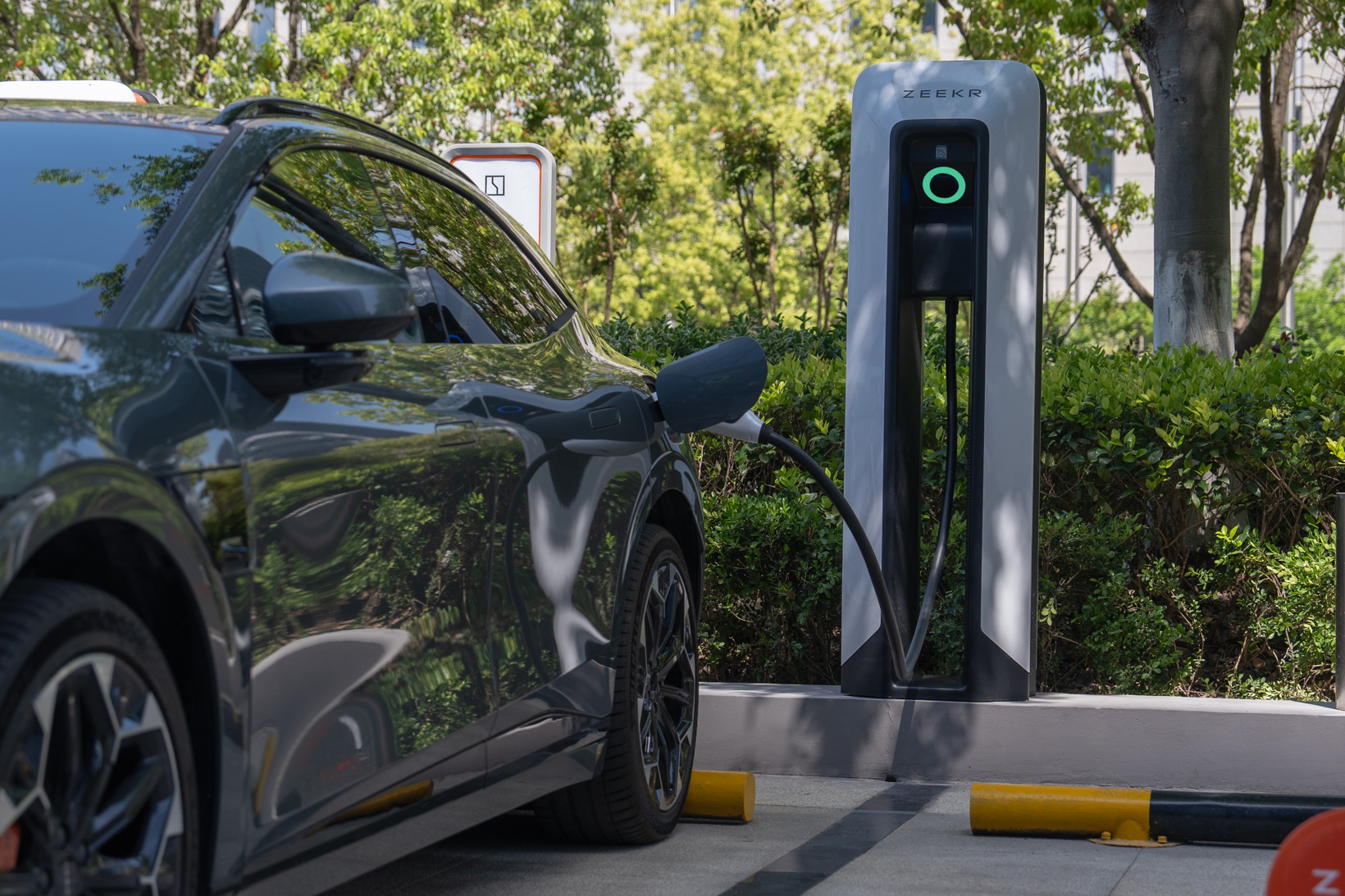
Image source: ZEEKR
Behind the shift: continued policy support, better user experience, and a total-cost-of-ownership edge. Differentiation in software, running costs and service is steadily pulling replacement buyers from oil to electric.
On January 6, 2026, NIO's 1 millionth mass-produced vehicle rolled off the line at the company's Advanced Manufacturing Xinqiao Plant 2 in Hefei, Anhui — another milestone in its development. Earlier, Leapmotor and XPENG also announced the rollout of their 1 millionth mass-produced vehicles.
From company milestones to macro-level gains, the NEV boom is no one-off breakout. It's an industry-wide surge.
At a media briefing for the China Electric Vehicle 100 Forum (2026), Zhang Yongwei, chairman of China EV100, predicted domestic auto sales could top 28 million in 2026, while NEV sales may exceed 20 million next year.
NEV penetration could break 60% in 2026
On December 30, 2025, the National Development and Reform Commission and the Ministry of Finance issued a notice on implementing large-scale equipment upgrades and consumer-goods trade-ins in 2026, confirming continued subsidies for scrapping and replacing automobiles.
To meet New Year and Lunar New Year demand, the central government has already front-loaded the first batch of 62.5 billion yuan in ultra-long special treasury bond funds to support consumer-goods trade-ins.
The 2026 Auto Trade-in Subsidy Implementation Rules make clear that scrappage and replacement subsidies will continue, with a nationally unified subsidy set as a fixed percentage of the new-car selling price.
Specifically, scrapping an old car and purchasing an eligible new NEV qualifies for a subsidy equal to 12% of the new-car selling price, capped at 20,000 yuan. Scrapping a gasoline passenger car and purchasing a new gasoline passenger car with a 2.0-liter engine or below qualifies for 10%, capped at 15,000 yuan.
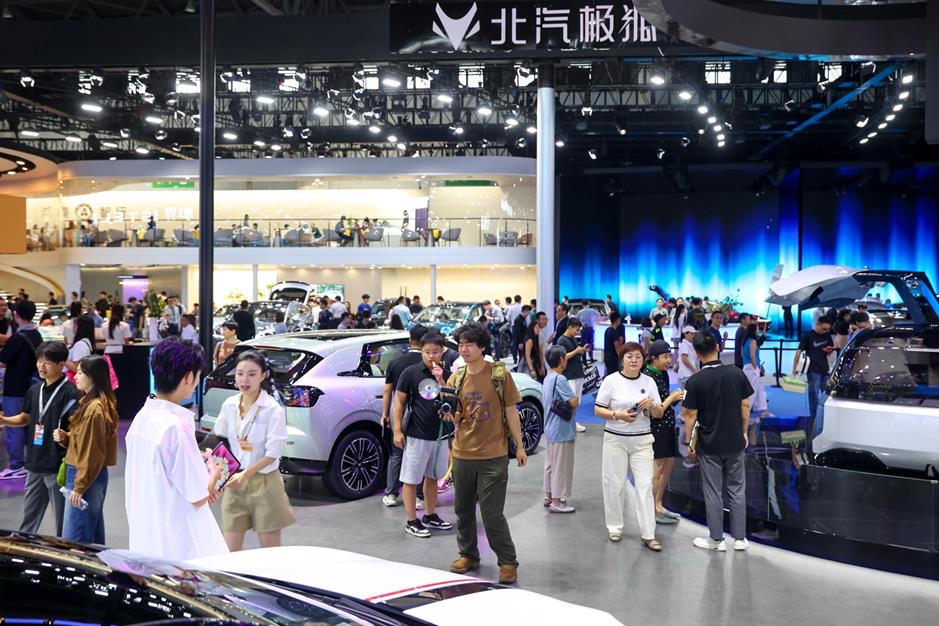
Image source: BAIC BJEV
No subsidy is provided for scrapping an NEV and buying a gasoline car. For trade-in replacements, eligible NEVs receive 8% of the new-car price, capped at 15,000 yuan; eligible gasoline passenger cars receive 6%, capped at 13,000 yuan.
He added that NEV penetration — the share of NEV sales in total auto sales — will keep rising, likely reaching 60% in 2026.
That aligns with a forecast from CPCA Secretary-General Cui Dongshu. He said at the forum that NEV sales and the vehicle parc will keep hitting records in 2026, with penetration expected to top 60%.
Even so, he noted, with macroeconomic pressure and policy tapering, the passenger-vehicle market is expected to reach 23.8 million units in 2026, down 2.1% year on year. Supported by policy backstops and new models, the NEV market should continue to grow — and the industry is set to enter a steadier, more mature phase.


