



On January 15, GAC Honda launched its refreshed Fit at 66,800 yuan, limited to just 3,000 units nationwide. While the price has been reduced by 20,000 yuan compared to the previous model, the changes are largely superficial: minor exterior tweaks, the same classic 1.5-liter naturally aspirated engine paired with a CVT, and no significant upgrades to the interior or smart features.
Once hailed as the "people's small car," the Fit is now testing the market with a low-cost strategy that leverages the convenience of refueling and Honda's reputation for reliability. Yet behind this move lies a stark reality: the model has slipped from its sales peak to the fringes of the market.
The strategy raises a broader question for the industry: How did the Fit fall from a "sales leader" to a "marginal player"? Is this limited-time price cut a signal of a desperate struggle, or merely the final phase of the gasoline-powered small car market?
The Rise and Fall of the Fit
Since entering China, the Fit rose rapidly driven by precise positioning. The third-generation model, in particular, marked its golden age, earning it the nickname "the people's supercar."
At its peak, annual sales consistently exceeded 100,000 units, keeping it at the forefront of the small internal combustion engine segment and making it a core volume driver for Honda's entry-level lineup in China.
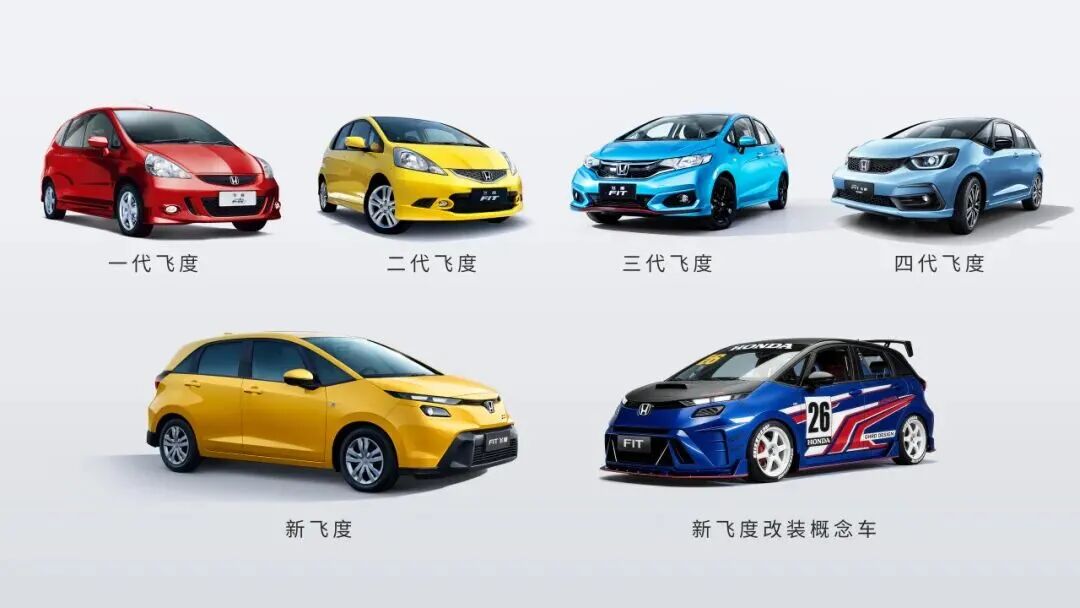
Image Source: GAC Honda
The Fit's success stemmed from irreplaceable core strengths. Leveraging Honda's "MM philosophy"—minimizing mechanical space to maximize passenger room—the model delivered class-leading space efficiency that perfectly matched the needs of young buyers and families looking for a daily commuter.
Its engine offered a strong combination of fuel efficiency and rugged durability, with low maintenance costs further boosting its competitiveness. These advantages allowed the Fit to define the core value of small gasoline cars, embedding the mindset among consumers that "if you're buying a small car, the Fit is the primary choice."
The turning point came with the rise of domestic new energy vehicles (NEVs). As the Fit's market share was steadily eroded, it gradually faded from a mainstream choice to a niche player.
The numbers tell the story of its decline. In 2025, sales have dropped below 3,000 units—a stark contrast to the peak years of over 100,000—and its presence in the market has all but vanished. The current model has been in inventory clearance mode with no new production scheduled, leaving the once-legendary model trapped in a sales slump.
The Fit's decline is not an isolated incident; it is a microcosm of the broader contraction in the small gasoline car market. In the A0 segment, new energy models now account for nearly 100% of sales, making electrification the dominant force.
Squeezed From Inside and Out
Perfunctory product updates are at the heart of the Fit's declining competitiveness. The refresh for the 2026 model is superficial, while the powertrain remains the 1.5-liter engine and CVT combination that hasn't seen a major upgrade in years—carried over since the third generation. It struggles to meet rising consumer expectations for power performance and driving dynamics.
Compared to the fast charging and high-torque delivery of rival electric vehicles, the Fit now lags far behind in both power response and driving refinement.
A lack of features has widened the product gap even further. The older Fit's interior was basic, missing essentials like a central touchscreen, connectivity, and driver-assist systems—a stark contrast to the "feature-rich" electric competitors in the same price range. The BYD Seagull, for instance, comes standard with a smart cockpit and connectivity, while even the 30,000 yuan Wuling Hongguang MINIEV offers the essentials for daily commuting.
Errors in branding and pricing have accelerated the decline. In recent years, Honda has shifted resources toward SUVs and new energy models, leaving the Fit with a strategy of slow updates and low investment—a move that caused the company to miss the window for necessary product upgrades.
With a starting price previously anchored above 80,000 yuan, the Fit found itself caught in a limbo of being too expensive to compete on price and too basic to compete on features as the cost of electric rivals continued to fall.
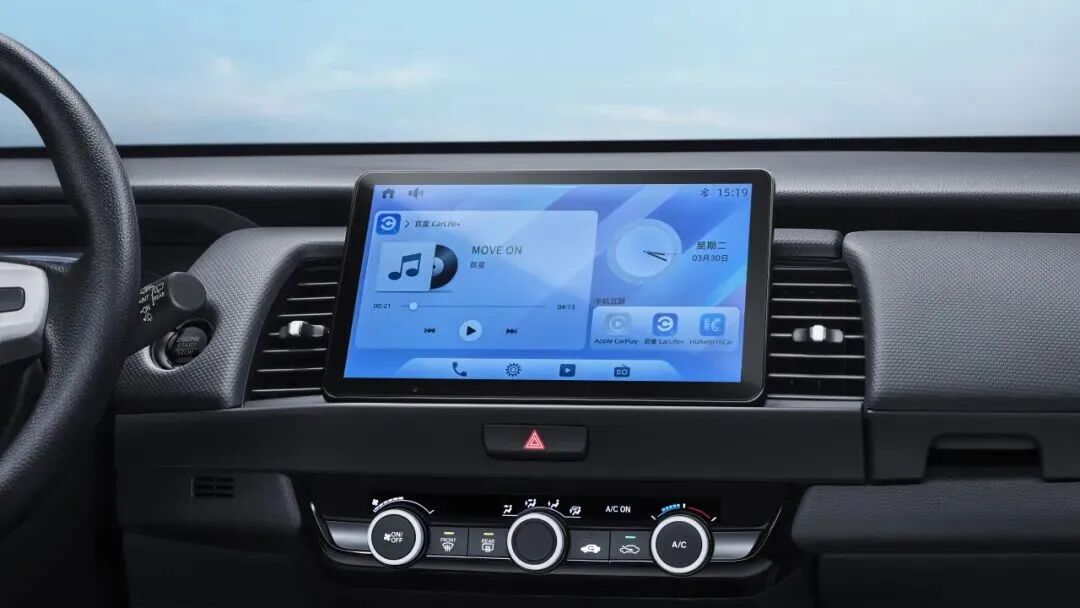
Image Source: GAC Honda
The direct catalyst for the Fit's decline has been the overwhelming dominance of domestic electric vehicles. Models like the Wuling Hongguang MINIEV, BYD Seagull, and Geely Xingyuan have cornered the commuter market with a winning formula of low prices, high specifications, and green license plates.
Not only are these electric models cheaper, but they also benefit from policy benefits like green plates and purchase tax exemptions, bringing ownership costs to roughly one-fifth of those for gasoline vehicles.
Shifting consumer demands and a reshaped market landscape have squeezed the Fit's room for maneuver even further. Buyers have moved from a "practicality-first" mindset to a mix of practicality, intelligence, and environmental friendliness—trends that favor the low energy consumption, smart features, and policy advantages of small electric cars.
Meanwhile, the overall small gasoline car market is shrinking, with competitors like the Volkswagen Polo also seeing sales slide. Electric models have exploited their distinct advantages to rapidly capture market share, fundamentally rewriting the competitive rules of the small car segment.
What's Behind the Strategy?
Clearing inventory is the primary objective. Limiting production to 3,000 units is likely aimed at clearing existing stockpiles of parts and unsold models in the channel, preventing capital from being tied up in excess inventory.
Image Source: GAC Honda
Due to the Fit's slow update cycle, components remain in stock in production lines and supply chains. A rapid clearance via a low-price refresh reduces holding costs and frees up capacity for future production adjustments.
Testing residual demand is also central to the strategy. The 66,800 yuan price point targets the price-sensitive segment of the gasoline commuter market. Honda is using this move to gauge the size and willingness of the buyer base that remains loyal to internal combustion engines, gathering data to inform decisions on the Fit's future iterations—or potential exit.
If the response is positive, the gasoline version may continue. If it fails, the company will likely accelerate its shift toward electrification.
Maintaining brand presence and mitigating risk are key considerations. As a classic model in Honda's entry-level lineup, the Fit holds significant brand equity for many users. A symbolic refresh prevents a total market exit, preserves loyalty among core gasoline buyers, and maintains a presence in the entry segment.
At the same time, a low-cost refresh that avoids major technological upgrades sidesteps heavy R&D spending. This allows Honda to control operational risks while the market direction remains uncertain, aligning with its dual-track strategy of "stabilizing the base with gasoline, seeking breakthroughs with electrification."
Conclusion:
This case offers a critical lesson for traditional automakers: the electrification of the small car market can no longer wait. Relying solely on traditional strengths like brand heritage and refueling convenience is no longer enough to withstand the strong competition from new energy vehicles.
Traditional brands must accelerate their electric small car strategies, building genuine competitiveness through R&D, feature upgrades, and cost control if they hope to remain competitive as the market evolves.


