



Early in 2026, a piece of news broke. It was not exactly sensational, yet it seemed poised to accelerate a significant shift in the industry.
Autoliv, a leading automotive safety supplier, announced a partnership with self-driving company Tensor to develop the world's first retractable steering wheel. It is already fitted in the Tensor Robocar, scheduled for mass production later this year. Meanwhile, Tesla's steering-wheel-free Cybercab is slated for official mass production in the second quarter.
The steering wheel, a core control element since the birth of the automobile, now stands on the brink of extinction.
Yet, more intriguing than the mechanism of folding or removing the component is the fundamental question driving this shift: why the urgency to eliminate the steering wheel?
The Compressed "L3 Era" and the Leap in Computing Power
While most automakers are still grappling with the mass production and liability questions of Level 3 autonomy, "radicals" at the top of the supply chain have already started redrawing their roadmaps.
He Xiaopeng is far from alone in his camp. "Level 3 is merely a brief transitional product; Level 4 will arrive very soon," an executive in charge of autonomous driving at a global chip giant recently told Gasgoo.
According to his understanding, numerous international automakers have already adjusted their strategies. They are "canceling or scaling back standalone L3 projects to pour resources into accelerating the final rollout of Level 4." Asked for a specific timeline, his response was telling: "It all depends on the pacing of the automakers' plans."
This sentiment is not unfounded.
Level 3 requires the system to handle driving under specific conditions, yet demands the driver remain ready to intervene at any moment. This contradictory logic is viewed by some technologists as an "engineering compromise," rather than the ultimate solution.
Consequently, a "leapfrog" race has quietly begun, bypassing L3 to move directly toward L4.
The core driver behind this is high-performance computing platforms, led by NVIDIA. At its GTC conference last October, NVIDIA joined forces with Uber to announce a significant goal. They plan to deploy up to 100,000 L4 robotaxis based on the DRIVE platform starting in 2027. They have also enlisted major automakers like Stellantis and Lucid to build the ecosystem.
Chinese companies are actively participating in this computing-powered race.
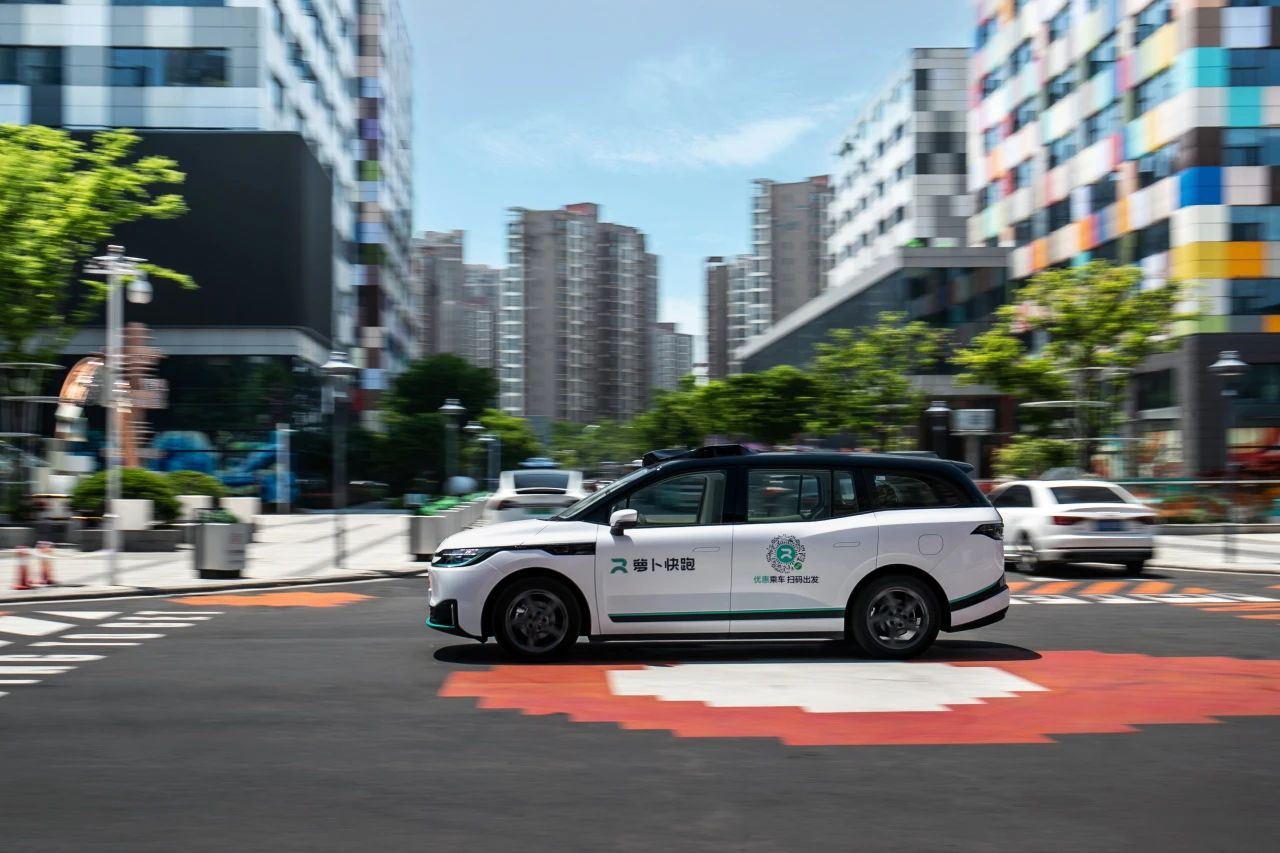
Image Source: Apollo Go
Feng Xingya, chairman of GAC Group, has explicitly stated that the company will push for scaled operations of L4 products in early 2026. Auto Shanghai 2025 served as a key showcase for China's L4 solutions. Pony.ai, Didi, and Momenta all unveiled mass-production-ready robotaxi solutions with significantly lower costs, clearing key obstacles for large-scale commercial deployment.
A clear trend is emerging. As top tech firms and automotive giants form alliances, betting massive resources and data on the endgame of L4, the time window for L3 as a transitional phase risks being compressed dramatically.
Underpinning this shift is the maturity and coordination of the entire supply chain.
Furthermore, the recent release of national-level "Ethical Guidelines for R&D of Driving Automation Technology" has laid the necessary ethical and legal groundwork. These guidelines emphasize "safety first" and "traceable system responsibility" for this technological leap.
The Retractable Steering Wheel: A Gamble on "Redundant Safety"
However, while the vision is appealing, the reality is stark.
No matter the demand for L4, vehicles must retain ultimate control for the human driver until regulations, technical reliability, and public acceptance are fully established.
This is precisely the critical role played by the "moderate transitionists," represented by Autoliv's retractable steering wheel.
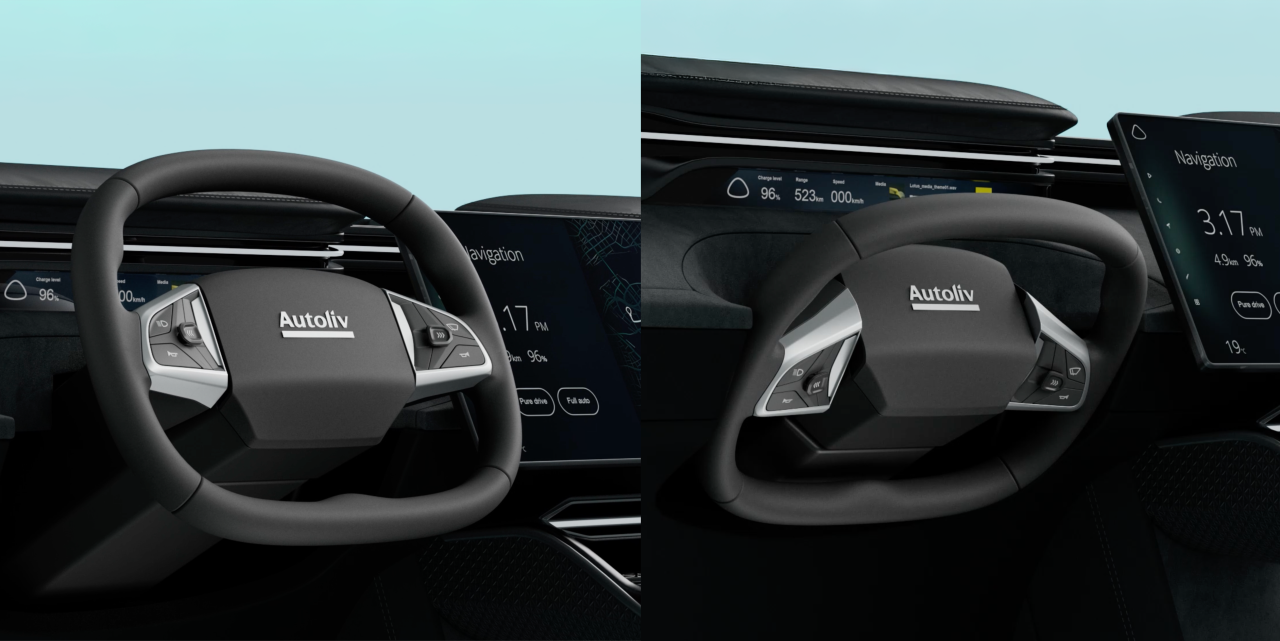
Image Source: Autoliv
Their retractable steering wheel is essentially a dual-mode redundancy system. When needed, it is a fully functional steering wheel; during autonomous driving, it folds away to free up cabin space.
It strikes a balance between the present and the future. This demonstrates technological foresight while accommodating regulations and the psychological reliance users still have on traditional controls.
In the international market, traditional automakers and tech companies are making equally aggressive moves.
BMW showcased a retractable steering wheel in its Vision Next 100 concept car. Unveiled years ago at its centenary celebration, a light tap on the brand logo was sufficient to switch to autonomous mode.
Mercedes-Benz went even further, skipping the folding stage entirely. Its VISION AVTR concept car eliminated the steering wheel and pedals altogether, borrowing design concepts from "Avatar" to reconstruct the cabin's interaction logic.
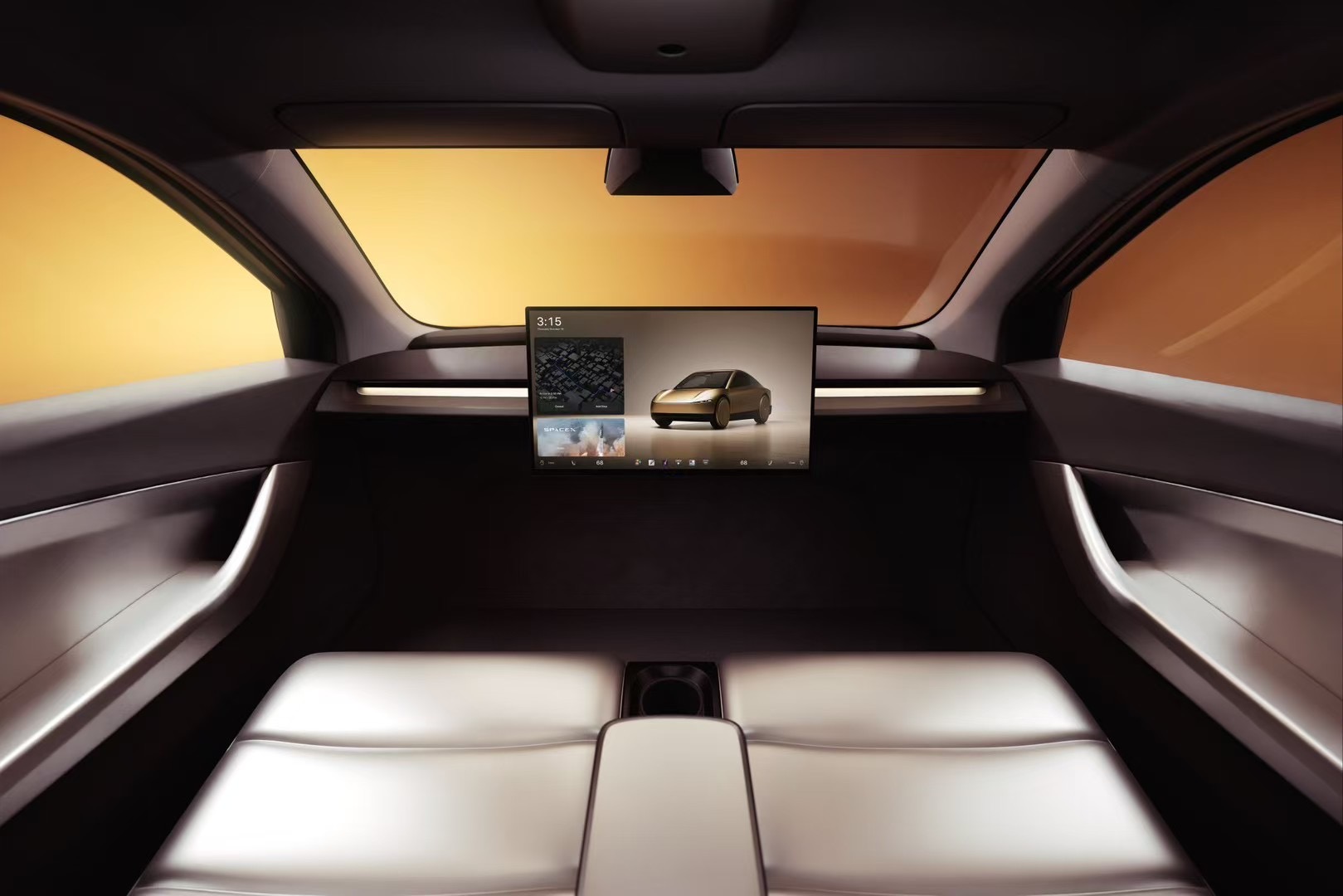
The steering-wheel and pedal-free Cybercab; Image Source: Tesla
Tech giant Tesla is also keeping pace. It plans to offer a controller similar to a gamepad as an alternative to the steering wheel in the 2026 Cybertruck, further diminishing the presence of traditional controls.
Chinese companies have not missed this trend either.
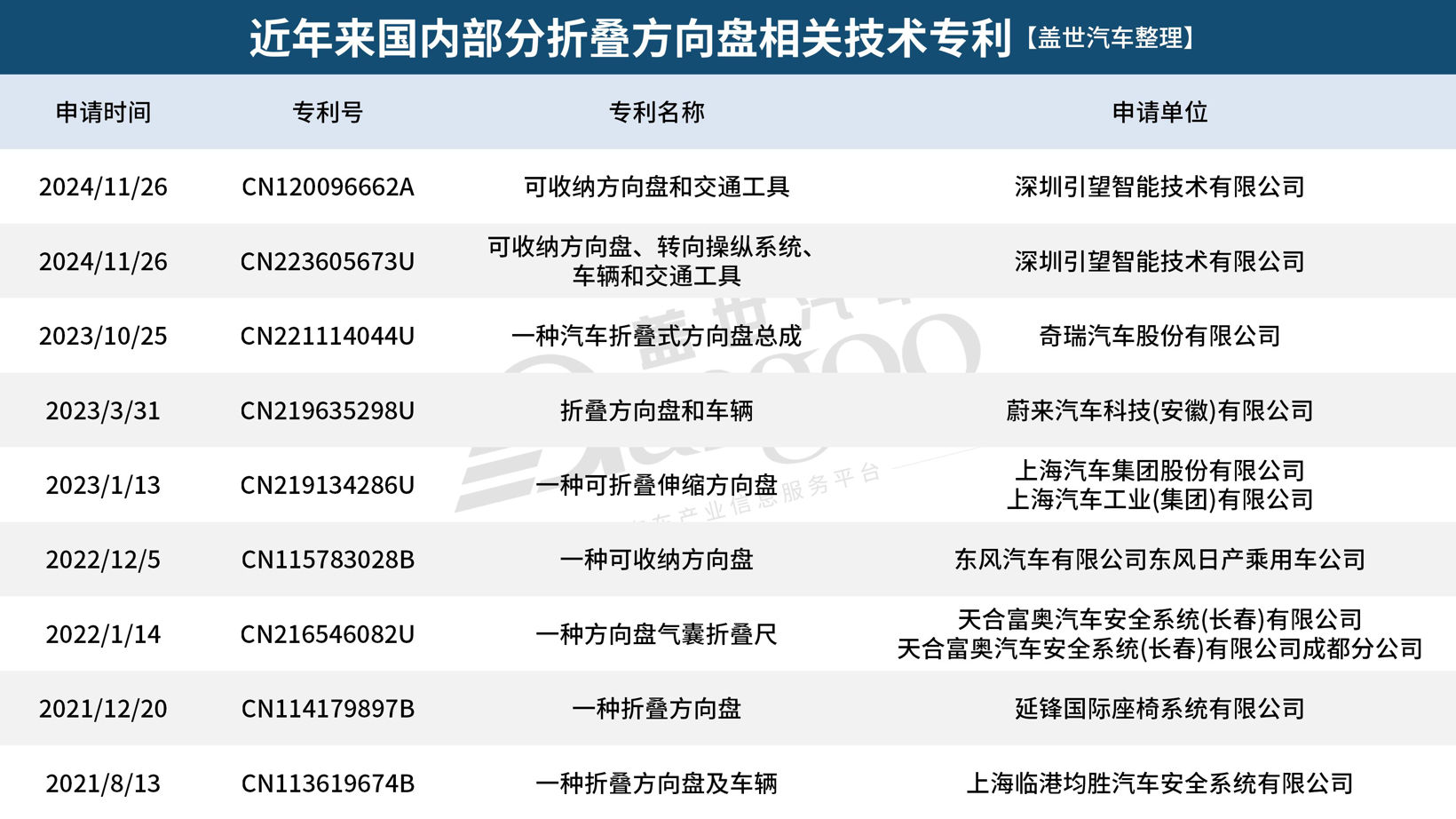
According to incomplete statistics from Gasgoo, Chinese companies have filed dozens of patents in the field of retractable and concealable steering wheels since 2021. This list spans OEMs like Dongfeng Nissan, SAIC, Chery, and NIO, to top-tier suppliers such as Joyson Safety, Yanfeng, and Yinwang.
Industry leaders like XPENG and BYD have participated deeply in discussions on reforming steering standards, helping to clear regulatory hurdles for the implementation of these new technologies.
What Are the Challenges of Eliminating the Steering Wheel?
Making the steering wheel disappear might sound like an innovative concept, but for engineers, it is an "extreme challenge" involving mechanics, electronics, software, and safety. It is certainly not as simple as attaching a hinge to the wheel.
The current mainstream solution is "fold-and-stow," which relies on a precision linkage and gear mechanism. The steering wheel rim is designed as multiple movable arc segments driven by built-in micro-servo motors, folding inward in sync like origami. The entire process must be absolutely smooth, quiet, and fast.
A crucial prerequisite is "auto-centering." The system must use sensors to detect the wheel's angle and drive it precisely back to the center zero point before folding can begin. Otherwise, the vehicle would not be able to drive straight once the wheel is deployed.
Next is the more advanced "steer-by-wire" revolution. This completely severs the physical mechanical connection between the steering wheel and the wheels, converting steering commands into pure electronic signals.
This offers three major advantages. First, it grants unprecedented freedom in steering wheel placement, allowing it to be hidden anywhere. Second, the steering ratio can be freely programmed to adjust the steering feel. Third, it paves the way for future integrated chassis control, such as linking with the suspension system.
Yet, the pinnacle of all technology must ultimately rest on "safety." And this is precisely where public skepticism lies.
What about the airbag? Autoliv's solution is a "smart dual-airbag system." When the steering wheel is stowed, protection is provided by a front airbag within the dashboard; when the wheel is deployed, the traditional driver airbag inside the wheel is activated. Both systems must independently meet the most stringent crash safety standards.
Is there enough time for an emergency takeover? This is the sharpest criticism from netizens: "If human intervention is needed, the time it takes for a folded steering wheel to deploy is far slower than simply placing hands on a traditional wheel." This places extreme demands on the system's warning logic.
It must rely on high-precision capacitive sensing and driver monitoring systems to predict the need for intervention earlier and more accurately, deploying the wheel ahead of time. This "time difference" is the critical limit that engineers must defend to prevent safety accidents.
How is reliability guaranteed? With the addition of dozens of moving parts, long-term durability and stability in extreme heat and cold must be verified through millions of test cycles. Additionally, redundancy capabilities in the event of a single motor failure are essential.
A senior chassis engineer once privately admitted: "Making a life-critical core component 'move' causes verification complexity and costs to rise exponentially."
The resulting cost could run into the thousands of yuan. For an ordinary family car, is the "occasionally liberated space" worth that price?
More importantly, under Level 3 "human-machine co-driving" conditions, does a stowed steering wheel imply that the automaker assumes 100% of the driving liability? If an accident occurs, how will the law distinguish between "the system failing to request a takeover in time" and "the driver failing to respond in time"?
Therefore, Gasgoo believes that 2026 is more likely to be the "Year of Technology Showcase and Path Divergence" rather than the "Year of Mass Adoption." The "disappearance" of the steering wheel will unfold along two distinct but clear paths:
The first is commercial autonomous driving for specific scenarios. Here, a steering-wheel-free design maximizes passenger space and experience, while the operating entities behind them can concentrate on tackling technical challenges. Tesla's Cybercab and the robotaxis in NVIDIA's ecosystem are prime examples of this path.
The second is high-end private vehicles pursuing technological sophistication and spatial transformation. Here, the retractable steering wheel serves as a "moderate redundancy," becoming a luxury feature that demonstrates technical prowess and provides scenario-based value (such as rest or entertainment modes). It is most likely to debut in flagship models first.
In China—the world's largest and most fiercely competitive smart vehicle market—the adoption of the retractable steering wheel may happen faster, but the path is destined to be more pragmatic.
This only increases anticipation for the upcoming Beijing Auto Show. The latest achievements and strategic plans from various automakers are sure to chart a clearer roadmap for this ultimate transformation regarding control and space.


