



Gasgoo Munich- At 8 p.m. on February 8, the world's first large-scale robot gala, *Robot Wonder Night*, made its debut. Hosted by Zhiyuan AGIBOT, the event stood out for one reason: more than 200 robots took center stage as the lead performers.
Specifically, the event shattered previous limitations where robots served merely as props or single-performance elements. It marked a qualitative leap from "robots performing acts" to "robots carrying an entire show." Spanning dance, martial arts, magic, skits, songs, and fashion shows, the performance highlighted China’s latest advances in robotics—specifically in executing complex tasks, achieving high-precision group coordination, and managing initial scenario-based interactions.
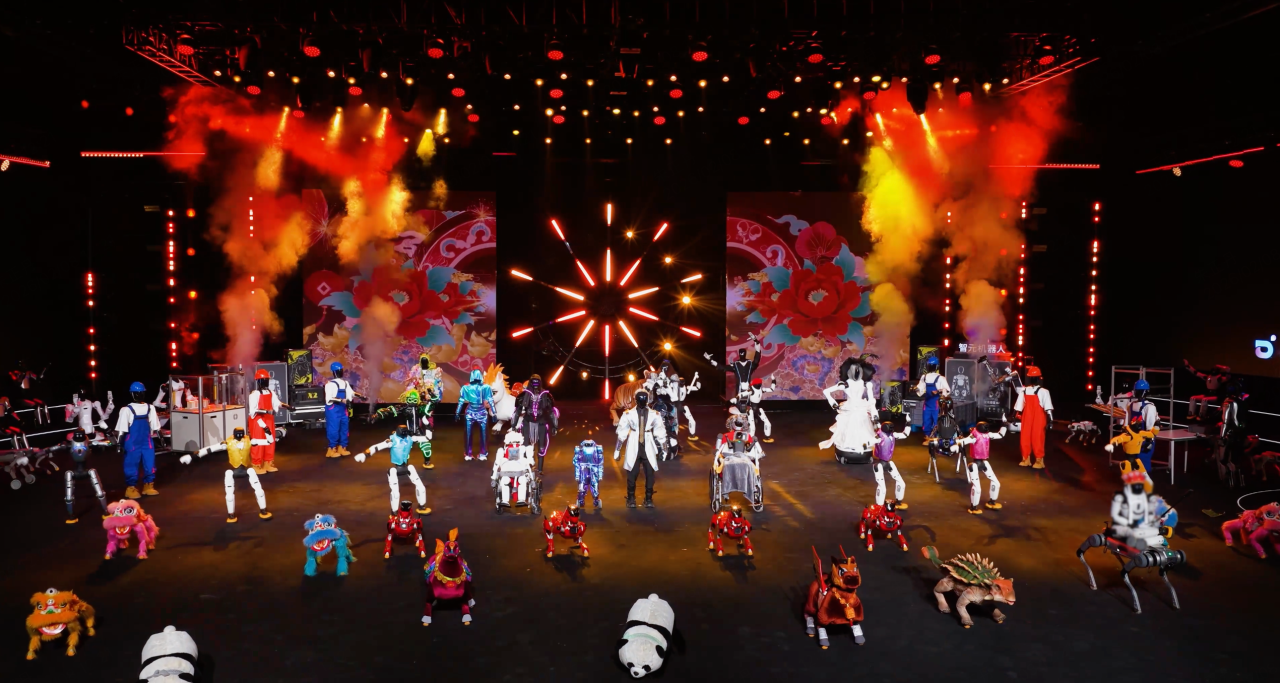
Image source: Zhiyuan Robot
Technological breakthroughs were the core draw. In the opening dance, 24 Lingxi X2 units achieved zero deviation in movement thanks to precise swarm control technology. During the *Wulin Assembly* segment, robots fluidly demonstrated traditional martial arts moves—a feat that demanded extreme requirements for dynamic balance and motion trajectory planning.
Even more striking was the world’s first magic show performed entirely by robots, alongside a waltz featuring human partners. These experiments signal a significant step forward in robotic perception, decision-making, and collaboration within unstructured environments.
Beyond the hardcore tech demos, the gala explored the emotional dimensions of human-robot interaction. By having robots perform skits, sing songs, and interact directly with human actors, the event aimed to shatter the "cold" stereotype and infuse machines with human warmth. Notably, sign-language translation robots were on hand, reflecting a commitment to technology that benefits diverse communities.
From an industry perspective, the successful staging of *Robot Wonder Night* not only helps elevate public awareness and acceptance of robotic technology, pushing it from labs and specific industrial settings into cultural life, but more importantly, by subjecting cutting-edge robotics to the complex, dynamic, and uncertain environment of a live stage, the event served as a systematic validation. It confirmed the potential for multi-task scheduling, real-time improvisation, and natural human-machine collaboration—offering a valuable "stress test" and fresh insights for deploying robotics in entertainment, services, and broader civilian scenarios.


