



"Whatever the people need, Wuling will build."
A brand's warmth is right there in that line.
An automaker that understands its people also knows what kind of cars they really need.
In early 2026, a routine handover at the Wuling Pengchi Dagang 4S dealership in Tianjin unexpectedly went viral on social media.
In the clip, a plainly dressed migrant worker, trouser hems slightly rolled, stands shyly beside his new car. Three sales staff, confetti cannons in hand, offer a solemn blessing: "Congratulations on becoming the proud owner of Wuling's iconic workhorse. May the Red Eagle spread its wings and light your path to prosperity; may the wings of victory carry you on your journeys near and far. Wishing you fortune and success all the way."
As the confetti bursts, his taut shoulders ease and a bashful but unmistakably joyful smile breaks through.
This handover — no celebrity, no lavish staging — drew more than a million likes. The words "Long live the people" flashed prominently across the video.
"He dresses simply but carries a family on his shoulders. This ceremony gives ordinary people full respect." "Selling cars isn't only about profit; seeing the value of everyday strivers is what gives a brand its warmth."
"Only now do I get the meaning of a handover ceremony." "I thought only luxury buyers got this kind of moment — turns out you can feel the same respect and warmth at Wuling."
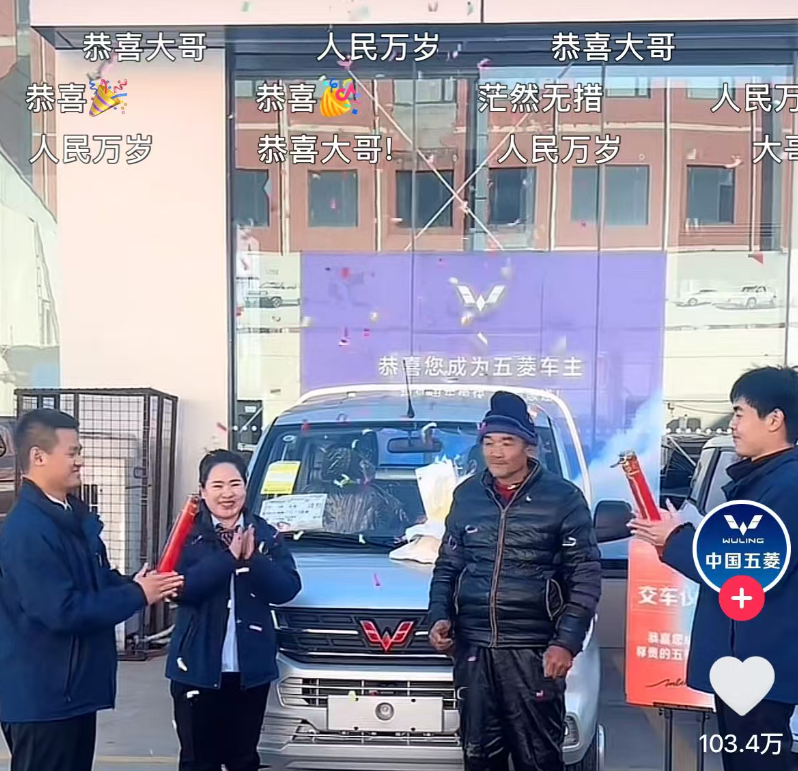
Image source: screenshot from a Chinese social media video
As China's new-energy carmakers push upmarket and into smarter features, scrambling for the million-yuan segment, Wuling has stayed rooted in lower-tier markets — zeroing in on the mobility and income-building needs of migrant workers, sole proprietors and other ordinary laborers.
In 2025, SAIC-GM-Wuling's output value again topped the 100 billion mark, reaching 100.02 billion yuan, up 24% year on year; full-year sales came in at 1.635 million units, up 6.2%. New-energy vehicle deliveries hit 1 million units — topping the 1 million mark for the first time — a 31.9% surge that kept growth in the industry's top tier. Overseas exports were 266,868 units/kits, up 18.6%, extending a decade-long growth streak.
Its trajectory is more than one company's growth story; it mirrors an inclusive evolution in China's auto industry — from scale expansion to value creation.
From ceremony to recognition: Wuling sees the "silent majority"
The handover that resonated across the internet was, at heart, a public affirmation of ordinary workers' worth.
In the car market, migrant workers have long sat at the margins. Budgets are tight, often under 100,000 yuan for practical models, leading dealers to view them as "low-margin customers." Their needs straddle work and life — a vehicle to haul goods and support a small business, but also one to ferry family — yet few brands focus on those core demands.
Wuling's ceremony breaks that industry habit.
The video shows the 4S store's ritual isn't exclusive to migrant workers; it's a standard for all buyers. For Starlight owners, the blessing reads, "Starlight doesn't question the traveler; time rewards the earnest." For commercial-vehicle owners, it centers on "entrepreneurship and prosperity." Those tailored touches reflect a precise read of different user groups.
Sincere staff, no perfunctory steps — every buyer feels respected. And those who struggle to express themselves, migrant workers especially, get a "spotlight moment" when the confetti blooms.
That respect rests on Wuling's clear view of who its users are.
Among core users of Wuling's Red Label models (primarily commercial vehicles), most are sole proprietors and migrant workers — the capillaries of China's real economy.
Wuling knows these seemingly "low-end" users are not only the backbone of sales, but also natural carriers of word of mouth.
Its respect for migrant workers shows even more in how its products match their needs.
Unlike brands that focus mainly on commuting, Wuling understands the core pain point of "one vehicle, many uses." It must haul and deliver — supporting renovation work, market stalls and other ventures — and also serve family trips like school runs and visits. That dual role demands durability, space and low fuel/electricity costs.
Take the Wuling Rongguang New Card dual rear-wheel CNG version. It uses the Wuling Liuzhou 2.0L CNG-dedicated engine with a factory CNG system and is compatible with gasoline and natural gas. In fuel mode it delivers a maximum 106 kW and 200 N·m of torque; in gas mode, 86 kW and 170 N·m — meeting users' needs for strong power and heavy loads.
It can be fitted with dual 80 L cylinders. Gas consumption is a class-leading 11.4 m³ per 100 km, with per-km costs under 0.4 yuan — roughly 50% below gasoline models — saving about 15,000–20,000 yuan a year. Single- and double-row cabs are available; the single-row bed is 3.3 meters long, the double-row 2.6 meters, with a maximum width of 1.77 meters — enough for six double-door refrigerators. Overall height stays under 2 meters for easy passage under bridges and into garages, fitting the varied needs of urban logistics.
As a new-energy commercial van, the Wuling Sunshine EV adopts a 30 kW rear-mounted motor and LFP battery. CLTC range is 201 km — sufficient for short-haul county runs — with 35-minute fast charging (30%–80%) and 3.3 kW vehicle-to-load power. Dimensions are 3,685×1,530×1,765 mm with a 2,600 mm wheelbase; cargo volume expands to 1,117 L. It trims annual fuel bills and has become a first-choice NEV for many migrant workers.
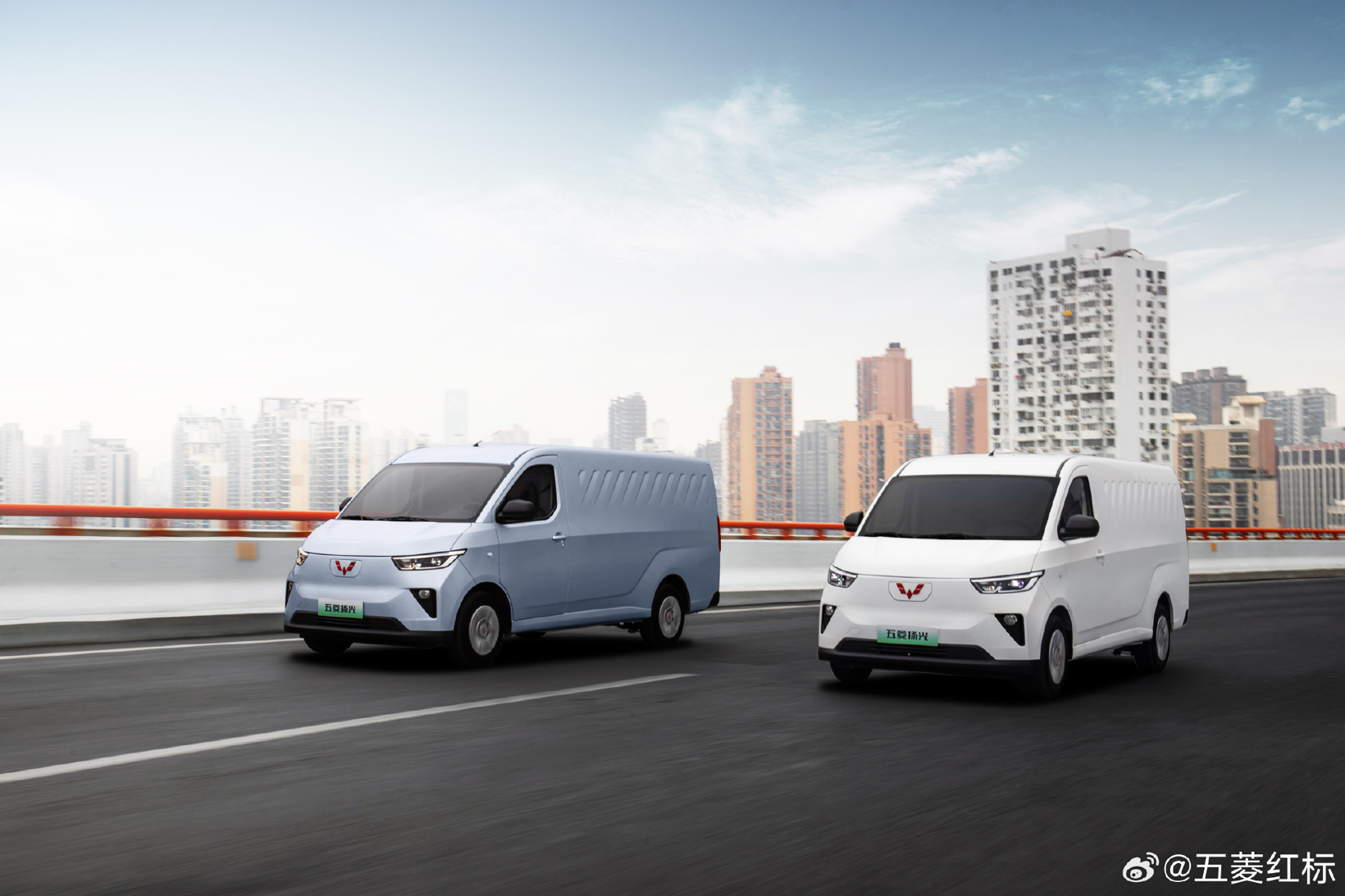
Image source: Wuling Red Label's Weibo
Beyond core functions, Wuling sweats the details for migrant workers.
With narrow rural roads in mind, the Hongguang series keeps width in check to improve passability. Seats use hard-wearing fabrics that resist dirt and clean easily for sites, markets and other tough settings. Select models add rear parking sensors, central locking and other practical kit to lower the learning curve for new drivers.
That "no spec-stuffing, just usefulness" philosophy has made Wuling a trusted pick for this group.
The numbers back it up. In 2025, Wuling Red Label sales totaled 577,886 units, retaining the national commercial-vehicle crown. NEV commercial-vehicle sales reached 148,166 units, taking No. 1 in that market with 10 straight months of 100%+ year-on-year growth.
A three-tier brand matrix — covering all price bands and the user lifecycle
If its focus on migrant workers is a point breakthrough, then a matrix spanning price bands and scenarios is Wuling's edge across the board.
After years of work, Wuling has built a three-tier architecture of Red Label–Silver Label–BAOJUN, mapping to commercial, passenger and smart segments. It covers the full lifecycle from a first business vehicle to a family's second car — a core pillar of its 2025 cumulative sales of 1.635 million units.
As a "money-making tool," Red Label targets commercial-vehicle buyers across microvans, micro-trucks and light trucks, priced roughly 30,000–90,000 yuan (subject to local dealer quotes and incentives). It aligns with the needs of migrant workers and sole proprietors and serves as a mainstay for county logistics and rural e-commerce.
In 2025, Red Label sales exceeded 577,000 units, keeping the No. 1 spot in domestic commercial vehicles. Cumulative Wuling commercial-vehicle sales have now topped 21 million.
On NEV transition, Red Label stands out. NEV commercial-vehicle sales totaled more than 148,000, with 10 consecutive months above 100% year-on-year growth, leading the segment. Sunshine EV cumulative sales topped 34,000, No. 1 among NEV microvans; the Yangguang family surpassed 115,000, leading NEV light vans for 21 straight months; and the Hongguang family climbed past 6 million in cumulative sales, ranking first in the rear-drive NEV MPV segment.
Silver Label focuses on passenger cars and upgrades perceived quality, priced roughly 50,000–150,000 yuan for families seeking comfort.
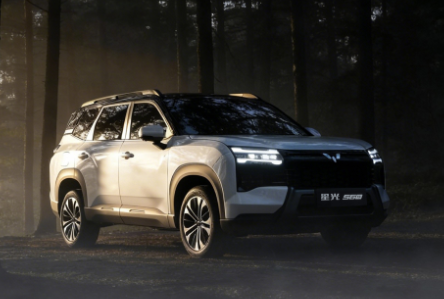
Image source: Wuling Silver Label's Weibo
In 2025, Silver Label sales topped 741,000 units, up 8.8%, with multiple models leading their segments. The "people's runabout" Hongguang MINIEV family sold 436,000 units in 2025 and has passed 1.85 million cumulatively, holding the A00-class NEV sales crown for 65 consecutive months. The Wuling Bingo family sold 213,000 units in 2025 and has exceeded 600,000 cumulatively, with the Bingo S winning a "2025 China Top 10 Car Bodies" award. The Starlight family sold 66,000 units in 2025; its Lingxi Power 3.0 PHEV system was named among the "China Heart" Top 10 engines and hybrid systems for 2025.
BAOJUN carries the mission of "inclusive intelligence," with 2025 sales of 49,002 units, up 12.3%.
Synergy across the three tiers helps Wuling stay competitive through cycles. This full-track coverage avoids overreliance on a single niche, while scale effects lower costs and reinforce its inclusive positioning.
Balancing inclusive pricing with solid quality rests on cost control from full value-chain integration.
On December 11, 2025, Saike Technology's Chongqing base was inaugurated and began production. The launch, following a Qingdao branch opened in January 2025, marked a key step in its national capacity rollout.
As the core executor of SAIC-GM-Wuling's "1-2-5 Project," Saike Technology remains ahead in core NEV components. In 2025, battery output reached 810,000 packs, ranking among the national top three; e-drive production hit 710,000 units, steady in the top four. Full-year output value is expected to surpass 15 billion yuan, up more than 40% — a fresh leap after passing 10 billion in 2024. With a >90% vehicle matching rate, its products ship with vehicles to 105 countries and regions, and it has delivered "product + production line + technology" exports to Indonesia and India.
Capacity-wise, Saike now runs a triangle of Liuzhou headquarters with Qingdao and Chongqing as two wings. Since starting up in January, the Qingdao unit's monthly peak capacity reached 35,000 e-drives and 34,000 battery packs, with line utilization above 135%. From January to November 2025, Qingdao produced 295,000 e-drives and 296,000 battery packs.
The Chongqing base serves SAIC-GM-Wuling's local NEV assembly, focusing on localized battery production. Total investment is 33 million yuan, with annual capacity of 60,000 units after ramp. That lifts Saike's national capacity past 1.38 million units, and once all three bases are fully on stream, annual output value targets 20 billion yuan.
This footprint not only breaks the industry's bottleneck of costly, slow cross-province logistics, it also rides Western Development policy tailwinds to sharpen reach in the Southwest and responsiveness to key clients — building a "north–south linkage, east–west synergy" industrial pattern.
Bringing Chongqing online has improved Saike's supply-chain response, cutting cross-province logistics costs and time via local production and strengthening its market coverage in the region.
From "building what users need" to "understanding the respect they crave"
As the industry chases premium and smart features, Wuling proves once again: user-centrism isn't a slogan. It means truly seeing different groups — especially those often overlooked at the grassroots.
China's auto market is stratifying. First-tier buyers want smart cabins and assisted driving; lower-tier users prize practicality, value and emotional recognition. Both are important, yet many brands selectively ignore the latter.
Data from the China Automobile Dealers Association show that in the first three quarters, fifth-tier city sales rose 14.6% year on year — nearly triple the pace of first-tier cities; third- and fourth-tier sales grew 8.15% and 10.65%, highlighting a clear shift downward. Lower-tier markets have become the core source of incremental demand.
Those who truly read lower-tier users will capture growth ahead — and Wuling's practice offers a strong reference.
Wuling's success has also reframed what "channel sinking" should be.
Many brands once treated channel sinking as simply adding 4S stores. But with dispersed users and limited throughput, dealers struggled to make money and service quality varied. Wuling chose "value sinking": beyond coverage, it upgraded service and innovated its model so lower-tier users enjoy service nearly on par with first-tier cities.
Compared with EV startups that push downmarket later, Wuling's edge is being native to these markets. Its long-built channel depth and reputation are hard to copy.
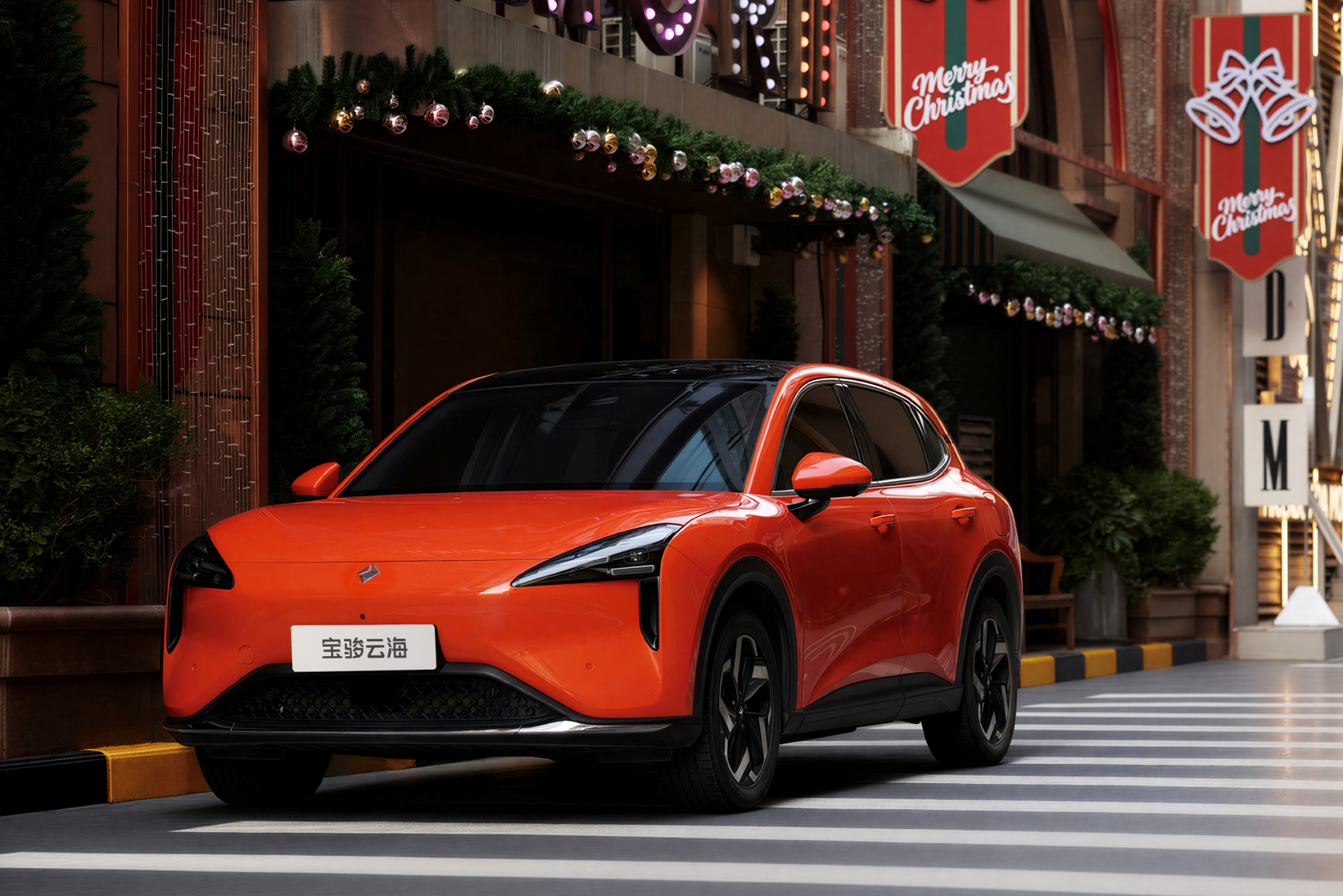
Image source: BAOJUN's Weibo
Globally, Wuling is taking a different path. Unlike some peers that target high-end Europe and the U.S., it focuses on emerging markets. With strong value-for-money and full value-chain capability, it is upgrading from "product exports" to "system exports," offering another route for China's auto industry to go global.
In overseas markets, SAIC-GM-Wuling exported 266,868 units/kits in 2025, including 94,686 NEVs — up 128.6% year on year. Its focus is India, Malaysia and Indonesia, where user needs mirror China's lower-tier markets: practical and value-driven — a quick fit for Wuling's lineup.
Backed by its three-brand channels and an integrated India–Malaysia–Thailand strategy, SAIC-GM-Wuling in 2025 opened more than 10 new markets including Malaysia, Armenia and Moldova. Its products now reach 104 countries and regions, as it builds competitiveness with a "NEV value chain + standards system" model for going overseas.
Its globalization shows China's edge lies not only in high-end smart tech but also in the value and value-chain strength of mass-market models. Amid a diverging global economy, demand in emerging markets is climbing quickly — and Wuling's approach offers a blueprint for Chinese brands abroad.
Conclusion: Wuling's long game
The reason a simple handover struck a chord is that Wuling holds to the industry's original promise: a car isn't just a status good — it's a tool that serves everyday life and livelihoods. Every buyer deserves respect.
While peers rush upmarket, Wuling hasn't followed the herd. It sticks to "build what the people need," plowing deep into lower-tier markets. With product innovation, value-chain upgrades and better service, it has balanced scale with profit — and earned users' trust.
As electrification and intelligence accelerate, Wuling is leaning in. Focusing on smart manufacturing, assisted driving and smart cabins, SAIC-GM-Wuling is deepening its strategic partnership with Huawei — integrating reliable production networks, AI and big data to keep upgrading its I²MS smart manufacturing system and EOAI excellence-in-operations model, lifting the level of Chinese smart manufacturing and product quality.
In assisted driving and smart cabins, SAIC-GM-Wuling will leverage its cost control and supply-chain integration to bring Huawei's Qiankun intelligent driving, HarmonyOS cockpit and Qiankun vehicle cloud into its lineup. Their first co-developed model, the Huajing S, will launch in the first half of 2026 to deliver a new smart mobility experience.
For China's auto industry, Wuling's model offers a key lesson: premium is not the only way forward; inclusive innovation can also drive high-quality growth.
As the market shifts from expansion to share-taking, only by truly understanding users and staying committed for the long term can brands endure.
Wuling's story, for its part, continues to write a new chapter in the inclusive evolution of Chinese carmakers.


