



Gasgoo Munich- Here are the major developments in embodied intelligence and driver-assistance technology this week:
SAIC welcomes its first humanoid robot employee
On March 27, SAIC Motor's first embodied intelligent humanoid robot—dubbed "Nengzai No. 1"—officially went to work on the Buick ZhiJing E7 battery production line. This marks the first time a humanoid robot has been deployed on a mass-production line at SAIC, signaling a critical leap in the automaker’s smart manufacturing evolution from "automation" to "embodied intelligence."
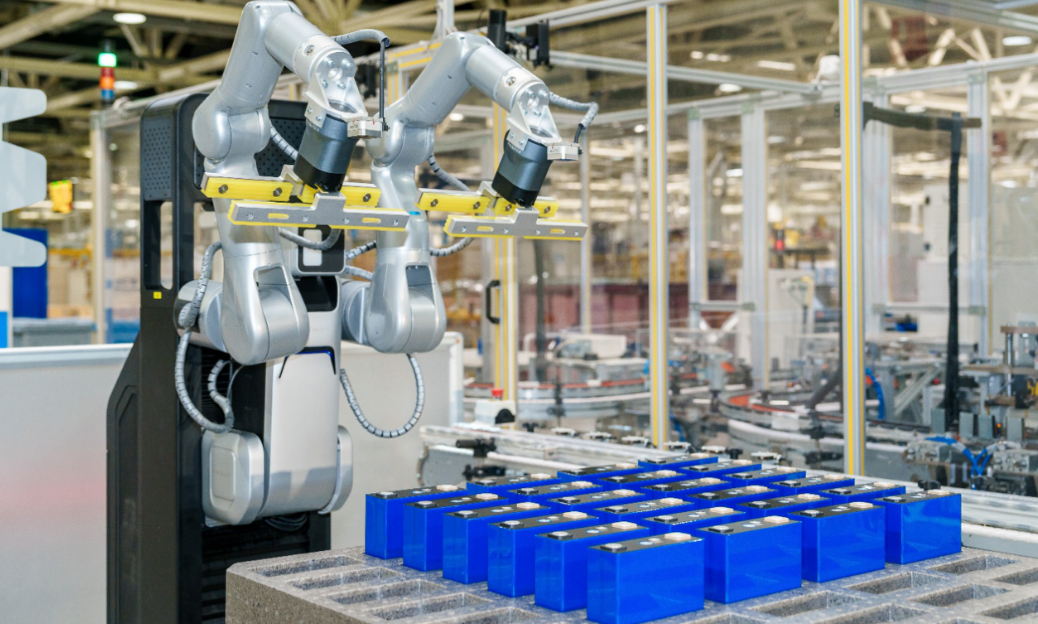
Image Source: SAIC
Developed jointly by SAIC-GM and Zhiyuan Robotics—a star portfolio company of SAIC Capital—the collaboration serves as a benchmark for SAIC’s strategy of integrating "capital, industry, and scenario."
The robot has already joined the Buick ZhiJing E7 battery line, handling core tasks like cell picking and loading.
SAIC has been positioning itself in the humanoid robotics space for some time. In 2023, the group began surveying and deeply testing the technology to meet the production needs of its automakers. That same year, adhering to a strategy of "early and innovative investment," SAIC Capital made a preemptive move into the sector, pairing up with Zhiyuan Robotics, which was actively seeking validation in industrial settings.
Beyond the partnership with Zhiyuan, SAIC Capital has poured over 800 million yuan into humanoid robotics, covering core areas like robot bodies, embodied intelligence, tactile sensors, and planetary roller screws.
XiaoZhi Comment: Invest internally, deploy internally, validate internally—SAIC has finally closed the loop on its humanoid robotics strategy.
Latest Tesla Optimus Video Revealed
Tesla Optimus recently released a video showcasing new details about the robot, including its R&D environment, reduction gearbox, and the design of its dexterous hand.
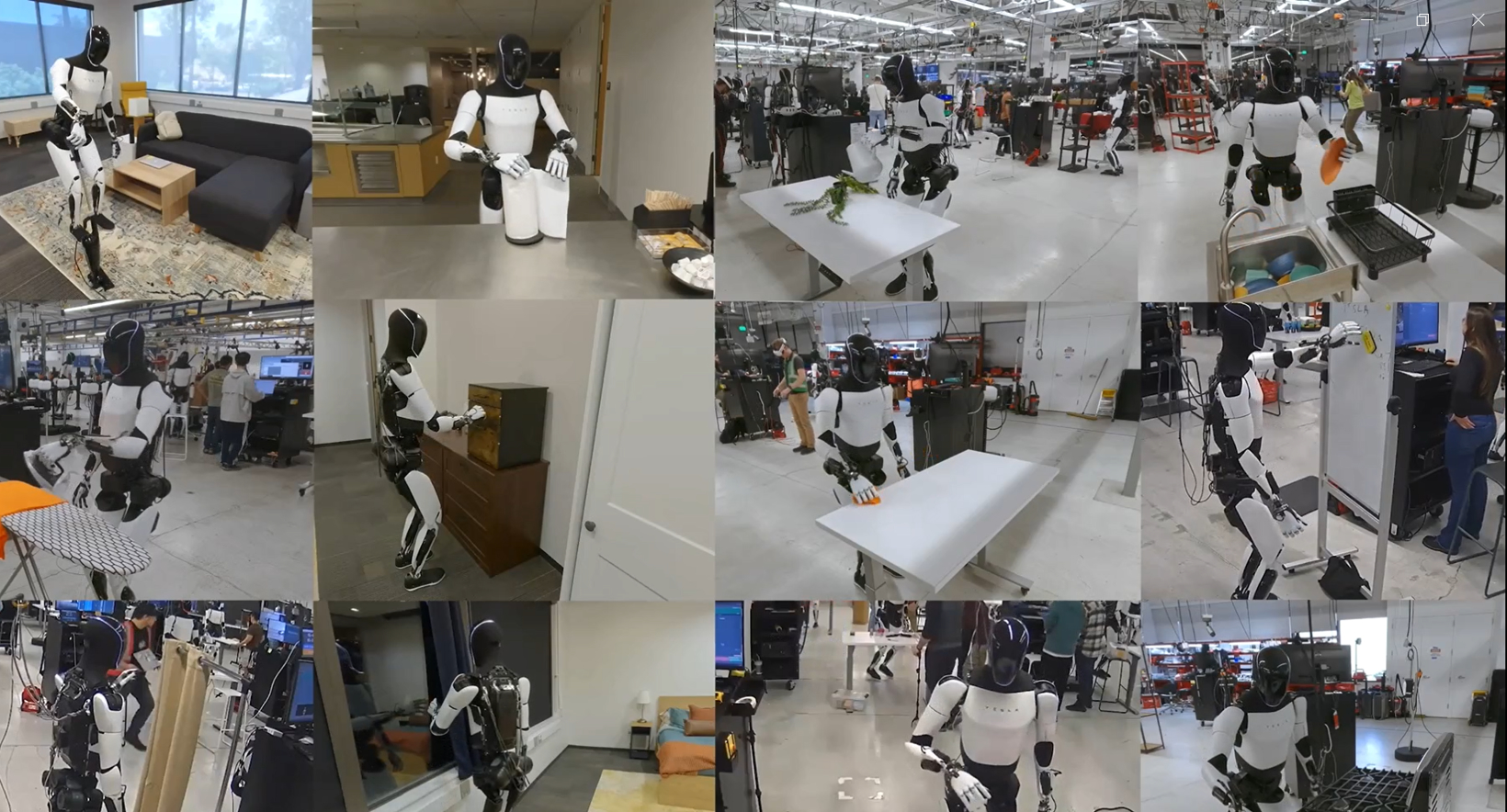
Image Source: Tesla Optimus
The video reveals the team is designing a compact, high-power inverter. In robotic systems, such inverters supply precise AC power to motors, enabling flexible joint movement, precise positioning, and high torque output.
"As we iterate on the design and prepare the third generation for mass production, the robot is approaching human functionality—so much so that it won't even look like a robot," said the lead designer for Optimus’s dexterous hand.
Speaking at the Abundance Summit earlier, Tesla CEO Elon Musk said production of the Optimus 3 could begin this summer. Musk noted that Tesla is in the final stages of developing the robot, calling it the world's most advanced humanoid.
Musk also tempered expectations for the production ramp, noting that initial volumes will be very low, though he added that mass production could be achieved by 2027.
XiaoZhi Comment: If the Optimus 3 hits its production targets and performance goals, its potential market size and disruptive impact on manufacturing and services will be incalculable.
XPENG Establishes Robotaxi Division
XPENG has officially set up a Robotaxi division to oversee product definition, project integration, R&D testing, and operations, Gasgoo learned on March 23.
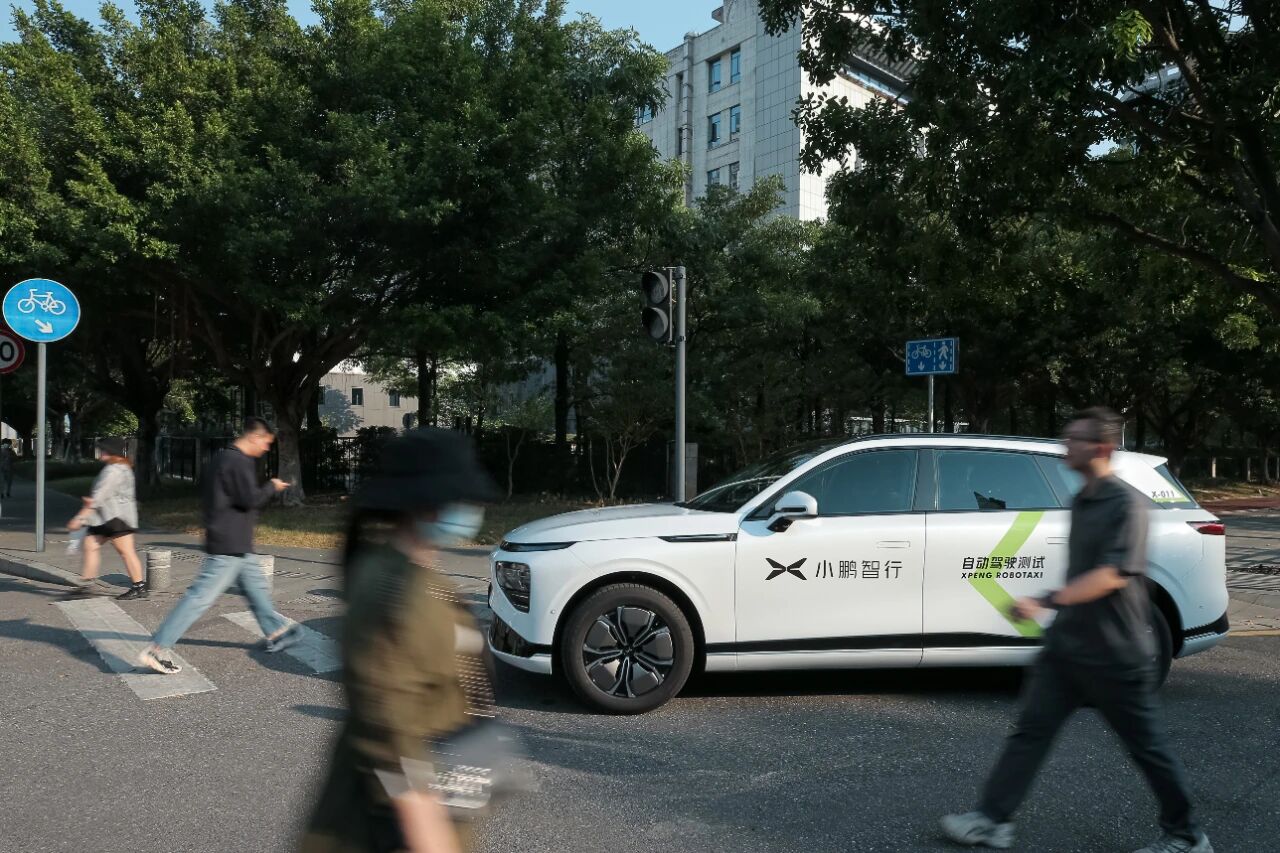
Image Source: XPENG
Operating as a first-tier unit, the new division will leverage platform resources across the company. Yuan Tingting has been appointed to lead the unit, which includes two sub-departments: one for product definition and business design, and another for project management and cross-system coordination.
XPENG Chairman He Xiaopeng revealed during the earnings call for the fourth quarter and full year of 2025 that the company plans to launch pilot ride-hailing operations in the second half of this year to validate its technology, customer acceptance, and business model.
He added that XPENG is at a historic inflection point in the application of "physical AI," with R&D investment in the field expected to jump from 4.5 billion yuan last year to 7 billion yuan this year.
XiaoZhi Comment: Elevating the division to a first-tier organizational structure signals that XPENG’s Robotaxi business will enjoy higher strategic priority and greater efficiency in resource allocation.
Zejing Electronics Lists on Hong Kong Stock Exchange
Jiangsu Zejing Automotive Electronics Co., Ltd. successfully listed on the main board of the Hong Kong Stock Exchange on March 24 under the ticker 2632.HK, Gasgoo learned.
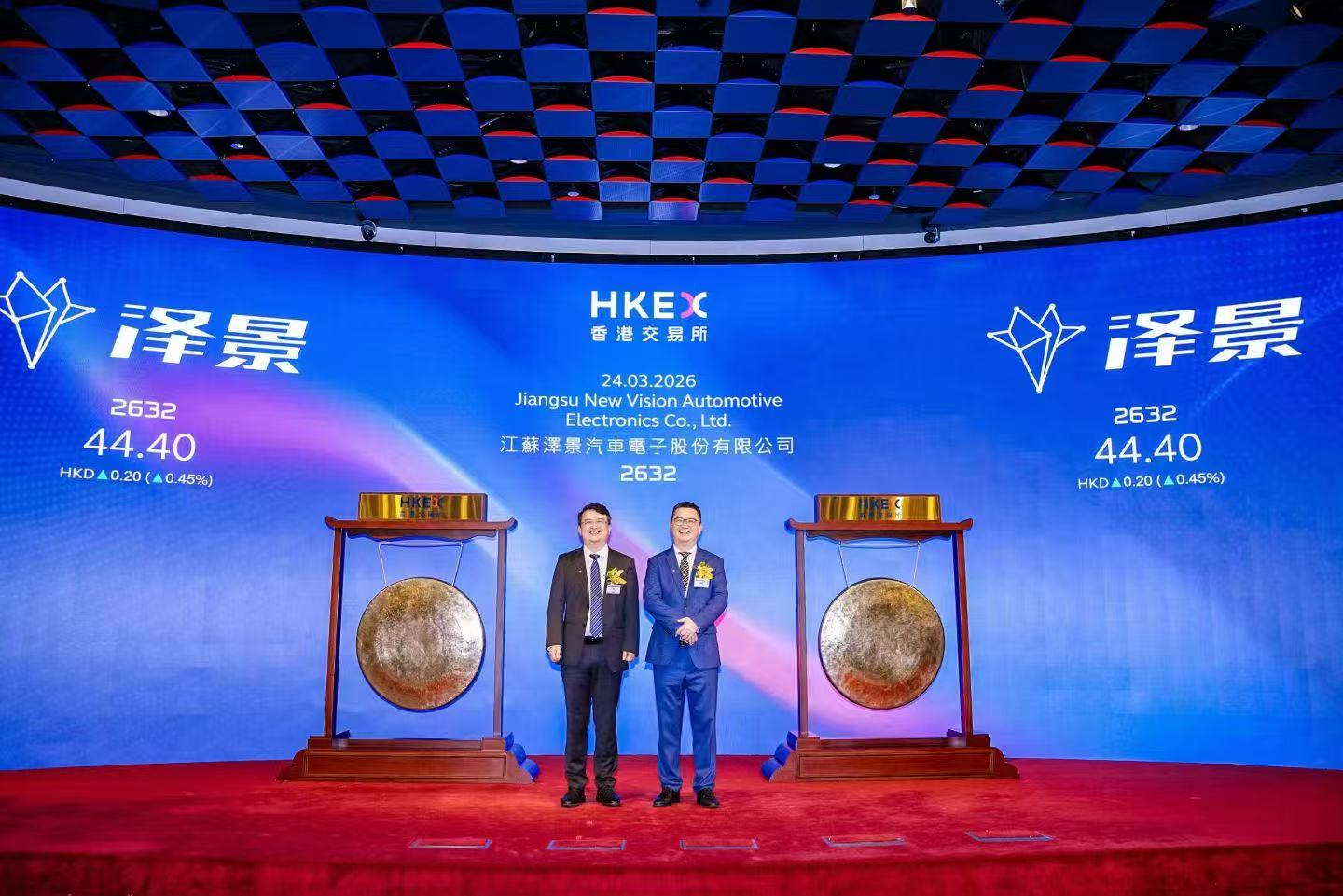
Image Source: Zejing Electronics
The company raised about 717 million Hong Kong dollars in its IPO, offering 16.23 million H-shares—roughly 13.15% of the enlarged share capital—at 44.20 Hong Kong dollars per share. Net proceeds totaled approximately 650 million Hong Kong dollars.
Founded in 2015, Zejing Electronics is an automotive electronics supplier focused on smart cockpit visual interaction solutions. Its core products include head-up displays (HUDs), such as W-HUD and AR-HUD.
Data from the Gasgoo Automotive Research Institute shows that Zejing’s HUDs were standard equipment in 499,756 vehicles in 2025, ranking second in the market with an 11.4% share—just behind Foryou Multimedia.
In the AR-HUD segment specifically, Zejing ranked fifth with 115,989 units installed, capturing a 7.2% share. The top four spots were held by Foryou Multimedia, Huawei, ELI, and Crystal Optech, with installation volumes of 346,014, 341,077, 337,568, and 201,995 units respectively, corresponding to market shares of 21.5%, 21.2%, 21%, and 12.5%.
Between 2022 and 2024, Zejing’s revenue climbed from 210 million yuan to 550 million yuan and then 580 million yuan, with 2023 growth surging 156.6%. Over the same period, the company recorded net losses of 260 million yuan, 180 million yuan, and 140 million yuan, respectively, accumulating a total deficit of 580 million yuan over three years.
XiaoZhi Comment: For investors, Zejing’s long-term value hinges on whether it can translate its technological edge and market share into sustainable profitability.
OYMotion Tech Closes 150 Million Yuan C1 Round
Shanghai OYMotion Information Technology Co., Ltd. announced on March 26 that it has closed a C1 funding round led by the Shenzhen Brain Science and Brain-Like Intelligence Industry Investment Fund under CICC Capital, with participation from several existing investors, Gasgoo learned.
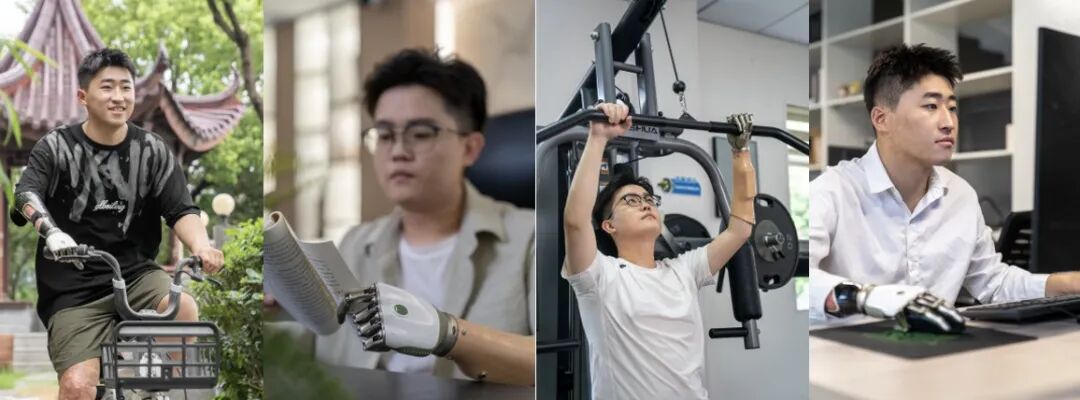
Image Source: OYMotion Tech
Founded in 2015, OYMotion pioneered a "Brain-Machine-Robot" (EEG-EMG-ROBAT) integrated technology system for brain-computer interface applications. Its proprietary non-invasive, multimodal neural signal fusion architecture creates a real-time closed loop involving EEG intention recognition, EMG motion decoding, and robotic feedback, achieving seamless conversion from neural commands to precise actions.
Beyond that, the company is expanding into embodied intelligence. Leveraging core technologies in non-invasive neural sensing and AI analysis, it has built a comprehensive product matrix spanning "neural interface, AI interaction, and robot execution."
Its flagship products in this space include the ROHand series of dexterous hands, such as the ROH-Lite S001 lightweight high-precision hand, the ROH-AP001 tactile hand, and the ROH-AP002 hybrid tactile force-control hand. The company currently serves nearly 100 downstream humanoid robotics customers.
XiaoZhi Comment: Brain-computer interfaces plus dexterous hands—OYMotion is telling a compelling story across two distinct tracks by closing the loop from "neural signal to action execution."
RoboSense Achieves First Quarterly Profit as Robot Business Surges
RoboSense reported its financial results for the fourth quarter and full year of 2025 on March 25. In the fourth quarter, total revenue hit 751 million yuan, alongside an operating profit of 130 million yuan and a net profit of 104 million yuan—marking the company’s first profitable quarter and far exceeding market expectations.
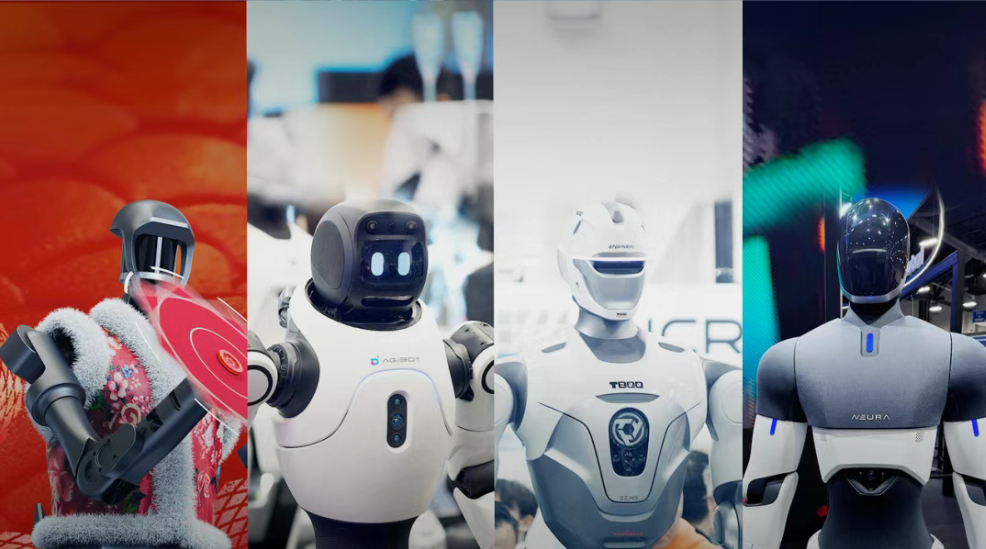
Image Source: RoboSense
Breaking it down by sector, revenue from robotics and other products came in at about 347 million yuan in the fourth quarter, while ADAS products contributed roughly 361 million yuan. This split—49% versus 51%—cements the company’s "automotive plus robotics" dual-engine growth model.
LiDAR shipments for the quarter jumped 183.2% year-over-year to 459,600 units. The robotics business drove that surge, with shipments soaring 2,565.1% to 221,200 units.
For the full year 2025, RoboSense set new records across revenue, shipments, and gross profit, with profitability steadily improving. Annual revenue reached about 1.94 billion yuan on shipments of 912,000 units, while gross profit climbed 81.3% to 514 million yuan. Notably, LiDAR sales for robotics applications surged 1,141.8% to 303,000 units, making RoboSense the top seller in the robotics sector.
XiaoZhi Comment: With robotics revenue approaching 50%, the "dual-engine" strategy has evolved from concept to a reality reflected in the financial statements.
Hesai 2025 Revenue Tops 3 Billion Yuan, Aims for 3 Million Shipments This Year
Hesai Technology (NASDAQ: HSAI; HKEX: 2525) released unaudited financial results for the fourth quarter and full year of 2025 on March 24.
In 2025, Hesai’s revenue surged 45.8% to a record 3.03 billion yuan. The company posted a GAAP net profit of 440 million yuan and a Non-GAAP net profit of 550 million yuan, making it the first LiDAR maker to achieve a full-year GAAP profit.
In the fourth quarter alone, revenue topped 1 billion yuan, up 39% year-over-year. This marked the seventh consecutive quarter of significant growth, the third straight quarter of GAAP profitability, and the fifth quarter of Non-GAAP profitability.
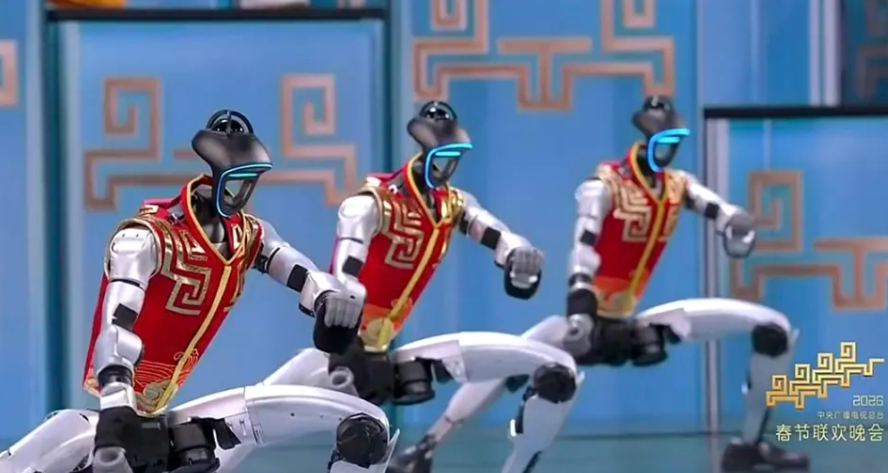
Image Source: CCTV Spring Festival Gala Live Stream Screenshot
The financial strength was underpinned by explosive delivery growth. Hesai delivered 1.62 million LiDAR units in 2025, a 222.9% increase. Fourth-quarter deliveries alone hit 631,095 units—up 184.2% and surpassing the total for all of 2024.
By sector, ADAS LiDAR deliveries jumped 202.6% to 1.38 million units. Hesai has secured design wins from 40 automakers for over 160 vehicle models, covering all of China’s top ten OEMs. In robotics, the company also notched several breakthroughs, delivering 239,273 units for the year—an increase of 425.8% that outpaced the entire sector.
Looking ahead to 2026, Hesai expects shipments to double again, reaching 3 million to 3.5 million units.
XiaoZhi Comment: A 3-million-unit shipment target is a declaration that the race for scale dominance has begun.
WeRide 2025 Revenue Jumps 90% Year-Over-Year
WeRide released its unaudited financial report for the fourth quarter and full year of 2025 on March 23. Total revenue for the year climbed 90% to a record 690 million yuan, while fourth-quarter revenue surged 123% to 314 million yuan, marking a new quarterly high.
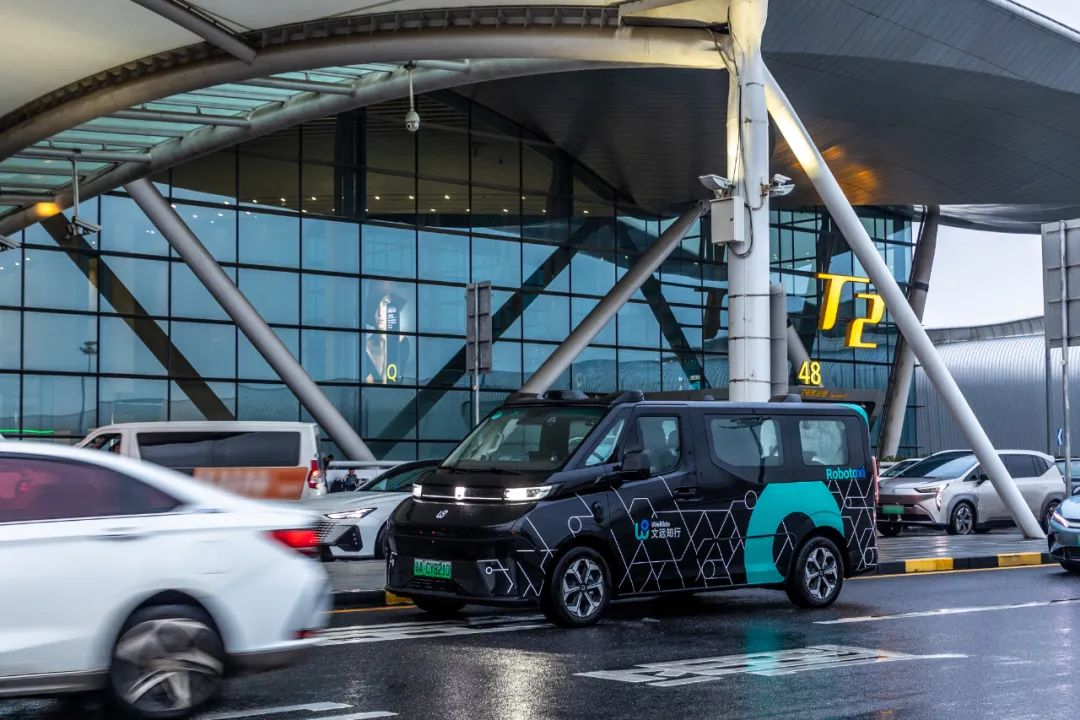
Image Source: WeRide
Commercialization of its core Robotaxi business accelerated. Full-year revenue from the segment jumped 209.6% to 150 million yuan, with fourth-quarter revenue up 66.4% to 50.6 million yuan. Registered users for its domestic Robotaxi service surged more than 900% quarter-over-quarter, signaling explosive demand.
WeRide’s autonomous driving products are now operational in over 40 cities across 12 countries. With a Robotaxi fleet of 1,125 vehicles, it boasts the broadest global reach among autonomous driving companies. The company plans to deploy 2,600 Robotaxis globally by the end of 2026, scaling up to tens of thousands by 2030.
XiaoZhi Comment: The Robotaxi ledger is finally looking healthier, but a global deployment plan of 2,600 vehicles remains a high-stakes bet on patience.
Pony.ai 2025 Robotaxi Revenue Doubles
Pony.ai released unaudited financial results for the full year and fourth quarter of 2025 on March 26. Total revenue for the year reached 629 million yuan, marking four consecutive quarters of growth. The fourth quarter alone contributed 204 million yuan.
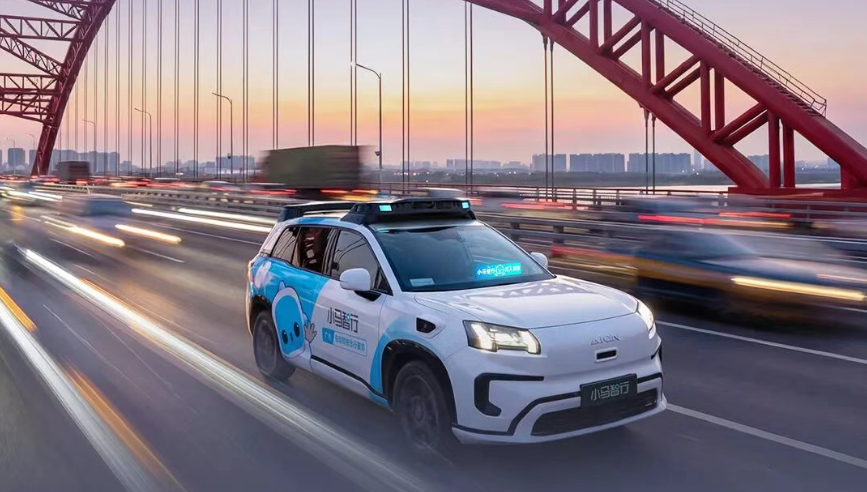
Image Source: Pony.ai
Growth in the Robotaxi segment was particularly pronounced. Full-year revenue from the business rose 129% to 116 million yuan. In the fourth quarter alone, Robotaxi revenue hit 46.6 million yuan—a 160% year-over-year jump. Notably, fare revenue from passengers surged more than 500% during the quarter.
Looking to 2026, Pony.ai plans to replicate its proven operational model in more than 20 cities worldwide, aiming to expand its Robotaxi fleet to over 3,000 vehicles. The seventh-generation Toyota bZ4X Robotaxi, developed in partnership with Toyota, has entered mass production, with 1,000 units already ordered for deployment this year.
XiaoZhi Comment: Now that the technology has proven its commercial viability, the race comes down to who can scale the fastest.


