



Gasgoo Munich- On February 11, 2026, General Motors broke the industry silence with a statement. The U.S. automaker explicitly ruled out excluding suppliers based on nationality, reaffirming that it views China as a vital component of its global business strategy and plans to continue strengthening its presence there.
This statement was no accident. Over the past year, fueled by geopolitical factors, rumors of GM "decoupling from China" have circulated persistently. Despite repeated denials, the trajectory of its China strategy has kept the industry on edge. And it is not just GM; the entire camp of foreign automakers is wrestling with choices and commitments in the Chinese market.
That same day, Ford released its 2025 financial report, revealing that its global sales had fallen short of BYD’s—a revelation that quickly ignited debate. On one side stood GM’s declaration of resolve; on the other, Ford’s transition struggles. The deep ties between foreign automakers and the Chinese market were once again thrust into the spotlight. Yet looking past the noise, one reality is clear: as China’s auto industry accelerates toward electrification and intelligence, the market has evolved from a source of "incremental growth" into a "survival foundation" and the "core of transformation."
GM’s Resolve Hides a Mandatory Choice for Foreign Automakers
The statement amounted to a sweeping rebuttal of rumors that had circulated for a year.
Over the past year, speculation that GM was "exiting China" never ceased, and its strategy in the country faced constant scrutiny.
This was more than just a clarification; it was a "manifesto of commitment" delivered on the Little New Year.
Why the steadfast hold? The logic is straightforward. Much like Tesla’s Shanghai Gigafactory, GM’s plants in China boast a parts localization rate exceeding 95%. "Decoupling" from China is far easier said than done.
Amid the gloom of significantly narrowed net profits in 2025—driven by massive spending on the EV transition—GM’s China operations stood out as a rare bright spot, having generated profits for five consecutive quarters. The Chinese market alone contributed 42% of sales. In other words, for every 10 vehicles GM sells, four come from China.
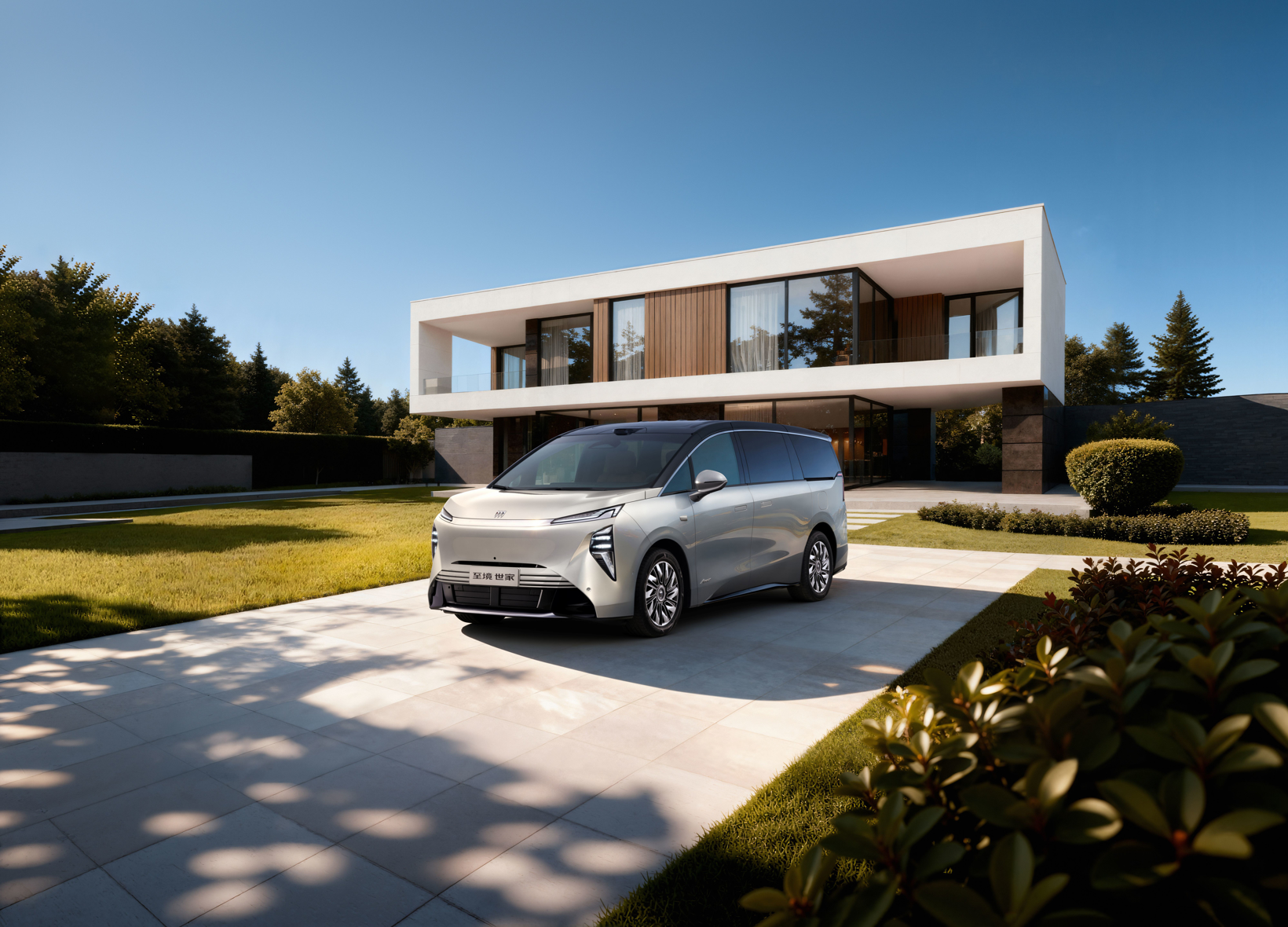
Image Source: General Motors
More importantly, financial reports reveal that GM’s NEV deliveries and penetration rate in China hit record highs in 2025, approaching 1 million units. For a company expecting a strong rebound in net profit by 2026, a market capable of continuously "transfusing blood" serves as an indispensable ballast during its transition.
Yet, it is undeniable that GM’s "China story" is internally diverging. On one side is SAIC-GM-Wuling, with annual NEV sales exceeding 1 million units and a penetration rate surpassing 61%. On the other is SAIC-GM, sitting at the center of the storm.
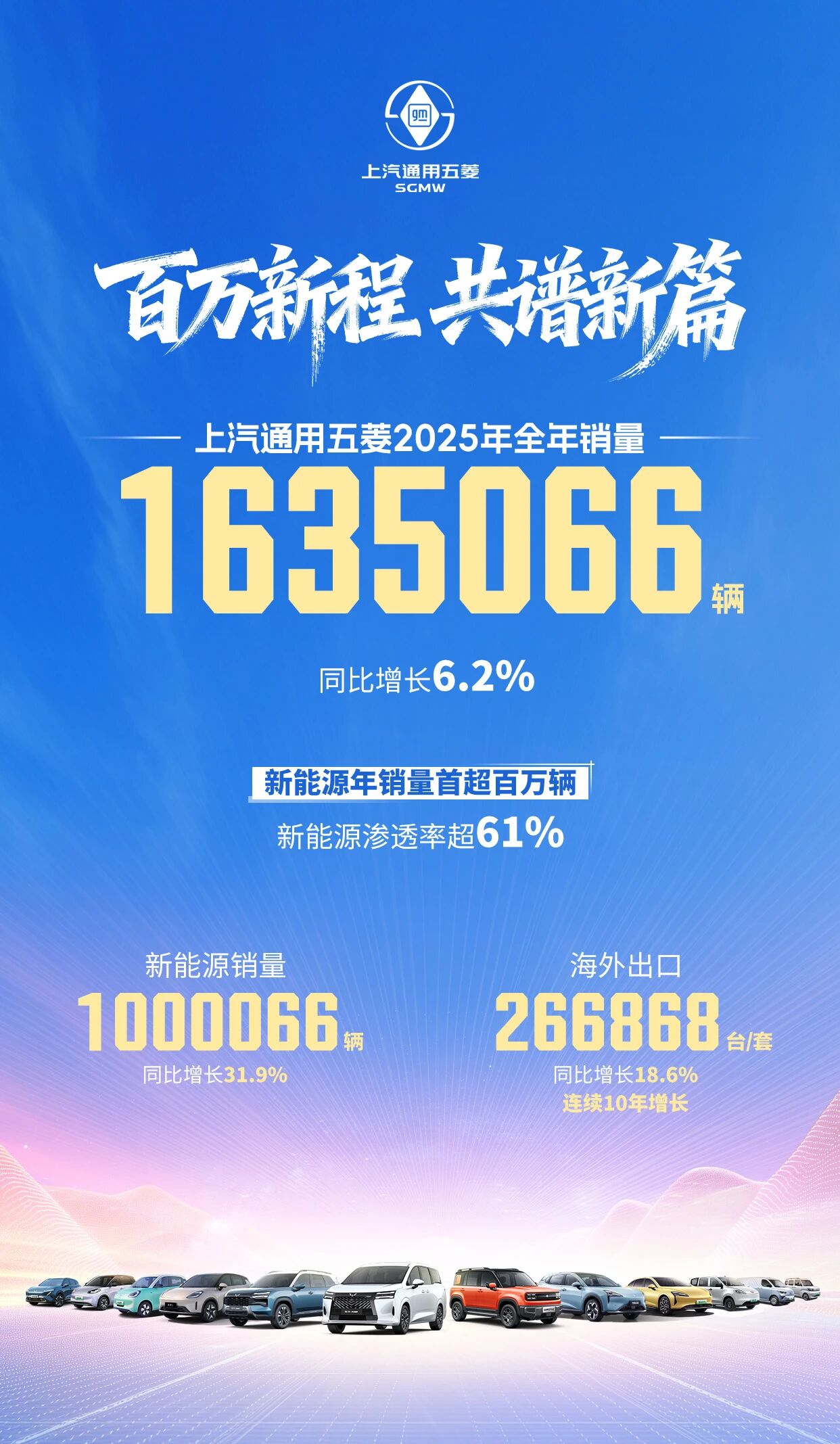
Image Source: SAIC-GM-Wuling
While SAIC-GM remains profitable, its pace of electrification is notably sluggish, with NEV penetration far trailing the industry average. Factory adjustments and capacity optimization are the growing pains that traditional joint ventures must endure amid such radical upheaval.
Zhuang Jingxiong, president of SAIC-GM, publicly stated at a media briefing in late 2025 that NEV sales must account for over 50% of the total by 2026—and that every model must be profitable.
As the core joint venture agreement between SAIC and GM enters a new renewal cycle, negotiations over technical leadership and profit distribution models are becoming increasingly visible. In a subtle twist, technical cooperation for Buick and Chevrolet has already been smoothly renewed.
Between the "pause" and the "renewal," the nature of the game has shifted. The question is no longer "whether to cooperate," but "who will take the lead in the future."
GM aims to leverage China’s supply chain and market scale to defray transition costs, while SAIC demands control over product definition, software, and supply chains—transforming the joint venture into a genuine innovation entity.
GM’s recent moves indicate a choice for deeper integration rather than exit: appointing executives familiar with China, increasing local R&D, and deepening ties with partners like CATL. It is all about holding its ground during this power restructuring.
GM appears to see a turning point at the start of 2026. The latest data shows SAIC-GM-Wuling’s sales continued their upward trend in January, while SAIC-GM’s own NEV sales surged more than threefold year-on-year.
GM’s resolve and maneuvering are not an isolated case, but a true microcosm of the situation facing all foreign automakers in China today. With its scale, industrial chain, and astonishing speed of innovation iteration, the Chinese market has shifted from an "option" to an "imperative." Abandoning it is akin to withdrawing early from the finals of the smart EV race.
“China Adaptation” for Foreign Automakers Extends Far Beyond “Selling Cars”
Looking back at the Chinese auto market from the vantage point of early 2026, a profound and irreversible transformation is underway.
In the past, foreign automakers could dominate the market with a unidirectional model of "technology export plus local production." That high-and-mighty posture has now been thoroughly dismantled.
A shift from "selling in China" to "empowering the world from China" is sweeping through the ranks of foreign automakers. Their "China adaptation" has long surpassed simple localization, entering a new phase of deep, all-encompassing integration across R&D, supply chains, and strategic decision-making.
The pursuit of change by giants like Renault, Volkswagen, Mercedes-Benz, and Toyota outlines distinct paths of integration.
Renault’s pivot is the most decisive—and perhaps the most instructive. Its exit from Chinese internal combustion engine passenger car manufacturing in 2020 was not a departure, but a strategic refocusing: positioning China as the efficiency engine and cost center for its global electrification and intelligence efforts.
Its goal is not to return to selling in China, but to leverage China’s R&D ecosystem and supply chain to build competitive products for the European market. In 2025, Renault China consolidated its offices and R&D in Shanghai, adopting an "asset-light, R&D-heavy" model.
The standout achievement is the Renault Twingo E-Tech. Priced at under 20,000 euros, it is the only electric option from a mainstream European automaker in that segment. It hit the market two years ahead of a comparable Volkswagen model and is priced on par with the European version of the BYD Seagull.
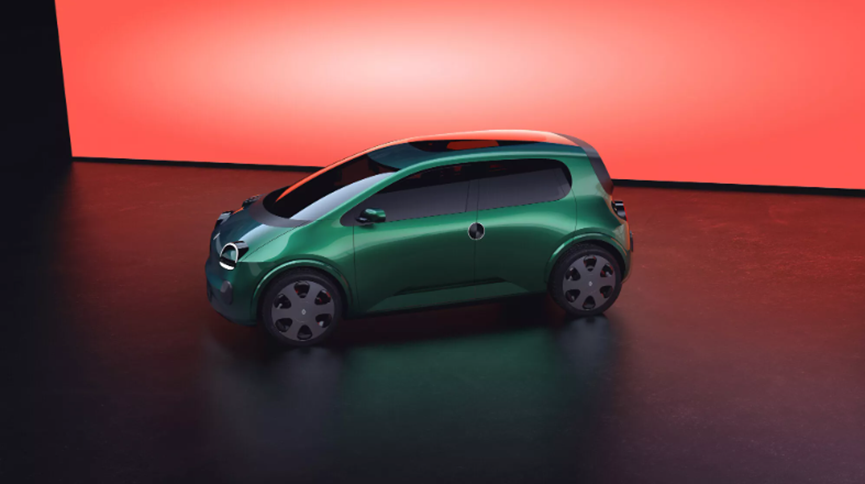
Twingo E-Tech, launched in Europe in January 2026; Image Source: Renault
Behind this vehicle lies the high-efficiency execution of the Shanghai R&D team, which moved from concept to mass production in just 21 months—drastically slashing the typical European cycle. By integrating 30 top-tier Chinese suppliers to optimize costs, the project has become a benchmark for "In China, for the World."
For Philippe Brunet, Renault’s CTO who oversees the ACDC China R&D team, China is a strategic high ground of immense competitiveness. He likens ACDC to a compass or the North Star, guiding the direction of technological iteration. "This is why, for me, it is crucial to always maintain close ties with the Chinese ecosystem," he says.
If Renault took the shortcut of "precise leveraging," then the Volkswagen Group’s recent layout in China can be described as an "all-in bet and systemic reconstruction."
"We are developing Hefei as the center of our ‘In China, for China’ strategy, serving as a key interface for our joint ventures and local partners to improve efficiency, accelerate development, and optimize cost structures," says Ralf Brandstaetter, CEO of Volkswagen Group China.
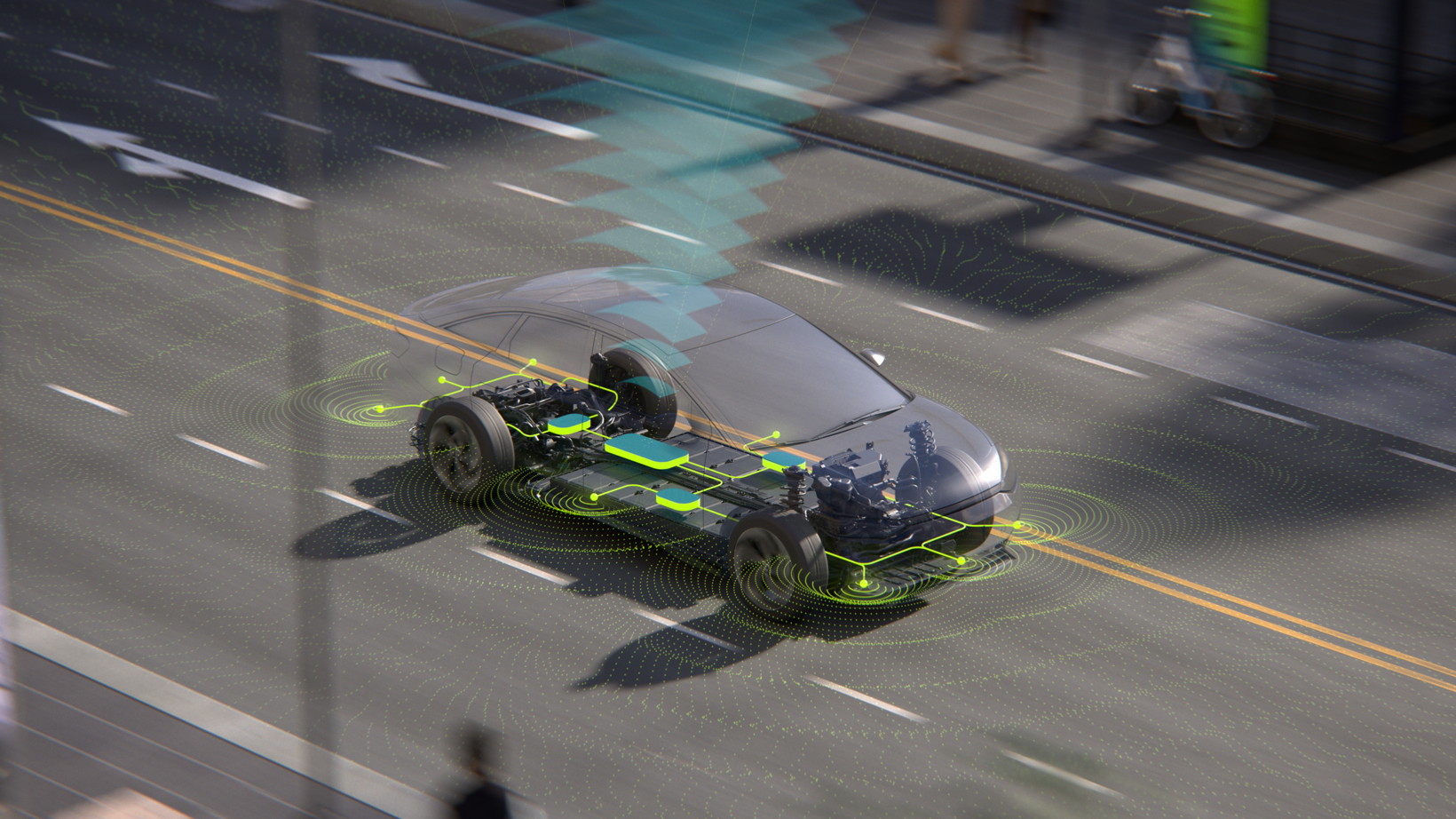
Source: Volkswagen Group
In just a few short years, the intelligent connected EV R&D, innovation, and procurement center Volkswagen built in Hefei has become its largest R&D base outside Germany. The center not only develops products for the Chinese market but is also gradually applying its R&D results to Volkswagen’s other global markets.
Even more noteworthy is Volkswagen’s investment in XPENG for the joint development of electronic and electrical architectures, its joint venture with Horizon Robotics focused on autonomous driving solutions, and its partnership with Gotion High-Tech to cut battery cell costs by 50%—moves aimed at rapidly bridging the gap in smart EV capabilities.
Today, its CEA (China Electronic Architecture) architecture, a regional control E/E architecture developed specifically for China, was officially delivered at the end of 2025. The first Volkswagen brand model featuring this architecture, the ID.与众07, went into production at the Volkswagen Anhui plant at the same time.
The shift in technical cooperation models is at the core of foreign automakers' strategic restructuring. Moving from the old one-way transfer of technology to today’s two-way or even multi-way learning, multinational automakers are redefining their roles within the Chinese automotive ecosystem.
Toyota has broken its long-standing tradition of Japanese leadership by appointing executives familiar with the Chinese market to drive decision-making reforms and accelerate its independent EV layout. Through its "ONE R&D" system, it has integrated Chinese R&D institutions and introduced a China Chief Engineer system, allowing local teams to lead model development. This leverages China’s advantages to feed back into its global EV transition, with joint venture NEV models shedding their "follower" approach to R&D.
Meanwhile, Lexus, after shelving localization for over a decade, finally announced it would land in Shanghai in 2025. The essence of this move is an "institutional alignment" of Toyota’s global manufacturing system with Chinese supply chain standards.
From Renault’s deep R&D cultivation to Volkswagen’s all-in bet, and Toyota’s localization breakthrough, the "China adaptation" of foreign automakers has entered a new stage of deep, all-encompassing integration across R&D, production, and supply chains. To win globally, one must first integrate into China.
The Irreplaceability of China’s Ecosystem Means Foreign Automakers “Can’t Leave”
The news on February 11 was not limited to GM’s statement. Ford also released its 2025 financial report, revealing global sales of approximately 3.5 million vehicles—lagging behind BYD’s 3.7 million units over the same period. The figures quickly ignited heated discussion across the industry. Many suddenly realized that the rules of the game had truly changed.
Since February, a flurry of reports on Ford has emerged, all centered on one theme: seeking partnerships with Chinese automakers.
On February 1, the Financial Times reported, citing four people familiar with the matter, that Ford had held talks with Xiaomi regarding cooperation. The core discussion explored the possibility of establishing a joint venture in the United States to manufacture electric vehicles together—a move that could pave the way for Chinese automakers to enter the U.S. market.
Shortly after Xiaomi and Ford both denied the report, industry rumors surfaced again that Ford was exploring cooperation potential with Geely, including autonomous driving technology. Another wave of news revealed that Geely might utilize Ford’s production capacity in Europe to manufacture vehicles in the region.
Although none of these rumored partnerships have been officially confirmed by either party, Ford’s intense pursuit of collaboration with Chinese automakers reveals a clear industry trend: amid a transformation unseen in a century in the global auto industry, the future of foreign automakers has become profoundly intertwined with China.
In the past, foreign automakers brought technology and products to China; today, they must obtain the keys to their transformation from here.
This dependency is, first and foremost, determined by market position. China is not only the world’s largest auto market but also the core battlefield for electrification and intelligence. Here, the penetration rate of new energy vehicles has exceeded 50%, and the intensity of competition and speed of iteration are unrivaled globally.
No automaker with global ambitions can afford the cost of failure here. Ford CEO Jim Farley has candidly admitted that the rapid development of China’s EV industry left him feeling "humbled."
An even deeper layer of binding lies in the reliance on the world’s most complete and vibrant smart EV supply chain.
China has built a full-chain ecosystem covering batteries, motors, electronic controls, and complete vehicles. The localization rate for battery materials exceeds 90%, and electrolytes are 100% domestically produced. The cost, efficiency, and resilience advantages of this system are irreplicable globally.
China’s supply chain advantage has evolved from a "cost advantage" into "technological symbiosis" and the "lifeline of efficiency." From power batteries to smart cockpit chips, and from lidar to software algorithms, Chinese companies not only provide efficient, low-cost solutions but have also become the leaders in defining technology across many fields.
Take AWM, a top-tier foreign supplier, which established a China Management Committee on January 1st. It decentralized decision-making to allow its Chinese team to respond quickly to the market without layer-by-layer approval from headquarters. "We must innovate where innovation happens," says Tang En, CEO of AWM China.
This deep integration makes "leaving China" extremely difficult, both commercially and physically.
Even more critically, Chinese automakers have evolved from local competitors into global challengers.
In 2025, total exports of Chinese passenger vehicles reached 6.04 million units (including KD exports for overseas assembly, excluding localized overseas production), a year-on-year increase of 21.85%. They not only dominate markets like Southeast Asia but have also achieved a leap from "market entry" to "brand rooting" in regions like Europe.
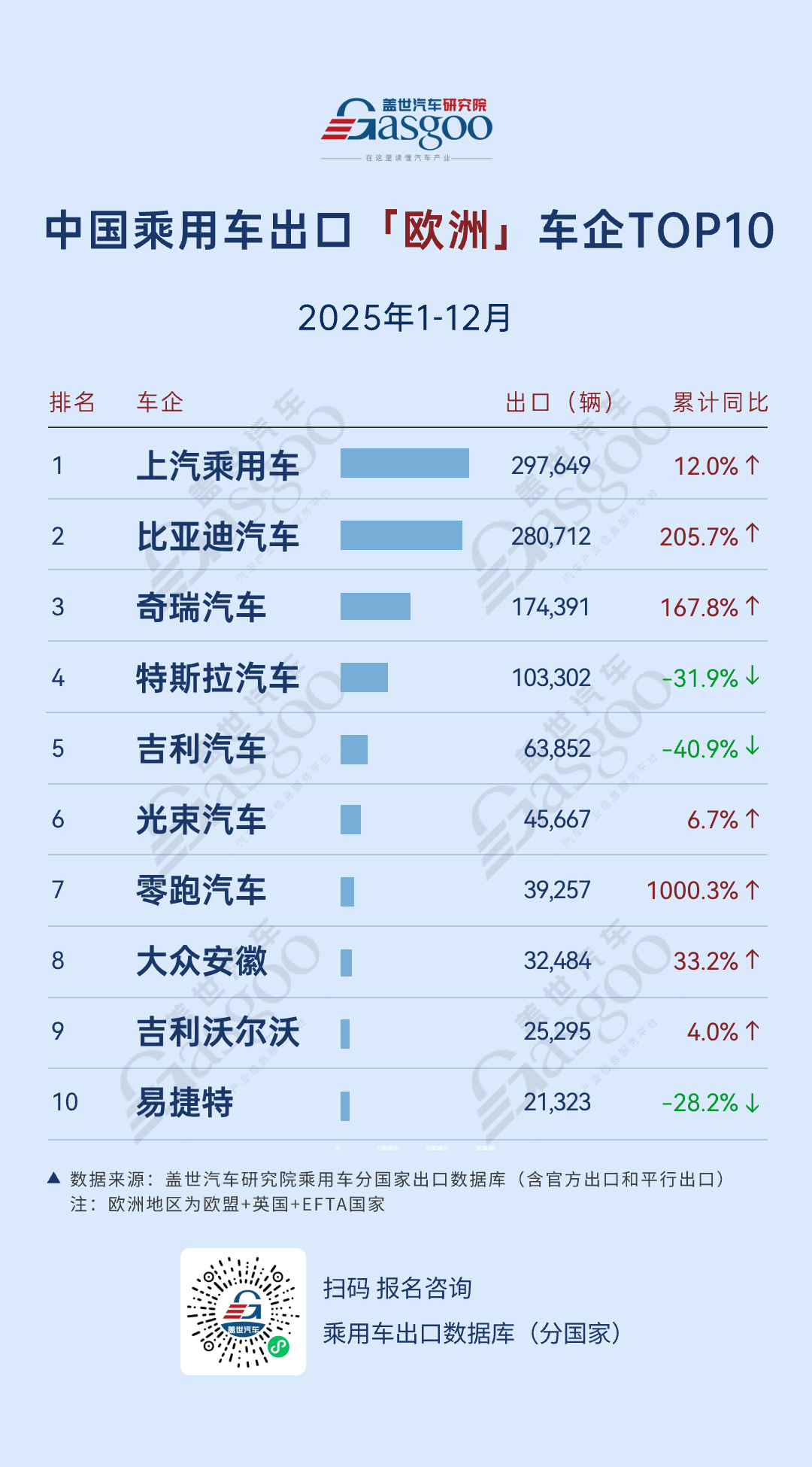
In the European market, for instance, Chery sold 171,000 vehicles in the EU and UK from January to October 2025, a surge of 2.4 times. BYD sold approximately 187,000 units for the full year, a spike of 276%. Both have successfully made the leap from "entering the market" to "taking root as a brand."
SAIC, Geely, and others are also leveraging their strengths to deploy differentiated global strategies. Roland Berger analysis notes that BYD’s self-operated model and Leapmotor’s partnership model with Stellantis each have their own logic, though BYD currently holds an advantage in brand awareness.
When former "students" take the global stage to compete head-to-head with their "teachers," foreign automakers need to be rooted in China—this vast innovation testing ground and frontier of competition—more than ever to understand trends and sharpen their competitive edge.
Conclusion:
For the world’s mainstream foreign automakers, "being unable to leave China" is no longer a strategic choice but a mandatory question concerning survival and development. This is not about emotion; it is a cold, hard reality based on the market, innovation, supply chains, and the global competitive landscape.
The massive market here is the cornerstone of profits; the fierce competition here is the crucible of innovation; the complete supply chain here is the lifeline of transformation; and the rising rivals here are the mirror spurring internal change.
In the future, successful foreign automakers will inevitably be those who best understand China, most deeply integrate into its ecosystem, and can convert "China advantages" into global competitiveness. This profound integration is reshaping the future of every brand.


