



Gasgoo Munich- On April 11, at the Intelligent Electric Vehicle Development Forum 2026, Lian Yubo, chief scientist and chief engineer at BYD, stated that the market penetration of new energy vehicles (NEVs) is set to historically surpass 50% in 2025, marking a deepening of the century-long transformation in the global auto industry. The current market is characterized by fierce competition and slowing growth, with consumers making more rational decisions—shifting from simply owning a car to prioritizing technology, safety, and experience.
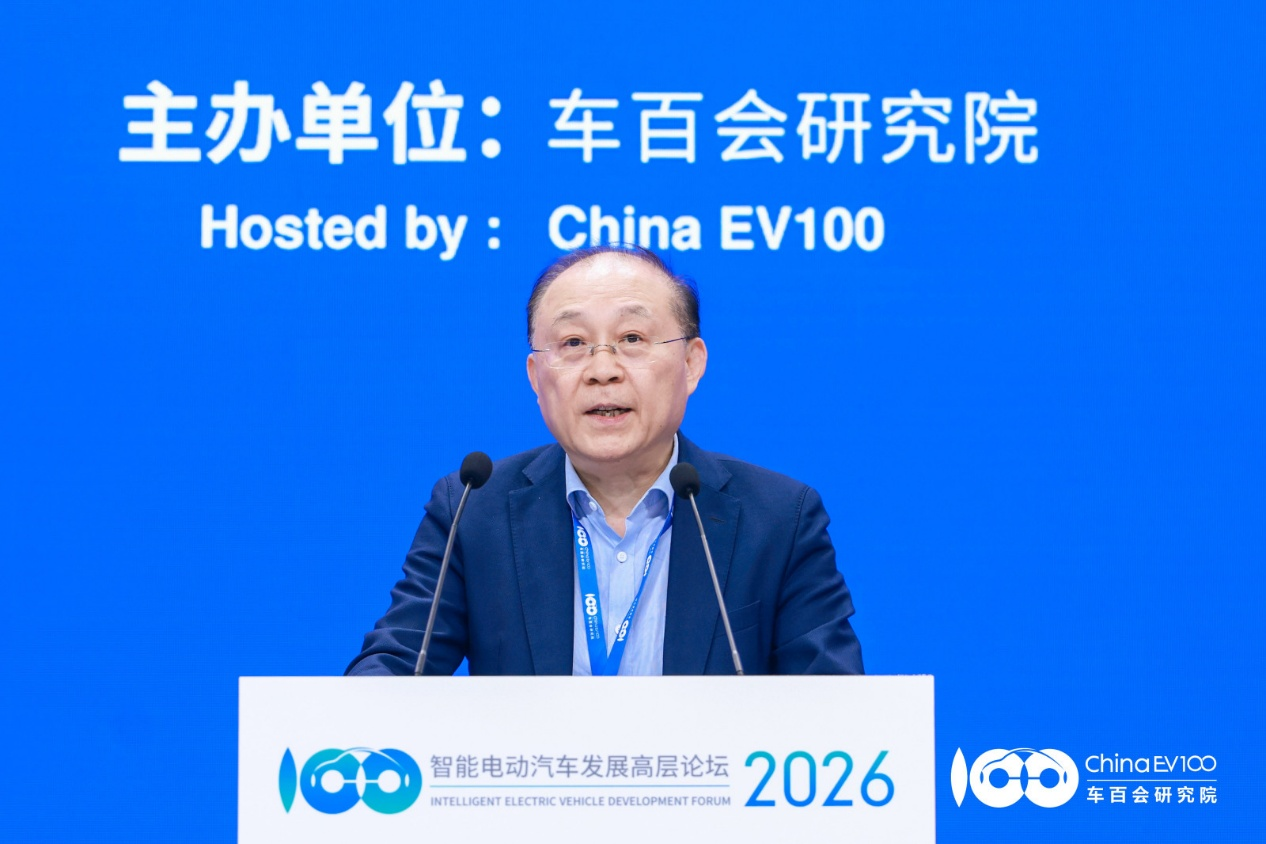
Image source: China EV100 Research Institute
Lian pointed out that the automotive industry has evolved from traditional linear supply chains into a new stage of "networked symbiosis." The relationship between automakers and components is being reconstructed, with value flowing bi-directionally across R&D, manufacturing, and service nodes. On the technology front, NEVs are moving from disruptive breakthroughs to refined polishing, requiring a shift from spec-sheet stacking to perceivable, trustworthy experience upgrades.
BYD remains steadfast in its commitment to technological innovation. In electrification, the company last month unveiled its second-generation Blade Battery and FLASH charge technology, comprehensively addressing pain points like slow charging and difficulties in low temperatures to make charging as fast as refueling. In the realm of intelligence, BYD champions holistic vehicle intelligence, bridging electrification and smart features. With safe driving as the goal, it is developing smart chassis components and fusion control functions to achieve the integration of intelligence and electrification.
Looking ahead, Lian believes there is uncertainty regarding technological tipping points and industry boundaries. Next-generation power batteries and smart chassis will push vehicles to break free from traditional rigid mechanical couplings, placing greater emphasis on user experience. Meanwhile, the automobile is evolving from a transport tool into a "multi-attribute intelligent agent." Vehicle-to-grid interaction will enrich its energy attributes, while AI integration may trigger a paradigm shift in human-machine interaction. BYD will adhere to long-term commitment, continuously refining its technology and product matrix.


