



Shangghai (Gasgoo)- GAC Group is pushing deeper into next-generation battery technology as Chairman Feng Xingya confirmed during the Auto Guangzhou 2025 that the company has completed and begun trial production at its all-solid-state battery pilot facility.
While solid-state batteries promise higher capacity and enhanced safety compared with liquid-electrolyte lithium-ion cells, their steep costs and technical complexity have slowed commercialization. Even so, automakers and battery makers worldwide—including GAC—continue to invest heavily in the technology.
Mr. Feng said on November 21 that the new pilot line gives GAC the capability to produce automotive-grade solid-state cells with capacities above 60 Ah, marking an important step toward installing small-batch solid-state packs in vehicles for real-world validation.
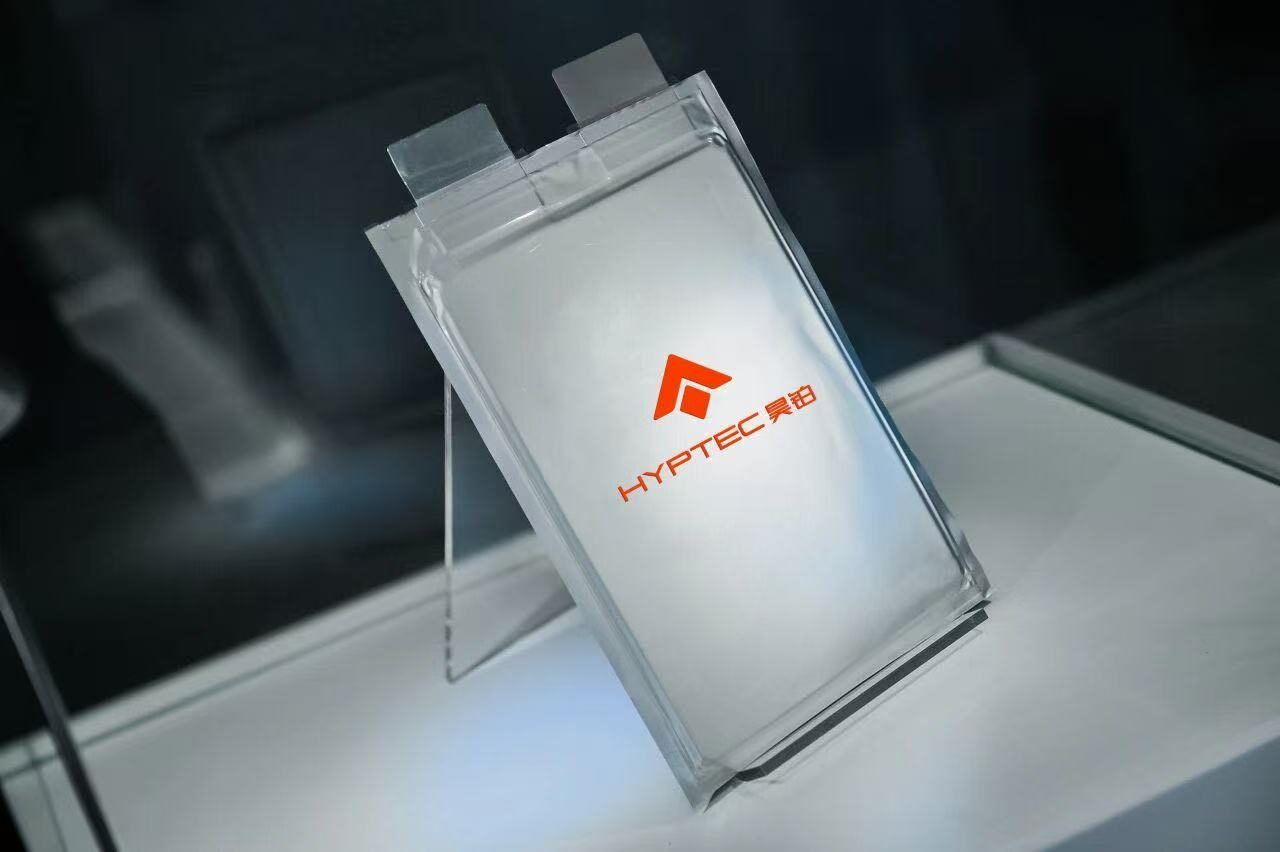
Photo credit: HYPTEC
GAC began exploring solid-state technology as early as 2016, initially focusing on polymer-based systems. Limitations in ionic conductivity, high-voltage tolerance and achievable energy density soon prompted a shift toward oxide-based electrolytes. The company has since narrowed its efforts to sulfide-electrolyte systems, which offer higher conductivity and support energy densities exceeding 400 Wh/kg.
Today, GAC is advancing two technical paths in parallel: one centered on sulfide-based composite electrolytes and another built around polymer-dominant composite materials.
The company achieved a full-process manufacturing breakthrough last year, enabling automotive-grade solid-state cells with high capacity, high safety and ultra-high energy density. GAC expects to begin equipping HYPTEC-branded models with these batteries in 2026.
According to GAC, its solid-state batteries combine high-loading solid-state cathodes with third-generation "sponge silicon" anodes based on advanced nano-silicon composites. The cathodes achieve surface capacities above 5 mAh/cm², enabling pack-level energy densities that surpass 400 Wh/kg.
The technology offers more than a 50% improvement in both volumetric and gravimetric energy density over today's leading liquid-electrolyte lithium-ion cells, potentially pushing vehicle range beyond 1,000 kilometers on a single charge.


