This is not a growth in quantity, but a reconfiguration of the system.
Over the past decade, something more significant than "number one in sales" or "number one in exports" has occurred in China's automotive industry:
It has completed a system leap in the era of electrification and intelligence, gaining the ability to reshape the global industrial structure for the first time.
This leap is not simply about "bigger scale, faster iteration, or lower costs," but about using industrial practice to answer three more fundamental questions:
• Redefining what a car is;
• Reorganizing how cars are made;
• Reconstructing the value structure of the supply chain.
1. Cognitive Restructuring: Who Was the First to Treat the Car as an "Intelligent Terminal"?
While most countries around the world still view cars as mechanical products, China was the first to complete a cognitive upgrade: the car is no longer just hardware, but a combination of "computing power + operating system + data platform."
In Europe and the US, intelligence is often understood as an "optional configuration": an advanced driver assistance package, a large screen, or a sound system.
But in China, leading automakers began viewing cars between 2017 and 2020 as: a continuously evolving computing platform, a wheeled mobile smart terminal, and a real-time user data feedback system.
This shift in understanding is crucial—because it determines how R&D resources are allocated, how organizations collaborate, and how the supply chain is restructured. The result is that China was the first to form a complete intelligent base: central computing platforms (Huawei MDC, XPeng's central domain controller, Li Auto's centralized architecture), SOA software architecture, high-frequency OTA updates (annual → quarterly → monthly), city NOA data feedback loops, and edge-cloud collaborative training systems. These are not just "functional differences," but a complete reset of product philosophy.
It is this cognitive shift that allowed Chinese automakers to take a new path, gain momentum, and lead the rhythm of the industry in the era of intelligence.
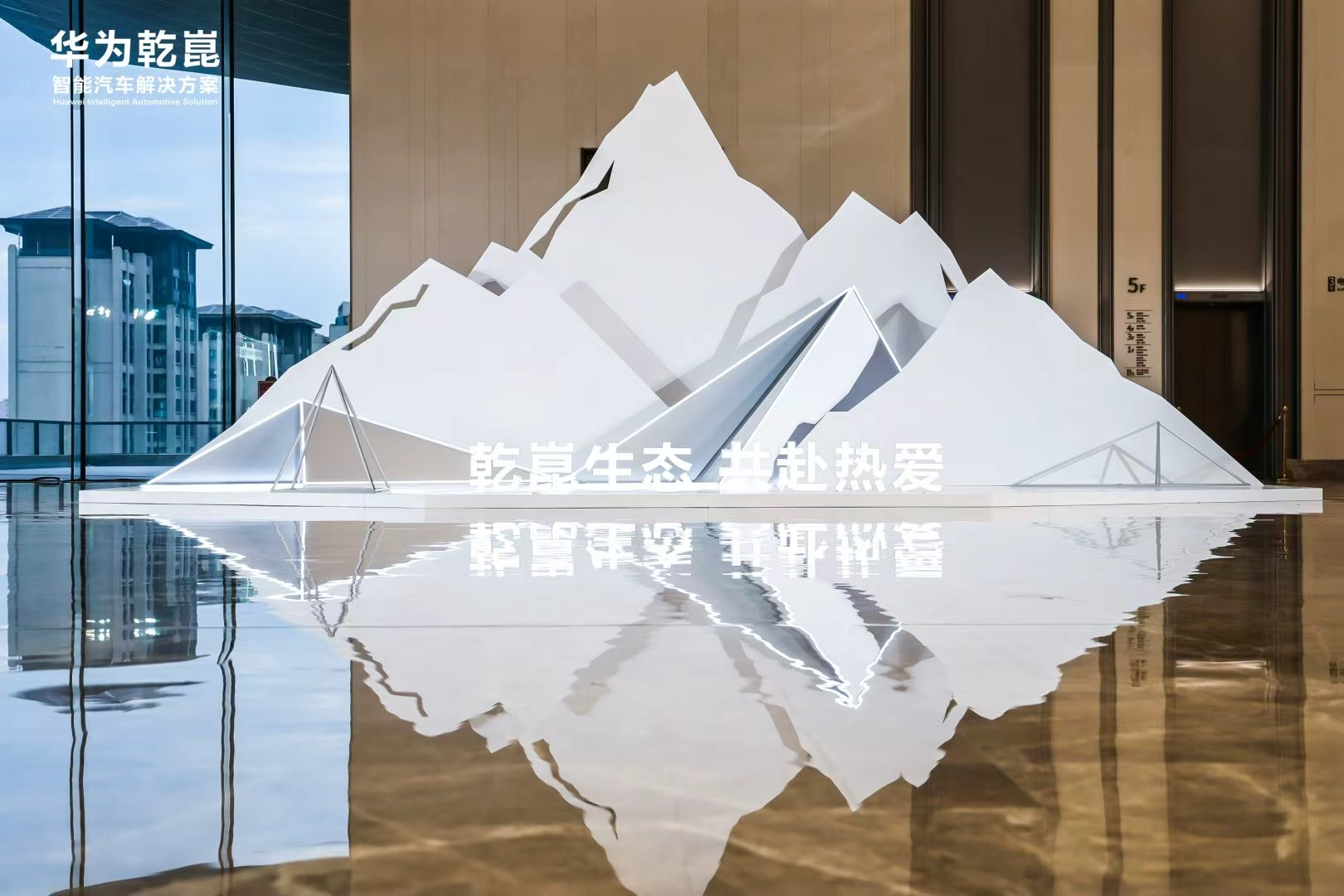
Photo source: Huawei Qiankun
2. Organizational Revolution: Why Can China Achieve "Internet-Speed" Development?
Why is the iteration speed of Chinese smart vehicles so fast? It's not just about "overtime culture"; changes in organizational mindset and structure are also crucial. In traditional automakers, it takes 4-5 years for a car to go from concept to market. In today's China, this cycle is typically 18 months, or even shorter. The core reasons are threefold:
① From "Project-Based" to "Platform-Based"
In Europe and the US, it's "one car, one project team."
In China, it's "one platform supporting dozens of cars." Platformization turns upgrades into "bulk upgrades." A new version of intelligent driving can be deployed via OTA to dozens of models on the same day. This is a completely different industrial logic and represents the highest iteration efficiency of a "platform-based automotive industry."
② From "Supplier-Driven" to "OEM-Led"
In the era of internal combustion engines, companies like Bosch, Continental, Aisin, and Denso controlled core technologies and industry rhythms, with automakers following.
In the era of smart electric vehicles, the rhythm is set by BYD, Geeley, XPeng, and Li Auto etc. Automakers themselves control key elements such as the computing platform, algorithms, architecture, data, and models. This makes Chinese automakers the first to become the "rhythm setters."
③ From "Waterfall Development" to "Agile Development"
In the past, car development was like building a skyscraper: one wrong step, and everything would be torn down.
Now, car development is more like app development: iterating weekly, upgrading monthly, with user participation online. This agile development model has accelerated the pace of intelligent vehicle implementation by more than twice.
The rhythm of Chinese automakers essentially resembles that of tech companies, rather than traditional industrial companies. This organizational capability is precisely what makes it most difficult for Western companies to replicate.
3. The Leap from "Cost Advantage" to "Architecture Advantage" in the Supply Chain
For a long time, China was at the bottom of the automotive value chain—producing non-core components like tires, glass, and seats.
But the era of smart electric vehicles has truly changed the game. The center of the value chain has shifted from "engine—transmission—chassis" to "battery—chips—algorithms—software—thermal management—electrical architecture." In these areas, China has competitive strength and even leads globally. The Chinese supply chain is no longer just "cost-effective"; it has, for the first time, formed a unique global architecture advantage.
① Batteries: 60% of the World's Supply is in China, and China Has Finally Mastered the "Heart"
CATL + BYD = The global duopoly of power batteries.
This is the first time China has taken control of the most critical component in the automotive industry.
② Intelligent Driving Chips: China is Moving from "Adequate" to "Scalable"
Horizon Robotics has shipped over 7 million units; Black Sesame's A1000 and A2000 are now being installed in vehicles; Huawei MDC has formed its own system; Momenta has received investments from Toyota and Volkswagen, and is starting to enter local European projects. This means that China now has scalable, independent capabilities in the brain system of smart vehicles.
③ Complete Supply Chain: China Has the World's Only "4-Hour Industrial Loop"
Centered around Shanghai, the Yangtze River Delta region is the world's most efficient new energy vehicle cluster: components can be delivered the same day; R&D, prototyping, validation, and production ramp-up can be completed in a week; about 80% of a car's supply chain components can be sourced within 300 kilometers. In this area, design, prototype, validation, and mass production can be completed in a matter of days.
China's cluster system improves overall enterprise collaboration efficiency by 30% and reduces supply chain costs by 20-25%. This cannot be replicated in Europe and the US, as their industrial distributions are too fragmented, and collaboration costs are too high. Even within their own countries, logistics time is 3-10 times longer than in China. This is not an issue of cost, but a structural problem.
4. The Leap in Globalization: From "Exporting Cars" to "Exporting the Entire Industry Chain"
In the past, Chinese companies' "going global" meant selling cars and exporting components.
Now, "going global" means: cars + batteries + supply chains + R&D + factories + service systems—all intertwined and expanding together. You will see scenes like:
• Hungary: CATL 100GWh battery + BYD vehicles
• Thailand: BYD's 150,000-unit factory + local supply chain
• Indonesia: Integration from nickel mining—materials—batteries—vehicles
• Mexico: With the influx of Chinese companies, it has rapidly become a key hub in the North American automotive supply chain.
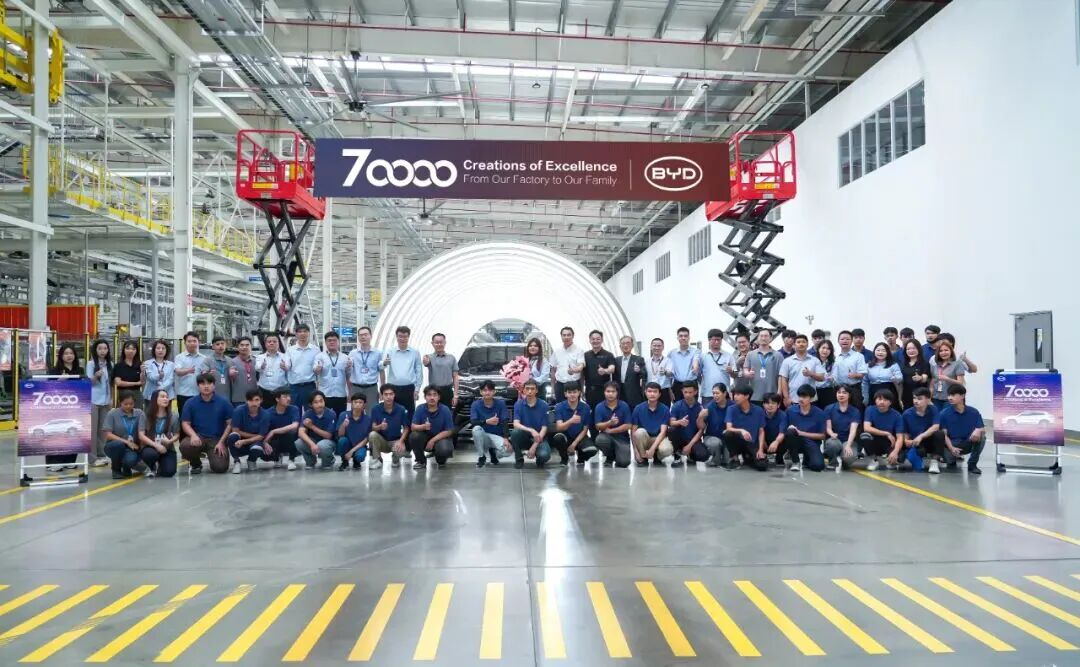
Photo source: BYD
When the entire industry chain can be exported, it is no longer just a participant; it becomes the organizer, driver, and leader of industry resources, delivering the entire ecosystem.
5. The True Leap: From "Followers" to "Industry Organizers"
After a decade of accumulation, China's automotive industry is no longer simply about "selling more electric vehicles." It has undergone a qualitative transformation across three dimensions:
① From "Product Competition" to "System Competition"
Europe and the US can make good cars, but they struggle to produce "systematic intelligent vehicles." In contrast, China's car manufacturing system has surpassed them in speed, collaboration, and organizational capability.
② From "Joining the Global Supply Chain" to "Building the Global Supply Chain"
For the first time, Chinese companies have become the "chain leaders," influencing the global industrial chain structure.
③ From "Global Participant" to "Shaper of Global Industry Structure"
The rhythm, pricing, iteration speed, and supply chain architecture of the electrification era are largely determined by China. Over the next decade, China will not only be the largest market and exporter globally, but it is also bound to become the new "operating system" of the global automotive industry.
6. Systemic Leap: The True Competitiveness of China's Automotive Industry
To sum it up in one sentence: The rise of China's automotive industry is not about "local leadership," but about "systemic leadership." Specifically, this is reflected in:
• Cognitive Leadership → Viewing cars as intelligent terminals
• Organizational Leadership → Building cars in the way tech companies do
• Supply Chain Leadership → Possessing the world's only intelligent electric vehicle supply chain
• Speed Leadership → Natural accelerators from market scale + data feedback loops
When these four elements come together, they form the true competitiveness of China's automotive industry: systemic, unreplicable, and strengthening over time.
This is the deeper logic behind the leap of China's automotive industry.
This is Tina's Talk. In the next episode, we'll discuss—EP5: What Supports the Underlying Power of China's Automotive Industry? The industrial system, the engineer dividend, and China's unique cultural DNA.