



Gasgoo Munich- 2026 marks the beginning of Leapmotor's second decade. Over the past ten years, the company has evolved from an industry outsider into a front-runner among EV startups, with cumulative deliveries surpassing 1.2 million units.
Entering this new era, Leapmotor has set its sights on becoming a global automaker with 4 million annual sales, designating 2026 as the year it breaks the million-unit mark. Moving the brand upmarket is central to achieving that vision.
On April 16, the D19 hit the market. Internally described as a "flagship forged over a decade," this SUV is the opening shot in Leapmotor's campaign to break into the premium segment.
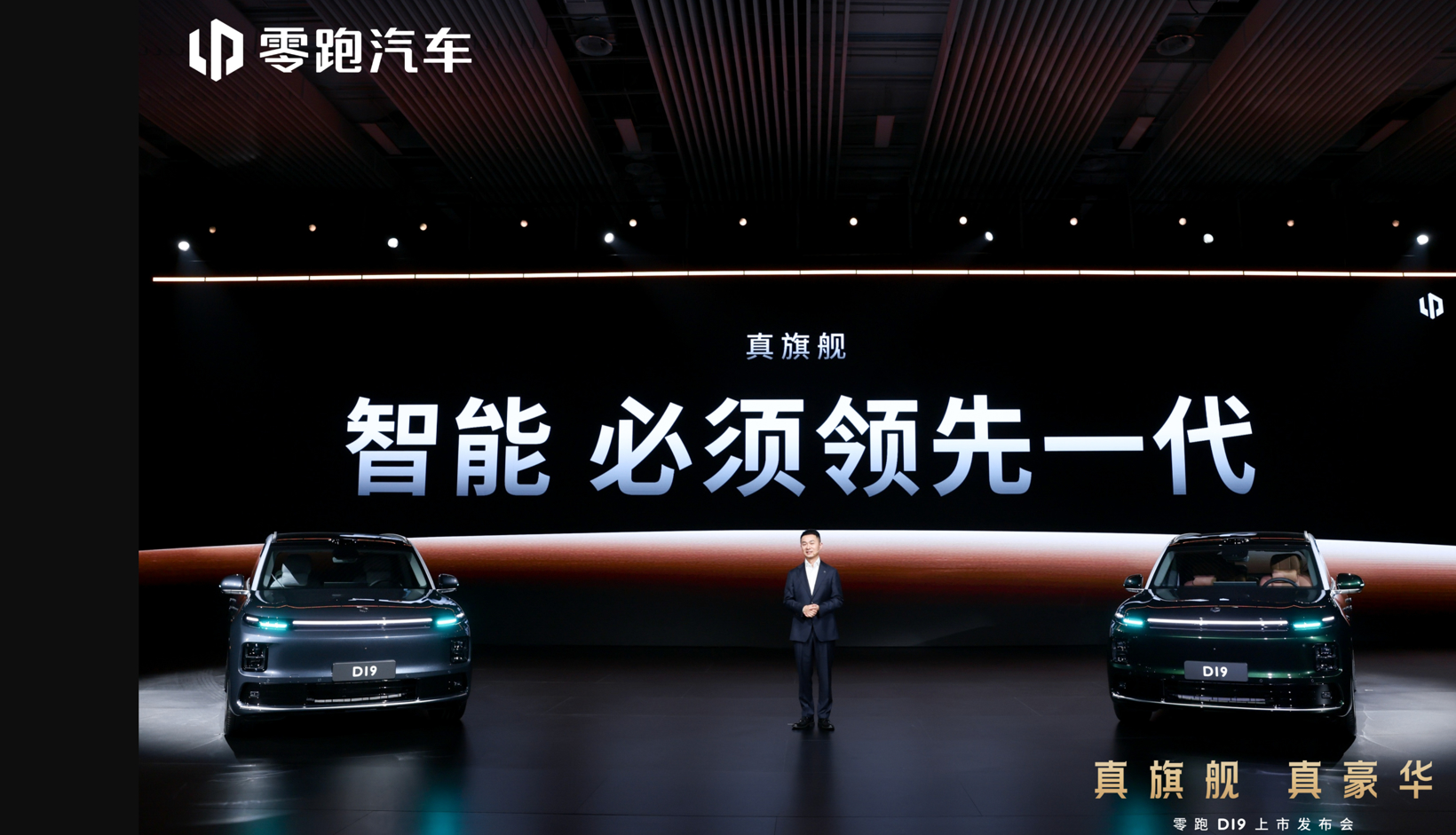
Image Source: Leapmotor
D19: A Price Strike Downmarket
When Leapmotor finally revealed the D19's pricing—starting at 219,800 yuan for the extended-range version, 239,800 yuan for the pure electric, and 269,800 yuan for the top-tier tri-motor performance model—one auto blogger reacted by calling it "insane pricing." That reaction stems from the stark contrast between the car's specifications and its price tag.
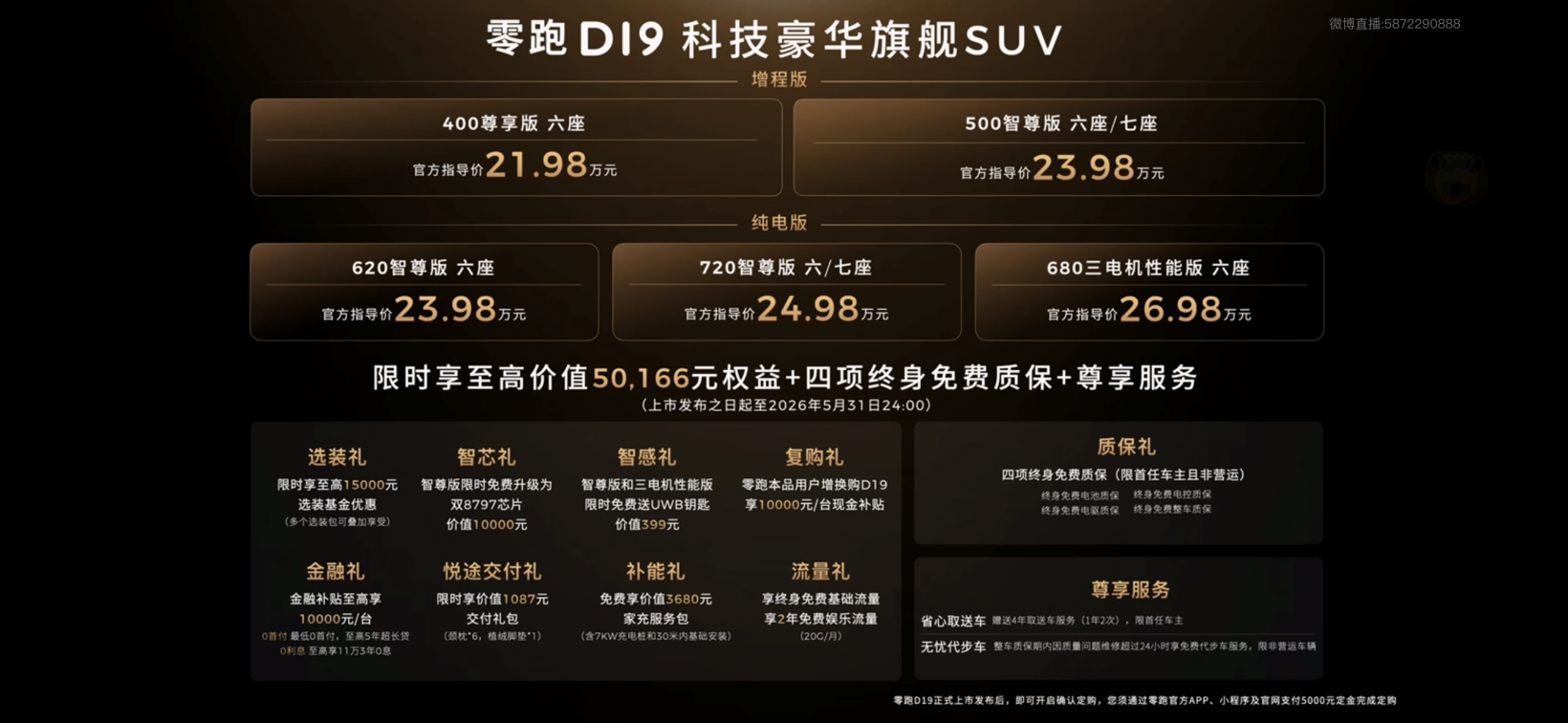
Image Source: Leapmotor
On the intelligent hardware front, the D19 features the global debut of dual Qualcomm Snapdragon 8797 chips, delivering 1,280 TOPS of AI computing power. Regarding memory, while chip prices have surged this year and many automakers are making cuts, Cao Li, Leapmotor's senior vice president, stated bluntly at the launch: "The industry standard is 16GB; we're going straight to 48GB and 64GB." That extra computing power and memory leaves headroom for OTA upgrades over the next three to five years.
For driver assistance, the D19 comes standard with lidar across the lineup. Based on a VLA large model, it offers 44 functions, including door-to-door navigation, roundabout traversal, narrow-road U-turns, and 120-meter trace reversing. From the A10—where the lidar version accounts for over 53% of orders—to the D19, Leapmotor is clearly shifting high-end intelligent driving from a paid option to a standard feature.
Zhu Jiangming, Leapmotor's founder, chairman, and CEO, added that all eight models currently on sale will be equipped with city navigation assist functions.
Range is another hard metric. The extended-range version packs an 80.3 kWh battery, delivering a CLTC pure electric range of 500 kilometers. Competitors in the same class typically offer between 200 and 300 kilometers. This advantage comes from Leapmotor's design, which routes the exhaust pipe through the side of the battery pack, combined with CTC (Cell-to-Chassis) technology to maximize battery placement area.
The pure electric version uses a CATL 115 kWh battery, achieving a maximum CLTC range of 720 kilometers and supporting 1,000V high-speed fast charging. It is worth noting, however, that Leapmotor's own ultra-fast charging network is still in its infancy, so actual charging speeds are often limited by third-party stations.
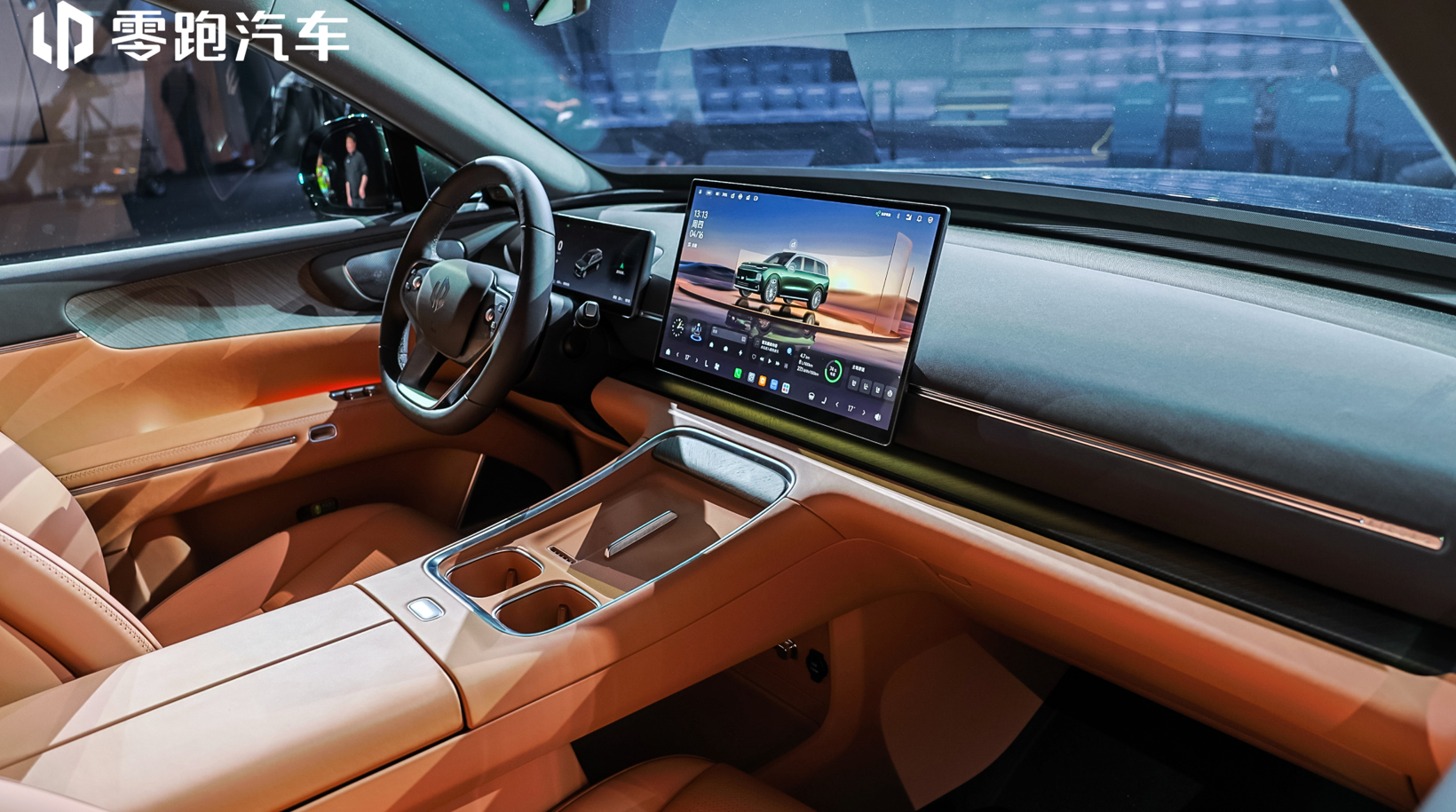
Image Source: Leapmotor
Inside, the D19 offers six- or seven-seat layouts with 88% space utilization. The seats use semi-aniline full-grain leather, a material typically found in million-yuan vehicles. The chassis comes standard with front double-wishbone and rear five-link independent suspension; higher trims feature dual-chamber air suspension and CDC continuous variable damping shock absorbers. Body torsional stiffness reaches 50,500 N·m/deg, and the car is equipped with nine airbags.
The D19 also includes an automotive-grade "forest oxygen cabin" with a maximum oxygen production capacity of 8 liters per minute, supporting both diffusion and nasal inhalation modes. This feature hasn't appeared in class competitors. While it may see limited use by city dwellers, it creates a unique point of differentiation.
Regarding pricing and market positioning, customers ordering the "Smart Premium" trims before May 31 receive a free upgrade to the dual 8797 chips. Combined with trade-in subsidies and other benefits, the limited-time perks total over 50,000 yuan in value.
Zhu Jiangming reiterated at the event that the D19 is "the top of the top tier," calling it "a car with no weak points." The model continues Leapmotor's playbook: "price down, specs up." By offering configurations that rival high-end versions at prices 20,000 to 100,000 yuan lower than competitors, Leapmotor creates dislocation competition—boosting brand influence while rapidly driving sales volume.
Of course, in the market above 250,000 yuan, price is just one hook. Soft factors like brand recognition, channel service, and resale value carry significant weight.
How Does It Deliver "High Value"?
As mentioned, judging by the D19's pricing and specs, Leapmotor hasn't abandoned its "high value" path as it enters the 250,000-yuan segment. Yet Zhu Jiangming emphasized to media outlets like Gasgoo that Leapmotor won't build cars at a loss; it will maintain reasonable gross margins. The D19's price, he said, is "the result of efforts on every front—a crystallization of cost control."
The D19's "value" is built largely on systemic capabilities—specifically, the vertically integrated supply chain the company has long emphasized.
Leapmotor adheres to a "cost-based pricing" principle, setting prices based on actual costs rather than brand premium. The company discloses that self-developed and self-manufactured core components account for 65% of total vehicle cost, covering the electric system, smart cockpit, and driver assistance.
Analysts at Gasgoo Automotive Research Institute believe Leapmotor rose quickly in the market precisely by leveraging a "high-spec, low-price" strategy and advantages in extreme cost control.
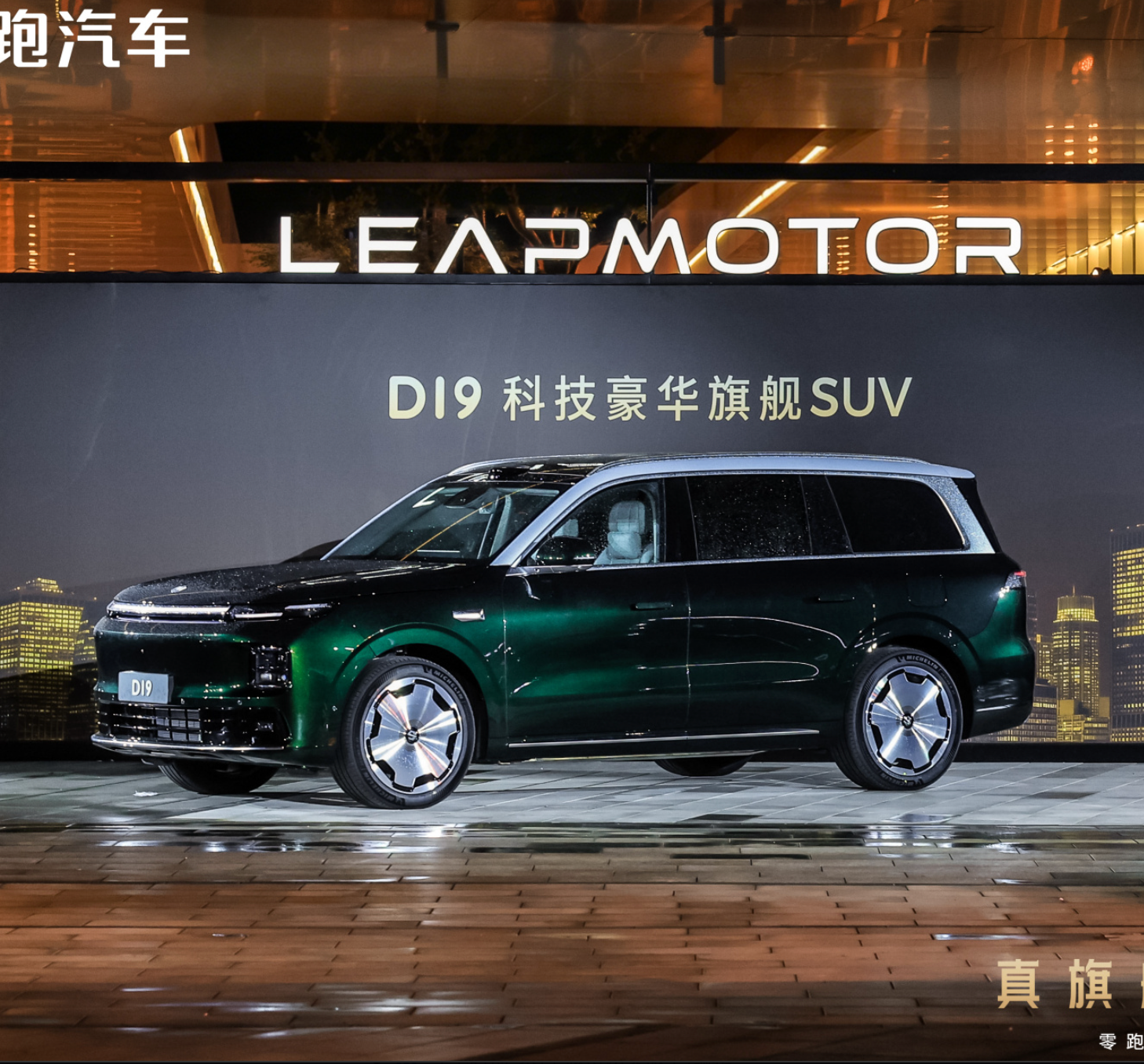
Image Source: Leapmotor
Zhu Jiangming explained several dimensions of cost control: engineering automation, production process optimization, in-house R&D and manufacturing, and standardization. He even mentioned that NIO founder William Li "envies Leapmotor's standardization," and he expressed support for industry-wide standardization.
This capability allows Leapmotor to control costs through architectural consistency and flexible production line switching, even when parts reuse rates between the D platform and other platforms are low.
Take the electric drive system: Leapmotor has iterated to a highly integrated e-drive, reducing component count and assembly hours. CTC battery-chassis integration eliminates the traditional battery pack's upper cover, improving space utilization and cutting material costs. These technical accumulations are concentrated in the D19—the extended-range version fits a massive 80.3 kWh battery into limited space precisely thanks to the structural optimization of CTC technology.
Vertical integration isn't just about "making it yourself," but also "how you use it." The D19 heavily relies on top-tier suppliers for key hardware. For the chassis, it uses Konghui dual-chamber air springs; by deeply involving itself in development and matching, Leapmotor secures better procurement prices while achieving deep decoupling of hardware and software.
The D19 also uses integrated front and rear aluminum die-cast floors produced by 9,200-ton large die-casting machines, drastically reducing the number of components and assembly steps to effectively dilute per-vehicle costs.
Zhu Jiangming has stated that Leapmotor has mastered all core technologies required for new energy vehicles and built a competitive autonomous parts system. This means Leapmotor isn't merely a system integrator; through full-domain self-research, it deeply integrates algorithms with hardware, raising the product's ceiling while securing a more controllable cost structure.
In recent years, Leapmotor has extended its reach into the supply chain, establishing 17 major component factories covering cells, battery systems, electric drives, electronic controls, headlights, AR-HUDs, air conditioning compressors, and seats. This "vehicle manufacturer + Tier 1" dual-drive model is rare among Chinese automakers.
The latest move: Leapmotor recently established Zhejiang Linghao Thermal Control to take charge of thermal management systems in-house. With self-developed thermal management, Leapmotor can design it as one with its battery packs and electric drive systems.
In batteries, Leapmotor pursues a dual strategy of "self-research + joint venture." Its wholly-owned subsidiary, Zhejiang Lingxiao Energy, is involved in battery component manufacturing. Meanwhile, a new energy battery project with CALB has begun construction, with a total investment of 7.5 billion yuan. Production is expected by June 2026, with an annual output value exceeding 10 billion yuan. The cooperation has evolved from procurement to equity binding, reflecting a shift from external purchasing to deep supply chain integration.
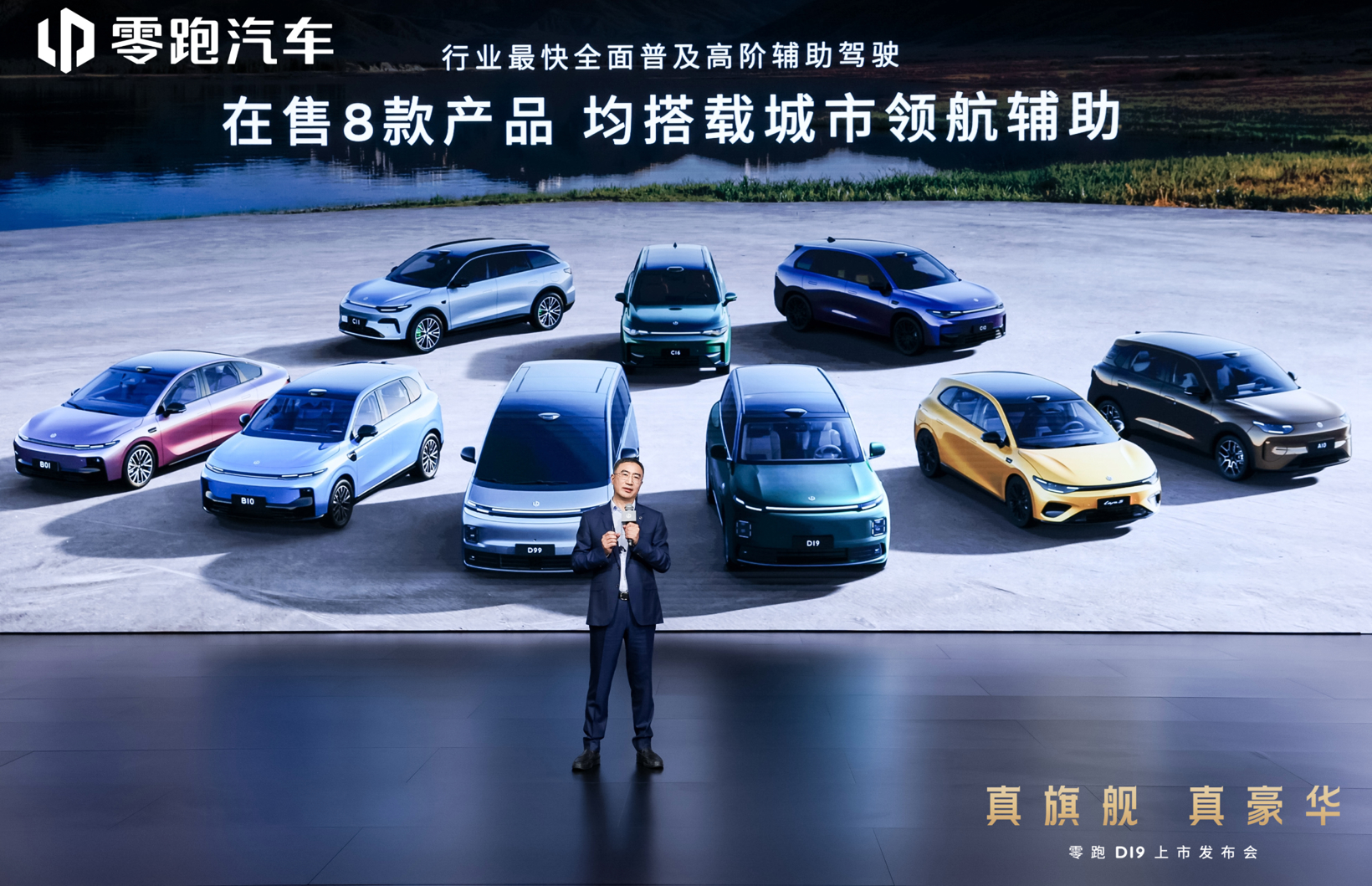
Image Source: Leapmotor
Of course, vertical integration comes at a price. Self-developing a technology requires building teams and long-term validation; every investment tests cash flow and R&D efficiency.
For Leapmotor, with annual sales approaching 600,000 units and having just achieved full-year profitability, maintaining a balance between continuous investment and financial health remains a long-term challenge.
Returning to the D19, thanks to vertical supply chain integration, its price is indeed lower than competitors with similar specs. But whether that price can be sustained depends on whether sales volume can dilute R&D and tooling costs. If the D19 can sell over 10,000 units a month, economies of scale will further cement Leapmotor's cost advantage. Zhu Jiangming revealed that factories are already running three shifts to keep up with deliveries.
Brand Upward: It's Leapmotor's Turn
Viewed over a longer timeline, Leapmotor's "brand upward" push isn't a sudden, phased goal, but a natural extension of its development path over the past decade.
When it crossed into the sector in 2015, outsiders questioned whether it could build good cars. Attention waned further after its first product, the S01, received a lukewarm market response. The turning point came in 2022, when Leapmotor pivoted from pure electric to extended-range powertrains. Models like the C11 EREV helped make "gas-or-electric" flexibility acceptable to more families.
Later, Leapmotor clarified its positioning in the "150,000-yuan class," using the C10 and C01 to gain ground with superior specifications. In 2025, Leapmotor delivered 597,000 vehicles, a 103% year-on-year increase, and achieved a net profit of 540 million yuan—becoming only the second EV startup to turn an annual profit. From doubted to established, Leapmotor spent a decade accumulating sales from zero to 600,000 units.
Analysts at Gasgoo Automotive Research Institute note that Leapmotor "rose rapidly by leveraging high-spec, low-price strategies and extreme cost control, traversing a growth path from exploration to breakthrough, and from follower to leader."
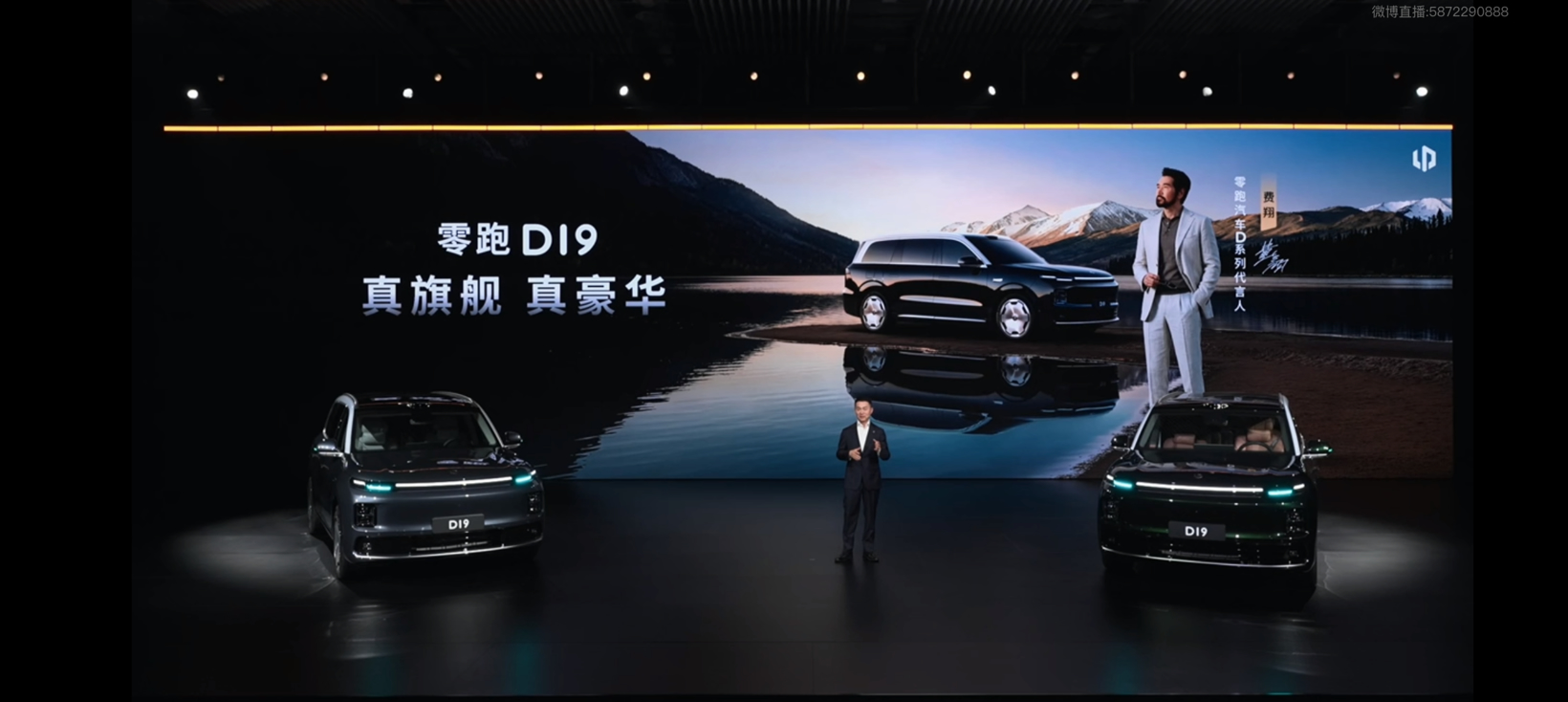
Image Source: Leapmotor
This trajectory provides the foundation for Leapmotor's subsequent move upmarket. At its tenth-anniversary event, Zhu Jiangming proposed a long-term goal of becoming a global automaker selling 4 million vehicles annually, with 2026 as the "million-unit breakthrough year." Previously, Leapmotor's sales were concentrated in the 100,000 to 200,000 yuan range. The D19's launch marks the first time Leapmotor has pushed its pricing above 200,000 yuan, entering the core territory of brands like Li Auto, AITO, and Xiaomi. Zhu also hinted, "The D series represents the peak of our current technology, but we have even bigger moves in store."
Gasgoo Automotive Research Institute summarizes this stage as "technology upward, market outward, competition intensifying—Leapmotor's critical battle." Moving from "good value" to "tech luxury," Leapmotor must prove it can not only produce high-value products for the mainstream but also stand firm in the premium market.
The importance of moving the brand upward is easy to grasp. For Leapmotor, the D19's success determines whether it can open up incremental space in the 250,000-yuan-and-above segment and influences future planning for high-end models. If it remains stuck in the 100,000 to 200,000 yuan bracket, the growth ceiling will quickly appear. For domestic brands as a whole, breaking upward is the key way out of "low-price involution."
One notable signal is that Leapmotor is trying branding paths it rarely used before. At the D19 launch, singer Fei Xiang appeared as the D series brand ambassador and became the D19's first owner. Fei also participated in the media roundtable. He revealed that he doesn't do short-term endorsements on principle, saying, "Every collaboration I invest in must be worthwhile."
Zhu Jiangming admitted that his engineering mindset originally made him feel hiring an ambassador was unnecessary, "but since bringing on Fei Xiang, I've changed my mind—the texture and quality he brings are a perfect match for the D19." The addition of an ambassador enhances the brand texture of the flagship product to some extent. It also reflects that, in its move upmarket, Leapmotor is beginning to shore up its previously weak marketing efforts.
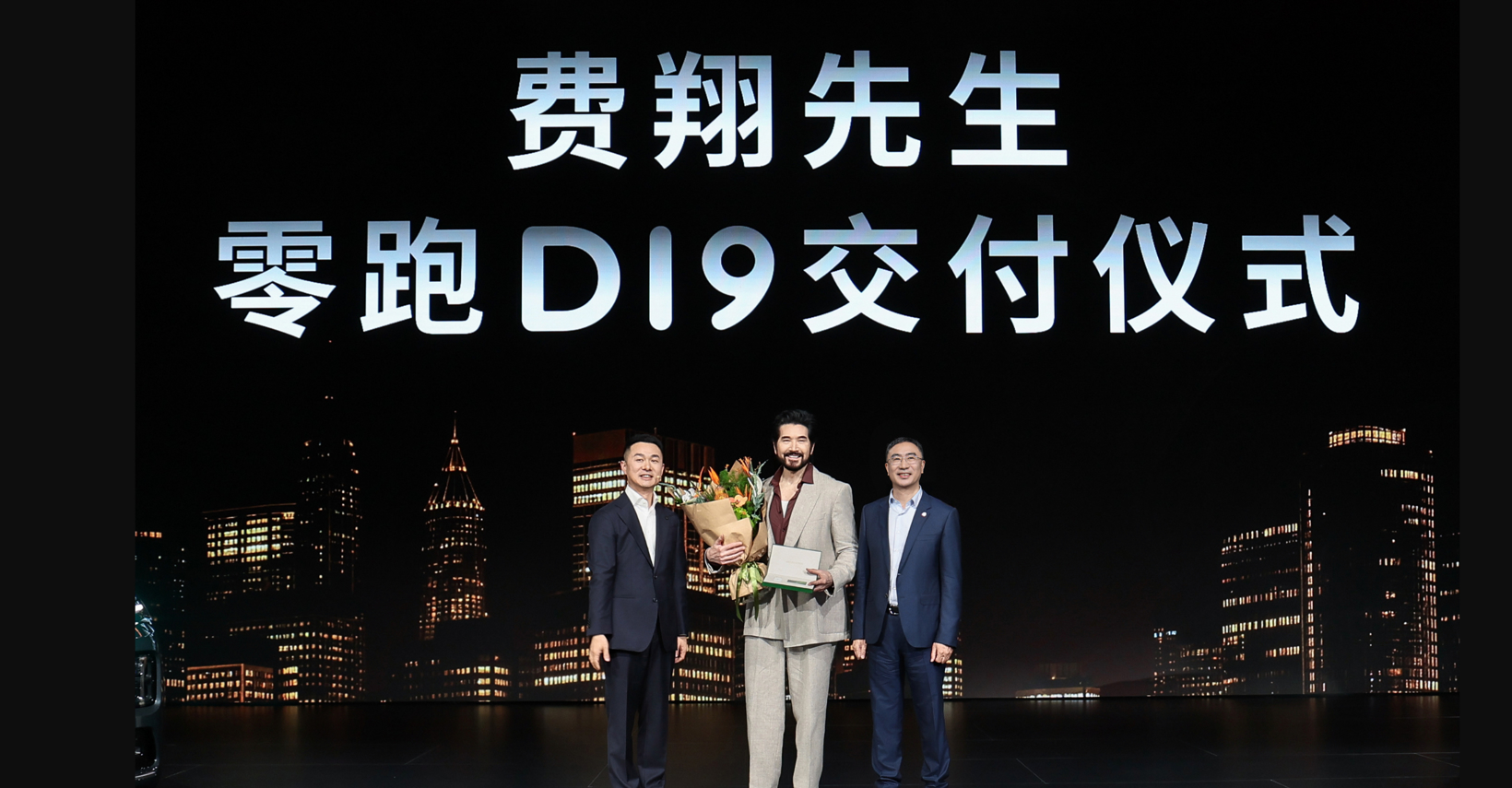
Image Source: Leapmotor
Some research institutions point out that the room for pure price competition is gradually narrowing, and differences between companies will increasingly be reflected in systemic efficiency.
From this perspective, what the D19 demonstrates is not simple "value," but the ability to use systemic capabilities to present configurations that belong to a higher price bracket at a price closer to the mainstream market. Once this capability is formed, it becomes replicable.
Leapmotor's path upward differs from NIO or Li Auto, which aimed high first and then moved down—it relies more on support from systemic efficiency, using product strength to force brand recognition.
Of course, the challenges are equally clear. Gasgoo Automotive Research Institute points out that Leapmotor "faces a situation where multiple opportunities and challenges coexist." Opportunities include the technology sector, where the LEAP 3.5 architecture is accelerating intelligent driving iteration, with plans to complete L3 function upgrades within the year. Overseas, deepening cooperation with Stellantis is expanding local manufacturing.
However, impacted by the slowing domestic auto market, intensifying price wars, and traditional automakers squeezing the C series' market space with new products, Leapmotor's shortcomings in intelligent driving technology and brand premium power still need to be overcome.
Specifically, the first challenge is the inertia of brand perception. Leapmotor has long been bound to "value" in consumer minds. Switching to the 250,000-yuan class requires convincing users to accept a "more expensive Leapmotor." Compared to moving downmarket, moving up is much harder. Blind booking data for the D19 shows owners of luxury brands account for over 40%—a positive signal, but whether it can be amplified remains to be seen.
Second is intensifying external competition. Rivals like the Li Auto L8, AITO M7, and Xiaomi YU7 have already established stable market recognition. If competitors match the D19's value advantage, pressure will mount. Additionally, foreign brands are accelerating their electric counterattack. Once they make concessions on price, the upward space for domestic brands will be squeezed.
Image Source: Leapmotor
Facing high industry "involution," Zhu Jiangming has his own judgment. He noted that there are too many new cars currently, with six launching on the same day, "but I feel that in two or three years, it will be impossible to have six new cars launching in a day—simply from a cost perspective, it's impossible." Therefore, since the S01, Leapmotor has carefully planned every vehicle, aiming to extend the lifecycle of each car and lengthen its profit cycle.
This judgment explains why Leapmotor insists on "cost-based pricing"—only by keeping every car competitive for a longer period can it amortize R&D and tooling costs to achieve sustainable profitability.
Zhu stated, "Whatever Leapmotor was like before, it will be the same in the future. Whether it's the A series or the D series, cost-based pricing comes first—getting better configurations and models for the same price." In other words, Leapmotor won't change its underlying logic just because it's moving the brand up.
He supports benign competition, believing that "Chinese new energy vehicles are doing very well domestically, but their share globally is still low. Victory is still a long way off."
On the service level, Leapmotor used the D series launch to upgrade its services. Not all stores are qualified to sell the D19; out of more than 1,000 stores nationwide, Leapmotor selected only about 600 certified ones. This move shows Leapmotor is consciously differentiating channel capabilities, matching higher-end products with a higher-standard service network.
Institutions are mostly optimistic about Leapmotor in 2026, offering positive growth forecasts. Gasgoo Automotive Research Institute predicts Leapmotor's total sales in 2026 could reach 650,000 to 750,000 units. Achieving this depends on the D series' breakthrough in the premium market and sustained volume from the A, B, and C series in the mainstream. Judging by the D19's pricing, Leapmotor's sales growth potential might be pushed even higher.
But as for the journey of moving the brand up, the D19 launch is just the beginning. What follows—user word-of-mouth, delivery quality, after-sales service, and the continuous iteration capability of intelligent driving algorithms—will determine whether Leapmotor can truly make the leap upward.


