Gasgoo Munich-On April 21, the 2026 Onvo L90 hit the market with a starting price of 179,800 yuan under the Battery-as-a-Service (BaaS) model. But the real story isn't the sticker price—it's that the car comes loaded with nearly the entirety of NIO's intelligent technology stack in one go:
The Shenji NX9031—the world's first self-developed 5nm automotive-grade smart-driving chip—boasting over 1,000 TOPS of computing power; NIO's "World Model" (NWM) end-to-end large model; and a full-domain 900V electric architecture. In industry parlance, NIO's full "technology suite" has officially made its way into the Onvo brand.
This confirms a promise made earlier by William Li: the technological achievements accumulated by the NIO main brand would be comprehensively applied to Onvo.
Among NIO's three brands—NIO, Onvo, and Firefly—Onvo occupies the most unique position. It inherits NIO's technology system while reaching down to crack the mainstream family market, serving as a critical bridge for NIO's transition from a premium marque to a high-volume automaker.
What Onvo truly means for NIO goes beyond product strategy; it is the key determinant of whether the company can evolve from a "small but beautiful" niche player into a "large and powerful" industry force.
The Start: Onvo's Growth and Exploration
Onvo's story did not begin slowly.
Following the brand's launch in May 2024 and the debut of its first model, the L60, that September, Onvo carved into the mainstream market with a clear identity as a "family smart EV." With a starting price of 146,900 yuan (BaaS), it was widely viewed by the industry as the crucial move for NIO to shatter its volume bottleneck.
Data from Gasgoo Automotive shows Onvo delivered approximately 108,000 vehicles in 2025, with the L60 contributing 64,000 units and the L90 adding 43,000. This dual-model drive firmly anchored the brand within the mainstream mid-to-high-end family electric SUV segment. Notably, after the L90 entered delivery in August 2025, Onvo's monthly sales briefly climbed to the 15,000-unit mark. By September, the brand achieved a milestone: its single-month deliveries surpassed those of the main NIO brand for the first time—37,656 units against 36,928.
This was a highlight moment for Onvo, validating that the product logic of "family plus battery swapping plus intelligence" holds genuine demand in the mainstream market.
Yet, as a new brand, Onvo is also facing growing pains.
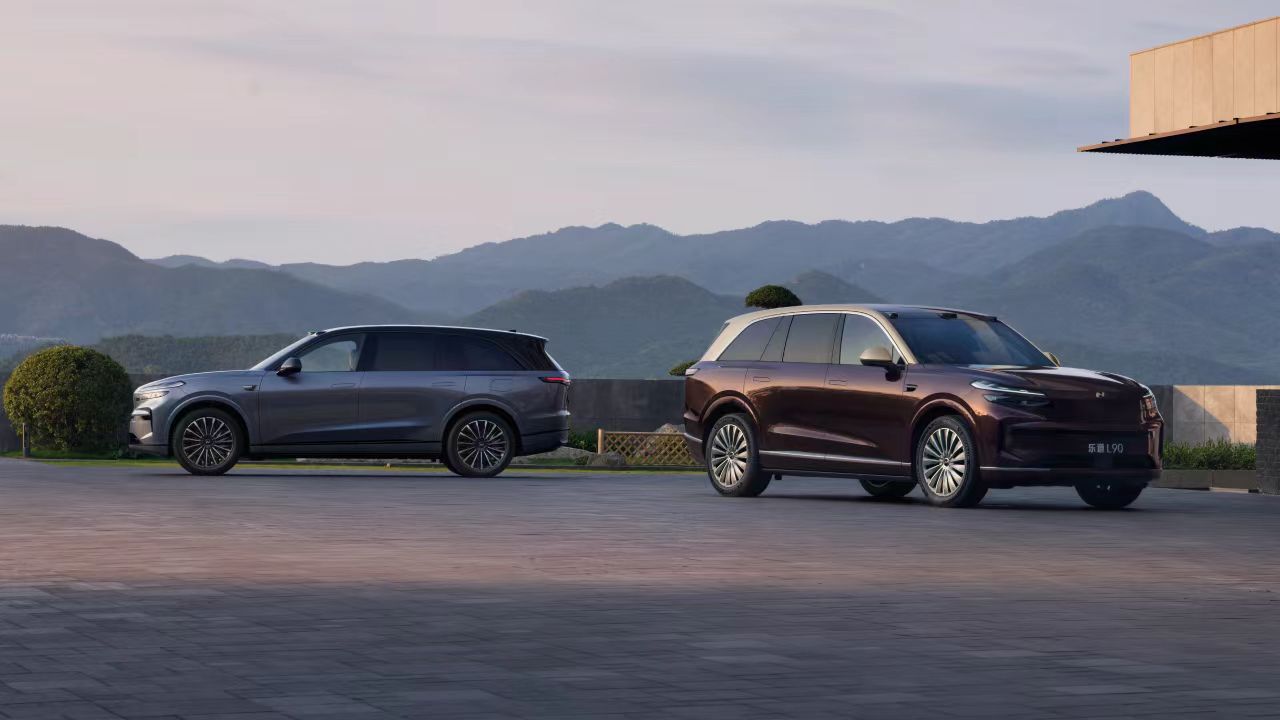
2026 Onvo L90, Image Source: Onvo
Starting in the fourth quarter of 2025, Onvo's monthly deliveries experienced some volatility. At the same time, the main NIO brand launched its next-generation ES8 in November 2025. A comprehensive upgrade in product competitiveness significantly boosted its appeal in the 300,000 to 400,000 yuan range, creating a degree of customer overlap with the Onvo L90.
This is not a problem unique to Onvo, but a universal challenge facing multi-brand strategies: how to draw clear boundaries in consumer perception between brand tiers to avoid internal cannibalization.
At the group level, NIO delivered 326,000 vehicles in 2025, a 46.9% year-on-year increase. The NIO brand contributed 179,000 units, Onvo 108,000, and Firefly 40,000, with the three brands combining to push deliveries to a record high.
In the fourth quarter of 2025, NIO achieved its first quarterly profit, with a net income of 280 million yuan, marking a new step in the group's overall operational efficiency. Onvo contributed roughly one-third of total group deliveries, showing that scale effects are beginning to materialize. However, there remains room for improvement before it can fully "shoulder the heavy responsibility."
The Significance: Why Onvo is NIO's "Must-Answer Question"
Regardless of current performance, Onvo's strategic importance to NIO cannot be underestimated. This can be understood through three dimensions.
First, scale is the prerequisite for every narrative. NIO's core competitive advantages—self-developed chips, the battery-swapping network, and smart-driving algorithms—are all essentially businesses with "high fixed costs and diminishing marginal costs."
Take battery swapping stations as an example. By the end of 2025, NIO had built over 3,200 stations, with a cumulative investment exceeding 18 billion yuan. This infrastructure spending requires a sufficiently large user base to amortize costs. Yet the main NIO brand is capped at annual sales of under 200,000 units and an average selling price above 300,000 yuan, meaning premium users alone cannot achieve the economies of scale needed for the network.
Onvo's mission is to extend the benefits of NIO's system capabilities from users spending over 300,000 yuan to the mass family market between 150,000 and 250,000 yuan, providing the scaled user support needed for infrastructure like swapping and smart driving.
This explains why the 2026 Onvo L90 comes directly equipped with the Shenji NX9031 chip and the NWM World Model, rather than a downgraded solution. Pushing technology downmarket is not simply a "value-for-money strategy"; it is a strategic test for NIO to verify whether its technology stack can be replicated at a larger scale.
If Onvo can deliver this technology stack to family users at a 150,000 to 200,000 yuan price point, NIO will simultaneously answer two questions: Can the technology be downward compatible? Can scale drive upward growth?
Second, Onvo is a critical variable in NIO's profit model. While NIO achieved its first quarterly profit in Q4 2025, it still reported a full-year net loss of 14.94 billion yuan. Its profitability model remains heavily reliant on the high gross margins of the main NIO brand.
William Li admitted during an earnings call that if any of the three new large vehicles launching in 2026 fail to meet delivery expectations, it will directly squeeze gross profit margins.
In other words, NIO's profitability is built on the high premium of its high-end models, a model with limited resilience against risk. Onvo's value lies in addressing a market that is price-sensitive and more elastic in terms of sales volume. Once Onvo's monthly sales stabilize above 10,000 units, further diluting per-vehicle costs, its contribution to profit after scaling will be significant—even if per-vehicle margins are lower than those of the NIO brand.
Third, Onvo determines the public persuasiveness of NIO's "technological faith." NIO invests over 10 billion yuan in R&D annually, with cumulative spending exceeding 60 billion yuan. But the value of technology must ultimately be priced by the market.
If NIO's technology can only be realized in high-end vehicles priced above 300,000 yuan, it remains a "luxury" for the few. If that same technology can be brought down to the 150,000 to 250,000 yuan range to cover a broader base of family users, it becomes true "industry infrastructure."
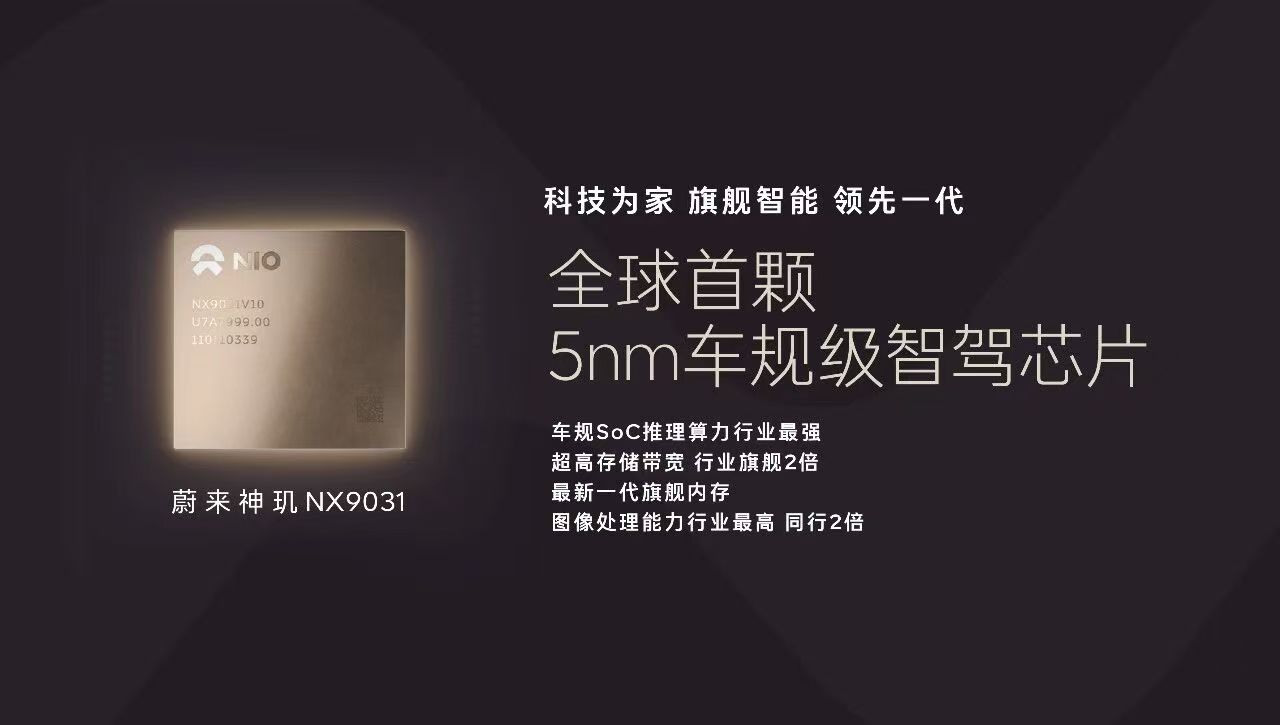
Image Source: Onvo
The "full suite" loaded onto the 2026 Onvo L90 was, just a year ago, the exclusive domain of the main NIO brand's flagship models. Now, achieved at a starting price below 200,000 yuan, this in itself constitutes a highly compelling industry narrative: NIO's technology is not self-indulgent; it is a capability capable of benefiting the masses.
Looking ahead, Onvo is actively paving the way. On the product front, the L80—a mid-to-large family SUV—is set to launch in 2026, gradually completing the product matrix. On the channel side, the three brands are accelerating their expansion into prefecture-level cities through SKY joint stores to improve market penetration. At the same time, with the 2026 Onvo L90 marking the debut of the "full technology suite," Onvo's core competitiveness is upgrading from "space plus battery swapping" to "intelligence plus battery swapping," promising to further clarify its differentiated positioning.
What does Onvo mean for NIO? It is not an optional "second growth curve," but the necessary path for NIO to evolve from a premium brand to a volume automaker. The 2026 Onvo L90 sends a positive signal with its "full technology suite." The real test lies in whether this technological dividend can be converted into sustained sales momentum.