



Gasgoo Munich-Since 2026, China's new energy vehicle market has shifted gears, with the growth trajectories for pure electric, plug-in hybrid, and range-extended powertrains diverging sharply.
As the market fragments, which powertrain will hit its growth ceiling first?
Meng Shuo, a strategic planning executive at an automotive supply chain firm (a pseudonym, like all names in this article), put it bluntly: "The range-extended sector will hit its growth ceiling between 2028 and 2029."
He is not alone. At a recent salon hosted by Gasgoo Auto Institute, industry insiders engaged in intense debate over the growth cycles, market share, and long-term outlook of the three major powertrain routes. While there was consensus that battery electric vehicles (BEVs) are the long-term mainstream, deep divisions remain over specific inflection points, market potential, and global value.
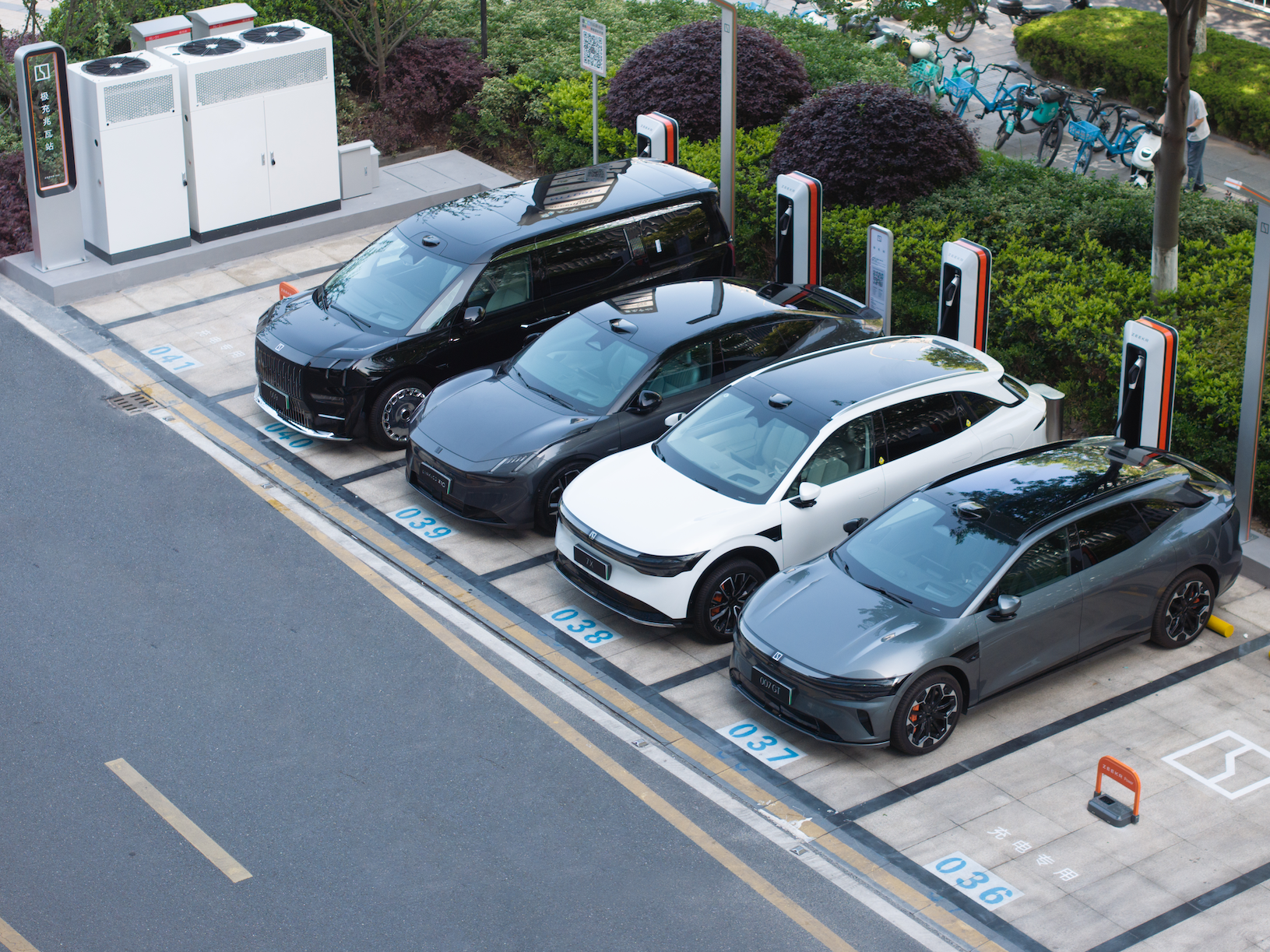
Image source: ZEEKR
Range-Extenders Peaking First? Industry Views Diverge.
After nearly doubling in 2024, the range-extended market saw growth decelerate sharply starting in 2025. By the first half of 2026, momentum had clearly stalled. Not only did sales slip year-on-year, but aging models also hit bottlenecks, and new entrants failed to generate the "instant hit" buzz seen previously.
Meng Shuo pegs the upper limit for range-extended growth between 2028 and 2029.
The most direct evidence comes from shifting user habits. Through long-term engagement with planning and user research departments at various automakers, he has observed that owners of both range-extended and plug-in hybrids primarily rely on pure electric mode for daily commuting. Internal combustion engines are used less frequently, and consumers are no longer willing to pay a premium just to alleviate range anxiety. The necessity of a fuel-electric hybrid setup is steadily weakening.
Strategic adjustments on the supply side will further compress growth space for range-extended technology. Meng Shuo notes that around 2028, several leading companies are expected to make strategic pivots away from range-extended and hybrid tracks, a shift that will directly impact the sector's growth rhythm.
Rapid iteration in pure electric technology is relentlessly squeezing the survival space of range-extended powertrains from the ground up. With solid-state battery development accelerating and mass-production models achieving record-breaking ranges, the "anxiety-free" moat that range-extended models rely on is being eroded. Their market share will likely contract to niche scenarios such as long-distance travel and areas without fixed charging infrastructure.
Ke Yi, a specialist in powertrain systems, shares this view. Compared to plug-in hybrids, he argues, the market boundary for range-extended technology is narrower. Its core value is concentrated on alleviating long-distance range anxiety, making its positioning highly focused. Domestic market heat also relies heavily on a few leading brands to drive it.
In his view, the industry landscape has fundamentally changed. As pure electric ranges increase rapidly and charging infrastructure improves, the experience of range-extended vehicles in most daily scenarios is converging with that of pure electrics, and their core advantage is continuously dissipating.
Even with the rapid proliferation of "big battery, small tank" range-extended solutions—which extend pure electric range and reduce fuel use—the core shortcoming remains: high substitutability. For daily city commuting, the experience is virtually indistinguishable from a pure electric vehicle; for long trips, advanced fast-charging networks for pure electrics now cover most needs, making the unique value of range-extenders increasingly weak.
Ke Yi has observed signs of sales fatigue and peaking growth in several mainstream range-extended models. Based on the pace of iteration in pure electric technology and charging facilities, he predicts the range-extended sector will likely hit its sales ceiling around 2027, marking a clear inflection point.
Shen Yan, an insider at an Italian firm, points out that the range-extended track has inherent market limits. It is naturally better suited to mid-to-large SUVs and struggles to extend downward to smaller family vehicles. The core audience is fixed: consumers without home charging, who prefer large SUVs and have severe range anxiety. This demographic is limited in size and cannot sustain long-term high-speed industry growth.
He emphasizes that the popularity of range-extended vehicles in China is a unique market phenomenon unlikely to be replicated overseas, leaving very little room for global growth.
Compared to the rapid peaking of range-extended tech, the plug-in hybrid lifecycle is significantly longer. Ke Yi analyzes that the core value of plug-in hybrids is to replace traditional internal combustion engine (ICE) vehicles, not to compete directly with pure electrics. Therefore, its growth is deeply tied to the fading of ICE vehicles. The mass market under 200,000 yuan is the core battleground for plug-in hybrids, as large numbers of ICE users switch over, ensuring strong short-term growth momentum.
But plug-in hybrids are not without limits. The dual-powertrain architecture inherently brings objective constraints: higher costs, greater weight, and lower energy efficiency. In Ke Yi's view, as ICE market share is cleared out and the replacement dividend fades, plug-in hybrids may also enter a plateau period around 2028.
Of course, the industry is not uniformly bearish on range-extended technology.
Deep technical investment by leading companies introduces variables into the trajectory of range-extended technology. Cheng Xu, an insider at an auto parts company, offers a different perspective. He argues that range-extended technology is not necessarily a dead end; it could well become a new growth driver.
A key industry signal came on July 30, 2026, when Xiaomi EV officially launched its Kunlun architecture and two range-extended SUVs under the SkyNomad series. This marked Xiaomi's expansion from a pure-electric-only lineup to a "pure electric + range-extended" dual-track strategy, formally entering the family SUV market.

Image source: Xiaomi EV
In his view, the technology choices of leading automakers point to the market's future direction. Continuous iteration and upgrades by automakers could shatter current market expectations for the scale of range-extended vehicles, leaving the sector's ultimate trajectory uncertain.
The vast space of overseas markets provides a buffer for hybrid growth. Zhou Yan, head of overseas business at a global auto parts giant, notes that the share of vehicle exports in domestic production and sales continues to rise. The EU is the largest export market, while emerging markets like South America, Southeast Asia, the Middle East, and Africa are seeing rapid growth.
These emerging markets generally suffer from underdeveloped charging infrastructure, low penetration of home chargers, and scarce public charging networks. The user experience for pure electric vehicles is compromised, while plug-in hybrids and range-extended vehicles—which offer fuel flexibility, no range anxiety, and usage versatility—fit local needs perfectly and offer irreplaceable adaptability.
Pure Electric as the Mainstream: A Consensus Emerges
Compared to hybrid routes, the resilience of pure electric growth has already been market-tested. Data from the China Association of Automobile Manufacturers (CAAM) shows that pure electric models accounted for approximately 67% of domestic NEV sales in the first half of 2026, cementing their position as the market leader.
Many industry insiders at the salon agreed that pure electric is the undisputed long-term mainstream of the NEV sector. Its growth logic, technological trends, and industry status have gained recognition across the supply chain.
Zhao Kai, a business development executive at a German auto parts supplier, stated that the development of pure electric vehicles has long transcended the category of a mere means of transport. It is deeply intertwined with national-level plans such as domestic battery industry upgrades and energy storage strategies. These overlapping advantages make the long-term potential of pure electric irreplaceable.
Ke Yi analyzes that the transition of transportation energy to electricity is the long-term direction. Declining battery costs and improving charging infrastructure are gradually resolving the pain points of pure electric adoption. As technology and production capacity scale up, the price gap between pure electric and equivalent ICE vehicles continues to narrow, lowering the entry barrier. Meanwhile, the expansion of charging networks is alleviating range anxiety.

Image source: China Charging Alliance
Based on this trend, he predicts that pure electric vehicles will see sustained growth over the next three to five years. Around 2028, the sector will enter an acceleration phase, rapidly cannibalizing market share from plug-in hybrids and range-extended vehicles.
Su Wan, head of overseas business expansion for smart cockpits, validated the replacement logic of pure electric vehicles through her personal driving experience. Her household owns a PHEV, yet she uses pure electric mode for almost all daily commuting, relying on fuel only for occasional long-distance road trips. Consumers will always gravitate toward lower-cost mobility; the cost advantage of electricity over fuel is the core driver for users embracing electrification.
Furthermore, pure electric dedicated platforms offer superior adaptability for intelligent features, generally delivering better performance in autonomous driving and smart cockpits.
In Su Wan's view, once high-power fast charging and ultra-long-range technologies become ubiquitous, the competitiveness of pure electric vehicles will widen the gap with hybrids significantly, making their mainstream status unassailable.
Fang Cheng, an insider at an automotive electronics firm, corroborated the mainstream trend from the perspective of underlying product logic. In his view, the core power output of range-extended vehicles still relies on fuel, essentially serving only to alleviate long-distance anxiety. Plug-in hybrids support short-range electric and long-range fuel use, representing an intermediate form between ICE and pure electric. Both are transitional products, their value lying in compensating for current shortcomings in battery range and charging capabilities.
Fang Cheng judges that plug-in hybrids and range-extended vehicles will remain necessary in the short term—three to five years. But over a longer horizon of 10 to 15 years, as technologies like solid-state batteries mature and land, pure electric will become the final market mainstream. The full electrification of transportation energy is an irreversible long-term trend.
Lu Ming, head of overseas business at a leading domestic automotive trim supplier, added that the resolution of pure electric technical pain points has not only revitalized the domestic market but also endowed Chinese NEVs with strong competitiveness in exports.
Jiang Yu, an insider at an automotive semiconductor manufacturer, cautioned against overhyping the speed of pure electric replacement. The three technology routes will coexist for a considerable period. Variables such as technological iteration, usage costs, infrastructure support, and regional environments will continue to influence the divergence of market shares.
In short, the mainstream status of pure electric is undisputed. Technological iteration resolves old pain points, industrial strategy provides new support, and user habits have fully transitioned. With these multiple advantages, the growth certainty of pure electric is far ahead. However, total replacement will not happen overnight; hybrid models will continue to survive in niche markets and overseas regions.
Global Divergence: Long-Term Coexistence of Routes
Looking globally, no single route is likely to form an absolute monopoly. Diverse coexistence and regional differentiation are more likely to be the mainstream pattern for the NEV industry over the next decade.
Ji Zhao, interpreting the national new energy industry plan, noted that China's long-term development goals for NEVs are clear: in future new vehicle sales, pure electric models will steadily surpass 50% to become the absolute main force. Plug-in hybrids and range-extended vehicles will be classified as energy-efficient models, sharing the remaining market share with traditional hybrids.
Industry insiders offered differing predictions on the final distribution of market share.
Ke Yi forecasts that by 2030, the internal ratio among the three NEV routes will be approximately 70% pure electric, 20% plug-in hybrid, and 10% range-extended.
Meng Shuo is more aggressive, arguing that between 2028 and 2030, the penetration rate of pure electric vehicles within the NEV sector could exceed 80%.
Jiang Yu believes that in the short term, pure electric's share of the domestic NEV market could reach 60% to 70%, with plug-in hybrids maintaining 25% to 30%, while range-extended vehicles will retain a corresponding niche market driven by range anxiety needs.

AI generated; Source: Doubao
Zooming out to the global market, the share structure will be thoroughly reconstructed. Significant differences in policy environments and infrastructure levels across regions directly impact the penetration pace of each technology route. Regions like South America, Southeast Asia, and the Middle East have far lower charging infrastructure penetration than China, and their replenishment networks are incomplete. Hybrid vehicles, which offer fuel flexibility, are better suited to the local electrification transition needs.
Based on the overall domestic production and sales volume including exports, Zhou Yan offers a 2030 outlook: ICE vehicles will retain about 20% market share, while the three NEV categories will account for about 80%. Of that, pure electric will hold roughly 50%, securing its mainstream position, while plug-in hybrids and range-extended vehicles will combine for about 30%, playing an important supplementary role.
While the hybrid share in the domestic market continues to shrink, overseas growth markets are poised to extend the lifespan of the hybrid sector.
Jiang Yu further emphasizes that China's domestic development path cannot be directly replicated globally, with core differences lying in the battery industry foundation and cost structure.
Domestic battery costs have been compressed to the limit; automakers generally build their own battery lines, supply chain clusters are mature, and pure electric models are often cheaper than equivalent ICE vehicles. In contrast, Europe's domestic battery industry foundation is weak, local manufacturers are under pressure, supply chain options are limited, and production costs are higher. This results in local NEV prices being 10% to 15% higher than ICE vehicles, creating a significantly higher price barrier for pure electric adoption. For local consumers, lower-priced and more flexible hybrid models remain the optimal choice, ensuring the long-term coexistence of the three routes.
Shen Yan added a special variable for the European market. In his view, Europe is adjusting its carbon emission accounting rules, as there is a marked discrepancy between laboratory data and actual usage emissions for plug-in hybrids. Market research shows that most European PHEV users charge infrequently, failing to fully utilize the product's electrification advantages. This reality will continue to compress the growth space of plug-in hybrids in Europe, confirming the differentiated development rhythms of technology routes in different regional markets.
A review of judgments across the supply chain shows that while pure electric as the long-term mainstream is a consensus, specific questions regarding growth inflection points, share allocation, and regional penetration rates still elicit differing opinions from practitioners at different stages of the chain.
The domestic market generally expects the dominance of pure electric vehicles to continue consolidating, but there is no unified conclusion on when range-extended vehicles will peak or when plug-in hybrids will plateau. Over the next three to five years, the three routes will continue to coexist dynamically, with share structures adjusting continuously as battery technology and charging infrastructure iterate.
Global market divergence is more pronounced. Regional disparities in battery industry foundations, usage costs, policy rules, and infrastructure levels determine that China's electrification path cannot be simply copied. Plug-in hybrids and range-extended vehicles will undertake transitional roles for a longer cycle overseas, making the coexistence of multiple routes a long-term norm for the global NEV industry.
This battle of routes is far from over. Technological iteration and shifting demand will continue to reshape the market boundaries and share structure of each route. The ultimate destination will be defined by the interplay of industrial evolution and market choice.
(Note: Names in this article are pseudonyms, and some information identifying personal identities has been obfuscated.)


