



Beijing (Gasgoo)- On May 2, China’s autonomous truck developer and operator Inceptio Technology completed the mass delivery of intelligent heavy-duty trucks to Huatai Logistics, a leading automotive parts logistics enterprise.
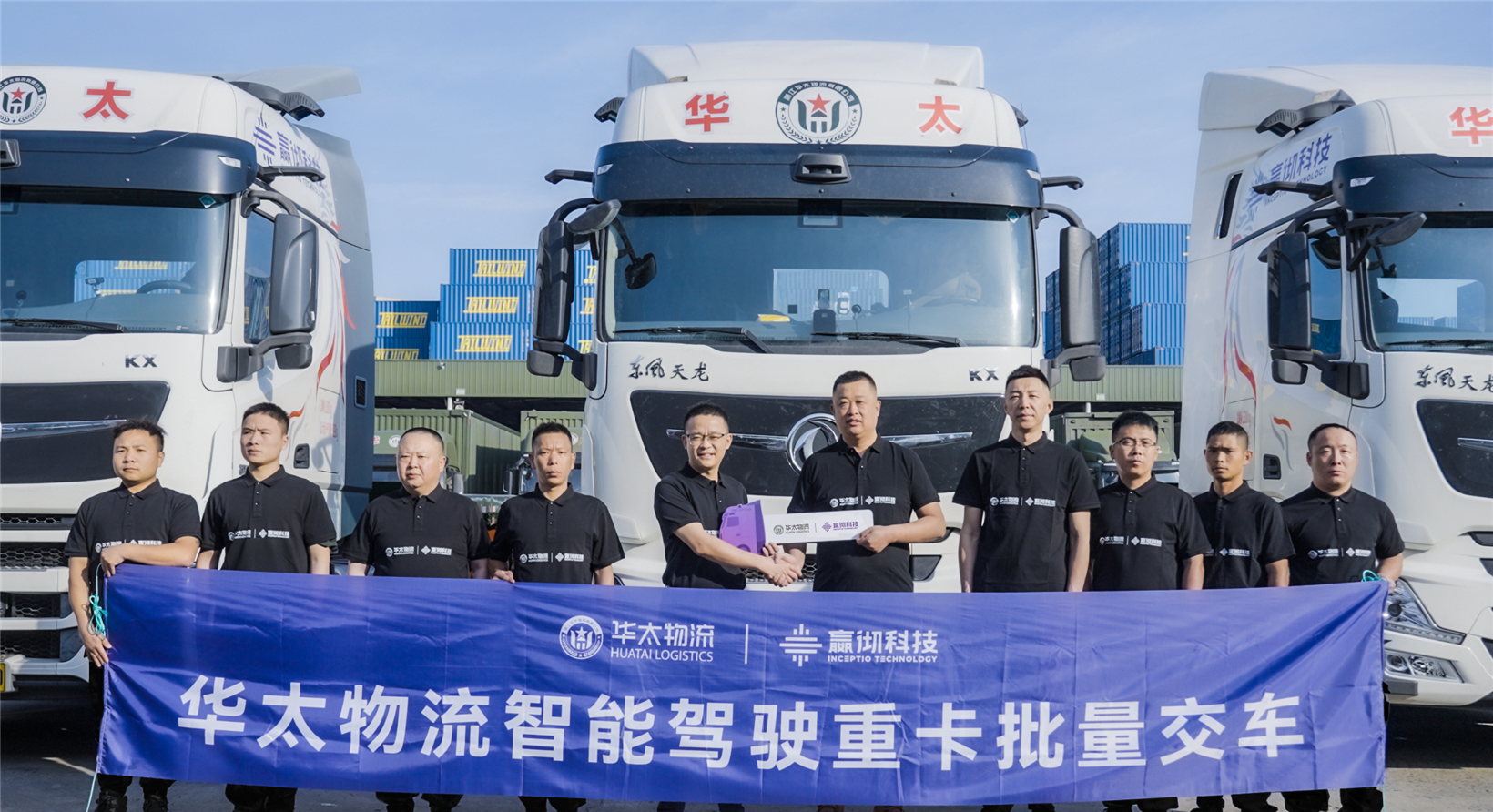
Photo credit: Inceptio Technology
Since January this year, Huatai Logistics has progressively purchased a total of 40 intelligent heavy-duty trucks, for use on major logistics routes in East China, Central China, Southwest China, etc. This marks the largest-scale fleet of intelligent heavy-duty trucks in the automotive parts industry, signifying the accelerated commercialization of autonomous driving trucks in various fields.
The intelligent heavy-duty trucks delivered this time are equipped with Inceptio’s Xuanyuan intelligent driving system, installed on the Dongfeng Tianlong 6X4 model. The vehicles are installed with LiDAR, millimeter-wave radar, HD cameras, and an autonomous driving computing platform. The trucks boast unique intelligent driving algorithms tailored for heavy-duty trucks, ensuring precise perception, control, and fuel economy based on intelligent fuel-saving technology throughout the journey.

Photo credit: Inceptio Technology
Under intelligent driving mode, the system achieves intelligent longitudinal and lateral control, including adaptive cruise control, intelligent evasive maneuvering, lane change assistance, intelligent overtaking, intelligent fuel-saving control, automatic emergency braking, driver safety monitoring, seat vibration reminders, and pre-tensioner seat belt reminders, effectively enhancing the safety and operational efficiency of long-haul freight transportation while providing drivers with a safer, more efficient, and less strenuous driving experience.
Operational data shows that the intelligent heavy-duty trucks have significantly improved safety and reduced costs for Huatai Logistics. With an average route distance of approximately 1,500 kilometers, the intelligent heavy-duty trucks have reduced fuel consumption by 3-5 liters per 100 kilometers compared to manual driving. With some routes transitioning from a driver-to-vehicle ratio of 2 to 1, the total cost of ownership (TCO) has decreased by 7-15% per kilometer. With excellent safety performance and a comfortable driving experience, the fleet's vehicle attendance rate has significantly increased, with average monthly per-vehicle operating distance increasing by 10%.


