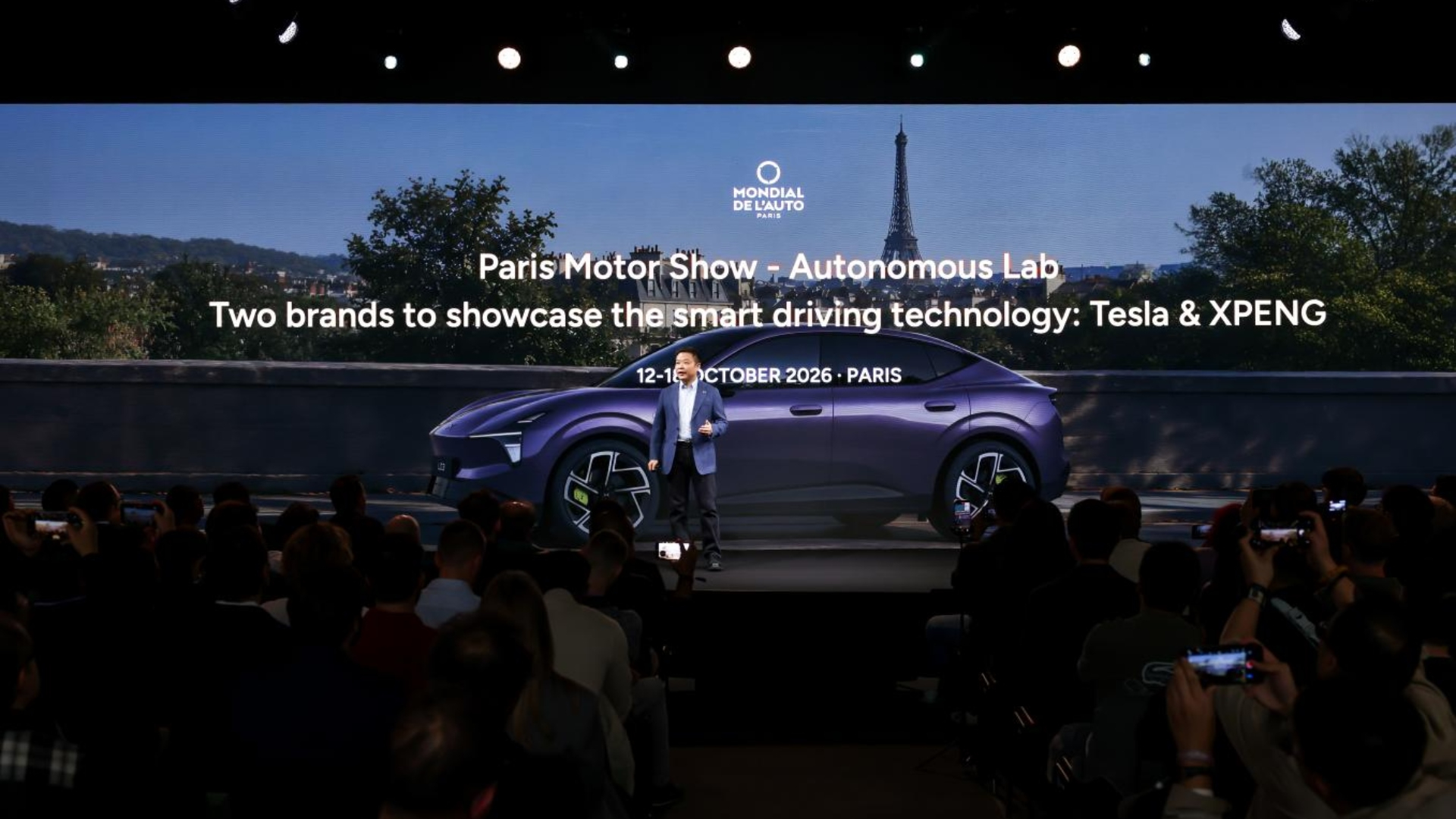
Around 20 Chinese brands are expected to appear at the 2026 Paris Motor Show.
That number is significant.
At the 2024 edition, nine Chinese manufacturers were reported as officially present. The Chinese presence in Paris has roughly doubled in just two years.
But I think the number itself is only the beginning of the story.
The deeper question is: What happens after these brands arrive?
France is a particularly interesting market in which to ask that question. It is a mature automotive market with unusually strong home-market incumbents.
In the first nine months of 2026, Renault Group and Stellantis together accounted for 52 percent of French passenger-car registrations. Even if we look only at five major French-origin marques — Renault, Peugeot, Citroën, DS and Alpine — they still represent around 39 percent of the market.
So new entrants are not competing in an open field.
They are entering a market with strong brands, deeply established distribution networks and long-standing consumer relationships.
At the same time, France is undergoing a rapid transition towards electrification.
Battery-electric vehicles accounted for 31.4 percent of passenger-car registrations in the first nine months of 2026, compared with 18.3 percent a year earlier. In September alone, their share reached around 42 percent.
That combination makes France particularly interesting.
Rapid electrification creates opportunity, while powerful incumbents raise the bar for every new entrant.
Chinese brands are already becoming more visible. In September, they accounted for around 8 percent of French new-car registrations, their highest level so far.
But market presence is not the same as market establishment.
Launching a competitive product is one thing.
Building a sustainable business around that product is another.
To succeed in France, Chinese automakers need more than attractive technology, specifications and pricing.
They need dealer networks, after-sales service, financing, residual-value management and strong local teams.
Increasingly, they will also need local manufacturing, supply-chain capabilities and a deeper understanding of European consumers.
Most importantly, they need to earn trust.
This is why I see Paris 2026 as more than a motor show.
It is becoming a useful checkpoint for China's automotive globalisation.
Two years ago, much of the discussion was still about whether Chinese automakers could bring competitive products to Europe.
Today, the questions are becoming more demanding.
Can they convert product competitiveness into brand competitiveness?
Can they convert exports into local operating capability?
And can they move from simply entering the European market to becoming genuinely embedded in it?
France is interesting precisely because it is difficult.
It combines rapid electrification with powerful home-market competitors, mature distribution systems and increasingly demanding regulatory requirements.
So the next stage of competition will not simply be about how many Chinese brands arrive in Europe.
It will be about how many can build a durable business there.
The competitive unit is no longer the car alone. It is the entire local operating system around the car.
And that, in my view, is the real story behind Paris 2026.