



Gasgoo Munich- In 2025, the global automotive industry appears locked in a relentless stress test with no clear finish line. Trade barriers, supply chain disruptions, and weakening consumer demand have combined to create a deeply complex operating environment. As earnings season unfolds, most automakers are struggling to maintain composure. Only a handful stand out for their resilience—BMW Group among them.
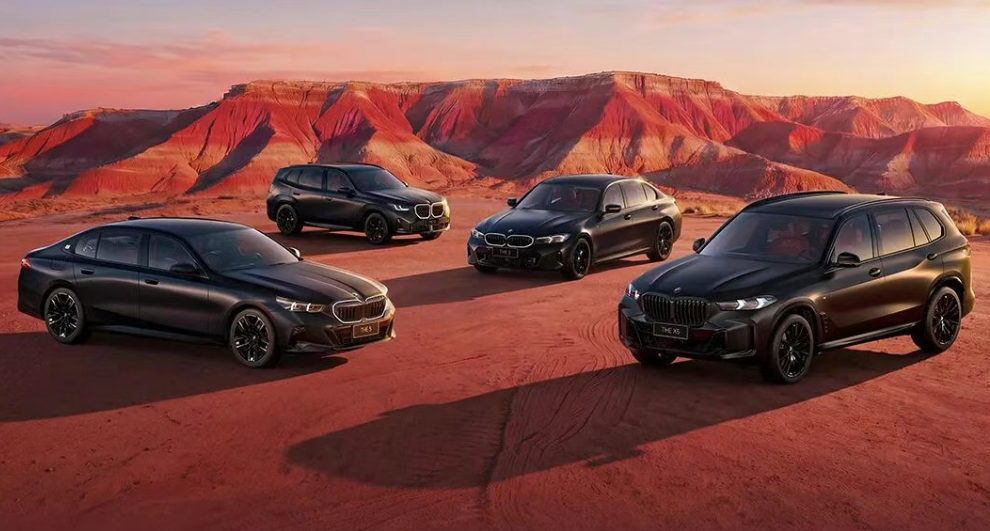
Image source: BMW
Against this turbulent backdrop, BMW's financial performance stands out. The German premium carmaker reported pre-tax earnings of €10.236 billion for the full year, once again surpassing the €10 billion mark, while maintaining a stable EBT margin of 7.7%, unchanged from the previous year. This consistency is particularly striking given the broader struggles among German peers. Volkswagen Group saw post-tax profits plunge by 44% year on year, marking its weakest result since the aftermath of the diesel emissions scandal, while Mercedes-Benz posted a 57% drop in EBIT to €5.82 billion. In contrast, BMW's steady footing has reinforced market confidence in the robustness of its operating model.
Yet the real significance of BMW's results lies not just in the numbers, but in the strategic inflection points they reveal.
A dual role behind the earnings: delivering results while building strategic momentum
Rather than viewing the results as a simple financial win, 2025 marks a pivotal transition for BMW. Internally, the year represents both a culmination and a starting point for BMW Group. It reflects the payoff from years of investment in diversified powertrain strategies, disciplined cost control, and a more balanced global footprint. At the same time, it serves as a preparatory phase for the company's next-generation vehicle strategy.
BMW is effectively crossing a watershed moment—moving beyond a prolonged period of transformation into a new cycle defined by value realization and an accelerated rollout of next-generation products. This dual role elevates the significance of its financial results far beyond headline figures.
Nowhere is this transition more evident than in China. In 2025, BMW significantly expanded local decision-making authority, particularly in product definition and R&D. More importantly, demand from the Chinese market has been elevated to a central role in shaping global product development.
Put simply, BMW is embedding "China speed" into its global competitive playbook. Shorter decision cycles, faster development timelines, and tighter alignment between customer insights and engineering execution are enabling the company to operate at a rhythm better suited to local market dynamics.
Electrification enters harvest phase: from scale expansion to qualitative leap
Electrification has become a key pillar underpinning BMW's performance.
The numbers tell a compelling story. In fiscal 2025, BMW delivered around 442,000 battery-electric vehicles globally, accounting for 17.9% of total sales. In practical terms, one in every six BMW vehicles sold is now fully electric. The MINI brand has gone even further, with one in three vehicles delivered as electric models.
A more symbolic milestone came in June 2025, when BMW delivered its 1.5 millionth fully electric vehicle. Beyond the headline figure, this milestone reflects tangible market validation of the company's EV portfolio.
However, the next phase of competition will not be defined by volume alone. The decisive factor will be breakthroughs in underlying vehicle architectures. BMW's upcoming Neue Klasse models are expected to embody this shift, signaling a transition from incremental gains in electrification to a more profound leap in technology and product capability.
Neue Klasse's China pivot: deepening localization and ecosystem integration
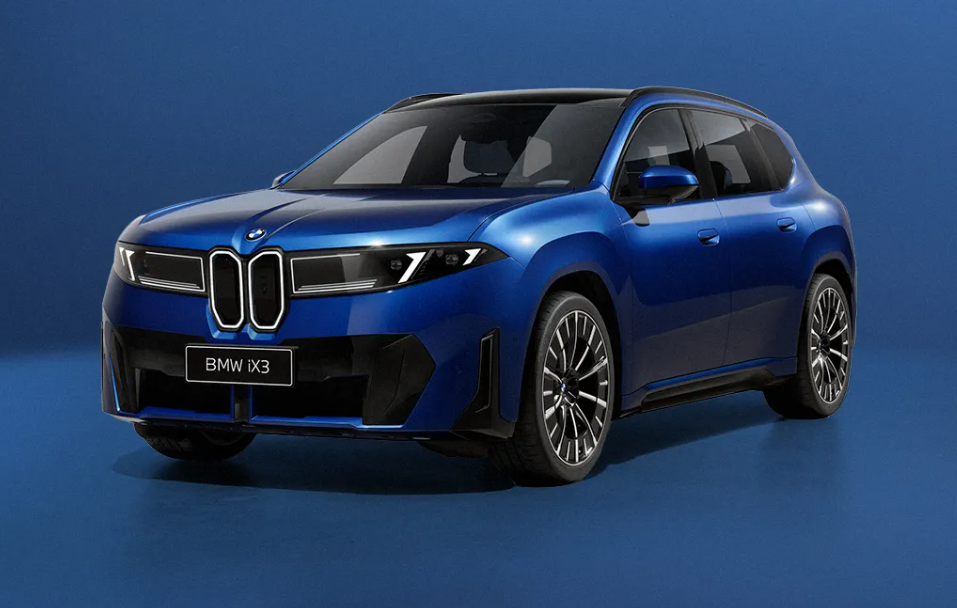
BMW's next-generation strategy is now entering a critical execution phase, with China playing an increasingly central role. In 2025, the first mass-produced Neue Klasse model—the all-new BMW iX3—rolled off the production line at the company's new plant in Debrecen, Hungary, quickly ramping up output. Following its market launch, the model outperformed expectations in Europe, accounting for roughly one-third of BMW's electric vehicle orders and drawing in a significant number of first-time premium EV buyers.
BMW iX3; image source: BMW
Momentum continued into March 2026 with the global debut of the second Neue Klasse model, the new BMW i3, in Munich. Yet the model attracting the most attention in China is the upcoming long-wheelbase version of the Neue Klasse iX3, tailored specifically for the local market and scheduled for release later in the year.
Developed jointly with local R&D teams, the China-specific iX3 is described internally as one of BMW's most localized products to date. It integrates a suite of in-house technologies, including an 800-volt architecture, a CLTC range exceeding 900 kilometers, and fast-charging capability that can add more than 400 kilometers of range in just 10 minutes. In intelligent driving, BMW is partnering with Momenta to co-develop a China-focused navigation-assisted driving system built on end-to-end large models, designed to handle complex real-world scenarios such as aggressive lane merging and unprotected left turns—conditions typical of Chinese urban traffic.
This level of localization extends well beyond a single product. It reflects a broader integration of BMW's China-based R&D, supply chain, and partner ecosystem. The company has already established its largest and most comprehensive research network outside Germany in China, while building deep collaborations with domestic players such as CATL, Alibaba, and Momenta. Together, these partnerships are creating a powerful synergy across electrification, connectivity, intelligence, and shared mobility.
2026 outlook: product surge meets the ultimate test of "China speed"
As BMW moves into 2026, its product offensive in China is set to intensify sharply. The year is shaping up to be a major launch cycle, with around 20 new and updated BMW and MINI models slated for release across internal combustion, battery-electric, and niche segments. Both core model upgrades and all-new introductions will roll out in parallel, signaling a broad-based push to capture market share.
On the production side, BMW's Shenyang base has emerged as a key hub for scaling Neue Klasse manufacturing, supported by an increasingly localized supply chain capable of sustaining high-volume deliveries. Technologically, the innovations underpinning the new generation are transitioning from concept to real-world application. Strategically, deeper collaboration with local partners is turning the idea of "China-specific" into a tangible competitive advantage.
For BMW, 2026 represents less a single breakthrough moment than a comprehensive phase of delivery. Investments made over recent years—spanning manufacturing, technology, R&D, and partnerships—are now converging into measurable market competitiveness in China.
Final thoughts
BMW's narrative in China is undergoing a fundamental rewrite. Long defined by its German heritage—precision engineering, craftsmanship, and brand legacy—the company is now adding a new dimension: speed, specifically the pace and agility demanded by the Chinese market.
This shift implies faster decision-making, more localized product development, and quicker technology deployment. Neue Klasse models—especially the China-specific long-wheelbase iX3—will serve as a crucial test of whether BMW can successfully deliver on this promise.
Ultimately, BMW's latest results tell a story that goes beyond annual performance. They capture the convergence of transformation, localization, and next-generation strategy into a single narrative arc. The coming years will determine how fully that story unfolds.


